Search News
Industry Portal
Hot Articles
- Cleanroom technology mistakes can threaten yieldCleanroom technology mistakes can quietly cut yield. Learn how airflow, humidity, filtration, monitoring, and operator habits affect quality and compliance.
- Can zero-carbon ventilation cut building emissions?Zero-carbon ventilation can cut building emissions by recovering energy, optimizing airflow, and improving IAQ. Use this checklist to reduce costs and decarbonize smarter.
- What makes high-tech air handling reliable in labs?High-tech air handling keeps labs reliable through precise filtration, humidity, pressure, exhaust, and smart monitoring—see what to verify before upgrading.
Popular Tags
Is industrial gas scrubbing worth the upgrade cost
author
Time
Click Count
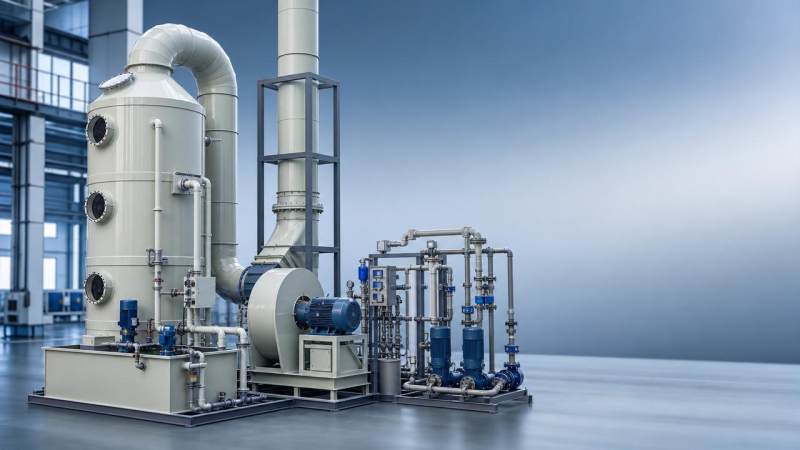
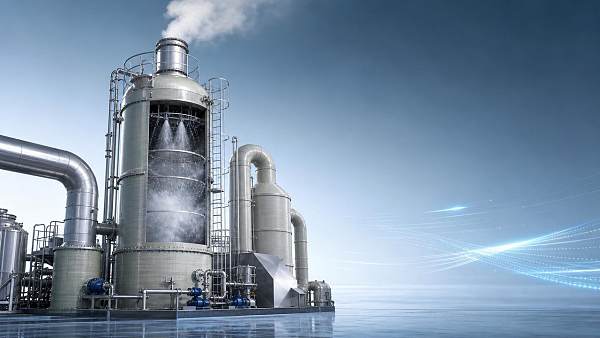
For teams balancing compliance, operating cost, and plant reliability, industrial gas scrubbing should be judged as a lifecycle decision, not a line-item purchase. When VOCs, acid gases, corrosive fumes, and hazardous particulates threaten emissions limits, product quality, and uptime, the real question is whether the upgrade reduces total risk faster than it adds capital cost.
In broad industrial settings, that answer is often yes—but only when the system is sized, integrated, and maintained around the actual gas profile. A poorly matched scrubber can waste energy, water, chemicals, and floor space. A correctly engineered one can stabilize compliance, protect downstream equipment, and prevent far more expensive shutdowns.
Why a checklist matters before upgrading industrial gas scrubbing
The upgrade debate usually gets distorted by upfront price. That is risky. Industrial gas scrubbing performance depends on pollutant chemistry, airflow variability, temperature, humidity, corrosivity, and discharge targets. Without a structured review, cost comparisons are incomplete and technical proposals look similar when they are not.
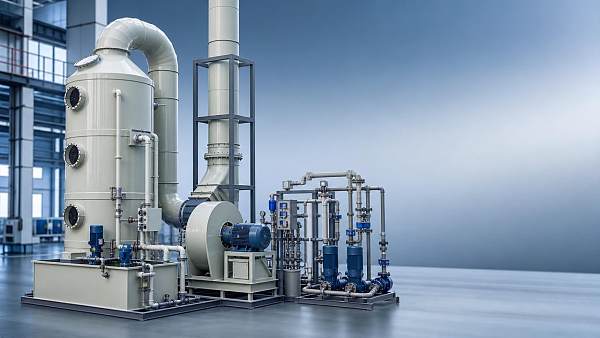
A checklist forces a practical decision. It connects environmental compliance, fan energy, reagent consumption, pressure drop, maintenance frequency, and stack performance. It also reveals whether a wet scrubber, dry scrubber, packed tower, venturi design, or hybrid gas treatment line offers the strongest payback.
Core checklist: how to judge whether industrial gas scrubbing is worth the upgrade cost
- Map the emission profile first, including concentration peaks, upset conditions, gas temperature, moisture, particle loading, and the exact mix of VOCs, acid gases, or alkaline contaminants.
- Compare compliance risk, not only current emissions, by checking future permit tightening, community exposure limits, internal EHS targets, and customer-driven environmental requirements.
- Calculate total operating cost with fan power, water use, reagent demand, waste neutralization, corrosion replacement, downtime hours, and monitoring labor included.
- Verify removal efficiency under real load swings, because vendor performance at steady design flow may not match production batches, shift changes, or startup transitions.
- Check material compatibility across housings, pumps, packing, seals, and ductwork to avoid hidden failures caused by chlorides, solvents, acids, condensate, or elevated temperatures.
- Review pressure drop carefully, since industrial gas scrubbing upgrades can increase fan demand and upset upstream capture efficiency if the ventilation balance is ignored.
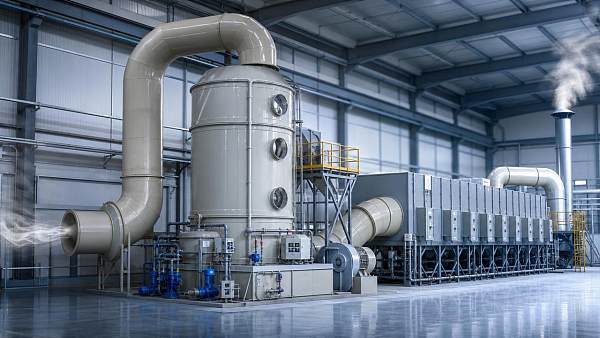
- Measure space and integration constraints, including duct rerouting, drainage, chemical storage, access platforms, instrumentation points, and tie-in windows during production.
- Confirm automation depth with pH control, conductivity tracking, differential pressure alarms, flow monitoring, and remote diagnostics to prevent underperforming manual operation.
- Quantify risk reduction value by pricing avoided fines, fewer odor complaints, lower corrosion damage, reduced fire or toxicity exposure, and stronger production continuity.
- Request lifecycle references from similar plants, because industrial gas scrubbing economics depend heavily on years of stable operation, not commissioning-week results.
Where the upgrade makes the strongest business case
Chemical processing and surface treatment
The value of industrial gas scrubbing is usually highest where acid gases, solvent vapors, and corrosive fumes occur together. In these environments, stack compliance is only one benefit. Proper scrubbing also limits corrosion in ducts, fans, roof structures, and nearby process equipment.
Facilities using etching, pickling, plating, or solvent-based reactions often see rapid returns when recurring maintenance and complaint-driven disruptions are included in the evaluation. A scrubber upgrade can convert unstable, reactive emissions into a more predictable and controllable exhaust stream.
Metallurgy, thermal operations, and dust-heavy exhaust
Heavy processes create a different case. Hot exhaust, variable particulate loading, and aggressive gases can overwhelm basic collection systems. Here, industrial gas scrubbing often works best as part of a staged line with cyclone separation, quenching, or pre-filtration before the main scrubbing section.
The upgrade becomes worthwhile when dust carryover, visible plume risk, or acid condensate threatens fan life, duct integrity, or permit stability. The return is frequently measured in fewer forced shutdowns and more consistent airflow through the process line.
High-tech manufacturing and controlled environments
In advanced manufacturing, emissions control interacts with cleanliness and climate control. Poor exhaust treatment can cause cross-contamination, pressure instability, or corrosion near precision tools. For these facilities, industrial gas scrubbing protects not only compliance but also yield, equipment calibration, and cleanroom support systems.
When the production value per hour is high, even one avoided contamination incident can justify part of the upgrade. The economics improve further when exhaust treatment is integrated with airflow control, heat management, and digital monitoring.
Commonly overlooked factors that weaken industrial gas scrubbing ROI
Ignoring exhaust variability
Average flow data hides peak events. If the scrubber is selected only around normal conditions, capture efficiency may collapse during batch releases, purge cycles, or startup surges. That leads to permit risk and expensive redesign.
Undervaluing corrosion control
Many upgrade reviews focus on emission numbers but miss asset protection. Corrosive gases attack fans, supports, electrical components, and building surfaces. Reduced replacement frequency can materially improve the business case for industrial gas scrubbing.
Forgetting wastewater and residue handling
Wet systems move pollution into liquid streams. If blowdown treatment, sludge handling, or neutralization capacity is not priced early, the project may look cheaper than it truly is. Dry and hybrid alternatives should be compared on this point.
Treating controls as optional extras
A scrubber without reliable instrumentation is difficult to optimize. Basic alarms are not enough when the process chemistry changes. Sensors, automated dosing, and trend logging help preserve removal efficiency and lower avoidable chemical consumption.
Skipping system-wide airflow review
An upgrade can alter static pressure across hoods, branches, and exhaust fans. If the ventilation system is not rebalanced, source capture may worsen even though the scrubber itself is more advanced. That is a common hidden failure mode.
Practical execution steps before committing capital
- Sample emissions across multiple production states, not one short test window.
- Build a five-year cost model covering CAPEX, OPEX, maintenance, and downtime.
- Compare at least two technical routes, such as packed-bed wet scrubbing versus hybrid treatment.
- Ask for guaranteed performance ranges at minimum, normal, and peak airflow.
- Review ducting, fan curve, drainage, and utility impacts before equipment selection.
- Plan commissioning with operator training, alarm limits, and a reagent management procedure.
Final answer: is industrial gas scrubbing worth the upgrade cost?
Yes, industrial gas scrubbing is often worth the upgrade cost when emissions are chemically aggressive, compliance margins are tightening, or downtime risk is expensive. The strongest cases appear where the system also prevents corrosion, protects process stability, and reduces operational uncertainty across the whole exhaust network.
The next step is simple: validate the emission profile, model lifecycle cost, and test every proposal against real operating variability. A disciplined review turns industrial gas scrubbing from a compliance expense into a measurable resilience investment.
Recommended News
 May 29, 2026When industrial gas purification needs wet scrubbersIndustrial gas purification challenges? Learn when wet scrubbers control acid fumes, soluble VOCs, sticky dust, and hot exhaust for safer, compliant operations.
 May 23, 2026Is industrial gas scrubbing worth the upgrade costIndustrial gas scrubbing upgrade cost: discover when better compliance, lower downtime, and corrosion protection make the investment pay off.
 May 22, 2026Industrial air purification mistakes that raise operating costsIndustrial air purification mistakes can quietly drive up energy, maintenance, and compliance costs. Learn how to compare systems wisely and avoid expensive procurement errors.
 May 22, 2026Hormuz Strait Disruption Threatens Grain Prices, Scrubber Shipping Costs RiseHormuz Strait disruption spikes scrubber shipping costs & threatens grain prices—discover how modular strategies and regional compliance can protect your margins.
 May 21, 2026Industrial air scrubbers help cut risks in harsh processesIndustrial air scrubbers reduce compliance, safety, and downtime risks in harsh processes. Learn how to choose efficient systems that protect workers, support uptime, and meet strict standards.
 May 21, 2026Hormuz Strait Disruption May Trigger Global Food Price Crisis, Wet Scrubber Export Logistics Under PressureHormuz Strait disruption threatens global food prices & wet scrubber exports—rising freight costs, delays, and insurance surcharges demand urgent supply chain action.
 May 20, 2026US EPA Enforces Dual-Traceability for Wet ScrubbersUS EPA enforces dual-traceability for wet scrubbers—real-time pH + dosing logs required. Avoid customs rejection: get EPA-certified now!
![]() May 19, 2026US EPA Mandates Dual-Trace Module for Wet Scrubbers by 2026US EPA mandates dual-trace module for wet scrubbers by 2026—real-time pH + dosing tracking required for U.S. import. Act now to avoid shipment delays & compliance risks.
May 19, 2026US EPA Mandates Dual-Trace Module for Wet Scrubbers by 2026US EPA mandates dual-trace module for wet scrubbers by 2026—real-time pH + dosing tracking required for U.S. import. Act now to avoid shipment delays & compliance risks. May 18, 2026US EPA Updates VOC Export Rules for Wet ScrubbersUS EPA updates VOC export rules for wet scrubbers—new real-time pH monitoring, tamper-evident dosing logs & EPA/FDA audit interface required. Act now to avoid delays & penalties.
 May 17, 2026US EPA Updates VOC Control Export Rules for Wet ScrubbersUS EPA VOC control export rules for wet scrubbers updated: real-time pH monitoring, automated dosing & audit-ready data logging required by Oct 2026.
 May 16, 2026MIIT Launches 2026 Industrial Energy Efficiency InspectionMIIT's 2026 Industrial Energy Efficiency Inspection mandates energy labeling for wet scrubbers (HS 2104.30)—key for exporters, manufacturers & suppliers navigating EU/U.S. compliance.
 May 15, 2026MIIT Launches 2026 Industrial Energy Conservation InspectionMIIT 2026 Industrial Energy Conservation Inspection targets wet scrubbers—verify CNAS-certified energy labeling now to ensure EU/S. Korea market access and avoid penalties.
 May 14, 2026MIIT Launches 2026 Industrial Energy Efficiency InspectionMIIT Launches 2026 Industrial Energy Efficiency Inspection — wet scrubbers & pulse-jet dust collectors now under mandatory energy labeling. Act now to avoid export delays, customs holds, and lost tenders.
 May 13, 2026Acid-Base Neutralization in Wet Scrubbers: Common RisksAcid-base neutralization in wet scrubbers: explore common risks, from dosing errors and sensor drift to scaling and corrosion, and learn how to improve compliance, reliability, and asset life.