Search News
Industry Portal
Hot Articles
- How Factories Can Select Air Quality Controls for Dust, Fumes, and VOCsIndustrial air quality control for factories: learn how to select effective solutions for dust, fumes, and VOCs while improving safety, compliance, energy efficiency, and uptime.
- How to Size Industrial Gas Scrubbing Units for Acid Fumes and Variable AirflowsIndustrial gas scrubbing units: learn how to size acid-fume scrubbers for variable airflows, peak loads, chemical demand, pressure drop, and reliable compliance.
- How to Evaluate Industrial Air Quality Control Systems for Dust, Fumes, and VOCsIndustrial air quality control systems: learn how to evaluate dust, fumes, and VOC solutions by capture efficiency, compliance, maintenance, and lifecycle cost.
Popular Tags
When industrial gas purification needs wet scrubbers
author
Time
Click Count

When Industrial Gas Purification Needs Wet Scrubbers
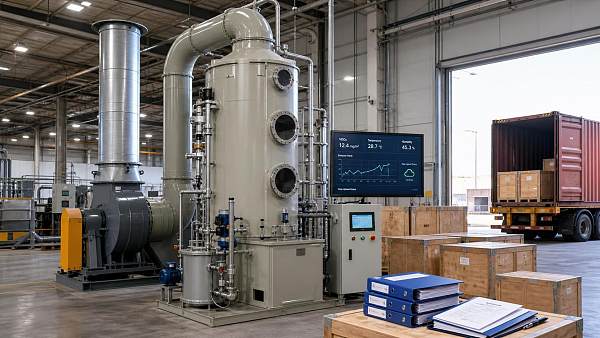
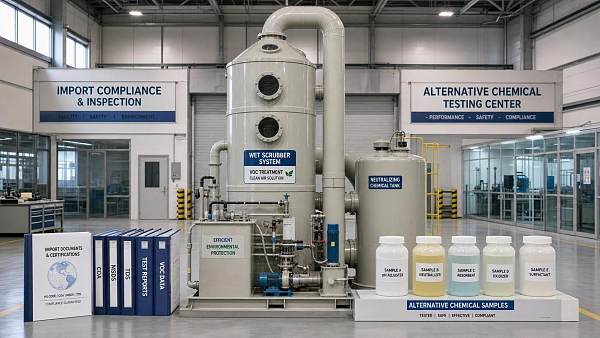
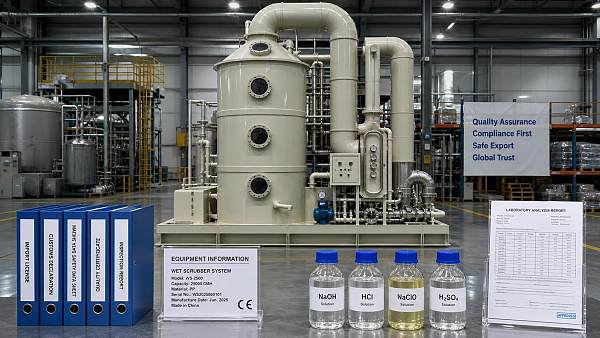
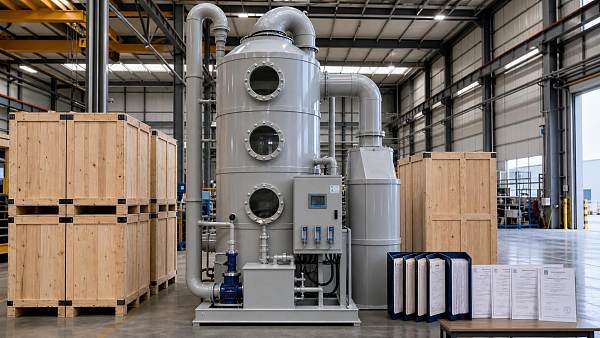
When industrial gas purification involves acid fumes, soluble VOCs, sticky particulates, or high-temperature exhaust, wet scrubbers often become the practical defense.
They protect production continuity, worker safety, and environmental compliance when dry filtration or thermal treatment alone cannot control complex emissions.
The key decision is not simply buying a scrubber. It is aligning chemistry, airflow, materials, wastewater, footprint, and lifecycle cost.
Basic Role of Wet Scrubbers in Industrial Gas Purification
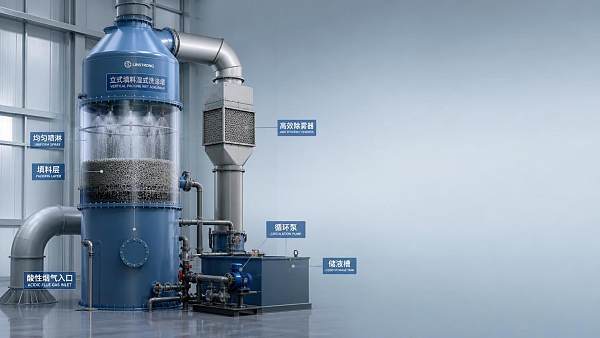
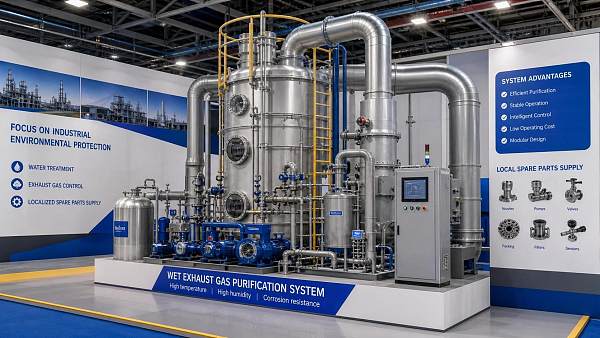
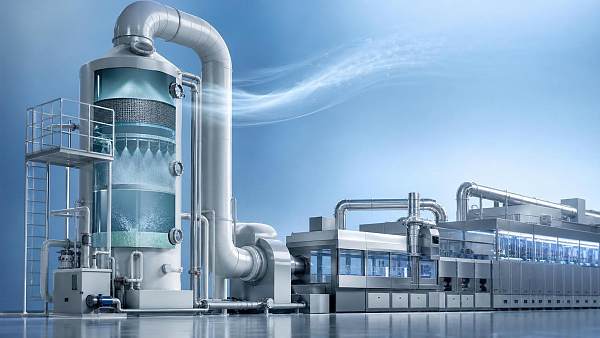
A wet scrubber removes pollutants by contacting contaminated gas with liquid, usually water, alkaline solution, acidic solution, or an oxidizing reagent.
This contact transfers pollutants from the gas phase into droplets or liquid films, where absorption, neutralization, or particle capture occurs.
In industrial gas purification, wet scrubbing is especially useful when contaminants are water-soluble, chemically reactive, adhesive, or difficult to collect dry.
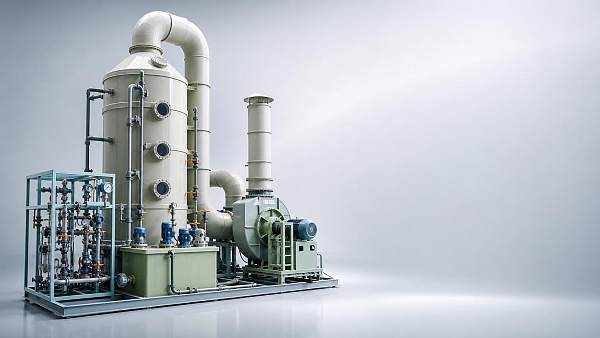
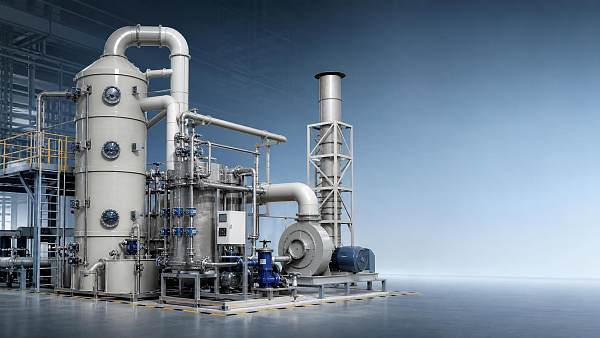
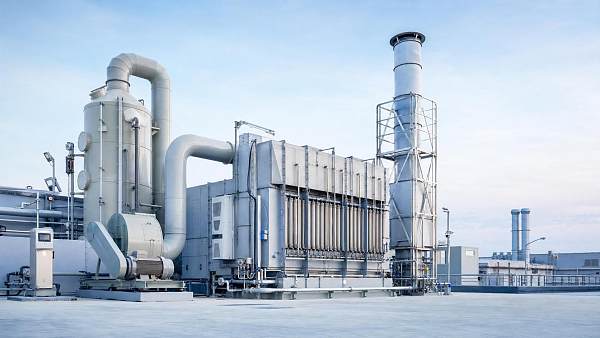
Common configurations include packed-bed scrubbers, venturi scrubbers, spray towers, tray towers, and multi-stage hybrid systems.
Packed towers favor acid gas absorption. Venturi scrubbers target fine particulate. Spray towers handle rough cooling and bulk pollutant removal.
Because industrial gas purification varies by process, scrubber selection must start with gas analysis, not equipment preference.
Industry Signals That Point Toward Wet Scrubbing
Wet scrubbers become relevant when process emissions show one or more technical warning signs.
These signals often appear in chemical production, metallurgy, electronics, battery manufacturing, waste treatment, food processing, and surface finishing.
These indicators do not automatically confirm the design. They define where industrial gas purification needs deeper technical screening.
Contaminants That Fit Wet Scrubber Treatment
Wet scrubbers perform best when pollutant chemistry supports mass transfer into liquid or rapid reaction inside the recirculation loop.
Acidic and alkaline gases
Hydrogen chloride, sulfur dioxide, ammonia, chlorine, and hydrogen fluoride often require controlled scrubbing chemistry.
For these streams, industrial gas purification depends on pH control, liquid distribution, packing performance, and corrosion-resistant construction.
Fine dust and condensable aerosols
Venturi scrubbers capture particles by accelerating gas through a throat and forcing intense contact with atomized droplets.
This approach is valuable where dust is hot, hygroscopic, explosive, or too sticky for conventional baghouse operation.
Soluble or reactive VOCs
Not all VOCs suit wet scrubbing. Water solubility, Henry’s law constant, and reagent compatibility determine feasibility.
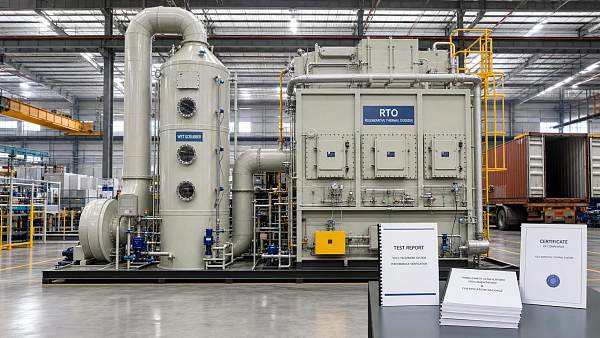
When suitable, wet treatment may reduce load before activated carbon, RTO, biological treatment, or catalytic oxidation.
Business Value Beyond Emission Reduction
The value of wet scrubbers extends beyond pollutant removal percentages. They can stabilize production and reduce compliance uncertainty.
In industrial gas purification, emission variability is often more difficult than average concentration control.
A well-designed scrubber absorbs short-term peaks, handles humidity shifts, and tolerates certain contaminant mixtures better than dry systems.
- Reduced corrosion in downstream fans, stacks, dampers, and heat exchangers.
- Lower fire risk when handling hot sparks, sticky fumes, or combustible dust.
- Improved odor control when soluble odorous compounds are present.
- Better resilience against process upsets and concentration spikes.
- Potential pretreatment before advanced zero-emission gas treatment systems.
For high-tech manufacturing, wet scrubbing can also protect cleanroom exhaust integrity and prevent cross-contamination from aggressive gases.
For heavy industry, it can help convert unstable emissions into measurable, manageable liquid-phase waste.
Typical Application Categories
Different industries use wet scrubbers for different reasons. The same equipment label may hide very different operating priorities.
These categories show why industrial gas purification should not rely on generic efficiency claims alone.
Each process requires confirmation of pollutant loading, droplet carryover, wastewater quality, and maintenance tolerance.
Key Design Parameters for Reliable Performance
Reliable industrial gas purification starts with accurate inlet data. Short sampling campaigns often miss peak loads and abnormal operating states.
Important inputs include gas flow, temperature, humidity, pollutant concentration, particle size, solubility, reaction rate, and pressure constraints.
Liquid-to-gas ratio
Too little liquid weakens absorption and particle capture. Too much liquid wastes pumping energy and increases wastewater handling.
Pressure drop
Higher pressure drop may improve capture, especially in venturi systems. It also increases fan power and operating cost.
Material selection
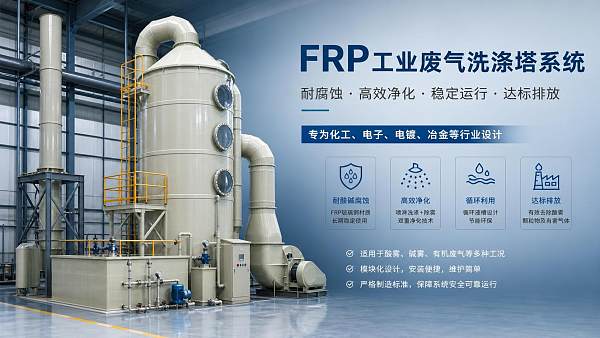
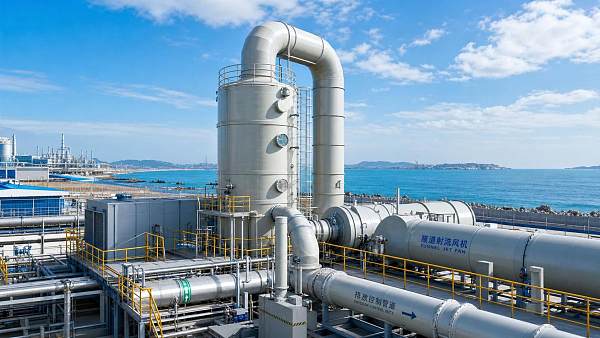
FRP, PP, PVC, stainless steel, duplex alloys, and lined steel each suit different temperature and chemical conditions.
Mist elimination
Droplet carryover can create visible plume, corrosion, and secondary emissions. Demisters need proper velocity and cleaning access.
A scrubber with strong removal efficiency but poor droplet control may fail practical industrial gas purification expectations.
Water, Wastewater, and Chemical Management
Wet scrubbing shifts part of the pollution burden from air to liquid. This shift must be designed responsibly.
Recirculation tanks accumulate salts, solids, reaction products, and dissolved organics. Blowdown strategy prevents scaling and loss of performance.
For industrial gas purification projects, water treatment capacity is as important as stack compliance.
- Confirm pH setpoints for each pollutant family.
- Estimate salt generation from neutralization reactions.
- Check scaling tendency from hardness, fluorides, sulfates, and silicates.
- Define sludge handling for captured dust and precipitates.
- Assess whether oxidants create hazardous byproducts.
Chemical dosing should be automated where emissions vary. Manual correction rarely maintains stable removal during production swings.
When Wet Scrubbers Are Not the Best Standalone Choice
Wet scrubbers are versatile, but they are not universal. Some emission streams require hybrid or alternative treatment.
Hydrophobic VOCs, low-solubility solvents, mercury, dioxins, and ultra-low concentration odors may need carbon, RTO, catalytic, or biological systems.
Very cold exhaust can cause condensation issues. Very high dust loads may require cyclones or settling chambers before scrubbing.
For industrial gas purification, the best solution often combines separation, cooling, neutralization, demisting, and polishing.
The purpose is not maximum equipment count. It is controlled risk with measurable performance at the lowest sustainable cost.
Practical Specification Checklist
A clear specification reduces disputes during commissioning and prevents under-designed systems from appearing acceptable on paper.
- Define guaranteed outlet concentration, not only percentage removal.
- State minimum and maximum airflow conditions.
- List all pollutants, including trace corrosive components.
- Specify operating temperature, humidity, and upset cases.
- Require material compatibility for liquid and vapor zones.
- Include demister access, spray nozzle access, and packing removal space.
- Set requirements for pH, ORP, conductivity, and flow monitoring.
- Clarify blowdown, wastewater pretreatment, and sludge disposal routes.
This checklist makes industrial gas purification easier to evaluate across proposals, suppliers, and technical routes.
Commissioning and Long-Term Operation
Commissioning should verify more than fan rotation and pump flow. It should test the chemistry and removal pathway.
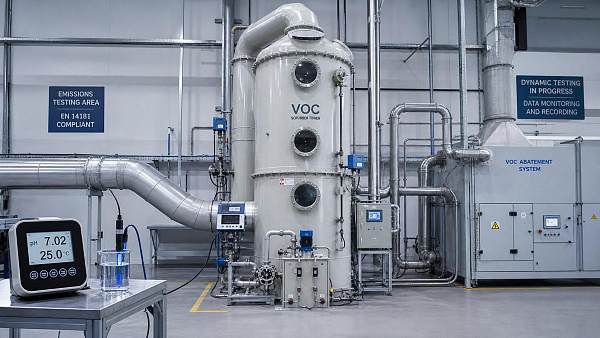
Baseline measurements should include inlet load, outlet emissions, pH stability, pressure drop, droplet carryover, and wastewater quality.
Routine inspections should focus on nozzle clogging, packing fouling, corrosion, scaling, pump wear, and demister blockage.
Digital monitoring strengthens industrial gas purification by linking process status with scrubber response.
Useful signals include pH trend, conductivity rise, differential pressure, recirculation flow, reagent consumption, and exhaust temperature.
When these signals drift, maintenance can occur before emission alarms, odor complaints, or equipment damage.
Action Path for Better Industrial Gas Purification Decisions
The next step is to build an emission profile that reflects normal production, peak production, cleaning cycles, and foreseeable upset conditions.
Then compare wet scrubbers against dry filtration, adsorption, oxidation, condensation, and hybrid treatment using lifecycle criteria.
CECS focuses on connecting microscopic filtration, gas treatment chemistry, and aerodynamic thermodynamics for demanding industrial environments.
For complex industrial gas purification, the strongest decision combines compliance confidence, maintainability, water responsibility, and energy awareness.
A wet scrubber is the right choice when the pollutant behavior, site utilities, and operating discipline support stable liquid-phase control.
Start with gas data, confirm chemistry, validate wastewater impact, and specify performance in measurable terms before final equipment selection.
Recommended News
 Aug 27, 2026How to Size Industrial Gas Scrubbing Units for Acid Fumes and Variable AirflowsIndustrial gas scrubbing units: learn how to size acid-fume scrubbers for variable airflows, peak loads, chemical demand, pressure drop, and reliable compliance.
 Aug 07, 2026How to Choose an Industrial Gas Purification System for Corrosive Emissions?Industrial gas purification system selection starts with chemistry, corrosion resistance, compliance, and lifecycle cost. Learn how to compare solutions for corrosive emissions with confidence.
 Aug 02, 2026How to Select FRP Industrial Gas Scrubbers for Corrosive Exhaust Streams?FRP industrial gas scrubbers selection guide for corrosive exhaust streams: compare resin, scrubber type, pressure drop, and controls to improve compliance, durability, and ROI.
 Jul 28, 2026How to Evaluate a Gas Scrubbing Systems Supplier for Compliance and Long-Term Cost?Gas scrubbing systems supplier selection affects compliance, uptime, and lifetime cost. Learn how to compare process fit, materials, maintenance, and real operating risk before you buy.
 Jul 26, 2026EPA Rule Takes Effect for Imported Wet ScrubbersEPA rule for imported wet scrubbers now ties U.S. market access to 95% VOCs removal and MQTT emissions uploads. Learn the compliance risks, CBP impact, and key actions exporters should take.
 Jul 09, 2026Industrial Exhaust Treatment Cost Breakdown: CAPEX, OPEX, and Key Price DriversIndustrial exhaust treatment cost explained: compare CAPEX, OPEX, and key price drivers to budget smarter, avoid hidden expenses, and choose the right compliant system.
 Jul 08, 2026China Adds Wet Scrubbers to Export ChecksChina adds wet scrubbers to export checks, bringing stricter inspection, test report requirements, and 5–7 extra clearance days. Learn how exporters and buyers can avoid delays.
 Jul 06, 2026EU Tightens Wet Scrubber VOC Rules for 2026EU Tightens Wet Scrubber VOC Rules for 2026: Learn how new EU compliance, CE marking, dynamic load testing, and real-time VOC reporting will impact exporters and buyers.
 Jun 30, 2026REACH Nickel Limits Tighten for Scrubber PartsREACH nickel limits tighten for scrubber parts from 2027. Learn the new 0.05 mg/cm²/week rule, affected RTO/RCO and wet scrubber components, and how exporters can avoid EU customs risk.
 Jun 28, 2026PP Gas Scrubbers vs FRP Scrubbers: Which Is Better for Corrosive Exhaust Applications?PP gas scrubbers vs FRP scrubbers: compare corrosion resistance, temperature limits, maintenance, and lifecycle cost to choose the best solution for corrosive exhaust applications.
 Jun 26, 2026Wet Scrubber Systems vs RTO: Which VOC Control Option Fits Your Process?Wet scrubber systems or RTO? Compare VOC control by moisture, acid gas, energy use, and lifecycle cost to find the right fit for your process.
 Jun 26, 2026ENTECH Vietnam 2026 Opens as Wet Scrubbers Gain BuyersENTECH Vietnam 2026 highlights rising wet scrubbers demand, with 270+ qualified buyer inquiries focused on exhaust gas treatment. See why Vietnam buyers now prioritize control accuracy, corrosion resistance, and fast local service.
 Jun 25, 2026ENTECH Vietnam 2026 Opens as Wet Scrubbers Gain TractionWet scrubbers gain momentum at ENTECH Vietnam 2026 as EPC contractors in Bac Ninh and Hai Phong show sample-testing interest. Explore why fast delivery and local spare-parts support matter.
 Jun 23, 2026EPA Draft Tightens VOCs Margin Proof for ImportsEPA draft tightens VOCs margin proof for imports of Wet Scrubbers and RTO/RCO systems. See how Q2 2027 rules may impact compliance costs, delivery timelines, and export readiness.
 Jun 22, 2026Qingdao Water Conference 2026 Highlights Coastal治理 TechnologiesQingdao Water Conference 2026 highlights coastal governance technologies, from corrosion-resistant Wet Scrubbers to IP68 and ISO 8501-1 Sa2.5-ready solutions—see what buyers and suppliers should watch.
 Jun 21, 2026Industrial Gas Scrubbing for Acid Fumes: Wet Scrubber Selection and Common MistakesIndustrial gas scrubbing for acid fumes: learn how to choose the right wet scrubber, avoid common design mistakes, and improve corrosion control, compliance, and long-term uptime.
 Jun 21, 2026EPA Tightens Wet Scrubber Import RequirementsWet Scrubber import rules are changing fast. Learn how the EPA’s 2026 compliance notice affects banned neutralizers, testing documents, export readiness, and U.S. market access before the Sept. 1 deadline.
 Jun 20, 2026EPA Tightens Import Rules for Wet ScrubbersEPA Tightens Import Rules for Wet Scrubbers: learn how the 2026 EPA update affects VOC control imports, chemical documentation, customs risk, and on-time delivery.
 Jun 19, 2026EPA Tightens Import Rules for Wet ScrubbersEPA tightens import rules for wet scrubbers: from Sept. 1, 2026, U.S. entries need a manufacturer-signed compliance declaration. Learn the risks, deadlines, and steps importers must take now.
 Jun 18, 2026EPA import rule tightens for wet scrubbersEPA import rule tightens for wet scrubbers entering the U.S. from Sept. 1, 2026. Learn key declaration requirements, CBP entry risks, and what importers and manufacturers must prepare now.
 Jun 16, 2026EPA Rule Takes Effect: CFD Reports Now Required for Wet Scrubber ImportsEPA rule for Wet Scrubber imports is now in force: CFD reports are required to prove ANSI/ASHRAE 113-2025 compliance and ±15% L/G uniformity. Learn the port-clearance risks and key actions now.
 Jun 15, 2026Industrial Gas Scrubbing Systems: How to Compare Wet Scrubbers by Pollutant TypeIndustrial gas scrubbing guide to compare wet scrubbers by pollutant type. Learn how to evaluate acid gases, dust, soluble vapors, and mixed streams for safer, lower-risk selection.
 Jun 15, 2026EPA Rule Takes Effect for Wet Scrubber ImportsEPA Rule Takes Effect for Wet Scrubber Imports: learn how the new U.S. EPA requirement affects CFD validation, compliance documents, port entry risk, and exporter readiness.
 Jun 14, 2026Industrial Gas Purification vs Wet Scrubbing: Which Process Fits Your Exhaust Stream?Industrial gas purification vs wet scrubbing: compare chemistry fit, moisture risk, compliance stability, and cost to choose the safest, most efficient exhaust treatment.