Search News
Industry Portal
Hot Articles
- How Factories Can Select Air Quality Controls for Dust, Fumes, and VOCsIndustrial air quality control for factories: learn how to select effective solutions for dust, fumes, and VOCs while improving safety, compliance, energy efficiency, and uptime.
- How to Size Industrial Gas Scrubbing Units for Acid Fumes and Variable AirflowsIndustrial gas scrubbing units: learn how to size acid-fume scrubbers for variable airflows, peak loads, chemical demand, pressure drop, and reliable compliance.
- How to Evaluate Industrial Air Quality Control Systems for Dust, Fumes, and VOCsIndustrial air quality control systems: learn how to evaluate dust, fumes, and VOC solutions by capture efficiency, compliance, maintenance, and lifecycle cost.
Popular Tags
Cleanroom technology mistakes can threaten yield
author
Time
Click Count
Cleanroom Technology Mistakes Can Threaten Yield
In high-stakes manufacturing, even minor cleanroom technology mistakes can quietly erode yield, compromise compliance, and expose teams to safety risks before alarms are triggered.
The real challenge is maintaining particle counts, airflow balance, humidity, pressure differentials, and disciplined procedures under changing production conditions.
When cleanroom technology is treated as static infrastructure, small gaps become contamination events, rework, shutdowns, or failed audits.
What does cleanroom technology actually control?
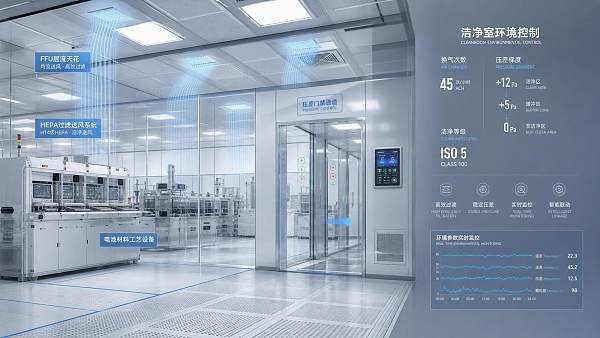
Cleanroom technology controls airborne particles, microbial load, temperature, humidity, pressure, airflow direction, chemical vapors, and human-generated contamination.
It is not only a room with HEPA filters. It is a complete environmental control system with measurable performance limits.
In semiconductor, battery, medical, optics, and precision assembly facilities, cleanroom technology protects process stability at microscopic scales.
A particle invisible to the eye can block lithography patterns, puncture separator films, contaminate surfaces, or weaken coatings.
Good cleanroom technology connects filtration, airflow, gowning, cleaning, monitoring, and maintenance into one controlled operating discipline.
The most common misunderstanding is focusing only on ISO class. Yield depends on dynamic control during real production.
- Air cleanliness must match process sensitivity.
- Pressure cascades must protect critical zones.
- Humidity must prevent electrostatic discharge or chemical instability.
- Temperature must support dimensional accuracy.
- Personnel behavior must support the engineered design.
Why do small cleanroom technology mistakes reduce yield?
Yield loss often starts when cleanroom technology drift remains below obvious alarm thresholds but above process tolerance.
A pressure imbalance may pull particles from an adjacent corridor. A clogged prefilter may disturb vertical laminar airflow.
A humidity excursion may cause static attraction, powder agglomeration, corrosion, or coating defects before operators notice any visible issue.
Cleanroom technology mistakes are dangerous because they rarely appear as one dramatic failure. They accumulate across shifts.
The result may be lower pass rates, unstable inspection data, batch segregation, longer root-cause investigations, and delayed release.
Common contamination pathways
- Unsealed ceiling penetrations near FFU grids.
- Improperly balanced return air paths.
- Door openings that collapse pressure differentials.
- Maintenance tools brought in without controlled transfer.
- Cleaning chemicals that release residues or vapors.
- Poorly positioned particle counters missing high-risk zones.
These problems show why cleanroom technology needs routine verification, not occasional inspection after quality deviations.
Which airflow errors are most damaging?
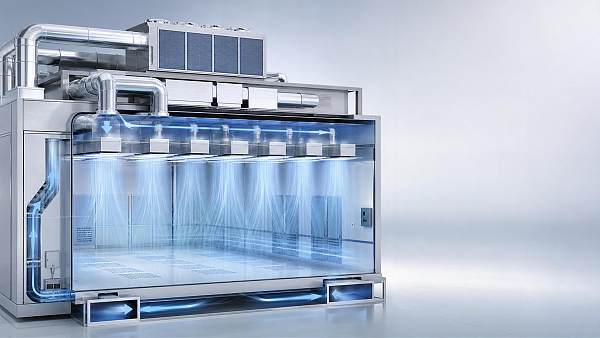
Airflow is the central nervous system of cleanroom technology. When airflow fails, contamination control becomes unpredictable.
The first error is assuming high air change rates always improve cleanliness. Excessive turbulence can resuspend particles.
The second error is ignoring equipment heat plumes. Hot tools can bend clean airflow away from protected product surfaces.
The third error is placing workstations where return air carries contamination across critical exposure points.
Cleanroom technology performs best when supply air, return air, tool exhaust, and operator movement are reviewed together.
How should airflow be checked?
Use smoke visualization, airflow velocity mapping, pressure logging, and particle monitoring during realistic operating conditions.
Testing should include door cycles, normal staffing levels, material transfer, tool operation, and maintenance access.
Cleanroom technology validation without production simulation may confirm design intent while missing actual contamination behavior.
For ISO 14644 compliance, classification data matters. For yield protection, dynamic process-zone data matters more.
How do humidity and temperature mistakes affect production?
Cleanroom technology must control thermal and moisture conditions as carefully as particle concentration.
In lithium battery coating, moisture can trigger hydrolysis, gas generation, binder instability, and electrolyte sensitivity.
In semiconductor lithography, temperature variation can affect overlay accuracy, resist behavior, and dimensional consistency.
In pharmaceutical and medical device areas, humidity may influence microbial risk, packaging stability, and material handling.
A common mistake is monitoring room averages while ignoring microclimates around tools, benches, storage racks, and transfer windows.
Another mistake is separating HVAC control from production scheduling. Peak heat loads can exceed the stable control window.
What should be controlled beyond room averages?
- Dew point at sensitive material exposure points.
- Temperature gradients near precision tools.
- Recovery time after door openings.
- Humidity spikes during cleaning or washdown.
- Heat accumulation during high-output production runs.
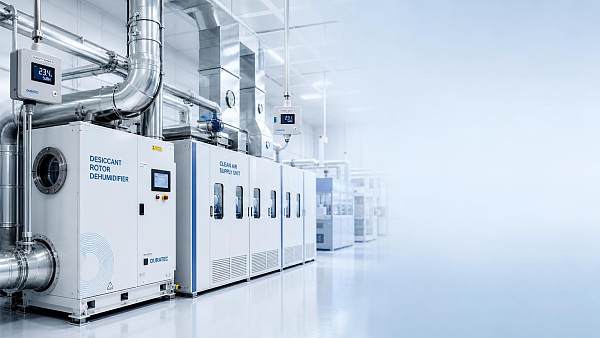
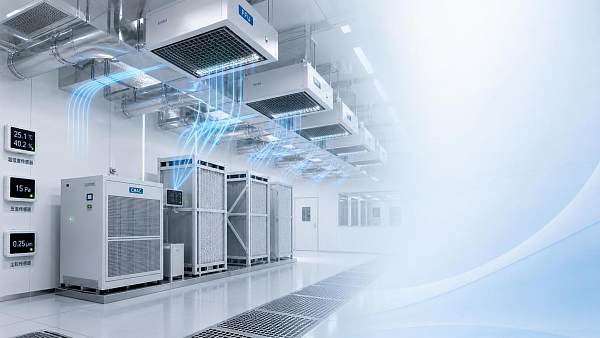
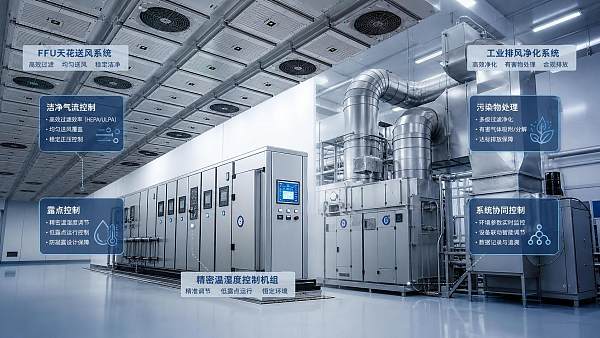
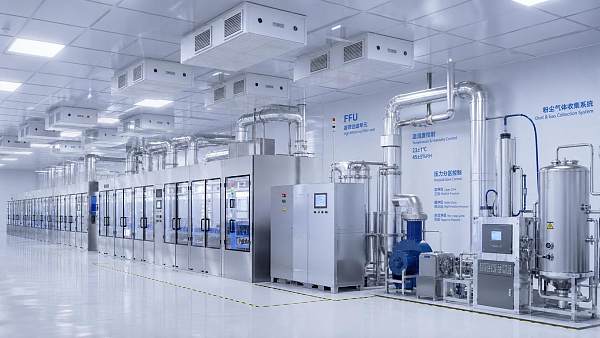
Advanced cleanroom technology links CRAC units, desiccant wheels, sensors, alarms, and trend analysis into one control strategy.
Are filtration mistakes only about filter grade?
Filter grade is important, but cleanroom technology performance depends on installation quality, sealing, loading, and airflow uniformity.
A high-efficiency filter with bypass leakage can perform worse than a lower-risk system installed correctly.
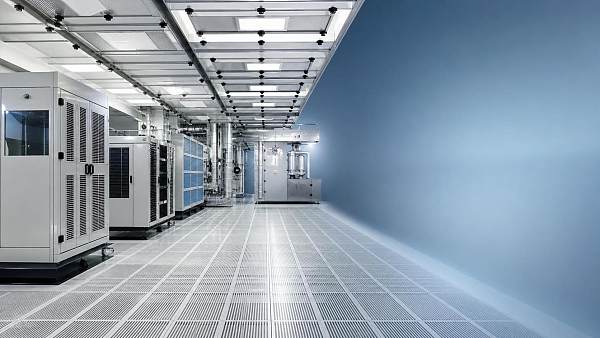
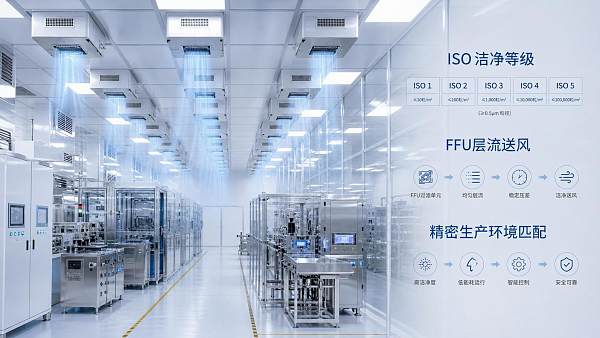
FFU arrays must deliver consistent vertical laminar flow. Uneven speed settings create dead zones and turbulent pockets.
Industrial exhaust and scrubber systems also matter. Process gases must not migrate back into controlled production zones.
Cleanroom technology can fail when supply filtration is excellent but return, exhaust, or make-up air design is weak.
What maintenance mistakes are most common?
- Replacing filters based only on calendar dates.
- Ignoring differential pressure trends across filter banks.
- Skipping leak tests after ceiling work.
- Using unverified replacement filters from inconsistent sources.
- Failing to rebalance airflow after equipment layout changes.
Predictive maintenance strengthens cleanroom technology because it reveals drift before contamination reaches product surfaces.
How does human behavior undermine cleanroom technology?
People are often the largest particle source inside controlled environments. Cleanroom technology cannot compensate for undisciplined movement.
Fast walking, poor gowning, exposed skin, unnecessary talking, and uncontrolled material transfer increase particle shedding.
A cleanroom may pass certification but still suffer yield loss if operating habits do not match contamination risk.
Training should explain why each behavior matters. Rules are followed better when linked to product failure modes.
Which procedures need special attention?
- Gowning sequence and mirror inspection.
- Hand hygiene and glove replacement.
- Tool wipe-down before entry.
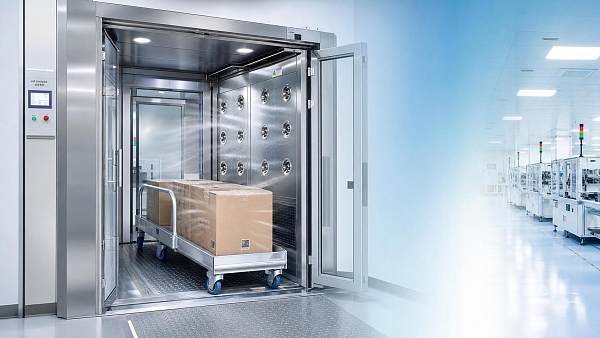
- Material staging in airlocks.
- Waste removal without route crossover.
- Behavior during alarms and pressure loss.
Cleanroom technology works when engineering controls and human routines reinforce each other every shift.
What is the difference between compliance and yield protection?
Compliance confirms that a cleanroom meets defined standards. Yield protection confirms that cleanroom technology supports actual process performance.
The two are related, but they are not identical. A compliant cleanroom can still have localized contamination risks.
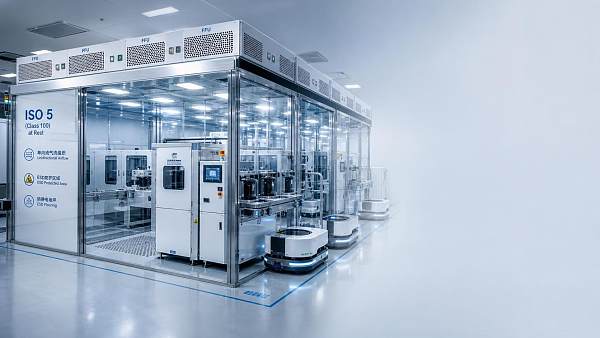
ISO 14644 classification is usually measured under specified states. Production introduces people, tools, heat, materials, and movement.
Yield-focused cleanroom technology uses monitoring data to connect environmental conditions with defect trends and process outcomes.
The strongest cleanroom technology programs treat compliance as the baseline and yield protection as the operating objective.
How should cleanroom technology be monitored and improved?
Improvement starts with meaningful data. Cleanroom technology monitoring should detect drift, not merely record historical failures.
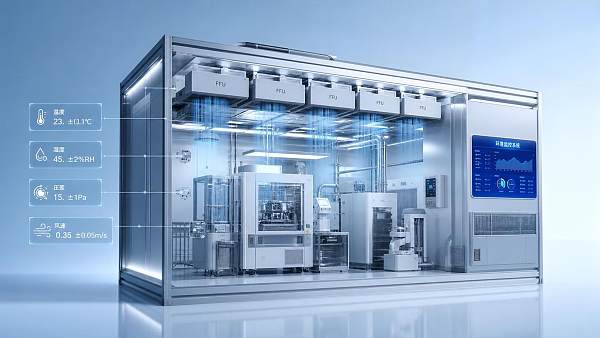
Particle counts, pressure differentials, dew point, temperature, airflow, and exhaust status should be reviewed as connected signals.
Alarm limits should include warning levels. Waiting for critical alarms can allow product exposure before intervention.
Trend analysis is especially valuable. Gradual filter loading or door discipline problems often appear as repeated small deviations.
Practical improvement checklist
- Map critical product exposure points.
- Compare monitoring locations with contamination risk.
- Review pressure cascade recovery after door openings.
- Correlate defects with environmental trend data.
- Validate cleaning agents for residue and compatibility.
- Requalify airflow after layout or tool changes.
- Audit gowning behavior without advance notice.
Digital cleanroom technology can improve response speed through automated alerts, dashboards, and equipment health indicators.
However, automation does not replace judgment. Data must be reviewed against process sensitivity and operational reality.
What cost mistakes appear during cleanroom technology decisions?
The cheapest cleanroom technology decision is rarely the lowest lifecycle cost decision.
Undersized HVAC capacity, weak humidity control, inefficient FFU operation, and poor recovery ventilation can raise operating costs.
Energy use matters because cleanrooms can operate continuously with large airflow volumes and tight thermal limits.
Energy recovery, intelligent fan control, optimized filtration stages, and proper zoning can reduce cost without sacrificing cleanliness.
Cleanroom technology investments should be judged by defect reduction, uptime, energy performance, compliance resilience, and maintenance stability.
FAQ: cleanroom technology risk reminders
Conclusion: protect yield before contamination becomes visible
Cleanroom technology protects yield only when design, monitoring, maintenance, and behavior remain aligned under real production conditions.
The most serious mistakes are often ordinary: pressure drift, airflow shortcuts, weak gowning, skipped verification, and incomplete trend review.
A practical next step is to map critical zones, compare them with monitoring points, and review recent deviations against defect data.
When cleanroom technology is managed as a living system, it becomes a durable shield for quality, safety, compliance, and energy efficiency.
Recommended News
 Aug 25, 2026How to Select Cleanroom Particle Control Equipment for ISO Class and Process RiskCleanroom particle control equipment selection starts with process risk, ISO class, and airflow design. Learn how to compare FFUs, filters, and monitoring for reliable performance.
 Aug 23, 2026How Laminar Airflow Supports Compliance and Contamination Control in Medical Device ManufacturingLaminar airflow for medical devices helps reduce contamination risk, support cleanroom compliance, and improve audit readiness—see how it protects product quality and manufacturing control.
 Aug 21, 2026How to Achieve Stable RH Precision Humidity Control in Cleanroom Production?Stable RH precision humidity control starts with process-based design. Learn how airflow, sensors, dehumidification, and recovery logic keep cleanroom production consistent and reliable.
 Aug 19, 2026What Drives Cleanroom Compliance Cost in Pharma and Semiconductor Projects?Cleanroom compliance cost in pharma and semiconductor projects depends on ISO class, airflow, humidity control, validation, and energy use. Learn what drives cost and how to avoid costly overdesign.
 Aug 11, 2026How to Select Precision Humidity Control for Cleanrooms and Micro-EnvironmentsPrecision humidity control for cleanrooms starts with process needs. Learn how to compare dew point targets, airflow, controls, and energy tradeoffs for reliable, high-yield micro-environments.
 Aug 05, 2026How Cleanroom Environmental Control Automation Improves Compliance and StabilityCleanroom environmental control automation improves compliance, stability, and audit readiness through faster response, traceable control logic, and consistent environmental performance.
 Aug 04, 2026How Smart Cleanroom Thermal Control Improves Stability in FFU-Based Micro-EnvironmentsSmart cleanroom thermal control improves FFU-based micro-environment stability by aligning temperature, humidity, pressure, and airflow—learn what to evaluate before performance drifts.
 Aug 03, 2026Semiconductor Cleanroom Standards Explained: ISO Classes, Air Changes, and ESD ControlsCleanroom standards for semiconductor industry explained: understand ISO classes, air changes, and ESD controls to improve yield, reduce contamination risk, and choose smarter fab environments.
 Jul 30, 2026How to Choose Environmental Control Solutions for High-Tech Manufacturing FacilitiesHigh-tech manufacturing environment solutions guide: learn how to evaluate cleanroom airflow, dew point control, exhaust treatment, and compliance to protect yield and cut lifecycle risk.
 Jul 29, 2026How to Design Ventilation for Precision Manufacturing to Control Particles and HeatPrecision manufacturing ventilation design guide: learn how to control particles, heat, airflow, filtration, and pressure for cleaner production, higher yield, and more reliable operations.
 Jul 26, 2026ISO 5 Semiconductor Cleanroom Solutions: Key Design Criteria for Process StabilityISO 5 semiconductor cleanroom solutions focus on process stability, airflow uniformity, pressure control, and thermal consistency to protect yield and improve fab performance.
 Jul 24, 2026Cleanroom Standards Compliance: Key Requirements and Audit Readiness ChecklistCleanroom standards compliance starts with real control, not paperwork. Explore key ISO requirements, common audit gaps, and a practical checklist to improve readiness.
 Jul 20, 2026How to Evaluate a Semiconductor Cleanroom Solutions Supplier for Fab ProjectsSemiconductor cleanroom solutions supplier selection can make or break fab performance. Learn how to compare engineering depth, compliance, delivery, and lifecycle value.
 Jul 15, 2026Dust-Free Manufacturing: Key Process Controls for Cleaner Production LinesDust-free manufacturing starts with tighter control of airflow, humidity, filtration, and gas capture. Discover how cleaner production lines improve yield, safety, compliance, and energy performance.
 Jul 13, 2026How Semiconductor Environmental Control AMC Reduction Prevents Yield LossSemiconductor environmental control AMC reduction is essential to prevent yield loss. Learn how airflow, humidity, filtration, and gas treatment protect fabs and improve process stability.
 Jul 12, 2026How to Choose Semiconductor Cleanroom Solutions for EUV Lithography LinesSemiconductor cleanroom solutions for EUV require more than ISO class compliance. Learn how to compare airflow, AMC, thermal stability, vibration, and lifecycle cost for better yield.
 Jul 11, 2026Cleanroom Design Criteria Explained: Air Changes, Pressure Cascade, and ISO ClassCleanroom design criteria explained: learn how air changes, pressure cascade, and ISO Class work together to improve contamination control, compliance, and process stability.
 Jul 09, 2026Semiconductor Facility Ventilation Standards: Pressure Cascade, Air Changes, and ComplianceSemiconductor facility ventilation explained: pressure cascade, air changes, and compliance essentials to protect yield, control contamination, and reduce hidden operational risk.
 Jul 09, 2026Clean Environment Control Solutions for Dust, Humidity, and ESD in Sensitive ProductionClean environment control solutions for dust, humidity, and ESD help sensitive production improve yield, ensure compliance, cut energy waste, and reduce costly rework.
 Jul 08, 2026Cleanroom Standards ISO Class Explained: How to Match Class Levels to ProductionCleanroom standards ISO class explained clearly: learn how to match class levels to production needs, reduce contamination risk, control costs, and choose smarter cleanroom strategies.
 Jul 08, 2026How Electronics Cleanroom Air Showers Reduce Particle Transfer at Entry PointsElectronics cleanroom air showers reduce particle transfer at entry points, protect sensitive processes, and support better yield, cleaner airflow, and more reliable contamination control.
![]() Jul 07, 2026Cleanroom Certification USA: ISO Classes, Testing Steps, and Common Compliance GapsCleanroom certification USA explained: compare ISO classes, understand key testing steps, and spot common compliance gaps before they trigger audit issues, downtime, or product risk.
Jul 07, 2026Cleanroom Certification USA: ISO Classes, Testing Steps, and Common Compliance GapsCleanroom certification USA explained: compare ISO classes, understand key testing steps, and spot common compliance gaps before they trigger audit issues, downtime, or product risk. Jul 06, 2026What Is Semiconductor Clean Air and Why Does It Matter in Contamination Control?Semiconductor clean air is vital to contamination control, protecting yield, tool stability, and process consistency. Learn why it matters in modern fabs.
 Jul 05, 2026Cleanroom Airflow Control Systems Explained: How to Balance Pressure, Air Changes, and StabilityCleanroom airflow control systems explained: learn how to balance pressure, air changes, and stability to improve contamination control, cut energy waste, and protect production yield.