Search News
Industry Portal
Hot Articles
- How Factories Can Select Air Quality Controls for Dust, Fumes, and VOCsIndustrial air quality control for factories: learn how to select effective solutions for dust, fumes, and VOCs while improving safety, compliance, energy efficiency, and uptime.
- How to Size Industrial Gas Scrubbing Units for Acid Fumes and Variable AirflowsIndustrial gas scrubbing units: learn how to size acid-fume scrubbers for variable airflows, peak loads, chemical demand, pressure drop, and reliable compliance.
- How to Evaluate Industrial Air Quality Control Systems for Dust, Fumes, and VOCsIndustrial air quality control systems: learn how to evaluate dust, fumes, and VOC solutions by capture efficiency, compliance, maintenance, and lifecycle cost.
Popular Tags
When semiconductor facility HVAC needs an upgrade
author
Time
Click Count
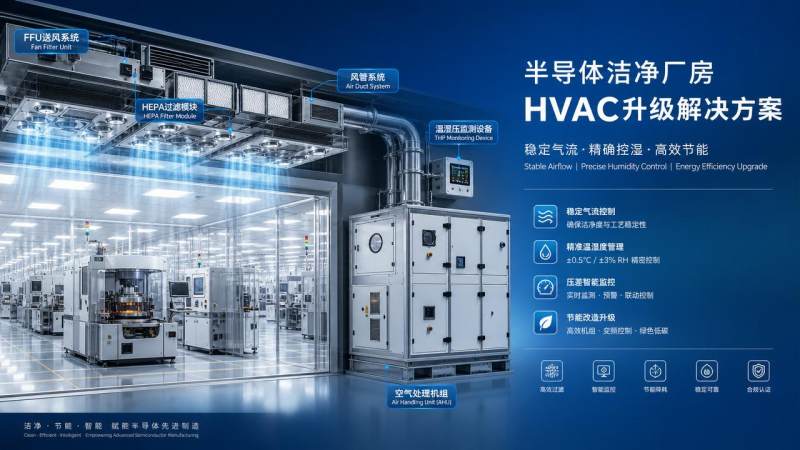
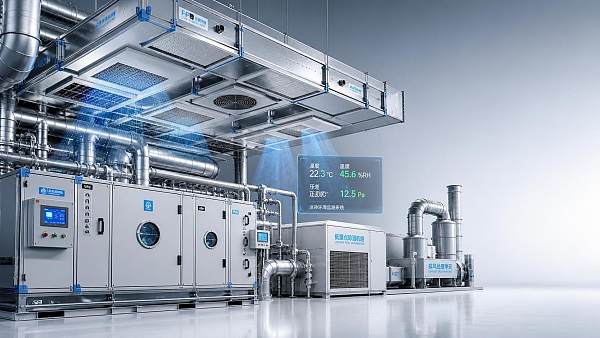
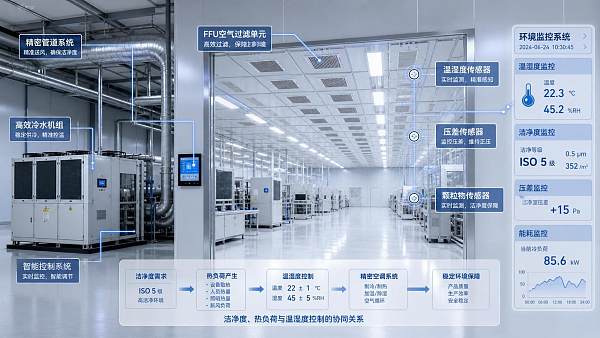
When semiconductor facility HVAC systems start limiting yield, compliance, or energy performance, an upgrade becomes a strategic decision rather than a maintenance task. For operations tied to stable cleanroom conditions, the real issue is not whether equipment is old, but whether airflow, humidity, pressurization, and filtration still support current process demands. A structured review helps reveal when semiconductor facility HVAC no longer protects production continuity or future capacity.
Why a checklist matters before a semiconductor facility HVAC upgrade
Semiconductor environments fail gradually. Yield loss may appear before alarms, and energy waste often grows long before major breakdowns. That makes checklist-based evaluation more reliable than reactive replacement.
A disciplined upgrade review also connects technical symptoms with business impact. In a semiconductor facility HVAC project, poor dew point control, unstable differential pressure, or uneven airflow can affect contamination risk, tool uptime, utility spending, and expansion readiness at the same time.
For mixed industrial portfolios, this approach supports broader facility strategy. It aligns cleanroom performance, energy recovery, compliance, and lifecycle planning instead of isolating HVAC as a single maintenance line item.
Core checklist: signs your semiconductor facility HVAC needs an upgrade
- Measure airflow uniformity across process zones, not only supply volume, because local turbulence and dead spots often create contamination exposure before overall air change rates appear abnormal.
- Verify humidity stability by trend data, especially during seasonal swings, since semiconductor facility HVAC weakness often shows up as drifting dew point instead of complete control failure.
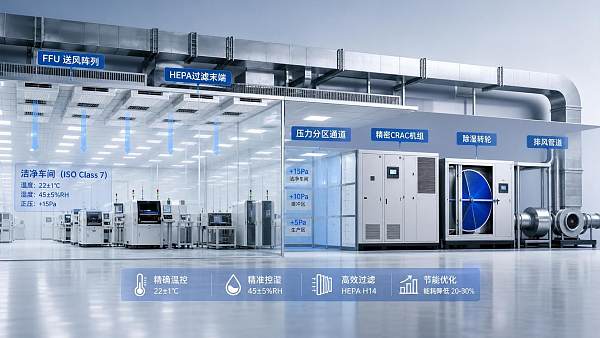
- Check cleanroom pressure cascades between bays, chases, and support rooms, because unstable differentials can pull particles or chemical vapors toward sensitive wafer processes.
- Inspect FFU and HEPA loading patterns to identify uneven filtration performance, fan degradation, or bypass leakage that may be hidden by acceptable average particle counts.
- Compare current HVAC capacity with actual tool heat loads, exhaust volumes, and makeup air demand, especially if production tools changed after the original facility design.
- Review recovery time after door openings, maintenance access, or utility interruptions, because slow environmental rebound signals weak control logic or undersized response capacity.
- Track alarms tied to chilled water, desiccant systems, reheat, and controls integration, since recurring minor faults often precede major semiconductor facility HVAC reliability events.
- Audit energy intensity per square meter and per process tool cluster, looking for excessive fan power, simultaneous heating and cooling, or poor heat recovery performance.
- Confirm compliance against ISO 14644 targets and internal process specifications, because an upgrade may be required even when legacy equipment still passes older acceptance criteria.
- Test building management visibility and control granularity, since modern semiconductor facility HVAC depends on fast data, zone-level trending, and predictive fault detection.
How upgrade triggers differ by operating scenario
High-precision wafer fabrication
In advanced wafer environments, environmental drift has little tolerance. Even when particle counts remain acceptable, poor laminar flow consistency can disturb exposure, deposition, or inspection steps.
Here, semiconductor facility HVAC upgrades often focus on FFU array balancing, tighter temperature bands, advanced humidity suppression, and faster controls response around lithography or etch areas.
Facility expansion or process conversion
An HVAC system designed for a previous generation of tools may not support today’s sensible loads, exhaust chemistry, or airflow distribution. Expansion pressure commonly exposes hidden design limits.
In this scenario, the upgrade question is less about equipment age and more about fit. Semiconductor facility HVAC must match future process density, not just current occupied floor area.
Energy and carbon reduction programs
Many sites discover that cleanroom air systems dominate utility costs. If fan energy, reheat demand, or makeup air conditioning is disproportionately high, upgrade economics improve quickly.
Projects in this category may include EC fan retrofits, smarter static pressure reset, heat recovery ventilation, high-efficiency cooling strategies, and better sequencing between cleanroom and support spaces.
Commonly overlooked risks during semiconductor facility HVAC evaluation
Ignoring process drift hidden by average readings
Average temperature or particle data can mask local instability. Short-duration excursions near critical tools matter more than building-wide daily averages in semiconductor facility HVAC performance reviews.
Treating filtration as the only cleanliness variable
Cleanliness depends on airflow path, pressure logic, maintenance discipline, and exhaust interaction. Replacing filters without fixing flow behavior rarely delivers durable cleanroom improvement.
Underestimating control system limitations
Mechanical assets may still be serviceable, but outdated controls can slow response, reduce trend visibility, and prevent optimization. Many semiconductor facility HVAC upgrades succeed through controls modernization first.
Skipping utility interaction analysis
Air handlers, chilled water, exhaust, scrubbers, and makeup air are interdependent. Improving one subsystem without reviewing the whole chain may shift bottlenecks instead of removing them.
Practical execution steps for a better upgrade decision
- Start with 12 months of trend data covering temperature, humidity, pressure, fan speed, alarms, and energy use, then compare excursions against process events and maintenance records.
- Map airflow and contamination risk by zone, including bays, sub-fabs, gowning, and service corridors, so upgrades target the real weak points instead of headline equipment.
- Separate quick corrections from capital projects by identifying balancing issues, sensor errors, control tuning gaps, and preventive maintenance backlog before replacing major assets.
- Model future loads using planned tool additions, tighter process tolerances, and utility constraints, ensuring the semiconductor facility HVAC upgrade supports expansion without oversizing everything.
- Prioritize measures with both resilience and efficiency value, such as variable airflow control, desiccant optimization, heat recovery, and better cleanroom zoning logic.
What a strong upgrade path usually includes
A strong plan often combines airside improvements, filtration verification, humidity control refinement, and smarter controls. In some sites, FFU modernization and better static pressure management deliver the fastest gains.
Where moisture control is critical, desiccant-based dehumidification, tighter reheat sequencing, and improved envelope leakage control can stabilize dew point without excessive energy penalties.
Sites pursuing broader environmental performance may also integrate energy recovery ventilation and coordinated exhaust treatment, especially where cleanroom support areas create large conditioned air losses.
Conclusion and next action
The right time to upgrade semiconductor facility HVAC is usually visible before failure, if the review looks beyond age and focuses on yield protection, control stability, compliance, and energy intensity. A checklist approach turns scattered symptoms into a clear decision framework.
Begin with measured performance gaps, rank them by production risk and lifecycle cost, and define whether tuning, partial retrofit, or full system renewal fits the site. That sequence makes a semiconductor facility HVAC upgrade practical, defensible, and aligned with long-term facility strategy.
Recommended News
 Aug 18, 2026How to Evaluate a High-Tech HVAC Manufacturer for Cleanroom and Precision FacilitiesHigh-tech HVAC manufacturer evaluation guide for cleanrooms and precision facilities. Learn how to assess control stability, compliance, serviceability, and long-term operational risk.
 Aug 13, 2026How to Select VAV Airflow Control Systems for Labs and Cleanroom HVAC ProjectsVAV airflow control systems are critical for labs and cleanroom HVAC projects. Discover how to choose the right system for stability, compliance, and energy savings.
 Jul 21, 2026How to Evaluate Cleanroom Equipment Suppliers in the Middle East for New ProjectsCleanroom equipment Middle East supplier selection starts with technical fit, compliance, service, and lifecycle cost. Discover how to evaluate vendors and reduce project risk.
 Jul 19, 2026How to Estimate HVAC Cost for Electronics Manufacturing Cleanrooms and Production AreasElectronics manufacturing HVAC cost explained: learn how cleanroom class, humidity control, filtration, exhaust, and energy recovery shape realistic budgets and smarter project decisions.
 Jul 14, 2026Electronics Cleanroom Systems in Southeast Asia: How to Choose AHU, FFU, and HEPA LevelsElectronics cleanroom systems Southeast Asia: learn how to choose AHU, FFU, and HEPA levels for better yield, humidity control, energy efficiency, and long-term ROI.
 Jul 13, 2026Cleanroom Design Layout Basics: Zoning, Material Flow, and Contamination ControlCleanroom design layout basics explained: learn zoning, material and personnel flow, and contamination control strategies that reduce risk, improve compliance, and support efficient project planning.
 Jul 12, 2026Air Handling Units Supplier Checklist: 7 Specs to Compare Before You BuyAir handling units supplier checklist: compare 7 critical specs before you buy. Learn how to evaluate airflow, filtration, humidity control, efficiency, and compliance to cut risk and lifetime cost.
 Jul 11, 2026Cleanroom Equipment for Pharmaceutical Plants: What to Specify for GMP ComplianceCleanroom equipment for pharmaceutical plants: learn what to specify for GMP compliance, from airflow and HEPA filtration to pressure, humidity, and cleanability by process.
 Jul 11, 2026EU ETS Revision Reaches Cleanroom AHUsEU ETS revision brings Cleanroom AHUs into focus. Learn how the 2026 amendment affects CE DoC disclosure, carbon cost allocation, EPC tenders, and supplier selection before 2027.
 Jul 10, 2026Cleanroom AHU Cost Guide: Price Ranges, Configuration Factors, and Budget PlanningCleanroom AHU cost explained with realistic price ranges, key configuration factors, and budget tips to compare quotes, avoid hidden costs, and plan smarter cleanroom investments.
 Jul 09, 2026How to Select Precision Air Conditioning for Cleanrooms by Temperature, RH, and Particle RiskPrecision air conditioning for cleanrooms: learn how to choose the right system by temperature stability, RH control, and particle risk to protect yield, ensure compliance, and cut lifecycle cost.
![]() Jul 07, 2026How to Select Heat Recovery Ventilation Systems for Cleanrooms by Class and Air Change RateHeat recovery ventilation systems for cleanrooms: learn how to choose by ISO class, air change rate, leakage risk, and energy performance for safer, more efficient cleanroom operation.
Jul 07, 2026How to Select Heat Recovery Ventilation Systems for Cleanrooms by Class and Air Change RateHeat recovery ventilation systems for cleanrooms: learn how to choose by ISO class, air change rate, leakage risk, and energy performance for safer, more efficient cleanroom operation. Jul 06, 2026Semiconductor Clean Air Systems for Wafer Fabs: Key Design Factors for Yield ControlSemiconductor clean air systems for wafer fabs directly affect yield. Explore key design factors in airflow, AMC, humidity, and pressure control to improve fab stability.
 Jul 04, 2026When to Use Cleanroom Design Services: Scope, Deliverables, and Project Handover TipsCleanroom design services: learn when to engage specialists, what deliverables to request, and how smart handover planning reduces risk, protects compliance, and avoids costly rework.
 Jul 02, 2026How HVAC Humidity Stability Affects Yield in Semiconductor ManufacturingSemiconductor manufacturing HVAC humidity stability directly affects yield, ESD risk, contamination control, and uptime. Learn how stable humidity reduces defects and protects fab performance.
 Jul 02, 2026EN 1886:2026 Sets New EU Entry Bar for Cleanroom AHUsEN 1886:2026 raises the EU entry bar for cleanroom AHUs with new CE marking rules on micro-leakage and heat recovery. Learn what exporters, manufacturers, and buyers must do before 2027.
 Jul 01, 2026SEMI Semiconductor Cleanroom Solutions: What to Compare Before Planning a New FabSEMI semiconductor cleanroom solutions compared the right way: evaluate airflow, humidity, filtration, energy, and scalability before planning a new fab to protect yield and avoid costly redesign.
 Jun 30, 2026What a Clean Environment Control Systems Manufacturer Should Provide Beyond Basic HVACClean environment control systems manufacturer selection should go beyond HVAC. Learn how the right partner improves cleanliness, dew point control, compliance, and energy savings.
 Jun 29, 2026What Drives Cleanroom Temperature Control Cost in New Facility Projects?Cleanroom temperature control cost depends on ISO class, humidity precision, heat load, airflow, redundancy, and lifecycle energy use. Learn what truly drives budgets in new facility projects.
 Jun 27, 2026Electronics Cleanroom Systems Cost Breakdown: What Drives CapEx and Operating Expense?Electronics cleanroom systems cost more than equipment alone. Discover what drives CapEx and operating expense, from FFUs and humidity control to compliance, energy use, and lifecycle risk.
 Jun 25, 2026Clean Environment Control Systems vs Traditional HVAC: Which Fits Sensitive Production?Clean environment control systems vs traditional HVAC: discover which solution better protects sensitive production, improves compliance, and reduces costly contamination risk.
 Jun 25, 2026Electronics Cleanroom Solutions: How to Choose FFU, AHU, and HEPA SetupsElectronics cleanroom solutions explained: learn how to choose FFU, AHU, and HEPA setups to improve yield, control airflow, and reduce lifecycle costs.
 Jun 24, 2026Cleanroom Airflow Control vs Pressure Control: What Matters More for Contamination Risk?Cleanroom airflow control vs pressure control: discover which factor has the bigger impact on contamination risk, product protection, compliance, and cleanroom performance.
 Jun 23, 2026How to Set Cleanroom Temperature Regulation for Stable Processes and Product QualityCleanroom temperature regulation starts with process needs, not generic setpoints. Learn how to control temperature, humidity, airflow, and deviations for stable quality and higher yield.