Search News
Industry Portal
Hot Articles
- How to Select Cleanroom Particle Control Equipment for ISO Class and Process RiskCleanroom particle control equipment selection starts with process risk, ISO class, and airflow design. Learn how to compare FFUs, filters, and monitoring for reliable performance.
- How to Choose a Ducted Heat Recovery Ventilation System for Commercial BuildingsDucted heat recovery ventilation for commercial buildings: learn how to compare efficiency, static pressure, controls, IAQ, and lifecycle cost to choose a smarter, high-performance system.
- How Laminar Airflow Supports Compliance and Contamination Control in Medical Device ManufacturingLaminar airflow for medical devices helps reduce contamination risk, support cleanroom compliance, and improve audit readiness—see how it protects product quality and manufacturing control.
Popular Tags
EU ETS Revision Reaches Cleanroom AHUs
author
Time
Click Count
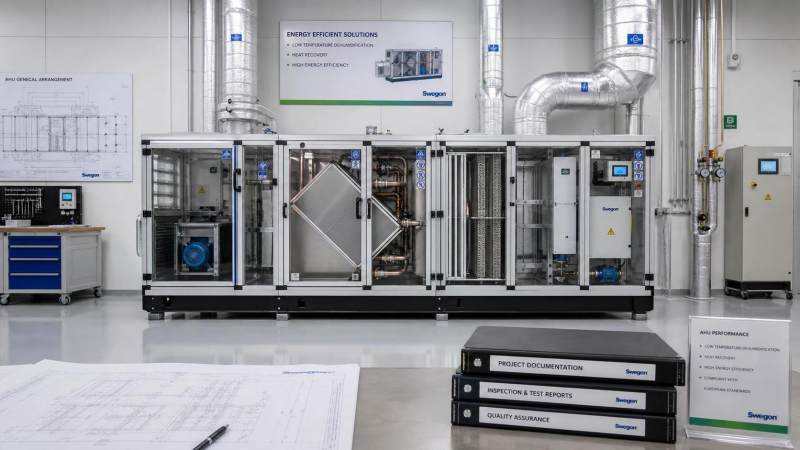
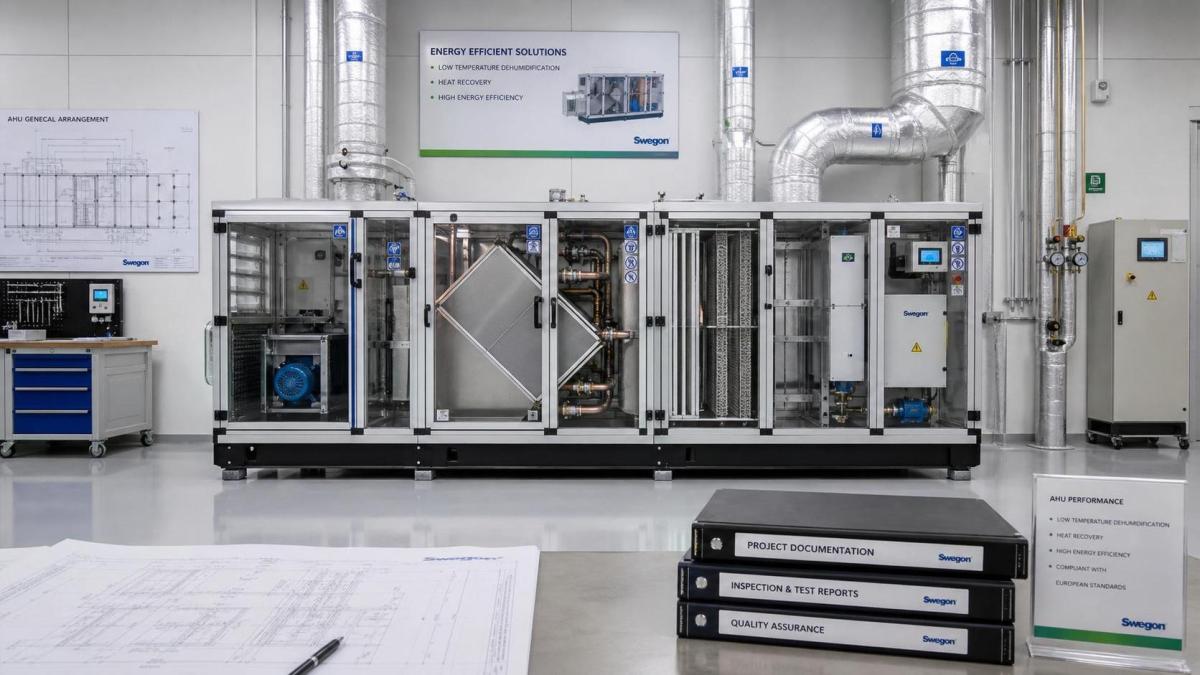
On 2026-07-10, the European Commission adopted the EU ETS Directive Amendment (2026/789), introducing a new compliance signal for cleanroom air handling units used in European projects. The change matters because it links carbon cost allocation to the operating energy performance of certain Cleanroom AHUs and adds a mandatory CE DoC disclosure requirement, which is likely to affect equipment selection, tender review, export documentation, and procurement decisions across the cleanroom project chain.
What the amendment confirms at this stage
The confirmed facts are limited but commercially significant. According to the provided event summary, the amendment was adopted on 2026-07-10 and, for the first time, brings Cleanroom AHUs into the scope of EU ETS coverage.
From 2027, AHUs with rated power of 50 kW or above will be subject to implied carbon cost allocation based on actual operating energy efficiency, expressed as COP at a -40°C dew point. The same summary also states that this information will have to be declared in the CE DoC.
The provided information further indicates that this rule change is expected to reshape equipment selection logic in European clean plant EPC projects and may favor Chinese exporters of high-end Cleanroom AHUs that already offer dual-mode designs combining ultra-low-temperature dehumidification and heat recovery.
Where the commercial pressure is likely to appear first
Equipment selection inside EPC cleanroom projects
From an industry perspective, EPC contractors, design teams, and project procurement units are likely to feel the change early because the amendment connects operating efficiency under a specific condition to carbon cost treatment. That means model selection may no longer be judged only on cooling, airflow, or cleanroom process suitability, but also on how the unit performs when its implied carbon cost must be disclosed and compared.
What deserves closer attention is the likely shift in tender evaluation and specification alignment. Buyers and project teams may need to review whether current technical schedules, bid documents, and equipment comparison sheets properly capture the required COP condition and CE DoC disclosure item.
Export documentation and CE compliance workflows
For exporters and compliance-related service providers, the immediate impact is likely to center on product documentation rather than only on product hardware. Because the provided summary states that CE DoC disclosure will become mandatory, manufacturers shipping qualifying units into the European market may need to review whether their declaration files, technical documents, and performance statements are consistent with the new requirement.
Analysis shows that this could affect handover packages, document review cycles, and pre-shipment compliance checks. Certification support firms, testing-related service providers, and project documentation teams may need to pay closer attention to how performance under the specified dew point condition is expressed in formal records.
Procurement and supplier qualification decisions
Purchasers, distributors, and supply-chain service providers may also be affected because the rule introduces another screening factor into vendor comparison. Where projects involve AHUs at or above the stated power threshold, procurement teams may begin to ask for clearer evidence on operating efficiency metrics, CE DoC readiness, and whether the supplier can support project-level carbon cost evaluation.
Observably, this does not automatically mean all suppliers will face the same pressure at the same pace. The effect is more likely to concentrate first in projects where compliance review, owner oversight, and EPC documentation discipline are already strict.
What companies should monitor before the 2027 application point
Check whether current CE DoC content is sufficient
Analysis shows that companies selling affected AHUs should first review whether existing CE DoC formats and supporting technical files can accommodate the required declaration item without ambiguity. The key issue is not only having performance data, but also whether the declared wording, test basis, and supporting records can withstand customer and compliance review.
Revisit performance evidence under the stated operating condition
What deserves closer attention is the use of COP at a -40°C dew point as the stated basis for implied carbon cost allocation. Manufacturers, testing partners, and bid teams may need to verify whether existing product literature and internal data packages clearly address that operating condition in a form usable for tenders, document submissions, and customer comparisons.
Watch for changes in tender language and owner specifications
The provided information supports the view that equipment selection logic in European clean plant EPC projects may change. Companies involved in export sales, technical bidding, and project delivery should therefore monitor whether tender documents begin to include new wording on carbon cost allocation, efficiency disclosure, or CE DoC evidence for qualifying AHUs.
Assess whether certain design routes gain a commercial edge
The event summary specifically notes a possible advantage for Chinese high-end Cleanroom AHU exporters with dual-mode ultra-low-temperature dehumidification and heat recovery designs. It is more appropriate to understand this as an observed market signal rather than a guaranteed outcome. Companies with similar design features may want to assess how those features are documented and presented in technical and commercial discussions.
How this development should be read right now
Observably, this is more than a general policy headline because the provided summary includes a defined product scope, a power threshold, a stated efficiency basis, and a future application point. That gives the market a concrete compliance direction.
At the same time, it is more appropriate to understand this as both a landed rule change and an execution signal that still requires close follow-up. Analysis shows that the practical impact will depend on how the requirement is reflected in compliance documentation, customer review practice, tender files, and project procurement decisions once the 2027 implementation point approaches.
From an industry perspective, the main value of this development is not only that Cleanroom AHUs are now linked to carbon cost allocation, but that energy performance under a defined operating condition may become more visible in commercial decision-making and formal declarations.
A rule change with immediate planning value
In practical terms, this development should be read as an actionable compliance and procurement signal for companies involved in Cleanroom AHU design, export, specification, and project delivery into Europe. The confirmed facts are narrow, but they point to concrete effects in documentation, equipment comparison, and supplier evaluation.
Analysis shows that the market is not yet at the stage where all execution outcomes can be treated as settled. A balanced reading is that the amendment already matters for planning, while the exact market response will still depend on subsequent implementation practice, customer requirements, and industry feedback.
Basis of this article and what still needs verification
This article is generated from the user-provided news title, event date, and event summary. It does not rely on any additional unverified data, company names, market figures, or external links.
For events of this type, source categories usually worth checking include official announcements, regulatory releases, trade or customs authority information, industry association updates, standard-setting documents, and reporting by established industry media. A specific official source link was not provided in the input, so that link still needs to be verified on an ongoing basis.
Further observation is still needed on implementation details, CE DoC execution practice, tender document changes, compliance interpretation, market feedback, and how affected companies actually adapt their product documentation and delivery processes.
Recommended News
 Aug 18, 2026How to Evaluate a High-Tech HVAC Manufacturer for Cleanroom and Precision FacilitiesHigh-tech HVAC manufacturer evaluation guide for cleanrooms and precision facilities. Learn how to assess control stability, compliance, serviceability, and long-term operational risk.
 Aug 13, 2026How to Select VAV Airflow Control Systems for Labs and Cleanroom HVAC ProjectsVAV airflow control systems are critical for labs and cleanroom HVAC projects. Discover how to choose the right system for stability, compliance, and energy savings.
 Jul 21, 2026How to Evaluate Cleanroom Equipment Suppliers in the Middle East for New ProjectsCleanroom equipment Middle East supplier selection starts with technical fit, compliance, service, and lifecycle cost. Discover how to evaluate vendors and reduce project risk.
 Jul 19, 2026How to Estimate HVAC Cost for Electronics Manufacturing Cleanrooms and Production AreasElectronics manufacturing HVAC cost explained: learn how cleanroom class, humidity control, filtration, exhaust, and energy recovery shape realistic budgets and smarter project decisions.
 Jul 14, 2026Electronics Cleanroom Systems in Southeast Asia: How to Choose AHU, FFU, and HEPA LevelsElectronics cleanroom systems Southeast Asia: learn how to choose AHU, FFU, and HEPA levels for better yield, humidity control, energy efficiency, and long-term ROI.
 Jul 13, 2026Cleanroom Design Layout Basics: Zoning, Material Flow, and Contamination ControlCleanroom design layout basics explained: learn zoning, material and personnel flow, and contamination control strategies that reduce risk, improve compliance, and support efficient project planning.
 Jul 12, 2026Air Handling Units Supplier Checklist: 7 Specs to Compare Before You BuyAir handling units supplier checklist: compare 7 critical specs before you buy. Learn how to evaluate airflow, filtration, humidity control, efficiency, and compliance to cut risk and lifetime cost.
 Jul 11, 2026Cleanroom Equipment for Pharmaceutical Plants: What to Specify for GMP ComplianceCleanroom equipment for pharmaceutical plants: learn what to specify for GMP compliance, from airflow and HEPA filtration to pressure, humidity, and cleanability by process.
 Jul 11, 2026EU ETS Revision Reaches Cleanroom AHUsEU ETS revision brings Cleanroom AHUs into focus. Learn how the 2026 amendment affects CE DoC disclosure, carbon cost allocation, EPC tenders, and supplier selection before 2027.
 Jul 10, 2026Cleanroom AHU Cost Guide: Price Ranges, Configuration Factors, and Budget PlanningCleanroom AHU cost explained with realistic price ranges, key configuration factors, and budget tips to compare quotes, avoid hidden costs, and plan smarter cleanroom investments.
 Jul 09, 2026How to Select Precision Air Conditioning for Cleanrooms by Temperature, RH, and Particle RiskPrecision air conditioning for cleanrooms: learn how to choose the right system by temperature stability, RH control, and particle risk to protect yield, ensure compliance, and cut lifecycle cost.
![]() Jul 07, 2026How to Select Heat Recovery Ventilation Systems for Cleanrooms by Class and Air Change RateHeat recovery ventilation systems for cleanrooms: learn how to choose by ISO class, air change rate, leakage risk, and energy performance for safer, more efficient cleanroom operation.
Jul 07, 2026How to Select Heat Recovery Ventilation Systems for Cleanrooms by Class and Air Change RateHeat recovery ventilation systems for cleanrooms: learn how to choose by ISO class, air change rate, leakage risk, and energy performance for safer, more efficient cleanroom operation. Jul 06, 2026Semiconductor Clean Air Systems for Wafer Fabs: Key Design Factors for Yield ControlSemiconductor clean air systems for wafer fabs directly affect yield. Explore key design factors in airflow, AMC, humidity, and pressure control to improve fab stability.
 Jul 04, 2026When to Use Cleanroom Design Services: Scope, Deliverables, and Project Handover TipsCleanroom design services: learn when to engage specialists, what deliverables to request, and how smart handover planning reduces risk, protects compliance, and avoids costly rework.
 Jul 02, 2026How HVAC Humidity Stability Affects Yield in Semiconductor ManufacturingSemiconductor manufacturing HVAC humidity stability directly affects yield, ESD risk, contamination control, and uptime. Learn how stable humidity reduces defects and protects fab performance.
 Jul 02, 2026EN 1886:2026 Sets New EU Entry Bar for Cleanroom AHUsEN 1886:2026 raises the EU entry bar for cleanroom AHUs with new CE marking rules on micro-leakage and heat recovery. Learn what exporters, manufacturers, and buyers must do before 2027.
 Jul 01, 2026SEMI Semiconductor Cleanroom Solutions: What to Compare Before Planning a New FabSEMI semiconductor cleanroom solutions compared the right way: evaluate airflow, humidity, filtration, energy, and scalability before planning a new fab to protect yield and avoid costly redesign.
 Jun 30, 2026What a Clean Environment Control Systems Manufacturer Should Provide Beyond Basic HVACClean environment control systems manufacturer selection should go beyond HVAC. Learn how the right partner improves cleanliness, dew point control, compliance, and energy savings.
 Jun 29, 2026What Drives Cleanroom Temperature Control Cost in New Facility Projects?Cleanroom temperature control cost depends on ISO class, humidity precision, heat load, airflow, redundancy, and lifecycle energy use. Learn what truly drives budgets in new facility projects.
 Jun 27, 2026Electronics Cleanroom Systems Cost Breakdown: What Drives CapEx and Operating Expense?Electronics cleanroom systems cost more than equipment alone. Discover what drives CapEx and operating expense, from FFUs and humidity control to compliance, energy use, and lifecycle risk.
 Jun 25, 2026Clean Environment Control Systems vs Traditional HVAC: Which Fits Sensitive Production?Clean environment control systems vs traditional HVAC: discover which solution better protects sensitive production, improves compliance, and reduces costly contamination risk.
 Jun 25, 2026Electronics Cleanroom Solutions: How to Choose FFU, AHU, and HEPA SetupsElectronics cleanroom solutions explained: learn how to choose FFU, AHU, and HEPA setups to improve yield, control airflow, and reduce lifecycle costs.
 Jun 24, 2026Cleanroom Airflow Control vs Pressure Control: What Matters More for Contamination Risk?Cleanroom airflow control vs pressure control: discover which factor has the bigger impact on contamination risk, product protection, compliance, and cleanroom performance.
 Jun 23, 2026How to Set Cleanroom Temperature Regulation for Stable Processes and Product QualityCleanroom temperature regulation starts with process needs, not generic setpoints. Learn how to control temperature, humidity, airflow, and deviations for stable quality and higher yield.