Search News
Industry Portal
Hot Articles
- How Factories Can Select Air Quality Controls for Dust, Fumes, and VOCsIndustrial air quality control for factories: learn how to select effective solutions for dust, fumes, and VOCs while improving safety, compliance, energy efficiency, and uptime.
- How to Size Industrial Gas Scrubbing Units for Acid Fumes and Variable AirflowsIndustrial gas scrubbing units: learn how to size acid-fume scrubbers for variable airflows, peak loads, chemical demand, pressure drop, and reliable compliance.
- How to Evaluate Industrial Air Quality Control Systems for Dust, Fumes, and VOCsIndustrial air quality control systems: learn how to evaluate dust, fumes, and VOC solutions by capture efficiency, compliance, maintenance, and lifecycle cost.
Popular Tags
High-tech manufacturing ventilation mistakes that raise risk
author
Time
Click Count
In high-tech manufacturing, ventilation errors rarely stay invisible for long—they surface as contamination, safety incidents, unstable process conditions, and rising energy costs. For project managers and engineering leads, understanding the most common high-tech manufacturing ventilation mistakes is essential to protecting yield, compliance, and long-term system performance. This article highlights where ventilation design and operation often go wrong, and how to reduce risk before small flaws become expensive failures.
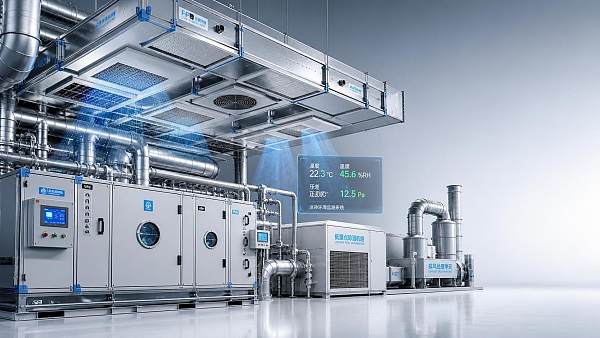
Whether the facility supports semiconductor processing, lithium battery production, precision coating, electronics assembly, or advanced materials handling, ventilation is not just a background utility. It directly affects airborne particle control, moisture stability, VOC extraction, pressure cascades, maintenance intervals, and energy use across 24/7 operations.
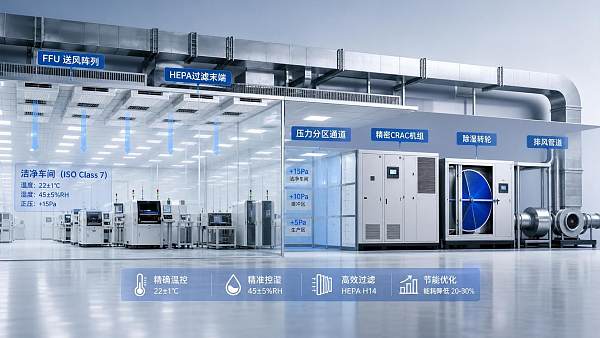
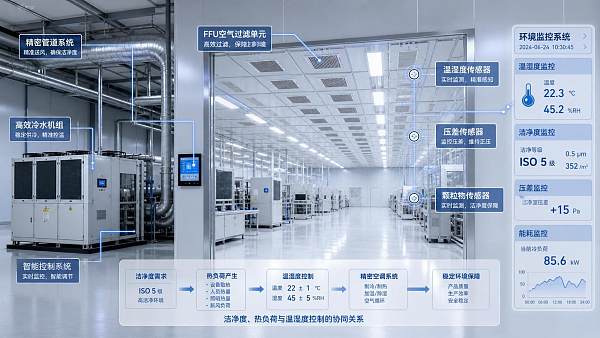
For project leaders, the challenge is rarely a single fan or duct decision. Risk usually appears at the interface between cleanroom FFUs, CRAC units, dust collection, scrubbers, workshop exhaust, and energy recovery devices. When these systems are designed in isolation, small coordination gaps can create large operational losses within 3 to 12 months after commissioning.
Why high-tech manufacturing ventilation failures become expensive so quickly
High-tech manufacturing ventilation mistakes are costly because process environments operate within narrow tolerances. In many facilities, temperature control may need to stay within ±1°C, relative humidity within ±5%, and pressure differentials within 5–15 Pa between adjacent zones. Once ventilation drifts outside those bands, the impact reaches quality, safety, and compliance at the same time.
In contamination-sensitive production, airflow is part of process control. A poorly balanced return path can disturb laminar flow under FFUs, while excessive turbulence near tools can resuspend particles in the 0.1–5 micron range. In corrosive or solvent-heavy areas, underperforming capture ventilation can allow vapors to accumulate at breathing height within minutes.
The three cost channels project managers should track
- Yield loss from contamination, condensation, or unstable air patterns
- Safety and compliance exposure caused by insufficient exhaust, dilution, or negative pressure control
- Energy waste from oversized airflow, simultaneous heating and cooling, or uncontrolled make-up air
A common mistake in high-tech manufacturing ventilation planning is to evaluate CAPEX only. A 10% underspecification in control logic or airflow zoning can create years of additional filter replacement, fan power consumption, and unplanned shutdowns. Lifecycle performance matters more than a low first-cost bid.
The most common ventilation mistakes in high-tech manufacturing projects
Most ventilation failures do not come from one dramatic defect. They come from repeated design shortcuts, weak coordination, and limited validation. The following mistakes are especially common in complex manufacturing environments where clean air, hazardous exhaust, and thermal control must work together.
1. Treating process exhaust and general ventilation as the same system
General air changes dilute background contaminants, but they do not replace source capture. Welding fumes, solvent vapors, acid gases, and battery-related emissions often require local extraction at the point of release. If teams rely only on room ACH targets such as 6–15 air changes per hour, hazardous peaks can still occur around operators and tools.
This error is especially risky when dust collectors, scrubbers, and exhaust fans are selected late in the project. Capture velocity, hood geometry, and duct transport velocity should be coordinated early, not after architectural and equipment layouts are fixed.
2. Ignoring pressure relationships between adjacent zones
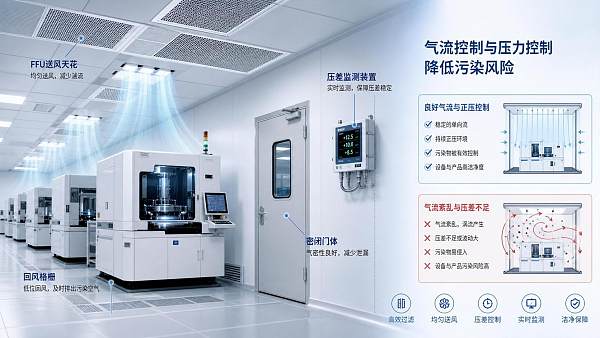
In clean manufacturing, pressure control is often more important than raw airflow volume. A room can meet supply CFM targets and still fail operationally if pressure cascades are unstable. Positive rooms may lose protection, while hazardous process rooms may leak contaminants into corridors or support spaces.
Typical zoning may require +10 Pa for cleaner spaces and -5 to -15 Pa for solvent or dust-generating rooms. Without proper door leakage assumptions, transfer air planning, and control sequence testing, those numbers often collapse during real operation.
3. Oversizing airflow “for safety” without checking side effects
Many teams assume more airflow always reduces risk. In reality, excessive supply can create turbulence, increase fan energy by 20%–50%, overload dehumidification capacity, and destabilize FFU performance. In some workshops, too much exhaust also pulls untreated infiltration air through doors, cable penetrations, and service chases.
For spaces requiring dew point suppression below -40°C or even near -60°C, every uncontrolled infiltration path raises the latent load significantly. That increases desiccant wheel duty, CRAC demand, and recovery time after door openings or maintenance access.
4. Designing airflow without considering equipment heat and contamination profiles
A tool that releases heat upward behaves differently from a line that emits solvent laterally or a station that sheds fine powder near the floor. High-tech manufacturing ventilation must reflect source location, release pattern, and process sensitivity. Uniform room airflow is not enough when process loads are highly localized.
This is where coordination between mechanical design and process engineering becomes critical. A room-level ventilation model should be checked against at least 4 variables: heat release, particle generation, chemical release, and occupancy pattern.
The table below shows how common mistakes translate into operational risk in high-tech manufacturing ventilation projects.
The key pattern is clear: high-tech manufacturing ventilation risk grows when airflow decisions are separated from process behavior. Good projects control contaminants at the source, maintain zone integrity, and validate system interaction before production ramp-up.
Where design coordination fails most often
Project managers often inherit ventilation problems from scope gaps rather than bad intent. Mechanical, process, EHS, utility, and facility teams may all review the same drawings but use different success criteria. One group focuses on room comfort, another on yield, and another on emissions or fire safety. The result is fragmented decision-making.
Handover gaps between process design and mechanical design
A common coordination error is incomplete process load definition at the 30% or 60% design stage. If the mechanical team does not receive accurate details on solvent release rate, heat load profile, particulate generation, or tool exhaust requirement, the ventilation basis of design becomes too generic to protect production.
Minimum data package needed before detailed ventilation design
- Process heat load by zone, preferably in hourly ranges
- Expected particle, dust, or vapor release points
- Required room classifications and pressure directions
- Operating schedule, maintenance windows, and occupancy density
- Utility constraints for exhaust treatment, make-up air, and recovery systems
Underestimating maintenance access and filter service impact
Even a technically correct design can fail operationally if maintenance access is poor. FFUs, HEPA filters, desiccant modules, scrubber media, and fan assemblies all need safe access zones. If service clearances are reduced to save floor area, maintenance takes longer, filter changes are deferred, and system resistance rises.
In many facilities, pressure drop across filters or treatment stages can rise 15%–30% before the issue is visible in room conditions. Without sensor trending and maintenance thresholds, performance decay remains hidden until product quality or odor complaints appear.
Forgetting energy recovery compatibility
Energy recovery ventilators can reduce HVAC load significantly, but they are not suitable for every exhaust stream. In high-tech manufacturing ventilation, exhaust carrying corrosives, reactive compounds, or sensitive contaminants may require separation from heat recovery devices to avoid cross-leakage and maintenance issues.
The right strategy may involve dedicated ERV application for office and low-risk support areas, while process exhaust uses isolated treatment systems. Mixing these categories can create efficiency claims on paper but operational liabilities in practice.
The next table outlines practical checkpoints for design coordination across the project lifecycle.
For engineering leads, the value of these checkpoints is not bureaucracy. It is prevention. A structured review at four project phases usually costs far less than one late redesign of duct routing, exhaust treatment, or cleanroom balancing.
How to reduce ventilation risk before startup
Reducing risk in high-tech manufacturing ventilation requires disciplined validation before the first production batch. The most effective teams move beyond nameplate capacity checks and verify actual room behavior under realistic operating conditions, including door openings, partial load, and filter aging.
Use a four-step pre-startup verification method
- Confirm design intent: room classes, pressure directions, exhaust treatment path, and recovery strategy
- Validate installation: duct leakage, sensor location, access clearances, and filter seating integrity
- Test operation: air balance, pressure recovery time, alarm response, and control stability over 8–24 hours
- Stress the system: simulate door events, process heat spikes, and partial exhaust failure scenarios
This sequence is especially important in facilities using FFUs, precision CRAC systems, dehumidification wheels, and local scrubbers together. A system can appear stable under empty-room commissioning yet drift once production tools, pallets, operators, and maintenance access begin affecting airflow paths.
Monitor the right indicators in the first 90 days
The first 30, 60, and 90 days after startup are critical. Project teams should not hand over the system and assume stability. Trending should include at least six indicators: supply and exhaust airflow, room pressure, temperature, relative humidity or dew point, filter differential pressure, and fan power.
If the process is moisture-sensitive, dew point trend analysis is essential. In coating or battery-related operations, a short drift from -40°C toward -20°C may be more significant than a minor temperature change. Likewise, repeated pressure dips below target during shift changes can expose clean zones to external particle loads.
Build procurement criteria around performance, not only hardware
For buyers and project managers, ventilation procurement should include response behavior, integration capability, and maintainability. A strong supplier should explain how CRAC, FFU, exhaust fans, scrubbers, and ERV elements interact under real operating loads, not just provide isolated equipment data sheets.
Five procurement questions worth asking
- What pressure and airflow stability can be maintained during door openings or partial load events?
- How are filter loading and fan speed control managed over a 6–12 month period?
- What exhaust streams can or cannot be paired with energy recovery equipment?
- What sensor points are required for ongoing verification and alarm logic?
- How much maintenance space is required around fans, filters, and treatment components?
These questions help separate suppliers that understand high-tech manufacturing ventilation as a system from those selling components without long-term accountability.
A practical decision framework for project managers
When ventilation decisions affect yield, safety, and energy all at once, project managers need a practical framework. The goal is not to become the deepest technical specialist in every airflow discipline. It is to manage the right reviews at the right time and avoid blind spots between departments.
Focus on three decision lenses
First, process protection: can the system preserve cleanliness, thermal stability, and moisture control under production conditions? Second, hazard control: can it safely capture and treat dust, fumes, or VOCs at the source? Third, lifecycle efficiency: can it maintain performance without excessive energy use or maintenance burden over 5–10 years?
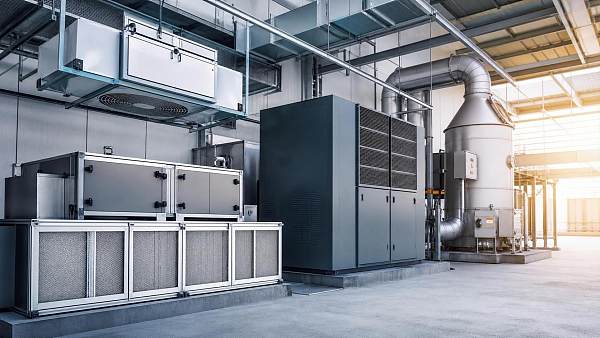
This approach fits the reality of advanced manufacturing projects, where cleanroom FFUs, precision CRAC units, industrial dust collectors, workshop ventilation systems, and commercial ERV applications often coexist in one campus. The best decisions come from system-level alignment rather than isolated equipment optimization.
Where CECS-aligned intelligence adds value
For teams navigating these risks, the most useful guidance links microscopic filtration, thermodynamic control, exhaust treatment, and compliance logic into one decision path. That is especially relevant in semiconductors, new energy manufacturing, advanced coating, and zero-carbon building integration, where ventilation performance has both process and financial consequences.
A disciplined intelligence approach helps project teams compare dew point control methods, assess FFU airflow uniformity, evaluate scrubber pressure loss, and judge whether heat recovery is appropriate by exhaust type. It turns ventilation from a hidden risk into a managed engineering asset.
High-tech manufacturing ventilation mistakes rarely begin as dramatic failures. They usually start as small assumptions about airflow, zoning, maintenance, or controls that go unchallenged during design and startup. For project managers and engineering leaders, the safest path is early coordination, measurable verification, and performance-based procurement.
If your facility must balance ultra-clean air, tight humidity control, hazardous exhaust treatment, and energy efficiency, a system-level review can prevent expensive corrections later. To explore tailored solutions for cleanroom airflow, industrial exhaust, dehumidification, or energy recovery strategy, contact us today to get a customized plan and discuss the right path for your project.
Recommended News
 Aug 18, 2026How to Evaluate a High-Tech HVAC Manufacturer for Cleanroom and Precision FacilitiesHigh-tech HVAC manufacturer evaluation guide for cleanrooms and precision facilities. Learn how to assess control stability, compliance, serviceability, and long-term operational risk.
 Aug 13, 2026How to Select VAV Airflow Control Systems for Labs and Cleanroom HVAC ProjectsVAV airflow control systems are critical for labs and cleanroom HVAC projects. Discover how to choose the right system for stability, compliance, and energy savings.
 Jul 21, 2026How to Evaluate Cleanroom Equipment Suppliers in the Middle East for New ProjectsCleanroom equipment Middle East supplier selection starts with technical fit, compliance, service, and lifecycle cost. Discover how to evaluate vendors and reduce project risk.
 Jul 19, 2026How to Estimate HVAC Cost for Electronics Manufacturing Cleanrooms and Production AreasElectronics manufacturing HVAC cost explained: learn how cleanroom class, humidity control, filtration, exhaust, and energy recovery shape realistic budgets and smarter project decisions.
 Jul 14, 2026Electronics Cleanroom Systems in Southeast Asia: How to Choose AHU, FFU, and HEPA LevelsElectronics cleanroom systems Southeast Asia: learn how to choose AHU, FFU, and HEPA levels for better yield, humidity control, energy efficiency, and long-term ROI.
 Jul 13, 2026Cleanroom Design Layout Basics: Zoning, Material Flow, and Contamination ControlCleanroom design layout basics explained: learn zoning, material and personnel flow, and contamination control strategies that reduce risk, improve compliance, and support efficient project planning.
 Jul 12, 2026Air Handling Units Supplier Checklist: 7 Specs to Compare Before You BuyAir handling units supplier checklist: compare 7 critical specs before you buy. Learn how to evaluate airflow, filtration, humidity control, efficiency, and compliance to cut risk and lifetime cost.
 Jul 11, 2026Cleanroom Equipment for Pharmaceutical Plants: What to Specify for GMP ComplianceCleanroom equipment for pharmaceutical plants: learn what to specify for GMP compliance, from airflow and HEPA filtration to pressure, humidity, and cleanability by process.
 Jul 11, 2026EU ETS Revision Reaches Cleanroom AHUsEU ETS revision brings Cleanroom AHUs into focus. Learn how the 2026 amendment affects CE DoC disclosure, carbon cost allocation, EPC tenders, and supplier selection before 2027.
 Jul 10, 2026Cleanroom AHU Cost Guide: Price Ranges, Configuration Factors, and Budget PlanningCleanroom AHU cost explained with realistic price ranges, key configuration factors, and budget tips to compare quotes, avoid hidden costs, and plan smarter cleanroom investments.
 Jul 09, 2026How to Select Precision Air Conditioning for Cleanrooms by Temperature, RH, and Particle RiskPrecision air conditioning for cleanrooms: learn how to choose the right system by temperature stability, RH control, and particle risk to protect yield, ensure compliance, and cut lifecycle cost.
![]() Jul 07, 2026How to Select Heat Recovery Ventilation Systems for Cleanrooms by Class and Air Change RateHeat recovery ventilation systems for cleanrooms: learn how to choose by ISO class, air change rate, leakage risk, and energy performance for safer, more efficient cleanroom operation.
Jul 07, 2026How to Select Heat Recovery Ventilation Systems for Cleanrooms by Class and Air Change RateHeat recovery ventilation systems for cleanrooms: learn how to choose by ISO class, air change rate, leakage risk, and energy performance for safer, more efficient cleanroom operation. Jul 06, 2026Semiconductor Clean Air Systems for Wafer Fabs: Key Design Factors for Yield ControlSemiconductor clean air systems for wafer fabs directly affect yield. Explore key design factors in airflow, AMC, humidity, and pressure control to improve fab stability.
 Jul 04, 2026When to Use Cleanroom Design Services: Scope, Deliverables, and Project Handover TipsCleanroom design services: learn when to engage specialists, what deliverables to request, and how smart handover planning reduces risk, protects compliance, and avoids costly rework.
 Jul 02, 2026How HVAC Humidity Stability Affects Yield in Semiconductor ManufacturingSemiconductor manufacturing HVAC humidity stability directly affects yield, ESD risk, contamination control, and uptime. Learn how stable humidity reduces defects and protects fab performance.
 Jul 02, 2026EN 1886:2026 Sets New EU Entry Bar for Cleanroom AHUsEN 1886:2026 raises the EU entry bar for cleanroom AHUs with new CE marking rules on micro-leakage and heat recovery. Learn what exporters, manufacturers, and buyers must do before 2027.
 Jul 01, 2026SEMI Semiconductor Cleanroom Solutions: What to Compare Before Planning a New FabSEMI semiconductor cleanroom solutions compared the right way: evaluate airflow, humidity, filtration, energy, and scalability before planning a new fab to protect yield and avoid costly redesign.
 Jun 30, 2026What a Clean Environment Control Systems Manufacturer Should Provide Beyond Basic HVACClean environment control systems manufacturer selection should go beyond HVAC. Learn how the right partner improves cleanliness, dew point control, compliance, and energy savings.
 Jun 29, 2026What Drives Cleanroom Temperature Control Cost in New Facility Projects?Cleanroom temperature control cost depends on ISO class, humidity precision, heat load, airflow, redundancy, and lifecycle energy use. Learn what truly drives budgets in new facility projects.
 Jun 27, 2026Electronics Cleanroom Systems Cost Breakdown: What Drives CapEx and Operating Expense?Electronics cleanroom systems cost more than equipment alone. Discover what drives CapEx and operating expense, from FFUs and humidity control to compliance, energy use, and lifecycle risk.
 Jun 25, 2026Clean Environment Control Systems vs Traditional HVAC: Which Fits Sensitive Production?Clean environment control systems vs traditional HVAC: discover which solution better protects sensitive production, improves compliance, and reduces costly contamination risk.
 Jun 25, 2026Electronics Cleanroom Solutions: How to Choose FFU, AHU, and HEPA SetupsElectronics cleanroom solutions explained: learn how to choose FFU, AHU, and HEPA setups to improve yield, control airflow, and reduce lifecycle costs.
 Jun 24, 2026Cleanroom Airflow Control vs Pressure Control: What Matters More for Contamination Risk?Cleanroom airflow control vs pressure control: discover which factor has the bigger impact on contamination risk, product protection, compliance, and cleanroom performance.
 Jun 23, 2026How to Set Cleanroom Temperature Regulation for Stable Processes and Product QualityCleanroom temperature regulation starts with process needs, not generic setpoints. Learn how to control temperature, humidity, airflow, and deviations for stable quality and higher yield.