Search News
Industry Portal
Hot Articles
- How Factories Can Select Air Quality Controls for Dust, Fumes, and VOCsIndustrial air quality control for factories: learn how to select effective solutions for dust, fumes, and VOCs while improving safety, compliance, energy efficiency, and uptime.
- How to Size Industrial Gas Scrubbing Units for Acid Fumes and Variable AirflowsIndustrial gas scrubbing units: learn how to size acid-fume scrubbers for variable airflows, peak loads, chemical demand, pressure drop, and reliable compliance.
- How to Evaluate Industrial Air Quality Control Systems for Dust, Fumes, and VOCsIndustrial air quality control systems: learn how to evaluate dust, fumes, and VOC solutions by capture efficiency, compliance, maintenance, and lifecycle cost.
Popular Tags
What defines reliable industrial cleanroom solutions today?
author
Time
Click Count
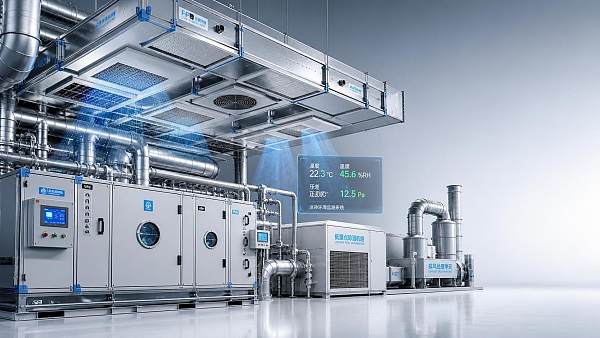
Reliable industrial cleanroom solutions today are defined by more than particle control alone—they must integrate precise temperature and humidity stability, energy efficiency, emission compliance, and process-specific airflow design. For advanced manufacturing and commercial building environments, the right system directly protects yield, safety, uptime, and lifecycle value.
Why application context now defines industrial cleanroom solutions
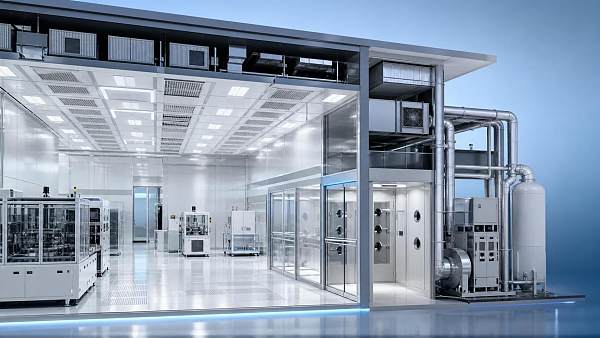
Modern industrial cleanroom solutions no longer follow a one-size-fits-all logic. Semiconductor fabs, battery coating lines, chemical workshops, tunnels, and green buildings each demand different control priorities.
In one setting, submicron particle removal is critical. In another, dew point suppression, corrosive gas capture, or heat recovery efficiency decides whether the system performs reliably.
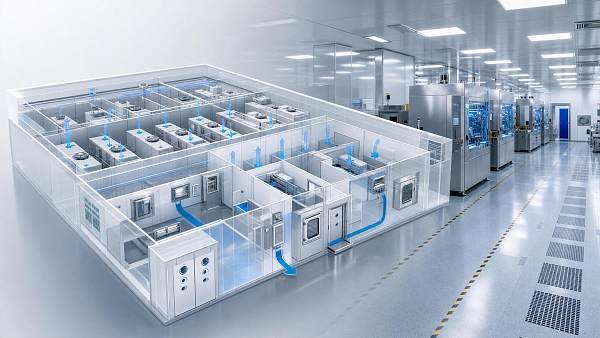
This is why system judgment must begin with the process. Airflow pattern, filtration grade, temperature drift, humidity swing, pressure cascade, and emissions control all change with the application.
Reliable industrial cleanroom solutions therefore combine mechanical design, aerodynamic control, filtration precision, and compliance intelligence. Performance is measured by stability over time, not only by initial specifications.
In semiconductor and microelectronics settings, cleanliness means yield protection
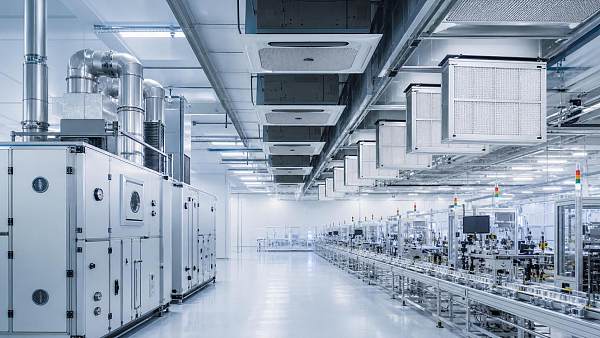
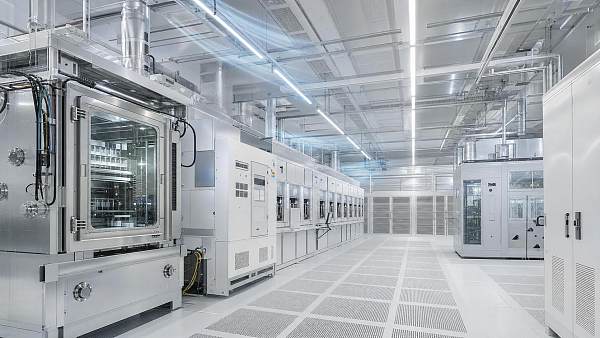
For wafer fabrication and microelectronics assembly, industrial cleanroom solutions must maintain extremely consistent laminar airflow and strict particle concentration limits.
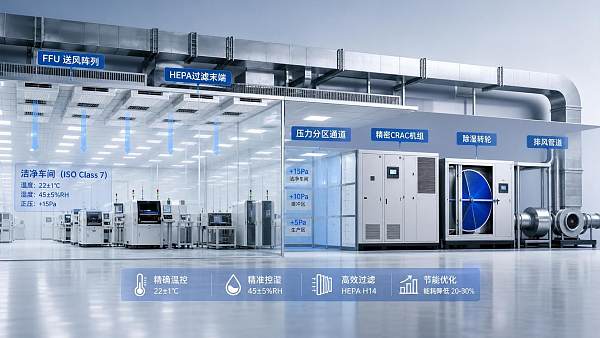
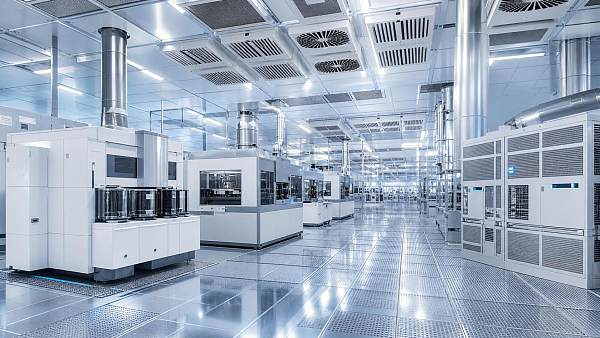
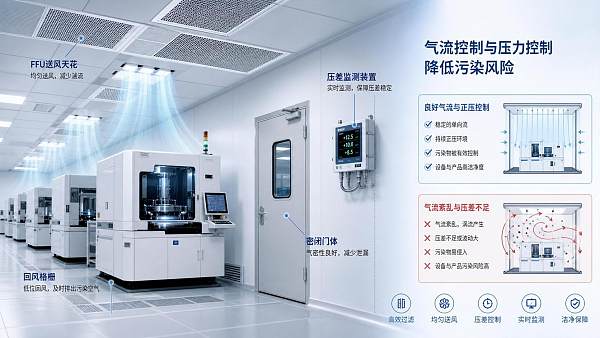
Cleanroom Fan Filter Units, or FFUs, often form dense ceiling arrays. Their role is not simply filtration. They must also deliver uniform airflow velocity across sensitive process zones.
Small turbulence changes can increase defect risk. Uneven air distribution can carry particles toward lithography, etching, or inspection stations where nanoscale contamination causes yield loss.
In this scenario, reliable industrial cleanroom solutions should be judged by several points:
- HEPA or ULPA filtration efficiency at the required particle range
- Vertical laminar flow uniformity across work surfaces
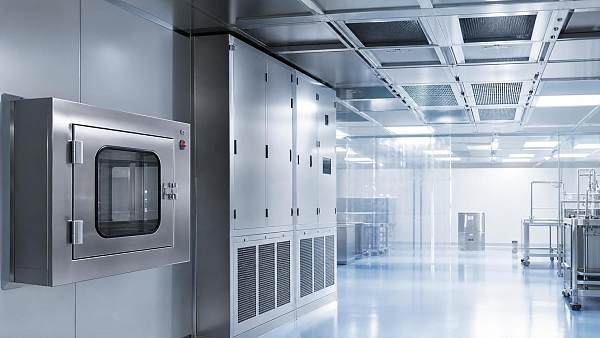
- Pressure cascade stability between adjacent rooms
- Vibration and noise control near precision tools
- Maintenance access without disrupting critical zones
In lithium battery and dry-room production, moisture control defines reliability
Battery manufacturing presents a different challenge. Here, industrial cleanroom solutions must control both particles and ultra-low moisture to prevent material degradation.
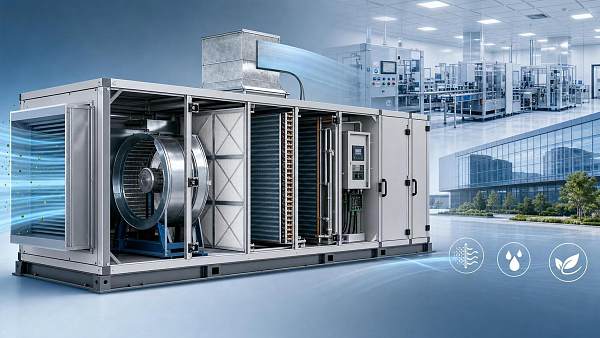
Precision CRAC units with desiccant wheel technology are often essential. The goal is stable low dew point performance, sometimes below -60°C, across changing production loads.
A dry room is only reliable when it handles door openings, personnel movement, heat gains, and process exhaust without large humidity rebounds.
For this environment, industrial cleanroom solutions should be assessed through process resilience rather than nominal ratings alone. Questions about dew point recovery time are especially important.
High-value indicators include desiccant regeneration efficiency, insulation quality, air leakage control, sensor accuracy, and integration with energy-saving operating modes.
In chemical and metallurgy workshops, gas treatment becomes the primary cleanroom task
Not every controlled environment is centered on micro-dust alone. In chemical processing, coating, metallurgy, and solvent-heavy operations, airborne hazards may include VOCs, acidic fumes, and combustible dust.
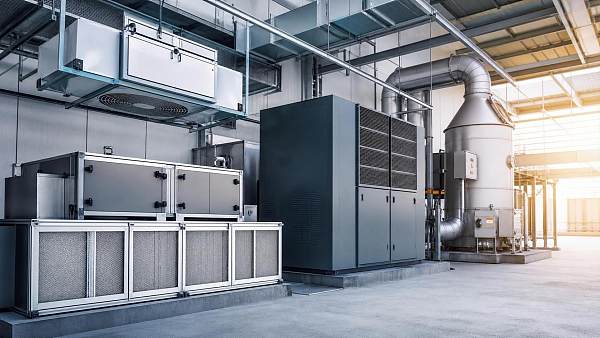
Here, industrial cleanroom solutions depend heavily on dust collectors, scrubbers, and exhaust system design. Worker protection and emission compliance often become the first design drivers.
Reliable systems combine source capture, airflow balancing, and treatment stages such as cyclone separation, plasma catalysis, and acid-base neutralization.
The main judgment point is whether the system controls contaminants before dilution spreads them across the workshop. Poor hood placement can defeat expensive treatment equipment.
Key checks for hazardous process environments
- Capture velocity near the emission source
- Compatibility with corrosive or explosive substances
- Treatment efficiency under peak production loads
- Monitoring for breakthrough, pressure drop, and leakage
- Alignment with local environmental and safety rules
In tunnels and enclosed workshops, airflow volume matters more than cleanroom class
Some industrial environments require rapid air exchange rather than strict cleanroom classification. Welding shops, maintenance bays, and tunnel systems often fit this category.
In such spaces, industrial cleanroom solutions should focus on contaminant removal speed, smoke control, heat discharge, and safe oxygen levels.
Explosion-proof axial fans, directional airflow planning, and zoned extraction strategies are usually more relevant than ultra-fine filtration alone.
A reliable design prevents stagnant pockets. It also considers worker pathways, vehicle movement, and emergency ventilation response under abnormal conditions.
In commercial buildings, industrial cleanroom solutions increasingly include energy recovery logic
The boundary between industrial air control and commercial building performance is narrowing. Many facilities now combine production zones with offices, labs, logistics areas, and public spaces.
Commercial Energy Recovery Ventilators support this mixed-use reality. They remove stale air while transferring heat or cooling to incoming fresh air.
For these projects, reliable industrial cleanroom solutions should reduce HVAC load without sacrificing indoor air quality or cross-contamination protection.
This matters for lifecycle cost control, LEED-oriented design, and stable occupancy comfort around sensitive production zones.
How scenario differences change system selection
Practical recommendations for matching industrial cleanroom solutions to the right environment
- Define the dominant failure mode first: particles, moisture, gas, heat, or energy loss.
- Map airflow around real process equipment, not only around room geometry.
- Check transient performance during door openings, shift changes, and peak output.
- Verify maintenance strategy, filter replacement access, and sensor calibration routines.
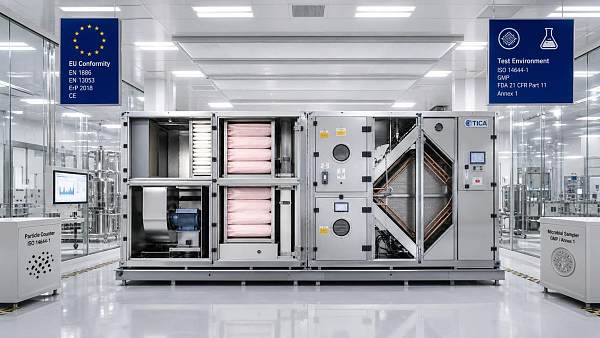
- Review ISO 14644 needs, local emissions rules, and safety compliance together.
- Include energy recovery and digital controls when long operating hours are expected.
Common misjudgments that weaken industrial cleanroom solutions
A frequent mistake is selecting equipment by airflow volume alone. Volume without proper direction, balance, or containment often creates turbulence and dead zones.
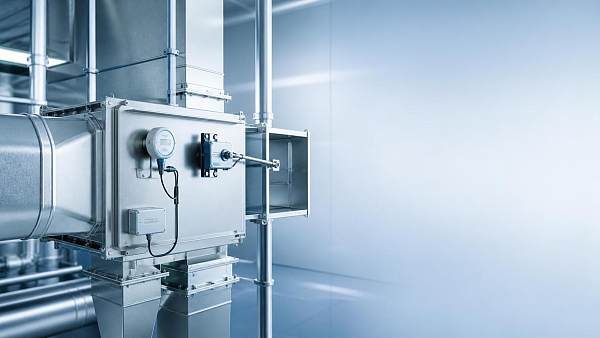
Another mistake is treating filtration grade as the only indicator of quality. In many cases, sensor accuracy, pressure control, and leakage prevention have equal importance.
Some projects also separate energy planning from contamination control. That approach raises operating cost and can reduce long-term reliability.
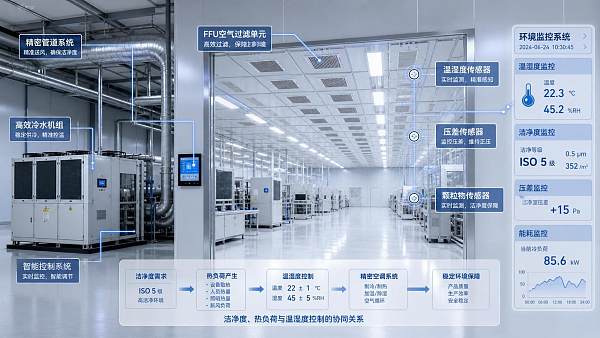
Reliable industrial cleanroom solutions work best when cleanliness, emissions, thermal behavior, and compliance are planned as one system rather than isolated packages.
What to do next when evaluating industrial cleanroom solutions
Start with a scenario-based audit. Document process sensitivity, contaminant type, airflow path, thermal load, operating schedule, and regulatory obligations.
Then compare industrial cleanroom solutions by real operating conditions, not brochure claims. Focus on recovery time, control stability, maintainability, and energy performance.
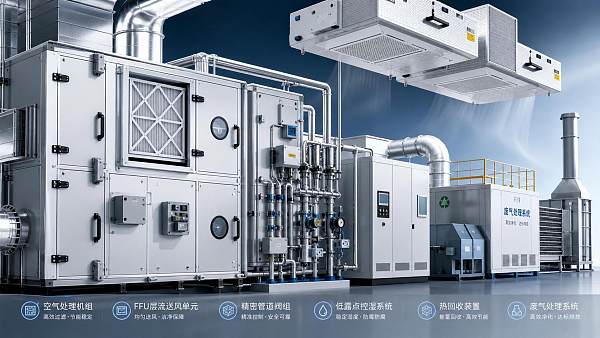
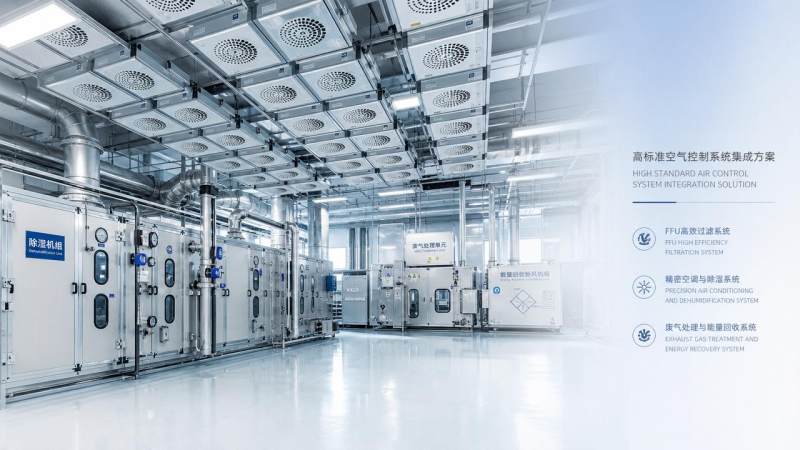
A strong evaluation should connect FFU design, CRAC drying, scrubber efficiency, ventilation response, and ERV savings into one environmental control roadmap.
That integrated view is what defines reliable industrial cleanroom solutions today: systems built for the exact scenario, proven under fluctuation, and ready for clean, efficient, compliant operation.
Recommended News
 Aug 18, 2026How to Evaluate a High-Tech HVAC Manufacturer for Cleanroom and Precision FacilitiesHigh-tech HVAC manufacturer evaluation guide for cleanrooms and precision facilities. Learn how to assess control stability, compliance, serviceability, and long-term operational risk.
 Aug 13, 2026How to Select VAV Airflow Control Systems for Labs and Cleanroom HVAC ProjectsVAV airflow control systems are critical for labs and cleanroom HVAC projects. Discover how to choose the right system for stability, compliance, and energy savings.
 Jul 21, 2026How to Evaluate Cleanroom Equipment Suppliers in the Middle East for New ProjectsCleanroom equipment Middle East supplier selection starts with technical fit, compliance, service, and lifecycle cost. Discover how to evaluate vendors and reduce project risk.
 Jul 19, 2026How to Estimate HVAC Cost for Electronics Manufacturing Cleanrooms and Production AreasElectronics manufacturing HVAC cost explained: learn how cleanroom class, humidity control, filtration, exhaust, and energy recovery shape realistic budgets and smarter project decisions.
 Jul 14, 2026Electronics Cleanroom Systems in Southeast Asia: How to Choose AHU, FFU, and HEPA LevelsElectronics cleanroom systems Southeast Asia: learn how to choose AHU, FFU, and HEPA levels for better yield, humidity control, energy efficiency, and long-term ROI.
 Jul 13, 2026Cleanroom Design Layout Basics: Zoning, Material Flow, and Contamination ControlCleanroom design layout basics explained: learn zoning, material and personnel flow, and contamination control strategies that reduce risk, improve compliance, and support efficient project planning.
 Jul 12, 2026Air Handling Units Supplier Checklist: 7 Specs to Compare Before You BuyAir handling units supplier checklist: compare 7 critical specs before you buy. Learn how to evaluate airflow, filtration, humidity control, efficiency, and compliance to cut risk and lifetime cost.
 Jul 11, 2026Cleanroom Equipment for Pharmaceutical Plants: What to Specify for GMP ComplianceCleanroom equipment for pharmaceutical plants: learn what to specify for GMP compliance, from airflow and HEPA filtration to pressure, humidity, and cleanability by process.
 Jul 11, 2026EU ETS Revision Reaches Cleanroom AHUsEU ETS revision brings Cleanroom AHUs into focus. Learn how the 2026 amendment affects CE DoC disclosure, carbon cost allocation, EPC tenders, and supplier selection before 2027.
 Jul 10, 2026Cleanroom AHU Cost Guide: Price Ranges, Configuration Factors, and Budget PlanningCleanroom AHU cost explained with realistic price ranges, key configuration factors, and budget tips to compare quotes, avoid hidden costs, and plan smarter cleanroom investments.
 Jul 09, 2026How to Select Precision Air Conditioning for Cleanrooms by Temperature, RH, and Particle RiskPrecision air conditioning for cleanrooms: learn how to choose the right system by temperature stability, RH control, and particle risk to protect yield, ensure compliance, and cut lifecycle cost.
![]() Jul 07, 2026How to Select Heat Recovery Ventilation Systems for Cleanrooms by Class and Air Change RateHeat recovery ventilation systems for cleanrooms: learn how to choose by ISO class, air change rate, leakage risk, and energy performance for safer, more efficient cleanroom operation.
Jul 07, 2026How to Select Heat Recovery Ventilation Systems for Cleanrooms by Class and Air Change RateHeat recovery ventilation systems for cleanrooms: learn how to choose by ISO class, air change rate, leakage risk, and energy performance for safer, more efficient cleanroom operation. Jul 06, 2026Semiconductor Clean Air Systems for Wafer Fabs: Key Design Factors for Yield ControlSemiconductor clean air systems for wafer fabs directly affect yield. Explore key design factors in airflow, AMC, humidity, and pressure control to improve fab stability.
 Jul 04, 2026When to Use Cleanroom Design Services: Scope, Deliverables, and Project Handover TipsCleanroom design services: learn when to engage specialists, what deliverables to request, and how smart handover planning reduces risk, protects compliance, and avoids costly rework.
 Jul 02, 2026How HVAC Humidity Stability Affects Yield in Semiconductor ManufacturingSemiconductor manufacturing HVAC humidity stability directly affects yield, ESD risk, contamination control, and uptime. Learn how stable humidity reduces defects and protects fab performance.
 Jul 02, 2026EN 1886:2026 Sets New EU Entry Bar for Cleanroom AHUsEN 1886:2026 raises the EU entry bar for cleanroom AHUs with new CE marking rules on micro-leakage and heat recovery. Learn what exporters, manufacturers, and buyers must do before 2027.
 Jul 01, 2026SEMI Semiconductor Cleanroom Solutions: What to Compare Before Planning a New FabSEMI semiconductor cleanroom solutions compared the right way: evaluate airflow, humidity, filtration, energy, and scalability before planning a new fab to protect yield and avoid costly redesign.
 Jun 30, 2026What a Clean Environment Control Systems Manufacturer Should Provide Beyond Basic HVACClean environment control systems manufacturer selection should go beyond HVAC. Learn how the right partner improves cleanliness, dew point control, compliance, and energy savings.
 Jun 29, 2026What Drives Cleanroom Temperature Control Cost in New Facility Projects?Cleanroom temperature control cost depends on ISO class, humidity precision, heat load, airflow, redundancy, and lifecycle energy use. Learn what truly drives budgets in new facility projects.
 Jun 27, 2026Electronics Cleanroom Systems Cost Breakdown: What Drives CapEx and Operating Expense?Electronics cleanroom systems cost more than equipment alone. Discover what drives CapEx and operating expense, from FFUs and humidity control to compliance, energy use, and lifecycle risk.
 Jun 25, 2026Clean Environment Control Systems vs Traditional HVAC: Which Fits Sensitive Production?Clean environment control systems vs traditional HVAC: discover which solution better protects sensitive production, improves compliance, and reduces costly contamination risk.
 Jun 25, 2026Electronics Cleanroom Solutions: How to Choose FFU, AHU, and HEPA SetupsElectronics cleanroom solutions explained: learn how to choose FFU, AHU, and HEPA setups to improve yield, control airflow, and reduce lifecycle costs.
 Jun 24, 2026Cleanroom Airflow Control vs Pressure Control: What Matters More for Contamination Risk?Cleanroom airflow control vs pressure control: discover which factor has the bigger impact on contamination risk, product protection, compliance, and cleanroom performance.
 Jun 23, 2026How to Set Cleanroom Temperature Regulation for Stable Processes and Product QualityCleanroom temperature regulation starts with process needs, not generic setpoints. Learn how to control temperature, humidity, airflow, and deviations for stable quality and higher yield.