Search News
Industry Portal
Hot Articles
- How Factories Can Select Air Quality Controls for Dust, Fumes, and VOCsIndustrial air quality control for factories: learn how to select effective solutions for dust, fumes, and VOCs while improving safety, compliance, energy efficiency, and uptime.
- How to Size Industrial Gas Scrubbing Units for Acid Fumes and Variable AirflowsIndustrial gas scrubbing units: learn how to size acid-fume scrubbers for variable airflows, peak loads, chemical demand, pressure drop, and reliable compliance.
- How to Evaluate Industrial Air Quality Control Systems for Dust, Fumes, and VOCsIndustrial air quality control systems: learn how to evaluate dust, fumes, and VOC solutions by capture efficiency, compliance, maintenance, and lifecycle cost.
Popular Tags
Why cleanroom compliance standards fail in real projects
author
Time
Click Count
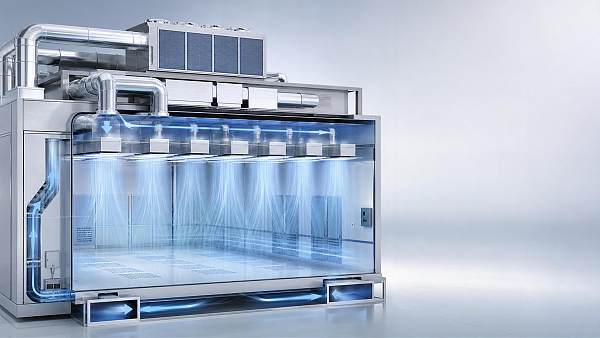
Why do cleanroom compliance standards look solid on paper yet break down during execution? For project managers and engineering leads, the gap often lies in design coordination, supplier alignment, commissioning discipline, and changing site conditions. This article explores why cleanroom compliance standards fail in real projects and how teams can reduce risk, protect certification goals, and keep performance targets achievable from planning to handover.
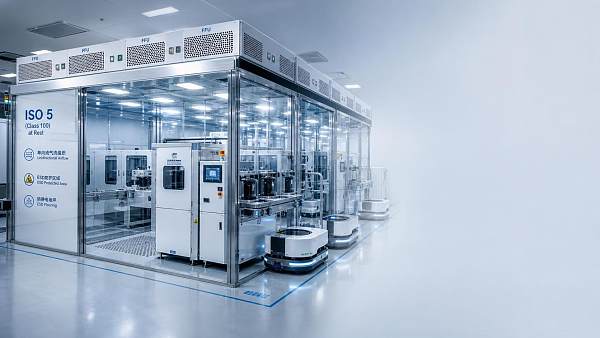
In semiconductor fabs, lithium battery dry rooms, pharmaceutical support areas, advanced optics workshops, and zero-carbon industrial buildings, cleanroom compliance standards are rarely defeated by a single dramatic error. They usually fail through small mismatches that accumulate across 6 to 12 months of design, procurement, installation, testing, and handover.
For project leaders, the issue is not just whether a room can pass one particle count or pressure test. The real question is whether the full environmental control system can consistently hold airflow, temperature, humidity, filtration efficiency, recovery time, and operational discipline under real production loads.
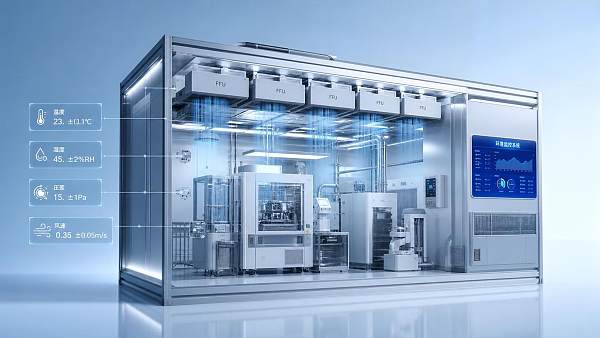
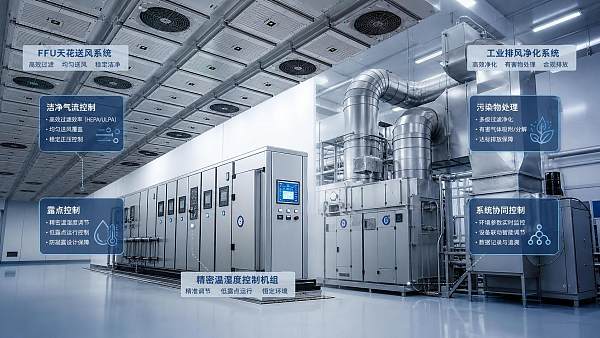
That is where CECS brings value. By connecting cleanroom Fan Filter Units, precision CRAC control, industrial exhaust treatment, workshop ventilation, and energy recovery logic into one project view, teams can identify where compliance drifts before the drift becomes a failed validation, a delayed start-up, or a costly retrofit.
Where cleanroom compliance standards fail most often
Most project failures appear in four zones: front-end design, supplier interpretation, site execution, and commissioning. Cleanroom compliance standards may define the target class, pressure cascade, or acceptable temperature band, but they do not automatically align every trade package working beneath that target.
Design intent is clear, but interfaces are not
A specification may call for ISO Class performance, +10 Pa to +15 Pa pressure differentials, 20°C to 24°C room temperature, and relative humidity of 40% to 55%. Yet if architectural details, HVAC routing, process exhaust loads, electrical heat gains, and maintenance access are not coordinated early, the standard becomes a disconnected checklist rather than a buildable system.
This is common when FFU layouts are frozen before ceiling congestion is resolved, or when CRAC sizing assumes steady loads while the actual process line produces rapid moisture spikes, solvent peaks, or thermal swings. On paper, the room is compliant. In operation, it oscillates outside control limits.
Suppliers meet the spec differently
Project managers often assume all vendors interpret cleanroom compliance standards in the same way. They do not. One supplier may quote terminal HEPA performance, another may quote fan-side airflow, and a third may assume testing under unloaded conditions. These differences can shift final room performance by 10% to 20% without appearing obvious during bid review.
The risk is even higher in integrated projects involving dry rooms, VOC scrubbers, make-up air units, recirculation systems, and energy recovery sections. If one package is optimized for low pressure drop and another for maximum capture efficiency, total system resistance and balancing strategy may no longer support the original compliance intent.
Site conditions invalidate laboratory assumptions
Cleanroom compliance standards assume a controlled envelope. Real projects face dust ingress, temporary openings, phased construction, local rework, uneven slab tolerances, and incomplete sealing at utility penetrations. A 2 mm to 5 mm leakage gap around a service interface can distort pressure stability more than teams expect, especially in rooms requiring tight cascade control.
In battery and semiconductor facilities, dew point performance can also collapse because insulation quality, door traffic, and purge sequence were treated as secondary construction issues rather than core compliance factors. A design target below -40°C or even below -60°C dew point cannot survive casual execution discipline.
Commissioning is shortened when schedules tighten
Many projects lose control in the last 2 to 6 weeks. As practical completion dates approach, commissioning windows are compressed, trend logs are incomplete, and integrated testing is reduced to pass-fail snapshots. Cleanroom compliance standards are then treated as paperwork milestones rather than performance verification processes.
A room that passes airflow balancing on Monday may fail particle recovery on Thursday after process tools, operators, and packaging materials are introduced. Without staged commissioning and repeat testing under realistic load, handover data creates false confidence.
The table below shows where compliance failures typically emerge and what project teams should watch before they become certification issues.
The main lesson is that cleanroom compliance standards usually fail at interfaces, not at isolated components. Even high-grade filters, well-sized CRAC units, or premium scrubbers cannot deliver compliance if the project system is fragmented.
Why project teams underestimate execution risk
Execution risk is often underestimated because standards create a false sense of certainty. A code, class, or acceptance protocol looks objective. But every compliant outcome still depends on sequencing, tolerances, human behavior, and the quality of decisions made under time pressure.
The specification is not the operating reality
A cleanroom may be designed for 0.35 m/s to 0.55 m/s average face velocity, a narrow temperature band, and a strict pressure cascade. Once production tools are installed, heat loads rise, access doors cycle 50 to 200 times per shift, and maintenance panels are opened more often than predicted. Compliance drifts because the actual operating profile exceeds the design profile.
Examples from high-control environments
- In wafer production areas, minor ceiling leakage can disrupt vertical laminar flow and create local turbulence above process tools.
- In lithium battery dry rooms, moisture ingress during door operation can raise dew point faster than regeneration systems can recover.
- In chemical workshops, exhaust imbalance can affect room pressure and compromise both cleanliness and worker safety.
- In commercial labs within green buildings, aggressive energy saving logic may conflict with stable clean air change rates.
Procurement focuses on price bands, not lifecycle control
Another reason cleanroom compliance standards fail is that procurement packages are compared as line items rather than operational systems. A lower-cost FFU or dehumidification package may look acceptable during bid review, yet require higher maintenance frequency, tighter balancing tolerances, or more complex control integration after installation.
For project managers, the hidden costs appear in three places: 1) installation changes, 2) extended commissioning, and 3) post-handover troubleshooting. A package that saves 5% in capital cost can easily consume that saving if it adds 10 to 15 extra days of validation rework.
Change management is too slow for fast-moving sites
On large industrial projects, field changes happen weekly. Utility routes shift, process tools are updated, safety requirements evolve, and local regulations may add controls for emissions or energy recovery. When drawing revisions lag by even 7 to 10 days, teams end up building against outdated compliance assumptions.
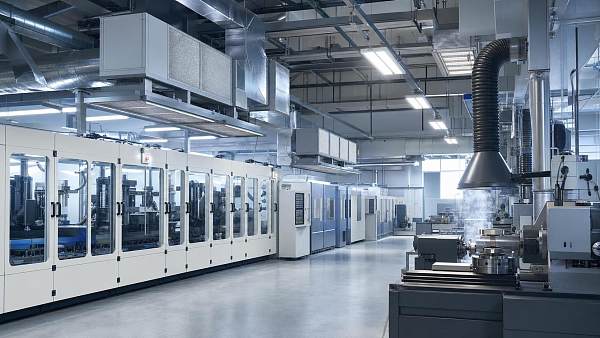
That delay is especially dangerous when cleanroom systems interact with scrubbers, tunnel ventilation, or ERV modules. Pressure relationships, exhaust compensation, and heat recovery settings must be reviewed as one control logic, not as separate engineering packages.
How to keep cleanroom compliance standards achievable from planning to handover
The most effective response is not more paperwork. It is tighter project control around measurable checkpoints. Teams that consistently deliver compliant facilities usually translate cleanroom compliance standards into a stage-gated execution model with visible owners, tolerances, and decision deadlines.
Build a four-layer compliance map
Before procurement starts, define compliance in four layers: room classification, environmental stability, system integration, and operational recovery. This avoids the common mistake of treating particle counts as the only success metric.
- Room classification: target cleanliness class, air changes, filter grade, and test boundaries.
- Environmental stability: temperature range, humidity band, dew point threshold, and pressure cascade.
- System integration: exhaust make-up balance, CRAC response, FFU control, and utility penetration sealing.
- Operational recovery: recovery time after door opening, maintenance intervention, or process upset.
For many projects, recovery time is the missing metric. A room that returns to acceptable conditions in 3 minutes is operationally very different from one that needs 12 minutes after each disturbance.
Align vendors around one verification matrix
Each major package supplier should sign off on the same verification matrix before fabrication. That matrix should define not only design duties, but also test method, measurement location, operating mode, and acceptable tolerance. This is where many cleanroom compliance standards become practical rather than abstract.
For example, airflow acceptance should specify whether values are measured at filter face, room plane, or process zone. Humidity compliance should state whether the target is average condition, worst-case corner condition, or loaded production condition over a 24-hour trend period.
The following table can be used as a project-side verification framework for integrated cleanroom systems.
A matrix like this reduces ambiguity during procurement, installation, and testing. It also helps project managers challenge incomplete vendor claims before those claims harden into expensive field problems.
Use staged commissioning instead of one final pass
Projects with better outcomes usually commission in at least three stages: pre-functional inspection, functional testing, and loaded-performance validation. Each stage catches different risks. If teams wait until final validation to assess integrated behavior, corrective options are fewer and schedule pressure is much higher.
Recommended commissioning sequence
- Stage 1: verify sealing, filter installation, panel integrity, sensor calibration, and control wiring.
- Stage 2: perform TAB, pressure balancing, FFU control checks, and CRAC sequence testing.
- Stage 3: test recovery time, particle stability, humidity response, and loaded operation with process interaction.
A disciplined 3-stage process may add 1 to 3 weeks to the pre-handover period, but it often prevents much larger delays after occupancy or tool installation.
Critical decision points for project managers and engineering leads
To keep cleanroom compliance standards from failing in real projects, decision-makers need to focus on a small number of high-leverage controls. These are not always the most technical details, but they strongly influence whether the whole delivery chain stays aligned.
Decide what must be fixed early
Some parameters should be locked before procurement, including target cleanliness class, room pressure logic, dry room dew point threshold, process exhaust philosophy, and major control sequences. If these move late, almost every other package is affected.
Other items can remain adjustable for longer, such as access panel arrangement, non-critical sensor placement, or selected maintenance routes. Separating fixed variables from flexible ones can reduce change-order chaos by a meaningful margin.
Track six field indicators every week
A weekly dashboard helps prevent cleanroom compliance standards from drifting silently. The most useful indicators are simple and observable:
- Number of unresolved penetration or sealing issues
- Percentage of installed FFUs or filters protected from construction dust
- Open design clarifications affecting airflow, pressure, or humidity
- Sensor calibration completion rate
- Commissioning prerequisites achieved versus planned
- Recovery or trend tests completed under realistic occupancy conditions
When these six indicators are reviewed every 7 days, emerging non-compliance becomes visible earlier, when corrective action is still affordable.
Balance energy targets with contamination control
In modern facilities, cleanroom compliance standards do not exist in isolation from energy and sustainability goals. ERV systems, heat recovery strategies, variable speed fan control, and exhaust treatment all influence total operating cost. Yet aggressive energy optimization should never be allowed to destabilize critical airflow or moisture control.
For example, reducing fan speed by a small percentage may save energy, but if it weakens pressure resilience during peak door traffic, the operational risk can outweigh the utility benefit. In high-control spaces, the priority order should be containment first, process stability second, and optimization third.
Common misconceptions that weaken compliance outcomes
Several recurring misconceptions cause teams to misread project readiness. These assumptions are common across semiconductors, new energy manufacturing, industrial ventilation retrofits, and green building conversions.
“If the equipment is premium, the room will pass”
Not necessarily. Premium components improve capability, but cleanroom compliance standards are delivered by system behavior. A high-efficiency FFU array cannot compensate for uncontrolled bypass leakage, poor return path design, or unstable make-up air control.
“One successful test means the risk is closed”
Single-point tests can be misleading. A room may pass at 8:00 a.m. under low occupancy and fail later under full thermal load. Repeated testing across 2 to 3 operating scenarios provides much better confidence than one ideal-condition result.
“Compliance belongs only to the HVAC contractor”
This is one of the costliest misconceptions. Compliance also depends on architecture, controls, process engineering, electrical loads, utility penetrations, doors, finishes, and maintenance procedures. If ownership sits with only one contractor, critical dependencies are missed.
“Energy recovery and emissions control are separate topics”
In many facilities, they are directly linked. Scrubbers, workshop ventilation, and ERV strategies can alter pressure balance, heat load, and supply air requirements. CECS often sees better results when these elements are reviewed as one environmental control architecture rather than separate compliance silos.
From standard compliance to reliable project delivery
The strongest projects treat cleanroom compliance standards as an execution framework, not just a certification reference. That means translating requirements into coordinated layouts, shared verification criteria, staged commissioning, and weekly risk visibility from concept through handover.
For project managers and engineering leads, the practical goal is clear: reduce ambiguity before procurement, reduce drift during installation, and reduce surprises during start-up. When CRAC control, FFU performance, ventilation logic, exhaust treatment, and energy recovery are engineered together, compliance becomes more durable and more economical to maintain.
If your team is planning a new cleanroom, dry room, industrial ventilation upgrade, or high-control building retrofit, CECS can help you evaluate compliance risks across system interfaces, not just equipment lists. Contact us now to discuss your project conditions, request a tailored solution path, or learn more about integrated environmental control strategies.
Recommended News
 Aug 25, 2026How to Select Cleanroom Particle Control Equipment for ISO Class and Process RiskCleanroom particle control equipment selection starts with process risk, ISO class, and airflow design. Learn how to compare FFUs, filters, and monitoring for reliable performance.
 Aug 23, 2026How Laminar Airflow Supports Compliance and Contamination Control in Medical Device ManufacturingLaminar airflow for medical devices helps reduce contamination risk, support cleanroom compliance, and improve audit readiness—see how it protects product quality and manufacturing control.
 Aug 21, 2026How to Achieve Stable RH Precision Humidity Control in Cleanroom Production?Stable RH precision humidity control starts with process-based design. Learn how airflow, sensors, dehumidification, and recovery logic keep cleanroom production consistent and reliable.
 Aug 19, 2026What Drives Cleanroom Compliance Cost in Pharma and Semiconductor Projects?Cleanroom compliance cost in pharma and semiconductor projects depends on ISO class, airflow, humidity control, validation, and energy use. Learn what drives cost and how to avoid costly overdesign.
 Aug 11, 2026How to Select Precision Humidity Control for Cleanrooms and Micro-EnvironmentsPrecision humidity control for cleanrooms starts with process needs. Learn how to compare dew point targets, airflow, controls, and energy tradeoffs for reliable, high-yield micro-environments.
 Aug 05, 2026How Cleanroom Environmental Control Automation Improves Compliance and StabilityCleanroom environmental control automation improves compliance, stability, and audit readiness through faster response, traceable control logic, and consistent environmental performance.
 Aug 04, 2026How Smart Cleanroom Thermal Control Improves Stability in FFU-Based Micro-EnvironmentsSmart cleanroom thermal control improves FFU-based micro-environment stability by aligning temperature, humidity, pressure, and airflow—learn what to evaluate before performance drifts.
 Aug 03, 2026Semiconductor Cleanroom Standards Explained: ISO Classes, Air Changes, and ESD ControlsCleanroom standards for semiconductor industry explained: understand ISO classes, air changes, and ESD controls to improve yield, reduce contamination risk, and choose smarter fab environments.
 Jul 30, 2026How to Choose Environmental Control Solutions for High-Tech Manufacturing FacilitiesHigh-tech manufacturing environment solutions guide: learn how to evaluate cleanroom airflow, dew point control, exhaust treatment, and compliance to protect yield and cut lifecycle risk.
 Jul 29, 2026How to Design Ventilation for Precision Manufacturing to Control Particles and HeatPrecision manufacturing ventilation design guide: learn how to control particles, heat, airflow, filtration, and pressure for cleaner production, higher yield, and more reliable operations.
 Jul 26, 2026ISO 5 Semiconductor Cleanroom Solutions: Key Design Criteria for Process StabilityISO 5 semiconductor cleanroom solutions focus on process stability, airflow uniformity, pressure control, and thermal consistency to protect yield and improve fab performance.
 Jul 24, 2026Cleanroom Standards Compliance: Key Requirements and Audit Readiness ChecklistCleanroom standards compliance starts with real control, not paperwork. Explore key ISO requirements, common audit gaps, and a practical checklist to improve readiness.
 Jul 20, 2026How to Evaluate a Semiconductor Cleanroom Solutions Supplier for Fab ProjectsSemiconductor cleanroom solutions supplier selection can make or break fab performance. Learn how to compare engineering depth, compliance, delivery, and lifecycle value.
 Jul 15, 2026Dust-Free Manufacturing: Key Process Controls for Cleaner Production LinesDust-free manufacturing starts with tighter control of airflow, humidity, filtration, and gas capture. Discover how cleaner production lines improve yield, safety, compliance, and energy performance.
 Jul 13, 2026How Semiconductor Environmental Control AMC Reduction Prevents Yield LossSemiconductor environmental control AMC reduction is essential to prevent yield loss. Learn how airflow, humidity, filtration, and gas treatment protect fabs and improve process stability.
 Jul 12, 2026How to Choose Semiconductor Cleanroom Solutions for EUV Lithography LinesSemiconductor cleanroom solutions for EUV require more than ISO class compliance. Learn how to compare airflow, AMC, thermal stability, vibration, and lifecycle cost for better yield.
 Jul 11, 2026Cleanroom Design Criteria Explained: Air Changes, Pressure Cascade, and ISO ClassCleanroom design criteria explained: learn how air changes, pressure cascade, and ISO Class work together to improve contamination control, compliance, and process stability.
 Jul 09, 2026Semiconductor Facility Ventilation Standards: Pressure Cascade, Air Changes, and ComplianceSemiconductor facility ventilation explained: pressure cascade, air changes, and compliance essentials to protect yield, control contamination, and reduce hidden operational risk.
 Jul 09, 2026Clean Environment Control Solutions for Dust, Humidity, and ESD in Sensitive ProductionClean environment control solutions for dust, humidity, and ESD help sensitive production improve yield, ensure compliance, cut energy waste, and reduce costly rework.
 Jul 08, 2026Cleanroom Standards ISO Class Explained: How to Match Class Levels to ProductionCleanroom standards ISO class explained clearly: learn how to match class levels to production needs, reduce contamination risk, control costs, and choose smarter cleanroom strategies.
 Jul 08, 2026How Electronics Cleanroom Air Showers Reduce Particle Transfer at Entry PointsElectronics cleanroom air showers reduce particle transfer at entry points, protect sensitive processes, and support better yield, cleaner airflow, and more reliable contamination control.
![]() Jul 07, 2026Cleanroom Certification USA: ISO Classes, Testing Steps, and Common Compliance GapsCleanroom certification USA explained: compare ISO classes, understand key testing steps, and spot common compliance gaps before they trigger audit issues, downtime, or product risk.
Jul 07, 2026Cleanroom Certification USA: ISO Classes, Testing Steps, and Common Compliance GapsCleanroom certification USA explained: compare ISO classes, understand key testing steps, and spot common compliance gaps before they trigger audit issues, downtime, or product risk. Jul 06, 2026What Is Semiconductor Clean Air and Why Does It Matter in Contamination Control?Semiconductor clean air is vital to contamination control, protecting yield, tool stability, and process consistency. Learn why it matters in modern fabs.
 Jul 05, 2026Cleanroom Airflow Control Systems Explained: How to Balance Pressure, Air Changes, and StabilityCleanroom airflow control systems explained: learn how to balance pressure, air changes, and stability to improve contamination control, cut energy waste, and protect production yield.