Search News
Industry Portal
Hot Articles
- How Factories Can Select Air Quality Controls for Dust, Fumes, and VOCsIndustrial air quality control for factories: learn how to select effective solutions for dust, fumes, and VOCs while improving safety, compliance, energy efficiency, and uptime.
- How to Size Industrial Gas Scrubbing Units for Acid Fumes and Variable AirflowsIndustrial gas scrubbing units: learn how to size acid-fume scrubbers for variable airflows, peak loads, chemical demand, pressure drop, and reliable compliance.
- How to Evaluate Industrial Air Quality Control Systems for Dust, Fumes, and VOCsIndustrial air quality control systems: learn how to evaluate dust, fumes, and VOC solutions by capture efficiency, compliance, maintenance, and lifecycle cost.
Popular Tags
How cleanroom environmental management cuts audit risk
author
Time
Click Count
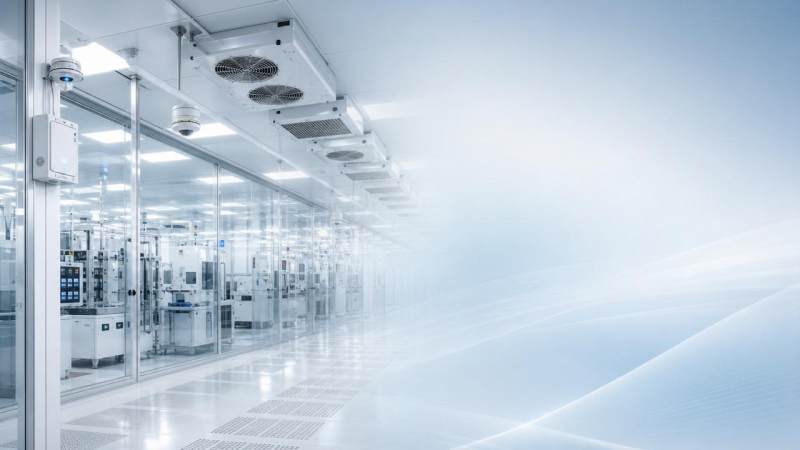
For quality and safety teams, cleanroom environmental management is more than a technical requirement—it is a practical way to reduce audit findings, strengthen compliance, and protect process stability. From particle control and humidity precision to airflow consistency and documentation discipline, a well-managed cleanroom supports stronger evidence, fewer deviations, and lower regulatory exposure across advanced manufacturing and controlled commercial environments.
Why cleanroom environmental management directly affects audit risk
Audit risk often grows in the gap between environmental performance and documented control. Cleanroom environmental management closes that gap by turning conditions into measurable, repeatable, and reviewable evidence.
In semiconductor, battery, healthcare, precision assembly, and green building support spaces, auditors rarely focus on equipment alone. They look for stable trends, alarm response, calibration records, maintenance proof, and deviation handling.
That is why cleanroom environmental management matters beyond cleanliness. It connects particle limits, airflow design, pressure cascades, humidity control, filtration integrity, and human behavior into one compliance system.
When this system is weak, findings appear in familiar forms: missing logs, unclear limits, inconsistent room recovery, unverified HEPA performance, overdue sensors, and poor corrective action closure.
Core checklist for stronger cleanroom environmental management
Use the following checklist to evaluate whether cleanroom environmental management is audit-ready, technically credible, and operationally sustainable.
- Define room classifications clearly and match them to process risk, occupancy pattern, material flow, and applicable standards such as ISO 14644 or internal customer specifications.
- Verify particle monitoring locations, frequency, alert limits, and action limits so trend data reflects actual critical zones instead of convenient sampling points.
- Control temperature and humidity with validated tolerances, especially where electrostatic discharge, moisture uptake, coating stability, or hydrolysis risk can affect quality.
- Confirm differential pressure setpoints between rooms, corridors, and airlocks, then document daily review and response rules for pressure excursions.
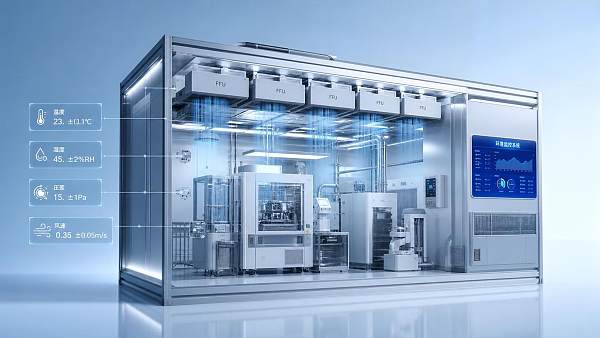
- Test airflow direction, air change effectiveness, and laminar flow uniformity to prove that cleanroom environmental management supports contamination removal, not just nominal fan operation.
- Inspect HEPA or ULPA filter integrity, installation condition, gasket sealing, and replacement history to prevent silent bypass that escapes routine visual checks.
- Calibrate sensors for particles, pressure, temperature, humidity, and airflow on schedule, and keep traceable certificates linked to each instrument location.
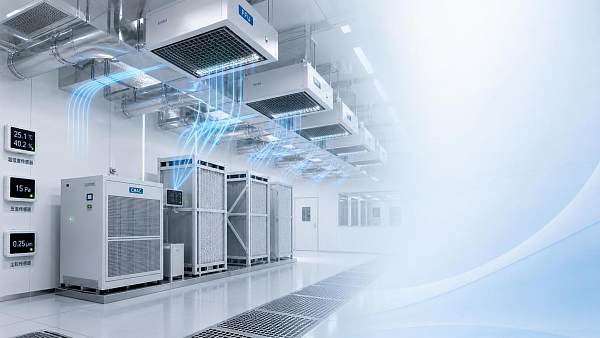
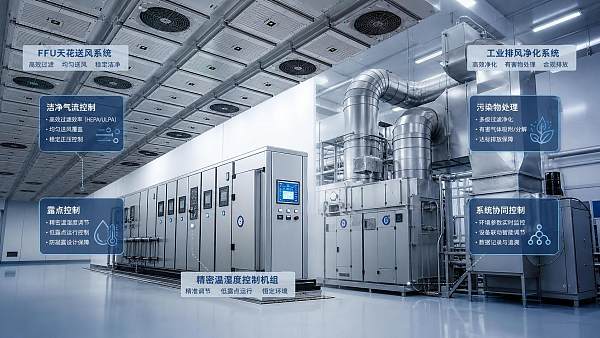
- Document preventive maintenance for FFU systems, CRAC units, scrubbers, dampers, and controls so equipment reliability supports environmental stability during audit review.
- Standardize cleaning methods, approved chemicals, contact times, and tool segregation to show that surface control aligns with airborne contamination goals.
- Train personnel on gowning, entry sequence, material transfer, and behavior inside critical zones because human movement is a major contamination and deviation driver.
- Review alarm handling workflows and ensure every event has a defined response, escalation path, root cause evaluation, and documented closure.
- Trend deviations monthly and compare environmental data with product defects, downtime, and maintenance records to detect hidden compliance patterns early.
How the checklist applies across different environments
Semiconductor and microelectronics spaces
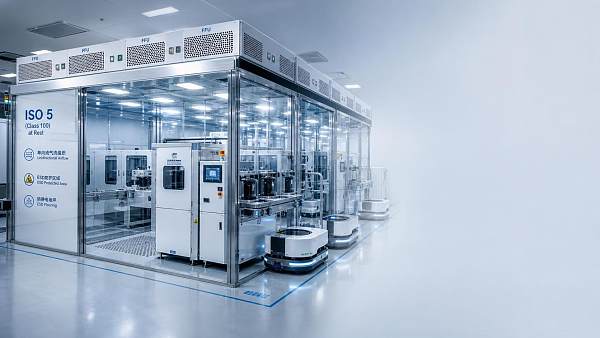
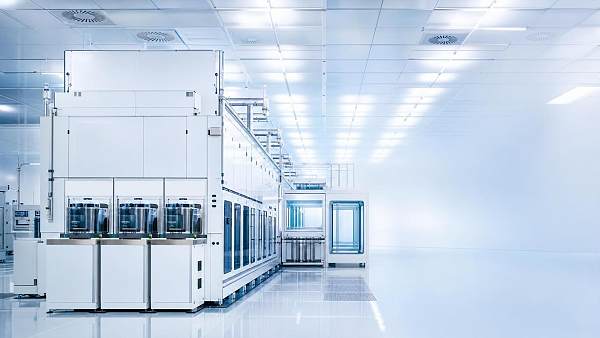
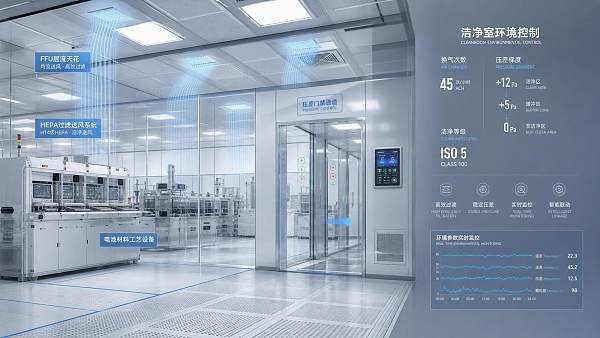
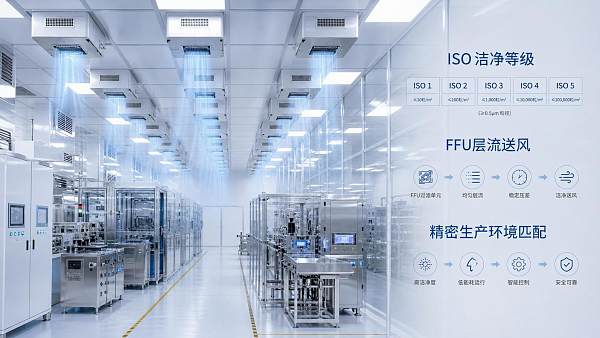
In wafer and precision electronics environments, cleanroom environmental management must prioritize submicron particle control, FFU consistency, and stable vertical airflow. A small airflow imbalance can influence yield long before alarms appear.
Audit reviews in these spaces often test whether monitoring points match process-critical tools, not only open room areas. Pressure control, filter integrity, and event trend analysis carry strong evidential value.
Battery and advanced materials production
For coating, mixing, and cell assembly areas, humidity precision is often the audit focus. Cleanroom environmental management must prove low dew point performance, sensor reliability, and disciplined response to moisture excursions.
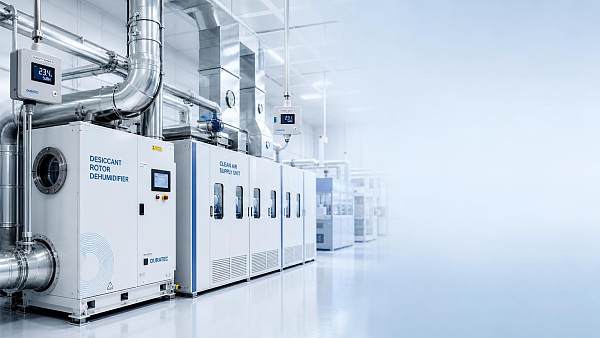
Here, documentation should connect desiccant performance, CRAC operation, room recovery time, and material exposure windows. Auditors usually question whether environmental drift can trigger hidden chemistry or safety risk.
Life science, lab support, and healthcare-adjacent rooms
These environments need cleanroom environmental management that links room classification, personnel behavior, and cleaning validation. Air quality alone is insufficient if transfer practices and change control remain weak.
Audit success depends on showing consistent records, defined intervention limits, and immediate containment actions when room conditions move outside approved ranges.
Commercial high-performance buildings with controlled zones
In premium buildings, cleanroom environmental management can apply to archives, specialty labs, data-adjacent rooms, and health-sensitive zones. The audit lens often includes ventilation balance, filtration proof, and energy-efficient control logic.
A strong program demonstrates that indoor environmental quality, heat recovery ventilation, and contamination control work together rather than compete for operating priority.
Commonly overlooked issues that create audit findings
Unclear ownership of environmental deviations
Many sites capture alarms but fail to define who evaluates product impact, who approves restart, and who verifies corrective action. Weak ownership undermines otherwise sound cleanroom environmental management.
Trend reports without decision thresholds
Data alone does not reduce audit risk. If reports show drift but no predefined trigger for investigation, auditors may conclude the monitoring program is observational rather than controlling.
Filter maintenance that lacks performance verification
Changing filters on schedule is not enough. Cleanroom environmental management should include post-maintenance integrity checks, airflow confirmation, and documented recovery before routine operation resumes.
Procedures that ignore human movement
Door opening habits, material staging, rapid turns, and poor gowning discipline can destabilize a well-designed room. Auditors frequently compare procedures against actual floor behavior.
Separated systems that do not share evidence
When BMS data, maintenance logs, calibration files, and quality deviations remain disconnected, cleanroom environmental management looks fragmented. Audit risk rises because traceability becomes slow and incomplete.
Practical execution steps to strengthen compliance
- Map every controlled room to a single risk register covering particles, humidity, pressure, airflow, occupancy, and product sensitivity.
- Set alert and action levels that reflect process impact, not only engineering comfort bands.
- Create one review dashboard combining environmental trends, maintenance status, calibration due dates, and open deviations.
- Run periodic smoke visualization, recovery testing, and pressure cascade checks after changes in layout, equipment, or occupancy.
- Use short refresher training cycles focused on gowning, transfer steps, and abnormal response instead of annual theory alone.
- Audit the cleanroom internally using the same evidence chain an external auditor will request.
Where possible, align these steps with digital monitoring and disciplined document control. Good cleanroom environmental management is easier to defend when records are current, linked, and easy to retrieve.
Summary and next action
Cleanroom environmental management cuts audit risk because it transforms environmental control into reliable compliance evidence. It reduces uncertainty, supports process consistency, and exposes weak points before they become formal findings.
The most effective next step is simple: review one cleanroom against the checklist above, verify the evidence trail for each item, and correct the gaps that affect classification, monitoring, maintenance, and deviation response first.
A disciplined cleanroom environmental management program does not just prepare for the next audit. It builds a more stable operation, stronger quality assurance, and better long-term control across high-tech and high-performance environments.
Recommended News
 Aug 25, 2026How to Select Cleanroom Particle Control Equipment for ISO Class and Process RiskCleanroom particle control equipment selection starts with process risk, ISO class, and airflow design. Learn how to compare FFUs, filters, and monitoring for reliable performance.
 Aug 23, 2026How Laminar Airflow Supports Compliance and Contamination Control in Medical Device ManufacturingLaminar airflow for medical devices helps reduce contamination risk, support cleanroom compliance, and improve audit readiness—see how it protects product quality and manufacturing control.
 Aug 21, 2026How to Achieve Stable RH Precision Humidity Control in Cleanroom Production?Stable RH precision humidity control starts with process-based design. Learn how airflow, sensors, dehumidification, and recovery logic keep cleanroom production consistent and reliable.
 Aug 19, 2026What Drives Cleanroom Compliance Cost in Pharma and Semiconductor Projects?Cleanroom compliance cost in pharma and semiconductor projects depends on ISO class, airflow, humidity control, validation, and energy use. Learn what drives cost and how to avoid costly overdesign.
 Aug 11, 2026How to Select Precision Humidity Control for Cleanrooms and Micro-EnvironmentsPrecision humidity control for cleanrooms starts with process needs. Learn how to compare dew point targets, airflow, controls, and energy tradeoffs for reliable, high-yield micro-environments.
 Aug 05, 2026How Cleanroom Environmental Control Automation Improves Compliance and StabilityCleanroom environmental control automation improves compliance, stability, and audit readiness through faster response, traceable control logic, and consistent environmental performance.
 Aug 04, 2026How Smart Cleanroom Thermal Control Improves Stability in FFU-Based Micro-EnvironmentsSmart cleanroom thermal control improves FFU-based micro-environment stability by aligning temperature, humidity, pressure, and airflow—learn what to evaluate before performance drifts.
 Aug 03, 2026Semiconductor Cleanroom Standards Explained: ISO Classes, Air Changes, and ESD ControlsCleanroom standards for semiconductor industry explained: understand ISO classes, air changes, and ESD controls to improve yield, reduce contamination risk, and choose smarter fab environments.
 Jul 30, 2026How to Choose Environmental Control Solutions for High-Tech Manufacturing FacilitiesHigh-tech manufacturing environment solutions guide: learn how to evaluate cleanroom airflow, dew point control, exhaust treatment, and compliance to protect yield and cut lifecycle risk.
 Jul 29, 2026How to Design Ventilation for Precision Manufacturing to Control Particles and HeatPrecision manufacturing ventilation design guide: learn how to control particles, heat, airflow, filtration, and pressure for cleaner production, higher yield, and more reliable operations.
 Jul 26, 2026ISO 5 Semiconductor Cleanroom Solutions: Key Design Criteria for Process StabilityISO 5 semiconductor cleanroom solutions focus on process stability, airflow uniformity, pressure control, and thermal consistency to protect yield and improve fab performance.
 Jul 24, 2026Cleanroom Standards Compliance: Key Requirements and Audit Readiness ChecklistCleanroom standards compliance starts with real control, not paperwork. Explore key ISO requirements, common audit gaps, and a practical checklist to improve readiness.
 Jul 20, 2026How to Evaluate a Semiconductor Cleanroom Solutions Supplier for Fab ProjectsSemiconductor cleanroom solutions supplier selection can make or break fab performance. Learn how to compare engineering depth, compliance, delivery, and lifecycle value.
 Jul 15, 2026Dust-Free Manufacturing: Key Process Controls for Cleaner Production LinesDust-free manufacturing starts with tighter control of airflow, humidity, filtration, and gas capture. Discover how cleaner production lines improve yield, safety, compliance, and energy performance.
 Jul 13, 2026How Semiconductor Environmental Control AMC Reduction Prevents Yield LossSemiconductor environmental control AMC reduction is essential to prevent yield loss. Learn how airflow, humidity, filtration, and gas treatment protect fabs and improve process stability.
 Jul 12, 2026How to Choose Semiconductor Cleanroom Solutions for EUV Lithography LinesSemiconductor cleanroom solutions for EUV require more than ISO class compliance. Learn how to compare airflow, AMC, thermal stability, vibration, and lifecycle cost for better yield.
 Jul 11, 2026Cleanroom Design Criteria Explained: Air Changes, Pressure Cascade, and ISO ClassCleanroom design criteria explained: learn how air changes, pressure cascade, and ISO Class work together to improve contamination control, compliance, and process stability.
 Jul 09, 2026Semiconductor Facility Ventilation Standards: Pressure Cascade, Air Changes, and ComplianceSemiconductor facility ventilation explained: pressure cascade, air changes, and compliance essentials to protect yield, control contamination, and reduce hidden operational risk.
 Jul 09, 2026Clean Environment Control Solutions for Dust, Humidity, and ESD in Sensitive ProductionClean environment control solutions for dust, humidity, and ESD help sensitive production improve yield, ensure compliance, cut energy waste, and reduce costly rework.
 Jul 08, 2026Cleanroom Standards ISO Class Explained: How to Match Class Levels to ProductionCleanroom standards ISO class explained clearly: learn how to match class levels to production needs, reduce contamination risk, control costs, and choose smarter cleanroom strategies.
 Jul 08, 2026How Electronics Cleanroom Air Showers Reduce Particle Transfer at Entry PointsElectronics cleanroom air showers reduce particle transfer at entry points, protect sensitive processes, and support better yield, cleaner airflow, and more reliable contamination control.
![]() Jul 07, 2026Cleanroom Certification USA: ISO Classes, Testing Steps, and Common Compliance GapsCleanroom certification USA explained: compare ISO classes, understand key testing steps, and spot common compliance gaps before they trigger audit issues, downtime, or product risk.
Jul 07, 2026Cleanroom Certification USA: ISO Classes, Testing Steps, and Common Compliance GapsCleanroom certification USA explained: compare ISO classes, understand key testing steps, and spot common compliance gaps before they trigger audit issues, downtime, or product risk. Jul 06, 2026What Is Semiconductor Clean Air and Why Does It Matter in Contamination Control?Semiconductor clean air is vital to contamination control, protecting yield, tool stability, and process consistency. Learn why it matters in modern fabs.
 Jul 05, 2026Cleanroom Airflow Control Systems Explained: How to Balance Pressure, Air Changes, and StabilityCleanroom airflow control systems explained: learn how to balance pressure, air changes, and stability to improve contamination control, cut energy waste, and protect production yield.