Search News
Industry Portal
Hot Articles
- When Does Cyclone Separation for Dust Collection Reduce Baghouse Filter Loading?Cyclone separation for dust collection can reduce baghouse filter loading by removing coarse, abrasive dust. Discover key sizing, flow, and discharge factors.
- What Determines Low Dew Point Dehumidification System Price for Dry Rooms?Low dew point dehumidification systems price depends on dew point targets, moisture loads, regeneration energy, controls, and installation scope. Compare costs confidently.
- Electronics Cleanroom System Cost: CAPEX, Energy, and Lifecycle Budget FactorsElectronics cleanroom systems cost explained: compare CAPEX, energy use, maintenance, and lifecycle factors to build a smarter, finance-ready budget.
Popular Tags
CSES and OCEESA Launch Shenzhen Compliance Lab
author
Time
Click Count
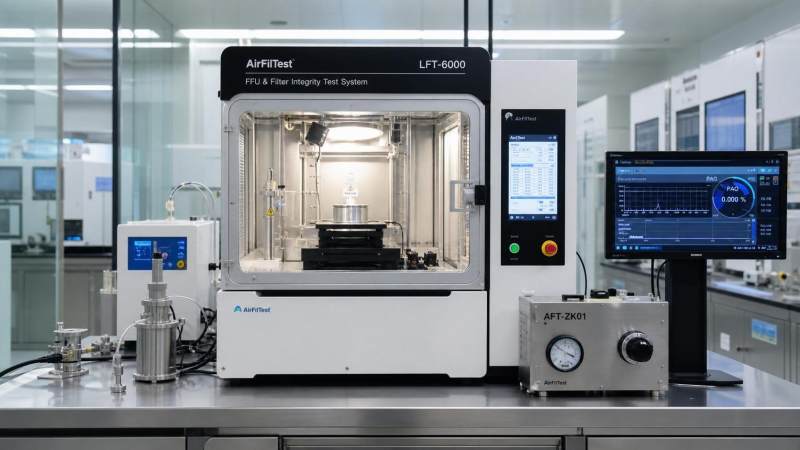
On June 4, 2026, the Chinese Society for Environmental Sciences (CSES) and the Overseas Chinese Environmental Protection Society of America (OCEESA) signed an MOU to build a joint Micro-environment Compliance validation laboratory in Shenzhen. For companies involved in cleanroom-related equipment, validation services, regulated production environments, and technical procurement, the development is worth watching because it links multi-standard verification with a shorter certification timeline, with the first services already launched on June 20 and the Micro-environment Compliance process reduced to 11 working days.
What the Shenzhen joint lab has confirmed so far
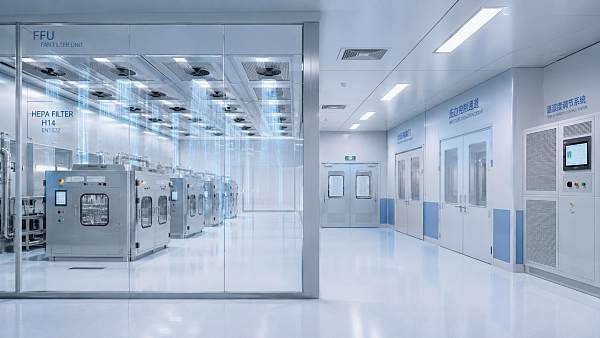
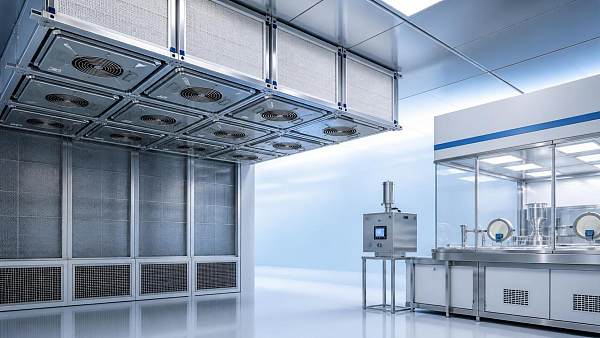
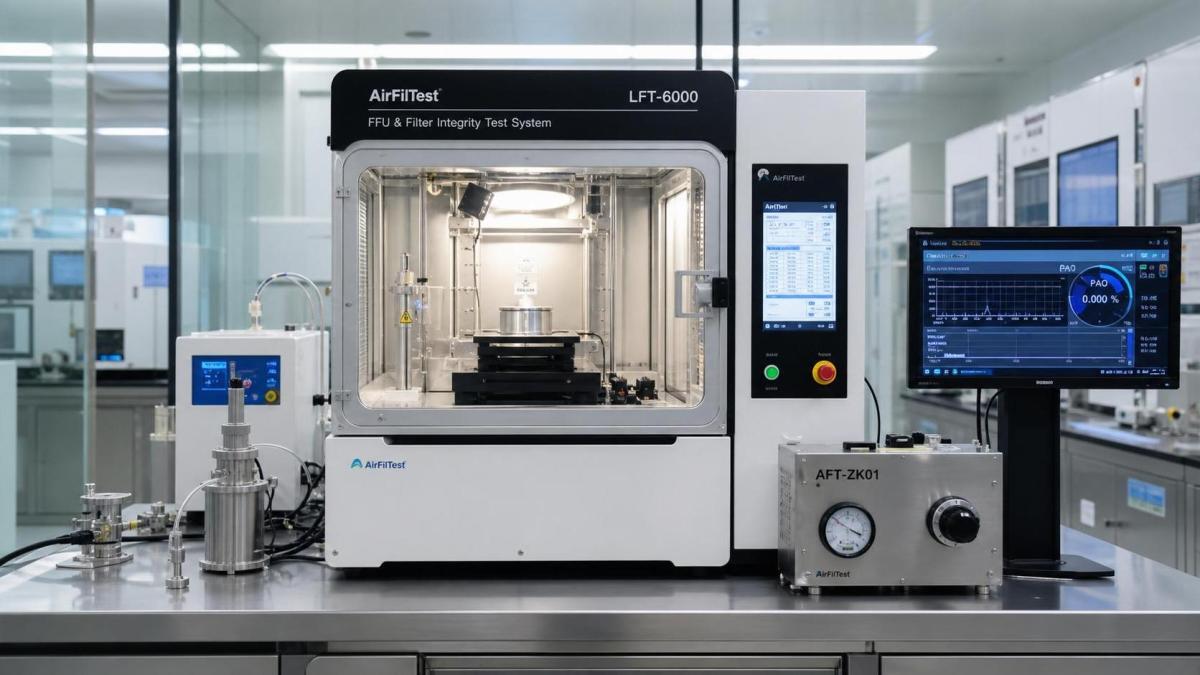
According to the provided event information, the new joint laboratory will integrate an AI compliance engine developed by Dr. Klaus Von Richt’s team. Its stated scope includes one-click comparative validation for Class 100 Laminar FFU, HEPA/ULPA Filters, and Ultra-low Dew Point CRAC against multiple standards, including ISO 14644, USP <797>, and EU GMP Annex 1.
The first batch of services went live on June 20. Based on the same provided information, the Micro-environment Compliance certification cycle has been shortened to 11 working days, which is described as 40% faster on average than traditional third-party institutions.
Where the market may feel the change first
Equipment makers facing multi-standard customer requests
From an industry perspective, manufacturers of FFU systems, filtration products, and environmental control equipment may be among the first to feel the impact. The reason is straightforward: the announced lab is designed around the validation of these product categories across more than one standard framework. The business effect may appear most clearly in pre-delivery verification, bid support materials, and compliance discussions with customers serving regulated environments.
Validation and testing service providers under timeline pressure
Service providers may also need to watch the development closely. Analysis shows that a publicly stated 11-working-day cycle can shift customer expectations around turnaround time, especially when projects involve parallel review against ISO 14644, USP <797>, and EU GMP Annex 1. The immediate issue is not only speed, but whether clients begin to treat multi-standard comparison as a baseline service requirement.
Procurement and end users in controlled environments
Buyers and end users that specify compliance conditions in procurement may be affected through sourcing, qualification, and delivery planning. What deserves closer attention is whether shorter certification cycles start influencing project sequencing, acceptance scheduling, and supplier selection for facilities that depend on validated micro-environment performance.
What companies should monitor now
Watch how the service scope is described in practice
Companies should focus on the exact wording used for Micro-environment Compliance services as they are rolled out. The key practical question is how one-click comparative validation is presented across different standards and equipment categories in actual project communication and documentation.
Check document readiness for multi-standard review
For suppliers and manufacturers, the most immediate operational issue is document preparation. If validation is organized around ISO 14644, USP <797>, and EU GMP Annex 1 in parallel, firms should review whether existing technical files, test records, and qualification materials are structured clearly enough for cross-standard comparison.
Reassess delivery and customer communication timelines
Where customers link shipment, installation, or acceptance to certification milestones, an 11-working-day cycle may affect planning assumptions. Observably, this does not automatically change contract terms, but it does mean suppliers and project teams should revisit lead-time communication, especially where compliance clearance is part of the delivery path.
Separate announcement-level signals from execution details
Companies should also distinguish between the strategic signal of the new lab and the operational details that still require observation. The MOU, the Shenzhen laboratory setup, the AI engine integration, and the first service launch are confirmed facts from the provided information; how consistently the faster cycle is delivered across project types remains a point for continued tracking rather than a settled market outcome.
Why this reads as a process signal, not a finished market shift
Analysis shows that this development is better understood as a process and capability signal than as proof of an immediate structural change in the compliance market. The combination of a joint validation lab, AI-assisted comparison, and a shorter certification cycle suggests growing attention to faster, multi-standard verification in micro-environment applications. At the same time, the current information does not establish how broadly the model will be adopted, how customers will weigh it against other validation routes, or whether it will reshape purchasing behavior across the market.
How to read the announcement at this stage
At this stage, it is more appropriate to understand the news as a concrete operational update with broader industry relevance, rather than as a final indicator of market reordering. The confirmed facts are meaningful for equipment suppliers, service providers, and regulated-environment buyers because they point to faster certification handling and integrated multi-standard review. The larger industry significance, however, still depends on follow-through in service delivery, market acceptance, and how compliance expectations evolve in real projects.
Basis of this report and what still needs verification
This article is based on the user-provided news title, event date, and event summary. For this type of industry development, commonly relevant source categories would include official announcements, association disclosures, company statements, authoritative media coverage, and standards-related documents. A specific official source link was not provided in the input, so further verification remains necessary. Follow-up attention should focus on later official wording, any expanded service descriptions, and how the announced 11-working-day certification cycle is reflected in practical market use.
Recommended News
 Sep 28, 2026Designing Laminar Airflow for Microelectronics Assembly to Control Particle RiskLaminar airflow for microelectronics: learn how to reduce particle risk with optimized airflow paths, local protection, ISO commissioning, and efficient cleanroom design.
 Sep 23, 2026How to Select Particle Control Equipment for Cleanrooms and Sensitive Production AreasParticle control equipment selection guide for cleanrooms and sensitive production areas. Compare filtration, airflow, pressure, humidity, energy efficiency, and maintenance for reliable compliance.
 Sep 21, 2026EUV Cleanroom Design: Controlling AMC, Airflow, and Micro-Vibration RisksSemiconductor cleanroom solutions for EUV: control AMC, laminar airflow, and micro-vibration with integrated design strategies that protect yield and tool performance.
 Sep 19, 2026How to Specify Tight Temperature and Humidity Control for Cleanroom ProcessesTight tolerance temperature and humidity control: learn how to specify measurable setpoints, recovery targets, sensing, and airflow for reliable cleanroom process performance.
 Sep 15, 2026ISO 14644 Particle Limits by Cleanroom Class: A Practical Compliance GuideISO 14644 particle limits explained by cleanroom class. Learn sampling, occupancy states, failure analysis, and audit-ready compliance practices.
 Sep 07, 2026What Drives Cleanroom Contamination Prevention Costs in Facility Design?Cleanroom contamination prevention cost depends on airflow, humidity, zoning, validation, and lifecycle energy. Discover smarter design choices that protect quality and budgets.
 Sep 04, 2026Ballroom Semiconductor Cleanroom Design: Airflow, Layout, and Contamination ControlBallroom semiconductor cleanroom design insights on airflow, layout, filtration, pressure cascades, and contamination control for scalable, high-yield semiconductor production.
 Sep 01, 2026How to Choose Extreme Humidity Control Automation for CleanroomsExtreme humidity control automation for cleanrooms: learn how to select reliable, energy-efficient controls for dew point stability, monitoring, integration, and failure recovery.
 Aug 29, 2026ISO 14644 Certification Process: From Cleanroom Testing to Compliance ApprovalISO 14644 certification process explained: prepare your cleanroom, complete particle testing, address failures, and achieve compliance approval with confidence.
 Aug 25, 2026How to Select Cleanroom Particle Control Equipment for ISO Class and Process RiskCleanroom particle control equipment selection starts with process risk, ISO class, and airflow design. Learn how to compare FFUs, filters, and monitoring for reliable performance.
 Aug 23, 2026How Laminar Airflow Supports Compliance and Contamination Control in Medical Device ManufacturingLaminar airflow for medical devices helps reduce contamination risk, support cleanroom compliance, and improve audit readiness—see how it protects product quality and manufacturing control.
 Aug 21, 2026How to Achieve Stable RH Precision Humidity Control in Cleanroom Production?Stable RH precision humidity control starts with process-based design. Learn how airflow, sensors, dehumidification, and recovery logic keep cleanroom production consistent and reliable.
 Aug 19, 2026What Drives Cleanroom Compliance Cost in Pharma and Semiconductor Projects?Cleanroom compliance cost in pharma and semiconductor projects depends on ISO class, airflow, humidity control, validation, and energy use. Learn what drives cost and how to avoid costly overdesign.
 Aug 11, 2026How to Select Precision Humidity Control for Cleanrooms and Micro-EnvironmentsPrecision humidity control for cleanrooms starts with process needs. Learn how to compare dew point targets, airflow, controls, and energy tradeoffs for reliable, high-yield micro-environments.
 Aug 05, 2026How Cleanroom Environmental Control Automation Improves Compliance and StabilityCleanroom environmental control automation improves compliance, stability, and audit readiness through faster response, traceable control logic, and consistent environmental performance.
 Aug 04, 2026How Smart Cleanroom Thermal Control Improves Stability in FFU-Based Micro-EnvironmentsSmart cleanroom thermal control improves FFU-based micro-environment stability by aligning temperature, humidity, pressure, and airflow—learn what to evaluate before performance drifts.
 Aug 03, 2026Semiconductor Cleanroom Standards Explained: ISO Classes, Air Changes, and ESD ControlsCleanroom standards for semiconductor industry explained: understand ISO classes, air changes, and ESD controls to improve yield, reduce contamination risk, and choose smarter fab environments.
 Jul 30, 2026How to Choose Environmental Control Solutions for High-Tech Manufacturing FacilitiesHigh-tech manufacturing environment solutions guide: learn how to evaluate cleanroom airflow, dew point control, exhaust treatment, and compliance to protect yield and cut lifecycle risk.
 Jul 29, 2026How to Design Ventilation for Precision Manufacturing to Control Particles and HeatPrecision manufacturing ventilation design guide: learn how to control particles, heat, airflow, filtration, and pressure for cleaner production, higher yield, and more reliable operations.
 Jul 26, 2026ISO 5 Semiconductor Cleanroom Solutions: Key Design Criteria for Process StabilityISO 5 semiconductor cleanroom solutions focus on process stability, airflow uniformity, pressure control, and thermal consistency to protect yield and improve fab performance.
 Jul 24, 2026Cleanroom Standards Compliance: Key Requirements and Audit Readiness ChecklistCleanroom standards compliance starts with real control, not paperwork. Explore key ISO requirements, common audit gaps, and a practical checklist to improve readiness.
 Jul 20, 2026How to Evaluate a Semiconductor Cleanroom Solutions Supplier for Fab ProjectsSemiconductor cleanroom solutions supplier selection can make or break fab performance. Learn how to compare engineering depth, compliance, delivery, and lifecycle value.
 Jul 15, 2026Dust-Free Manufacturing: Key Process Controls for Cleaner Production LinesDust-free manufacturing starts with tighter control of airflow, humidity, filtration, and gas capture. Discover how cleaner production lines improve yield, safety, compliance, and energy performance.
 Jul 13, 2026How Semiconductor Environmental Control AMC Reduction Prevents Yield LossSemiconductor environmental control AMC reduction is essential to prevent yield loss. Learn how airflow, humidity, filtration, and gas treatment protect fabs and improve process stability.