Search News
Industry Portal
Hot Articles
- ISO 14644 Certification Process: From Cleanroom Testing to Compliance ApprovalISO 14644 certification process explained: prepare your cleanroom, complete particle testing, address failures, and achieve compliance approval with confidence.
- How Factories Can Select Air Quality Controls for Dust, Fumes, and VOCsIndustrial air quality control for factories: learn how to select effective solutions for dust, fumes, and VOCs while improving safety, compliance, energy efficiency, and uptime.
- How to Size Industrial Gas Scrubbing Units for Acid Fumes and Variable AirflowsIndustrial gas scrubbing units: learn how to size acid-fume scrubbers for variable airflows, peak loads, chemical demand, pressure drop, and reliable compliance.
Popular Tags
How cleanroom temperature regulation affects yield
author
Time
Click Count
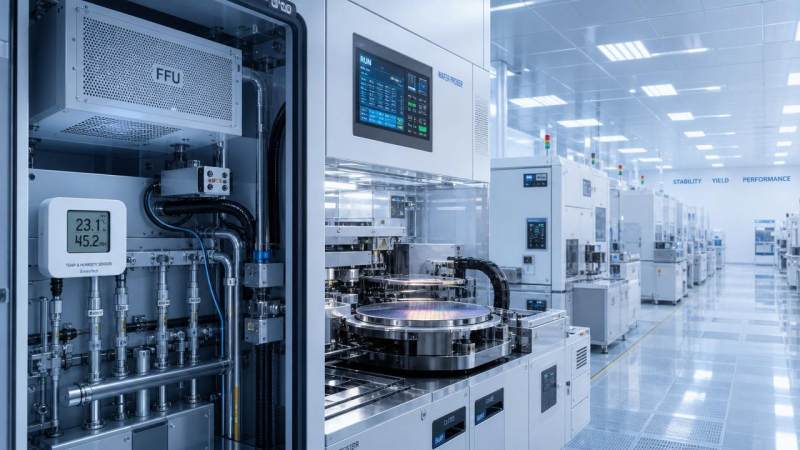
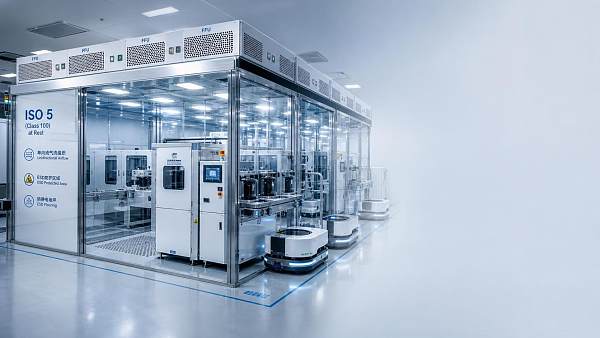
In high-spec manufacturing, cleanroom temperature regulation is not just an HVAC setting—it is a direct yield protection strategy.
Even small thermal fluctuations can trigger particle drift, condensation risk, material instability, equipment deviation, and process variability.
Whether in semiconductor lithography, lithium battery coating, or precision assembly, stable temperature control protects compliance and repeatable outcomes.
This article explains how cleanroom temperature regulation influences yield and what operational teams should monitor for stronger quality and safety.
Cleanroom Temperature Regulation as a Yield Variable
Cleanroom temperature regulation means maintaining controlled thermal conditions inside classified production environments.
It includes room temperature, supply air temperature, equipment heat load, local gradients, and recovery speed after disturbances.
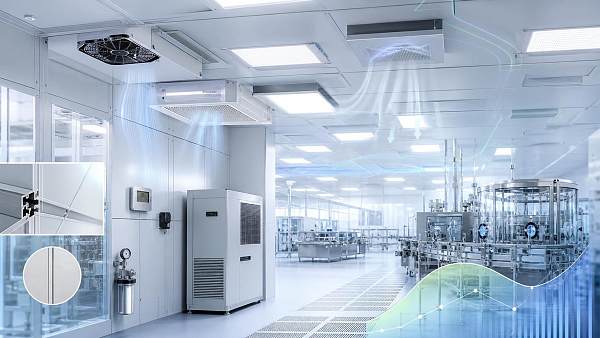
In practice, cleanroom temperature regulation works with humidity control, airflow balance, filtration, and pressure cascade management.
Yield depends on repeatability. A process that performs correctly at 21°C may drift when local zones reach 23°C.
Temperature changes affect materials, operators, machines, sensors, adhesives, coatings, and microscopic contamination behavior.
For this reason, cleanroom temperature regulation should be treated as a process parameter, not a comfort parameter.
A stable setpoint supports dimensional accuracy, coating consistency, defect reduction, and reliable inspection data.
Industry Conditions Raising Temperature Control Requirements
Advanced manufacturing is becoming more sensitive to invisible environmental shifts.
Cleaner air alone is no longer enough. Thermal stability now defines the practical boundary of many production windows.
Cleanroom temperature regulation is receiving greater attention because processes are denser, faster, and more energy intensive.
These signals explain why cleanroom temperature regulation increasingly sits between quality engineering and energy strategy.
A narrow control band can reduce scrap, but it must be designed around process physics.
How Thermal Instability Creates Yield Loss
Yield loss rarely comes from one visible temperature event.
More often, it develops through small deviations that move a process outside its most stable range.
Dimensional movement and alignment error
Most materials expand or contract when temperature changes.
In precision assembly, optics, wafer processing, and metrology, micron-scale movement can create measurable defects.
Effective cleanroom temperature regulation reduces these thermal movements before they become inspection failures.
Particle transport and airflow disturbance
Temperature differences create buoyancy flows.
Warm equipment surfaces can lift particles into critical zones, especially near workbenches, tools, and transfer openings.
Cleanroom temperature regulation supports laminar airflow by reducing unwanted thermal plumes and recirculation pockets.
Condensation and moisture-related defects
Temperature and humidity are inseparable in many cleanrooms.
When surface temperature approaches dew point, condensation risk increases sharply.
In battery and electronics environments, moisture can cause hydrolysis, corrosion, insulation failure, or unstable coating behavior.
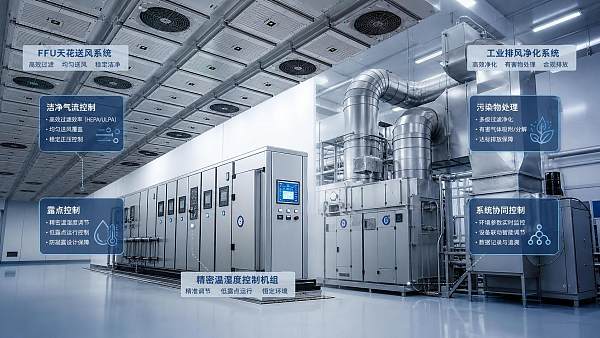
Cleanroom temperature regulation must therefore be coordinated with dew point control, not managed as a separate function.
Equipment drift and sensor uncertainty
Production tools and inspection systems often rely on thermal assumptions.
Temperature drift can affect calibration, exposure stability, robotic positioning, balance readings, and adhesive curing profiles.
Good cleanroom temperature regulation protects both product formation and measurement confidence.
Business Value of Stable Thermal Control
The business value of cleanroom temperature regulation is seen in fewer defects and more predictable output.
It also improves compliance readiness by creating defensible environmental records during audits and customer reviews.
- Lower scrap caused by process drift, condensation, or dimensional error.
- Improved first-pass yield in precision manufacturing steps.
- Reduced rework, quarantine, and root-cause investigation time.
- More stable equipment calibration and metrology performance.
- Better alignment between ISO 14644 cleanliness goals and thermal risk control.
- Lower lifecycle cost when control logic avoids unnecessary overcooling.
Energy efficiency must not be ignored.
Overly rigid temperature bands can waste energy if they exceed actual process requirements.
Balanced cleanroom temperature regulation protects yield while respecting carbon, operating cost, and ventilation constraints.
Typical Cleanroom Scenarios and Control Priorities
Different applications require different temperature strategies.
The correct control band depends on materials, process sensitivity, humidity interaction, and heat load distribution.
These examples show why cleanroom temperature regulation cannot use one universal setpoint strategy.
A validated semiconductor zone may need different control logic from a battery coating line.
Key Indicators for Monitoring Temperature-Related Yield Risk
Yield-focused monitoring should go beyond average room temperature.
Averages can hide local hot spots, stratification, delayed recovery, and unstable equipment neighborhoods.
- Temperature uniformity across critical process zones.
- Vertical temperature gradients near laminar flow work areas.
- Recovery time after door openings, maintenance, or batch changeover.
- Surface temperature of tools, benches, ducts, and enclosures.
- Correlation between temperature excursions and defect maps.
- Dew point margin near cold surfaces and sensitive materials.
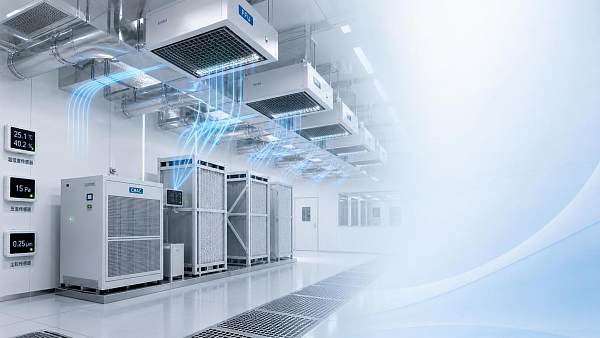
- Supply air stability from CRAC units, AHUs, and FFU arrays.
Cleanroom temperature regulation improves when these indicators are trended with production data.
The most useful dashboard links environmental variation with scrap reason codes, tool alarms, and inspection results.
Practical Design and Operation Recommendations
Effective cleanroom temperature regulation starts with understanding the process window.
The target should be based on product sensitivity, not copied from a generic cleanroom specification.
Map heat sources before adjusting setpoints
Production tools, lighting, operators, motors, ovens, pumps, and automation cabinets all add heat.
Heat mapping identifies whether the issue is room control, local exhaust, airflow obstruction, or equipment placement.
Coordinate airflow and temperature together
Increasing cooling airflow may disturb particle control if velocity patterns are not reviewed.
Cleanroom temperature regulation should preserve unidirectional flow, pressure cascades, and filter performance.
Use zoning for sensitive processes
A single room setpoint may not protect every process position.
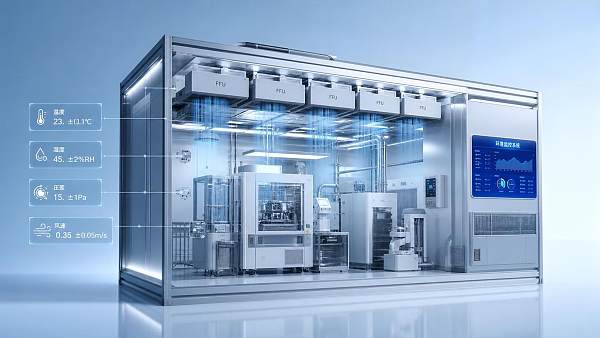
Critical tools may require local temperature sensors, mini-environments, or dedicated supply air control.
Validate after layout or load changes
New equipment can alter heat release, airflow resistance, and maintenance access patterns.
Temperature validation should follow major layout changes, production ramp-ups, and HVAC retrofits.
Avoid narrow bands without evidence
Tighter control is not always better.
If product data does not justify an extreme band, excessive cooling may raise cost without improving yield.
Common Mistakes That Weaken Yield Protection
Several recurring mistakes reduce the value of cleanroom temperature regulation.
- Relying only on wall-mounted sensors far from critical processes.
- Ignoring heat from temporary tools, carts, chargers, and maintenance equipment.
- Separating temperature alarms from humidity, pressure, and particle events.
- Changing setpoints without reviewing airflow visualization results.
- Accepting average compliance while local process zones remain unstable.
- Treating energy saving and yield protection as unrelated objectives.
The strongest programs integrate facility control, process engineering, compliance records, and defect analytics.
This integration turns cleanroom temperature regulation into a continuous improvement system.
Action Path for Stronger Temperature Control
A practical improvement path can begin with a focused environmental risk review.
Start by selecting the most yield-sensitive process area and comparing temperature trends with defect history.
- Define the product-specific temperature window and humidity interaction.
- Map sensors against actual critical process locations.
- Identify local heat sources and airflow restrictions.
- Review recovery behavior after doors, tool access, and shift changes.
- Connect environmental excursions to quality records and tool alarms.
- Adjust control logic, zoning, maintenance, or equipment placement.
- Revalidate results through trending, inspection outcomes, and audit evidence.
Cleanroom temperature regulation is most effective when reviewed as part of the full clean environment ecosystem.
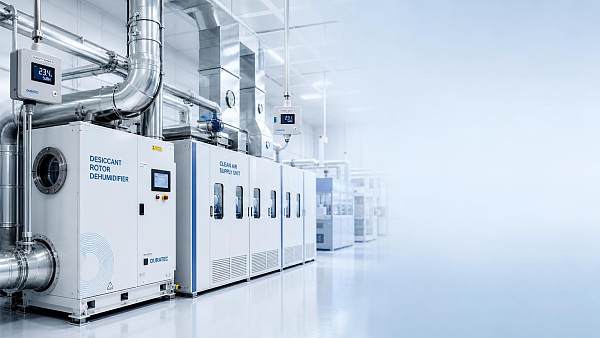
That ecosystem includes CRAC units, desiccant systems, FFUs, filtration, pressure management, and energy recovery strategies.
CECS tracks these invisible control layers across high-tech manufacturing, industrial air treatment, and zero-carbon buildings.
For facilities pursuing higher yield, the next step is clear: audit thermal stability where defects are most expensive.
Then align cleanroom temperature regulation with process evidence, compliance requirements, and long-term energy discipline.
Stable temperature does not guarantee perfect yield, but unstable temperature almost always increases hidden risk.
By controlling that risk deliberately, production environments become cleaner, safer, more predictable, and more competitive.
Recommended News
 Aug 29, 2026ISO 14644 Certification Process: From Cleanroom Testing to Compliance ApprovalISO 14644 certification process explained: prepare your cleanroom, complete particle testing, address failures, and achieve compliance approval with confidence.
 Aug 25, 2026How to Select Cleanroom Particle Control Equipment for ISO Class and Process RiskCleanroom particle control equipment selection starts with process risk, ISO class, and airflow design. Learn how to compare FFUs, filters, and monitoring for reliable performance.
 Aug 23, 2026How Laminar Airflow Supports Compliance and Contamination Control in Medical Device ManufacturingLaminar airflow for medical devices helps reduce contamination risk, support cleanroom compliance, and improve audit readiness—see how it protects product quality and manufacturing control.
 Aug 21, 2026How to Achieve Stable RH Precision Humidity Control in Cleanroom Production?Stable RH precision humidity control starts with process-based design. Learn how airflow, sensors, dehumidification, and recovery logic keep cleanroom production consistent and reliable.
 Aug 19, 2026What Drives Cleanroom Compliance Cost in Pharma and Semiconductor Projects?Cleanroom compliance cost in pharma and semiconductor projects depends on ISO class, airflow, humidity control, validation, and energy use. Learn what drives cost and how to avoid costly overdesign.
 Aug 11, 2026How to Select Precision Humidity Control for Cleanrooms and Micro-EnvironmentsPrecision humidity control for cleanrooms starts with process needs. Learn how to compare dew point targets, airflow, controls, and energy tradeoffs for reliable, high-yield micro-environments.
 Aug 05, 2026How Cleanroom Environmental Control Automation Improves Compliance and StabilityCleanroom environmental control automation improves compliance, stability, and audit readiness through faster response, traceable control logic, and consistent environmental performance.
 Aug 04, 2026How Smart Cleanroom Thermal Control Improves Stability in FFU-Based Micro-EnvironmentsSmart cleanroom thermal control improves FFU-based micro-environment stability by aligning temperature, humidity, pressure, and airflow—learn what to evaluate before performance drifts.
 Aug 03, 2026Semiconductor Cleanroom Standards Explained: ISO Classes, Air Changes, and ESD ControlsCleanroom standards for semiconductor industry explained: understand ISO classes, air changes, and ESD controls to improve yield, reduce contamination risk, and choose smarter fab environments.
 Jul 30, 2026How to Choose Environmental Control Solutions for High-Tech Manufacturing FacilitiesHigh-tech manufacturing environment solutions guide: learn how to evaluate cleanroom airflow, dew point control, exhaust treatment, and compliance to protect yield and cut lifecycle risk.
 Jul 29, 2026How to Design Ventilation for Precision Manufacturing to Control Particles and HeatPrecision manufacturing ventilation design guide: learn how to control particles, heat, airflow, filtration, and pressure for cleaner production, higher yield, and more reliable operations.
 Jul 26, 2026ISO 5 Semiconductor Cleanroom Solutions: Key Design Criteria for Process StabilityISO 5 semiconductor cleanroom solutions focus on process stability, airflow uniformity, pressure control, and thermal consistency to protect yield and improve fab performance.
 Jul 24, 2026Cleanroom Standards Compliance: Key Requirements and Audit Readiness ChecklistCleanroom standards compliance starts with real control, not paperwork. Explore key ISO requirements, common audit gaps, and a practical checklist to improve readiness.
 Jul 20, 2026How to Evaluate a Semiconductor Cleanroom Solutions Supplier for Fab ProjectsSemiconductor cleanroom solutions supplier selection can make or break fab performance. Learn how to compare engineering depth, compliance, delivery, and lifecycle value.
 Jul 15, 2026Dust-Free Manufacturing: Key Process Controls for Cleaner Production LinesDust-free manufacturing starts with tighter control of airflow, humidity, filtration, and gas capture. Discover how cleaner production lines improve yield, safety, compliance, and energy performance.
 Jul 13, 2026How Semiconductor Environmental Control AMC Reduction Prevents Yield LossSemiconductor environmental control AMC reduction is essential to prevent yield loss. Learn how airflow, humidity, filtration, and gas treatment protect fabs and improve process stability.
 Jul 12, 2026How to Choose Semiconductor Cleanroom Solutions for EUV Lithography LinesSemiconductor cleanroom solutions for EUV require more than ISO class compliance. Learn how to compare airflow, AMC, thermal stability, vibration, and lifecycle cost for better yield.
 Jul 11, 2026Cleanroom Design Criteria Explained: Air Changes, Pressure Cascade, and ISO ClassCleanroom design criteria explained: learn how air changes, pressure cascade, and ISO Class work together to improve contamination control, compliance, and process stability.
 Jul 09, 2026Semiconductor Facility Ventilation Standards: Pressure Cascade, Air Changes, and ComplianceSemiconductor facility ventilation explained: pressure cascade, air changes, and compliance essentials to protect yield, control contamination, and reduce hidden operational risk.
 Jul 09, 2026Clean Environment Control Solutions for Dust, Humidity, and ESD in Sensitive ProductionClean environment control solutions for dust, humidity, and ESD help sensitive production improve yield, ensure compliance, cut energy waste, and reduce costly rework.
 Jul 08, 2026Cleanroom Standards ISO Class Explained: How to Match Class Levels to ProductionCleanroom standards ISO class explained clearly: learn how to match class levels to production needs, reduce contamination risk, control costs, and choose smarter cleanroom strategies.
 Jul 08, 2026How Electronics Cleanroom Air Showers Reduce Particle Transfer at Entry PointsElectronics cleanroom air showers reduce particle transfer at entry points, protect sensitive processes, and support better yield, cleaner airflow, and more reliable contamination control.
![]() Jul 07, 2026Cleanroom Certification USA: ISO Classes, Testing Steps, and Common Compliance GapsCleanroom certification USA explained: compare ISO classes, understand key testing steps, and spot common compliance gaps before they trigger audit issues, downtime, or product risk.
Jul 07, 2026Cleanroom Certification USA: ISO Classes, Testing Steps, and Common Compliance GapsCleanroom certification USA explained: compare ISO classes, understand key testing steps, and spot common compliance gaps before they trigger audit issues, downtime, or product risk. Jul 06, 2026What Is Semiconductor Clean Air and Why Does It Matter in Contamination Control?Semiconductor clean air is vital to contamination control, protecting yield, tool stability, and process consistency. Learn why it matters in modern fabs.