Search News
Industry Portal
Hot Articles
- How to Choose Extreme Humidity Control Automation for CleanroomsExtreme humidity control automation for cleanrooms: learn how to select reliable, energy-efficient controls for dew point stability, monitoring, integration, and failure recovery.
- How to Size a Workshop Roof Exhaust System for Heat, Fumes, and Dust ControlRoof exhaust workshop systems: learn how to size airflow for heat, fumes, and dust, optimize makeup air, control costs, and improve workplace safety.
- How to Evaluate a Clean Air Recovery System Supplier for Industrial ProjectsChoose a clean air recovery system supplier with confidence. Compare technology, compliance, lifecycle cost, contamination control, and service for reliable industrial performance.
Popular Tags
How do industrial cleanroom solutions reduce downtime?
author
Time
Click Count
How do industrial cleanroom solutions reduce downtime?
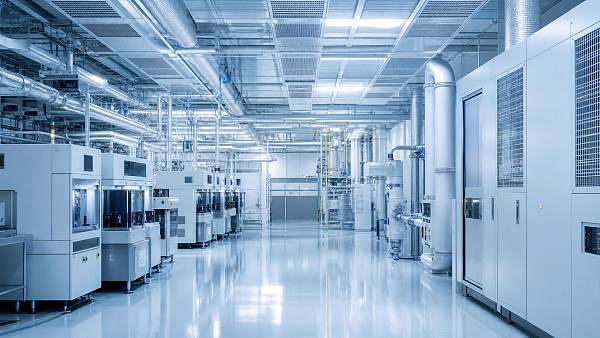
Downtime in semiconductor, battery, pharmaceutical, and precision manufacturing facilities threatens yield, compliance, and capital efficiency.
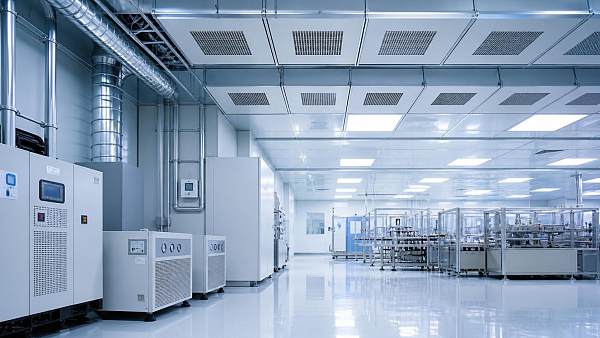
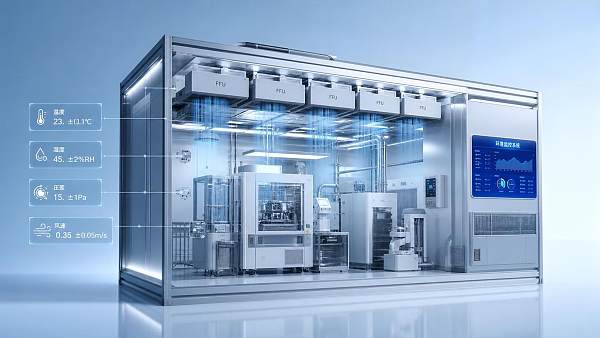
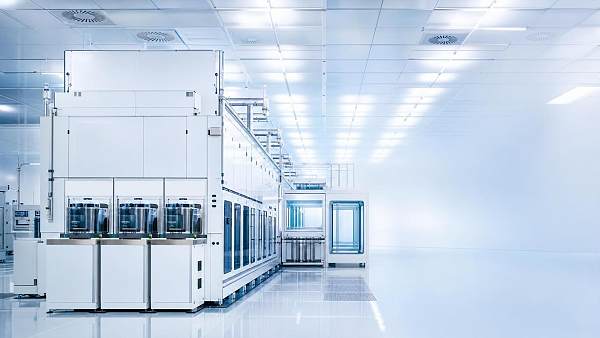
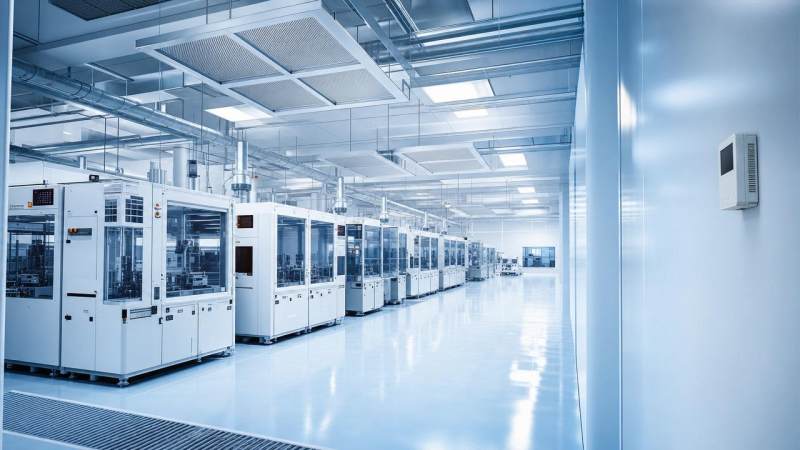
Industrial cleanroom solutions reduce downtime by stabilizing temperature, humidity, airflow, particle control, and exhaust treatment before small deviations become failures.
By integrating FFUs, CRAC units, filtration, ventilation, and monitoring, industrial cleanroom solutions keep critical operations predictable and resilient.
What makes downtime so costly in controlled manufacturing?
Downtime is rarely only a stopped machine. In clean manufacturing, it often means revalidation, scrapped batches, delayed release, and root-cause investigation.
A brief particle excursion can affect wafer yield. A humidity spike can damage lithium battery coating stability or sensitive pharmaceutical ingredients.
Industrial cleanroom solutions address these risks by controlling the invisible environment surrounding every process, operator movement, and material transfer.
The most damaging shutdowns often begin as small environmental drift. Pressure imbalance, filter loading, or chilled-water instability may seem minor.
Once the drift crosses a process limit, the result may be line stoppage, batch quarantine, emergency cleaning, or compliance documentation.
Reliable industrial cleanroom solutions convert these hidden variables into managed parameters with alarms, redundancy, and engineered containment.
Key downtime triggers
- Particle spikes caused by filter leakage, poor airflow, or maintenance disturbance.
- Temperature deviation affecting lithography, coating, filling, or metrology stability.
- Humidity excursions causing electrostatic discharge, hydrolysis, corrosion, or product defects.
- Pressure cascade failure allowing unclean air to enter critical zones.
- Exhaust interruption exposing processes to fumes, VOCs, acids, or powders.
How do industrial cleanroom solutions prevent contamination events?
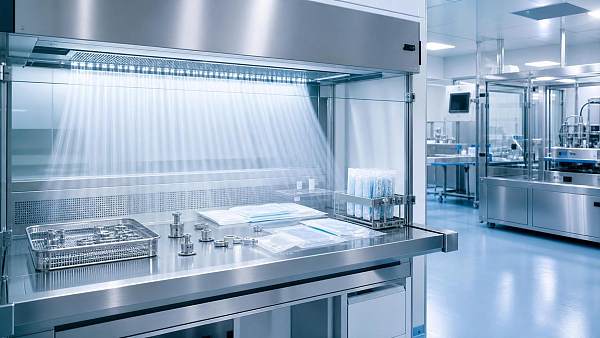
Contamination control starts with airflow discipline. Clean air must move in the right direction, at the right speed, through verified filtration.
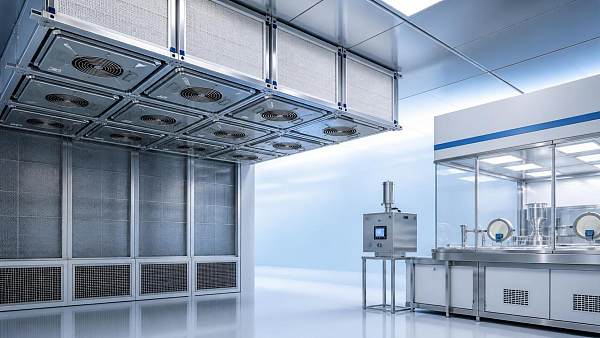
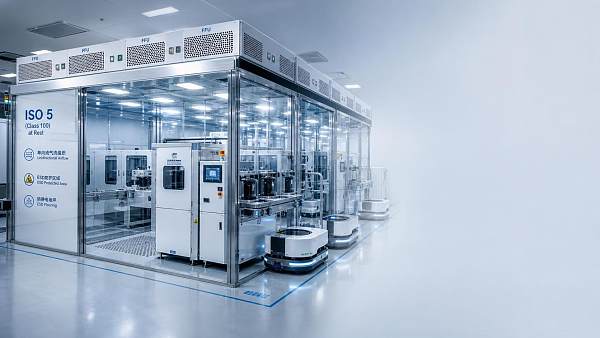
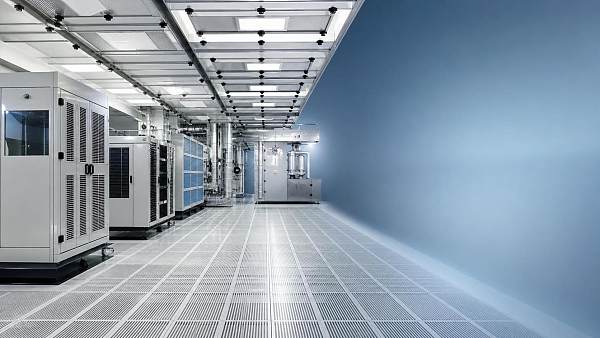
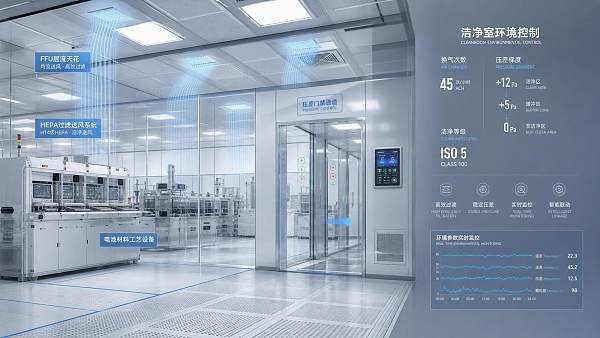
Cleanroom Fan Filter Units, or FFUs, create uniform laminar flow that carries particles away from sensitive work areas.
In wafer fabs, thousands of FFUs can work as a ceiling array, filtering microscopic dust before it reaches nano-scale production surfaces.
Industrial cleanroom solutions also use HEPA or ULPA filters, sealed ceiling systems, return air paths, and controlled gowning routes.
These elements reduce random contamination, but they also reduce cleaning frequency, emergency recertification, and production hold time.
A well-designed pressure cascade is equally important. Critical rooms remain slightly positive or negative depending on process risk.
Positive pressure protects products from outside contaminants. Negative pressure helps contain hazardous powders, vapors, or active pharmaceutical compounds.
Industrial cleanroom solutions reduce downtime by making contamination pathways predictable, measurable, and easier to isolate during abnormal events.
Practical design reminders
- Verify filter grade against process sensitivity, not only room classification.
- Confirm airflow uniformity through mapping, smoke studies, and velocity testing.
- Separate dirty, clean, and critical paths for materials and personnel.
- Use pressure alarms before deviations reach shutdown thresholds.
Why are temperature and humidity control central to uptime?
Many high-value processes fail without visible contamination. Temperature and humidity instability can be enough to stop production.
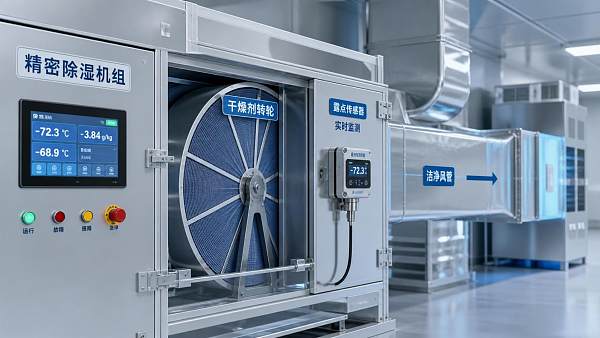
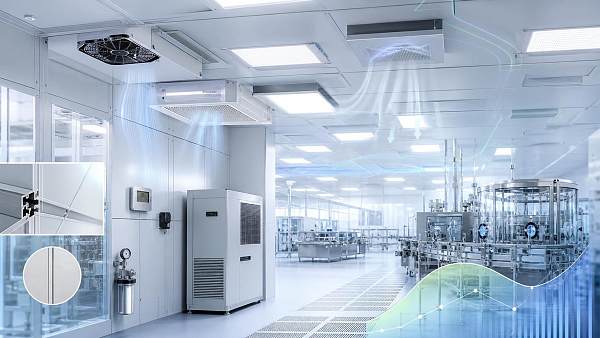
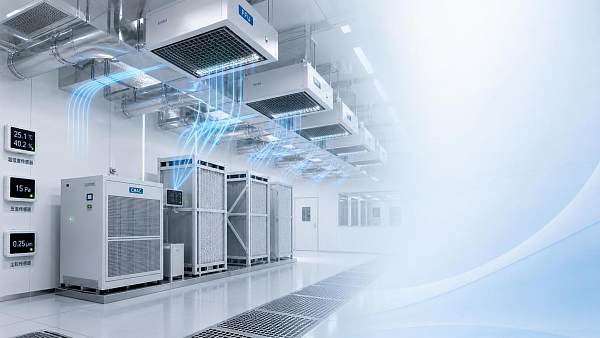
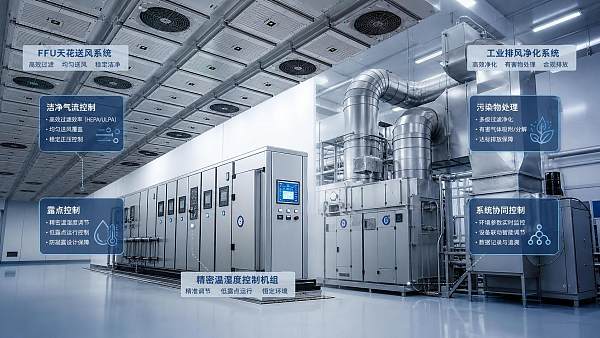
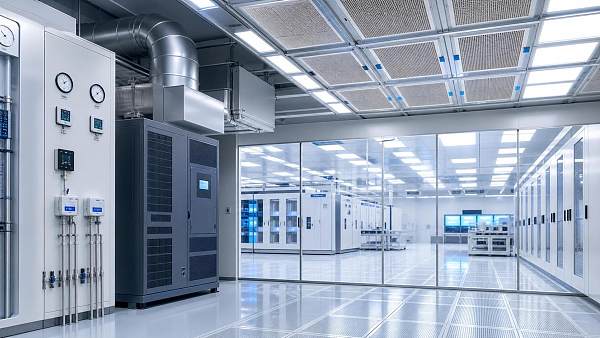
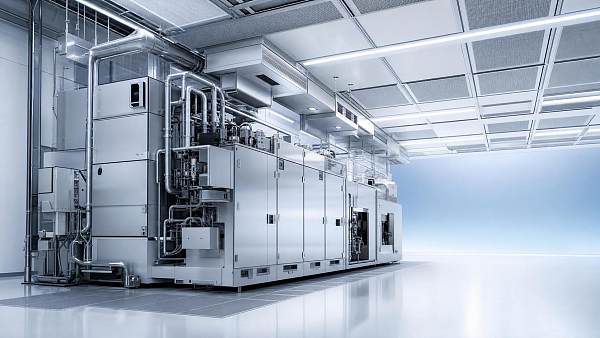
Precision CRAC units maintain process climate by regulating sensible heat, latent load, air distribution, and dew point.
In lithium battery coating, extremely dry air helps prevent reactions between moisture and sensitive electrode materials.
In semiconductor lithography, tight thermal stability supports overlay accuracy, chemical consistency, and metrology repeatability.
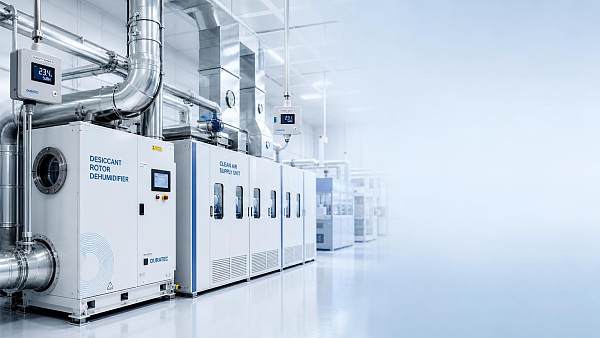
Industrial cleanroom solutions often combine CRAC units with desiccant wheels, chilled-water systems, reheating, and smart zoning.
This combination prevents one area’s heat load from destabilizing another area’s critical environmental window.
Humidity control is especially important where electrostatic discharge, powder behavior, coating thickness, or molecular hydrolysis matters.
Industrial cleanroom solutions reduce downtime by holding dew point and temperature within defined process bands during peak load changes.
Where climate deviation causes stoppage
- Battery dry rooms where moisture may degrade material stability.
- Pharmaceutical filling lines requiring reproducible aseptic conditions.
- Optical assembly areas where expansion affects alignment.
- Electronics production zones where ESD risks increase defects.
- Metrology rooms where thermal drift disrupts measurement confidence.
How do ventilation and exhaust systems reduce unplanned shutdowns?
Cleanroom uptime is not only about supply air. Exhaust, make-up air, and contaminant removal must remain balanced.
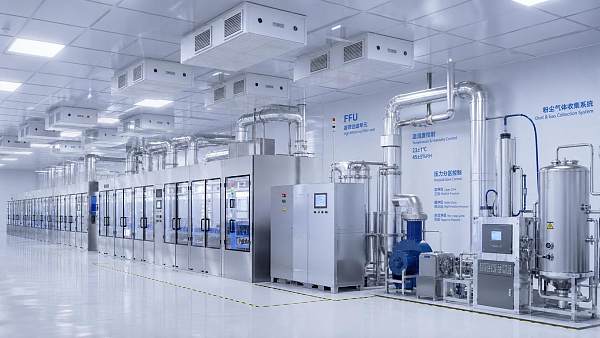
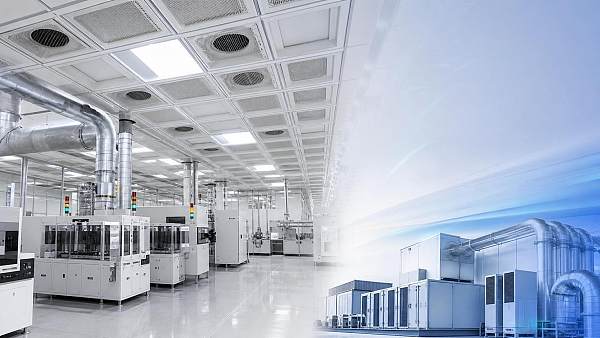
Industrial cleanroom solutions include scrubbers, dust collectors, VOC treatment, and workshop ventilation when processes generate hazardous emissions.
If exhaust capacity drops, fumes or particles may accumulate, forcing a safety stop or process interruption.
Acid-base scrubbing, plasma catalysis, cyclone separation, and activated media can support continuous operation under demanding emissions conditions.
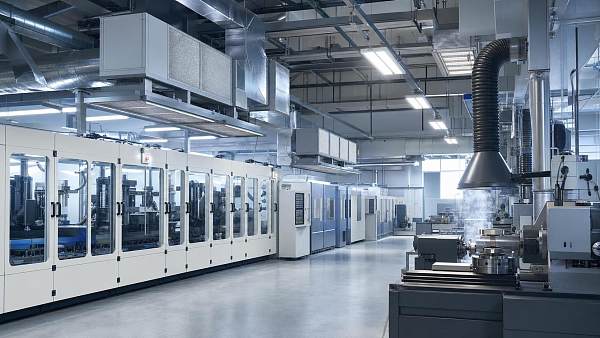
Workshop ventilation systems also protect adjacent clean zones by removing welding smoke, solvent vapor, process heat, and confined-space contaminants.
When exhaust and supply are engineered together, pressure cascades remain stable and contamination does not migrate between zones.
Industrial cleanroom solutions reduce downtime by linking process safety, emissions compliance, and cleanroom balance into one airflow strategy.
Warning signs in exhaust reliability
- Frequent pressure alarms after tool start-up or exhaust damper movement.
- Odor complaints near transfer corridors or service chases.
- Dust collector differential pressure rising faster than expected.
- Scrubber pH, flow, or mist eliminator performance drifting repeatedly.
- Make-up air units struggling during seasonal temperature changes.
What role does monitoring play in reducing downtime?
The fastest repair is the one avoided through early detection. Monitoring turns cleanroom instability into actionable signals.
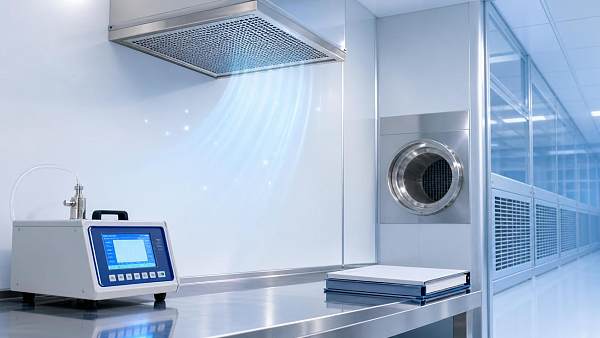
Modern industrial cleanroom solutions track particles, pressure, temperature, humidity, airflow, filter differential pressure, and equipment status.
Trend data shows whether a room is stable, slowly drifting, or vulnerable during shift changes and maintenance windows.
This allows corrective action before a deviation becomes a quality event, regulatory finding, or process shutdown.
Alarm strategy matters. Too many nuisance alarms create fatigue, while weak alarm limits hide real risk.
Industrial cleanroom solutions should use layered alarms, escalation rules, and historical baselines tied to actual process risk.
Digital swarm control can coordinate FFUs, dampers, CRAC units, and exhaust devices for more stable room behavior.
Instead of isolated equipment reactions, the environment responds as one controlled system with fewer oscillations.
Useful monitoring priorities
- Continuous pressure cascade records for critical rooms.
- Particle trend monitoring near high-risk process points.
- Dew point tracking in dry rooms and moisture-sensitive areas.
- Filter loading trends for planned replacement scheduling.
- Energy and airflow data to detect hidden system imbalance.
How should industrial cleanroom solutions be selected for different facilities?
Selection begins with process risk, not equipment preference. The cleanroom must match the product, compliance path, and production rhythm.
A semiconductor fab may prioritize particle control, vibration awareness, thermal stability, and FFU redundancy.
A battery dry room may prioritize dew point, desiccant capacity, air leakage control, and heat recovery opportunities.
A pharmaceutical facility may prioritize ISO 14644 alignment, GMP zoning, pressure cascades, cleanability, and documented validation.
Industrial cleanroom solutions must therefore be judged by uptime impact, lifecycle cost, maintainability, and certification readiness.
Energy efficiency should not be treated as separate from reliability. Overloaded HVAC systems fail more often and recover more slowly.
Commercial energy recovery ventilators can reduce HVAC burden by transferring heat or cooling from exhaust to incoming fresh air.
When properly applied, ERV systems support lower operating cost without compromising cleanroom pressure or air quality requirements.
Selection checklist
- Define contamination limits, recovery time, and acceptable deviation duration.
- Map room classification, pressure cascade, and process exhaust needs.
- Check CRAC capacity under seasonal and production peak loads.
- Confirm filter access, replacement method, and maintenance isolation.
- Specify monitoring points linked to quality, safety, and energy performance.
- Review ISO 14644, GMP, LEED, and local emissions requirements early.
What mistakes increase downtime despite cleanroom investment?
A cleanroom can be expensive yet fragile if design decisions ignore real operating behavior.
One common mistake is overspecifying room class while underspecifying airflow balance, recovery speed, or maintenance access.
Another mistake is treating industrial cleanroom solutions as separate equipment packages instead of one integrated environment.
FFUs, CRAC units, scrubbers, ducts, controls, and doors all influence each other during real operation.
Poor commissioning is another downtime driver. Systems may pass basic checks but fail during tool start-up or seasonal load changes.
Industrial cleanroom solutions require testing under realistic scenarios, including maintenance mode, filter loading, emergency exhaust, and occupancy variation.
Finally, weak documentation slows recovery. When teams cannot trace deviations quickly, stoppages last longer than necessary.
FAQ and decision table
Conclusion: how to turn cleanroom control into uptime resilience
Industrial cleanroom solutions reduce downtime by preventing contamination, stabilizing climate, balancing exhaust, and detecting drift early.
Their value is strongest when filtration, CRAC units, FFUs, scrubbers, ventilation, ERV systems, and controls are designed together.
The next practical step is an environmental risk review covering particles, pressure, dew point, thermal load, exhaust, and recovery time.
From that review, industrial cleanroom solutions can be upgraded, validated, and monitored around the real failure modes of each facility.
With disciplined design and data-driven operation, cleanrooms become more than compliant spaces. They become invisible moats for continuous manufacturing.
Recommended News
 Sep 01, 2026How to Choose Extreme Humidity Control Automation for CleanroomsExtreme humidity control automation for cleanrooms: learn how to select reliable, energy-efficient controls for dew point stability, monitoring, integration, and failure recovery.
 Aug 29, 2026ISO 14644 Certification Process: From Cleanroom Testing to Compliance ApprovalISO 14644 certification process explained: prepare your cleanroom, complete particle testing, address failures, and achieve compliance approval with confidence.
 Aug 25, 2026How to Select Cleanroom Particle Control Equipment for ISO Class and Process RiskCleanroom particle control equipment selection starts with process risk, ISO class, and airflow design. Learn how to compare FFUs, filters, and monitoring for reliable performance.
 Aug 23, 2026How Laminar Airflow Supports Compliance and Contamination Control in Medical Device ManufacturingLaminar airflow for medical devices helps reduce contamination risk, support cleanroom compliance, and improve audit readiness—see how it protects product quality and manufacturing control.
 Aug 21, 2026How to Achieve Stable RH Precision Humidity Control in Cleanroom Production?Stable RH precision humidity control starts with process-based design. Learn how airflow, sensors, dehumidification, and recovery logic keep cleanroom production consistent and reliable.
 Aug 19, 2026What Drives Cleanroom Compliance Cost in Pharma and Semiconductor Projects?Cleanroom compliance cost in pharma and semiconductor projects depends on ISO class, airflow, humidity control, validation, and energy use. Learn what drives cost and how to avoid costly overdesign.
 Aug 11, 2026How to Select Precision Humidity Control for Cleanrooms and Micro-EnvironmentsPrecision humidity control for cleanrooms starts with process needs. Learn how to compare dew point targets, airflow, controls, and energy tradeoffs for reliable, high-yield micro-environments.
 Aug 05, 2026How Cleanroom Environmental Control Automation Improves Compliance and StabilityCleanroom environmental control automation improves compliance, stability, and audit readiness through faster response, traceable control logic, and consistent environmental performance.
 Aug 04, 2026How Smart Cleanroom Thermal Control Improves Stability in FFU-Based Micro-EnvironmentsSmart cleanroom thermal control improves FFU-based micro-environment stability by aligning temperature, humidity, pressure, and airflow—learn what to evaluate before performance drifts.
 Aug 03, 2026Semiconductor Cleanroom Standards Explained: ISO Classes, Air Changes, and ESD ControlsCleanroom standards for semiconductor industry explained: understand ISO classes, air changes, and ESD controls to improve yield, reduce contamination risk, and choose smarter fab environments.
 Jul 30, 2026How to Choose Environmental Control Solutions for High-Tech Manufacturing FacilitiesHigh-tech manufacturing environment solutions guide: learn how to evaluate cleanroom airflow, dew point control, exhaust treatment, and compliance to protect yield and cut lifecycle risk.
 Jul 29, 2026How to Design Ventilation for Precision Manufacturing to Control Particles and HeatPrecision manufacturing ventilation design guide: learn how to control particles, heat, airflow, filtration, and pressure for cleaner production, higher yield, and more reliable operations.
 Jul 26, 2026ISO 5 Semiconductor Cleanroom Solutions: Key Design Criteria for Process StabilityISO 5 semiconductor cleanroom solutions focus on process stability, airflow uniformity, pressure control, and thermal consistency to protect yield and improve fab performance.
 Jul 24, 2026Cleanroom Standards Compliance: Key Requirements and Audit Readiness ChecklistCleanroom standards compliance starts with real control, not paperwork. Explore key ISO requirements, common audit gaps, and a practical checklist to improve readiness.
 Jul 20, 2026How to Evaluate a Semiconductor Cleanroom Solutions Supplier for Fab ProjectsSemiconductor cleanroom solutions supplier selection can make or break fab performance. Learn how to compare engineering depth, compliance, delivery, and lifecycle value.
 Jul 15, 2026Dust-Free Manufacturing: Key Process Controls for Cleaner Production LinesDust-free manufacturing starts with tighter control of airflow, humidity, filtration, and gas capture. Discover how cleaner production lines improve yield, safety, compliance, and energy performance.
 Jul 13, 2026How Semiconductor Environmental Control AMC Reduction Prevents Yield LossSemiconductor environmental control AMC reduction is essential to prevent yield loss. Learn how airflow, humidity, filtration, and gas treatment protect fabs and improve process stability.
 Jul 12, 2026How to Choose Semiconductor Cleanroom Solutions for EUV Lithography LinesSemiconductor cleanroom solutions for EUV require more than ISO class compliance. Learn how to compare airflow, AMC, thermal stability, vibration, and lifecycle cost for better yield.
 Jul 11, 2026Cleanroom Design Criteria Explained: Air Changes, Pressure Cascade, and ISO ClassCleanroom design criteria explained: learn how air changes, pressure cascade, and ISO Class work together to improve contamination control, compliance, and process stability.
 Jul 09, 2026Semiconductor Facility Ventilation Standards: Pressure Cascade, Air Changes, and ComplianceSemiconductor facility ventilation explained: pressure cascade, air changes, and compliance essentials to protect yield, control contamination, and reduce hidden operational risk.
 Jul 09, 2026Clean Environment Control Solutions for Dust, Humidity, and ESD in Sensitive ProductionClean environment control solutions for dust, humidity, and ESD help sensitive production improve yield, ensure compliance, cut energy waste, and reduce costly rework.
 Jul 08, 2026Cleanroom Standards ISO Class Explained: How to Match Class Levels to ProductionCleanroom standards ISO class explained clearly: learn how to match class levels to production needs, reduce contamination risk, control costs, and choose smarter cleanroom strategies.
 Jul 08, 2026How Electronics Cleanroom Air Showers Reduce Particle Transfer at Entry PointsElectronics cleanroom air showers reduce particle transfer at entry points, protect sensitive processes, and support better yield, cleaner airflow, and more reliable contamination control.
![]() Jul 07, 2026Cleanroom Certification USA: ISO Classes, Testing Steps, and Common Compliance GapsCleanroom certification USA explained: compare ISO classes, understand key testing steps, and spot common compliance gaps before they trigger audit issues, downtime, or product risk.
Jul 07, 2026Cleanroom Certification USA: ISO Classes, Testing Steps, and Common Compliance GapsCleanroom certification USA explained: compare ISO classes, understand key testing steps, and spot common compliance gaps before they trigger audit issues, downtime, or product risk.