Search News
Industry Portal
Hot Articles
- How Factories Can Select Air Quality Controls for Dust, Fumes, and VOCsIndustrial air quality control for factories: learn how to select effective solutions for dust, fumes, and VOCs while improving safety, compliance, energy efficiency, and uptime.
- How to Size Industrial Gas Scrubbing Units for Acid Fumes and Variable AirflowsIndustrial gas scrubbing units: learn how to size acid-fume scrubbers for variable airflows, peak loads, chemical demand, pressure drop, and reliable compliance.
- How to Evaluate Industrial Air Quality Control Systems for Dust, Fumes, and VOCsIndustrial air quality control systems: learn how to evaluate dust, fumes, and VOC solutions by capture efficiency, compliance, maintenance, and lifecycle cost.
Popular Tags
How cleanroom airflow control affects yield and compliance
author
Time
Click Count
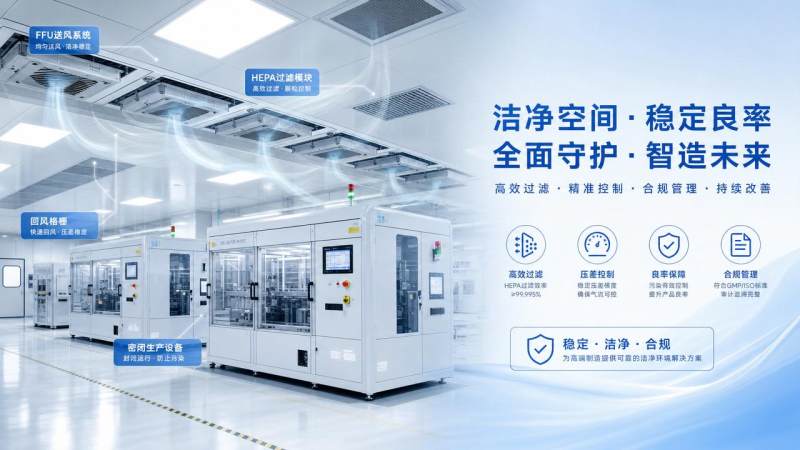
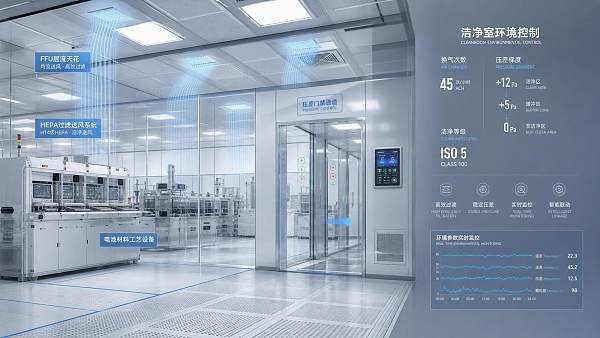
In high-stakes manufacturing, cleanroom airflow control is more than an engineering setting—it directly shapes product yield, contamination risk, and audit readiness. For quality and safety managers, understanding how airflow patterns, pressure differentials, and filtration performance interact is essential to meeting ISO expectations while protecting process stability. This article explores why precise airflow control has become a frontline factor in both compliance and operational excellence.
Why airflow control matters first to yield and compliance
When people search for cleanroom airflow control, they usually want a practical answer to one question: how does airflow affect defects, contamination events, and regulatory findings in real production environments?
For quality and safety managers, the short answer is clear. Airflow control determines whether particles are swept away from critical zones, whether pressure protects process boundaries, and whether validation data remains defensible during audits.
In other words, cleanroom performance is not only about installing HEPA or ULPA filters. It depends on how air actually moves through the room, around equipment, across operators, and out of return paths.
A room may meet design specifications on paper and still create hidden contamination risk if supply velocity is uneven, dead zones form near tools, or door openings collapse pressure cascades between classified spaces.
That is why cleanroom airflow control has become a key management topic in semiconductor, battery, pharmaceutical, electronics, and precision assembly environments where a small airborne failure can mean scrap, rework, or nonconformance.
What quality and safety teams care about most
Target readers in quality control and safety management are rarely looking for textbook definitions alone. They want to know what can go wrong, how to detect it early, and what actions reduce risk without disrupting production.
Their top concerns usually include unexplained yield loss, repeated environmental monitoring deviations, particle spikes after maintenance, unstable pressure differentials, and weak evidence during customer or certification audits.
They also care about people-related factors. Operator movement, gowning behavior, material transfer, and maintenance access can all disrupt intended airflow patterns and introduce contamination into critical process areas.
From a safety perspective, airflow also affects hazardous exposure control. In some manufacturing spaces, improper directionality can spread fumes, process gases, or reactive dust into adjacent work zones.
So the real value of good airflow control is broader than cleanliness alone. It supports product quality, worker protection, contamination isolation, process repeatability, and confidence that the facility can withstand regulatory scrutiny.
How airflow affects yield in day-to-day operations
Yield losses linked to contamination are not always dramatic or obvious. Many begin as small pattern defects, coating irregularities, bonding issues, oxidation events, or surface contamination that slowly erode process capability.
Airflow influences these outcomes by controlling the transport path of airborne particles. If airflow remains uniform and directional, particles are diluted or removed before they settle on wafers, cells, optics, or sensitive assemblies.
When airflow becomes turbulent near critical tools, the opposite happens. Particles can recirculate, hover in stagnant pockets, or be driven back into process zones where they create defects at exactly the wrong moment.
Even a well-filtered room can suffer if airflow velocity is mismatched to the process. Too low, and contaminants are not removed fast enough. Too high, and turbulence or equipment disturbance may increase contamination risk.
This is especially important in high-spec environments where product geometry is shrinking and tolerance windows are tightening. As process nodes become more sensitive, airflow control shifts from a facilities issue to a yield management issue.
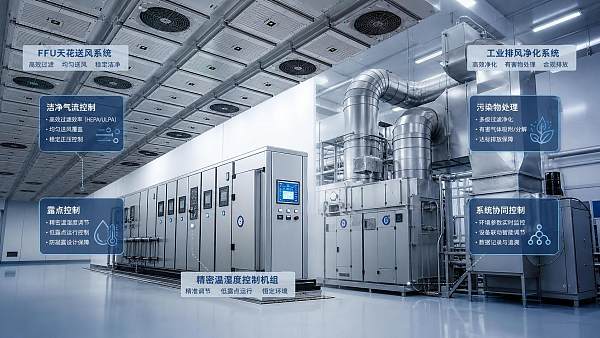
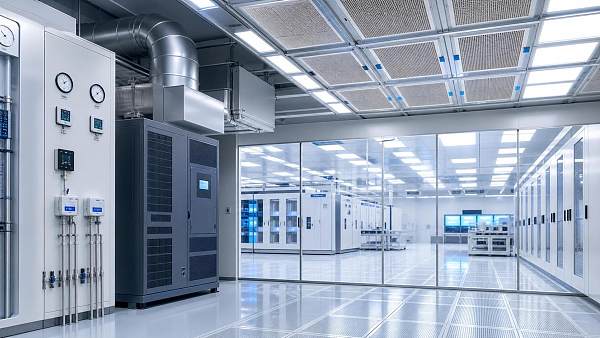
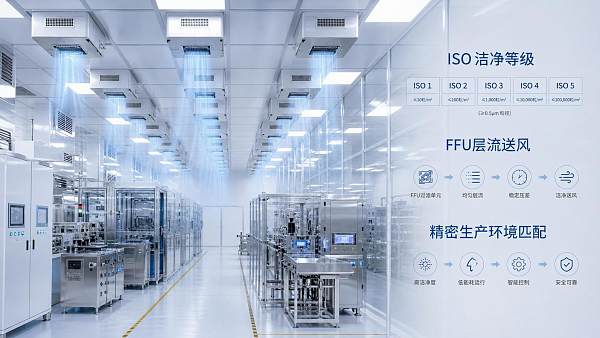
Fan filter units, return air layout, ceiling coverage, obstruction control, and equipment placement all matter because they influence the real airflow field, not just the theoretical design intent.
How airflow control supports ISO and audit compliance
From a compliance viewpoint, airflow is one of the most visible signs that a cleanroom is being controlled rather than merely classified. Auditors often look beyond filter ratings and ask whether airflow performance is measured, trended, and maintained.
ISO 14644 does not simply reward having clean air equipment installed. It expects the cleanroom to operate in a way that consistently maintains the required airborne particulate cleanliness under defined conditions.
That means quality records should show more than one-time commissioning data. Teams should be able to demonstrate pressure differential control, airflow velocity verification where relevant, recovery performance, and response to deviations.
In practice, many findings emerge not because the system lacks capacity, but because monitoring is weak or corrective actions are poorly documented. A pressure alarm without root-cause follow-up is rarely enough.
For safety and quality managers, audit readiness improves when airflow control is connected to routine operating procedures, change management, maintenance records, and environmental trend reviews.
This linkage matters because regulators and customers increasingly want evidence that environmental control is risk-based, data-driven, and aligned with actual production behavior rather than static facility assumptions.
The airflow variables that deserve the closest attention
Not every parameter has equal operational impact. For most facilities, the highest-value variables are airflow pattern, air change effectiveness, pressure differentials, filter integrity, recovery time, and disturbance sensitivity.
Airflow pattern is the first priority. Quality managers need to know whether air moves consistently from cleaner zones toward less critical zones, and whether critical process points stay within protected flow paths.
Pressure differential is the second. Stable pressure cascades help prevent infiltration from adjacent spaces. If pressure drops during door openings, shift changes, or maintenance events, contamination control can fail quickly.
Filtration performance is the third. Even excellent airflow design cannot compensate for leaking filters, poor sealing, bypass conditions, or overloaded media that reduce effective contamination capture.
Recovery time is another underused metric. It reveals how quickly the room returns to acceptable conditions after a particle-generating event, personnel movement, or process interruption. Slow recovery often signals deeper airflow weaknesses.
Finally, teams should assess disturbance sensitivity. Some rooms appear compliant during steady-state testing but become unstable when people, carts, tool doors, or process heat loads alter the local flow field.
Common failure modes that quietly undermine control
Many airflow problems start small and remain hidden until yield or compliance suffers. One common issue is uneven supply distribution caused by poorly balanced fan filter units or blocked ceiling sections.
Another frequent problem is return air obstruction. Storage creep, temporary barriers, cable routing, and tool retrofits can interrupt intended circulation paths and create stagnant zones where particles accumulate.
Door behavior is also underestimated. Frequent openings, damaged seals, and interlock failures can collapse pressure relationships, especially in layouts that rely on narrow differential margins between rooms.
Maintenance activities introduce another risk. Filter replacement, duct work, sensor recalibration, and utility access can all change the airflow field. If post-maintenance verification is weak, the room may drift out of control unnoticed.
Heat load changes from new equipment can also alter airflow behavior. Thermal plumes rising from tools or process chambers may distort vertical flow and carry particles into areas that were previously stable.
These failure modes matter because they are operational, not just mechanical. They often sit at the boundary between facilities, production, quality, and EHS responsibilities, which is why clear ownership is essential.
How to evaluate whether your airflow strategy is really working
For practical decision-making, quality and safety teams need a framework that goes beyond pass or fail. The key question is whether airflow control is robust under normal production stress.
Start by comparing classification data with actual defect trends, excursion reports, and maintenance history. If cleanroom test results look good but contamination-related issues persist, the airflow strategy may be incomplete.
Next, review pressure differential trends over time rather than relying on spot checks. Look for drift during peak activity, shift transitions, material transfer periods, or process conditions with high thermal output.
Then assess airflow visualization results, smoke studies, or equivalent mapping methods around critical process points. These tests often reveal recirculation, turbulence, or operator interference that particle counts alone may miss.
Filter integrity testing and fan performance verification should also be reviewed as a linked control system. A filter can pass nominally while the surrounding airflow balance remains suboptimal for the process.
Most importantly, involve production teams when evaluating findings. Operators often notice unstable doors, uncomfortable drafts, recurring alarms, or contamination patterns before formal reports identify a trend.
What strong corrective action looks like in practice
Effective corrective action does not begin with replacing equipment by default. It begins with identifying whether the issue is caused by design, operation, maintenance, behavior, or process change.
If airflow mapping shows local turbulence near a critical tool, the solution may involve repositioning returns, adjusting FFU balance, adding containment features, or changing material flow paths rather than increasing total airflow.
If pressure instability is the main issue, teams may need to review door discipline, interlock logic, sensor placement, control tuning, and leakage paths around panels or service penetrations.
For recurring post-maintenance deviations, a structured requalification checklist is often more valuable than extra monitoring alone. Every intervention affecting the envelope or air system should trigger defined verification steps.
Where contamination is linked to operator activity, corrective action may include revised gowning, workstation redesign, movement restrictions, or training focused on how human behavior interacts with airflow direction.
The best corrective actions are measurable. They should define expected outcomes such as lower particle excursions, faster recovery, tighter pressure stability, or reduced defect correlation in the affected area.
Balancing cleanliness, safety, and energy use
One of the most important management judgments is recognizing that more airflow is not always better. Excessive airflow can raise energy costs, increase noise, create operator discomfort, and sometimes worsen turbulence.
For organizations focused on both compliance and operational efficiency, the goal is optimized airflow, not maximum airflow. That means matching velocity, filtration, zoning, and control logic to the actual process risk.
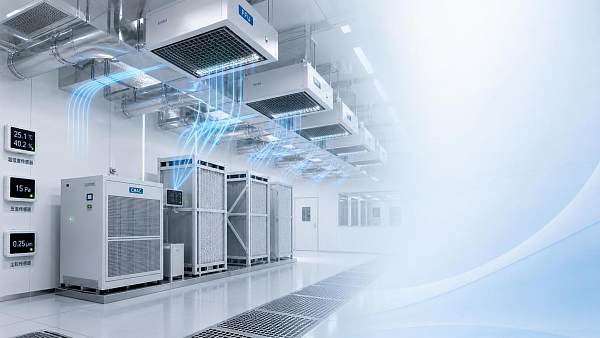
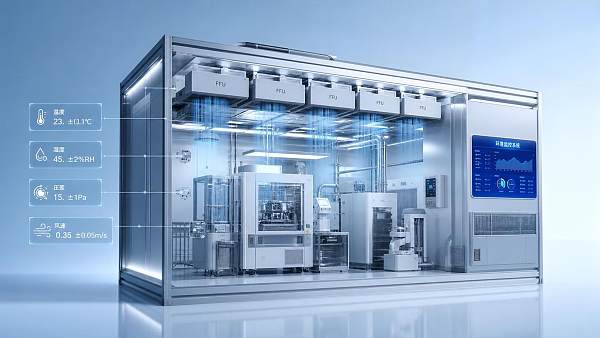
This is where advanced environmental control strategies create value. Precision CRAC systems, well-managed FFU arrays, and pressure cascade controls can support both contamination control and energy discipline when integrated properly.
In facilities pursuing zero-carbon or high-efficiency targets, energy recovery and intelligent ventilation strategies must still respect contamination boundaries. Efficiency gains should never come from compromising directional airflow integrity.
Quality and safety managers play a critical role here because they translate environmental settings into risk language: what level of airflow deviation is acceptable, what is not, and what evidence supports that decision.
A practical checklist for quality and safety managers
If you need a simple way to review cleanroom airflow control, begin with five questions. Are critical zones protected by verified airflow patterns? Are pressure cascades stable during real operations? Are filters and fans performing as intended?
Next ask whether deviations are trended and investigated, whether maintenance changes trigger re-verification, and whether environmental data is linked to yield or contamination outcomes instead of stored in isolation.
Then review people and process factors. Are operator movements disrupting clean paths? Have new tools changed thermal behavior? Are carts, storage, or temporary partitions affecting return air routes?
Finally, confirm governance. Clear roles between facilities, production, quality, and EHS reduce the risk that airflow issues stay unresolved because each team assumes another group owns the problem.
This checklist will not replace formal qualification, but it helps managers quickly identify whether their airflow strategy is mature, reactive, or vulnerable to the next audit or production upset.
Conclusion
Cleanroom airflow control affects yield and compliance because it determines how contamination actually behaves inside the production environment, not just how the system was originally designed to perform.
For quality and safety managers, the priority is to treat airflow as a monitored, risk-based control that connects facility performance with product stability, worker protection, and audit readiness.
When airflow patterns are verified, pressure relationships remain stable, filtration is maintained, and operational disturbances are managed, cleanrooms become more than compliant spaces—they become reliable manufacturing assets.
That is the real takeaway. Better cleanroom airflow control is not only a facilities upgrade. It is a practical lever for protecting yield, reducing risk, and strengthening confidence in every critical process carried out inside the room.
Recommended News
 Aug 25, 2026How to Select Cleanroom Particle Control Equipment for ISO Class and Process RiskCleanroom particle control equipment selection starts with process risk, ISO class, and airflow design. Learn how to compare FFUs, filters, and monitoring for reliable performance.
 Aug 23, 2026How Laminar Airflow Supports Compliance and Contamination Control in Medical Device ManufacturingLaminar airflow for medical devices helps reduce contamination risk, support cleanroom compliance, and improve audit readiness—see how it protects product quality and manufacturing control.
 Aug 21, 2026How to Achieve Stable RH Precision Humidity Control in Cleanroom Production?Stable RH precision humidity control starts with process-based design. Learn how airflow, sensors, dehumidification, and recovery logic keep cleanroom production consistent and reliable.
 Aug 19, 2026What Drives Cleanroom Compliance Cost in Pharma and Semiconductor Projects?Cleanroom compliance cost in pharma and semiconductor projects depends on ISO class, airflow, humidity control, validation, and energy use. Learn what drives cost and how to avoid costly overdesign.
 Aug 11, 2026How to Select Precision Humidity Control for Cleanrooms and Micro-EnvironmentsPrecision humidity control for cleanrooms starts with process needs. Learn how to compare dew point targets, airflow, controls, and energy tradeoffs for reliable, high-yield micro-environments.
 Aug 05, 2026How Cleanroom Environmental Control Automation Improves Compliance and StabilityCleanroom environmental control automation improves compliance, stability, and audit readiness through faster response, traceable control logic, and consistent environmental performance.
 Aug 04, 2026How Smart Cleanroom Thermal Control Improves Stability in FFU-Based Micro-EnvironmentsSmart cleanroom thermal control improves FFU-based micro-environment stability by aligning temperature, humidity, pressure, and airflow—learn what to evaluate before performance drifts.
 Aug 03, 2026Semiconductor Cleanroom Standards Explained: ISO Classes, Air Changes, and ESD ControlsCleanroom standards for semiconductor industry explained: understand ISO classes, air changes, and ESD controls to improve yield, reduce contamination risk, and choose smarter fab environments.
 Jul 30, 2026How to Choose Environmental Control Solutions for High-Tech Manufacturing FacilitiesHigh-tech manufacturing environment solutions guide: learn how to evaluate cleanroom airflow, dew point control, exhaust treatment, and compliance to protect yield and cut lifecycle risk.
 Jul 29, 2026How to Design Ventilation for Precision Manufacturing to Control Particles and HeatPrecision manufacturing ventilation design guide: learn how to control particles, heat, airflow, filtration, and pressure for cleaner production, higher yield, and more reliable operations.
 Jul 26, 2026ISO 5 Semiconductor Cleanroom Solutions: Key Design Criteria for Process StabilityISO 5 semiconductor cleanroom solutions focus on process stability, airflow uniformity, pressure control, and thermal consistency to protect yield and improve fab performance.
 Jul 24, 2026Cleanroom Standards Compliance: Key Requirements and Audit Readiness ChecklistCleanroom standards compliance starts with real control, not paperwork. Explore key ISO requirements, common audit gaps, and a practical checklist to improve readiness.
 Jul 20, 2026How to Evaluate a Semiconductor Cleanroom Solutions Supplier for Fab ProjectsSemiconductor cleanroom solutions supplier selection can make or break fab performance. Learn how to compare engineering depth, compliance, delivery, and lifecycle value.
 Jul 15, 2026Dust-Free Manufacturing: Key Process Controls for Cleaner Production LinesDust-free manufacturing starts with tighter control of airflow, humidity, filtration, and gas capture. Discover how cleaner production lines improve yield, safety, compliance, and energy performance.
 Jul 13, 2026How Semiconductor Environmental Control AMC Reduction Prevents Yield LossSemiconductor environmental control AMC reduction is essential to prevent yield loss. Learn how airflow, humidity, filtration, and gas treatment protect fabs and improve process stability.
 Jul 12, 2026How to Choose Semiconductor Cleanroom Solutions for EUV Lithography LinesSemiconductor cleanroom solutions for EUV require more than ISO class compliance. Learn how to compare airflow, AMC, thermal stability, vibration, and lifecycle cost for better yield.
 Jul 11, 2026Cleanroom Design Criteria Explained: Air Changes, Pressure Cascade, and ISO ClassCleanroom design criteria explained: learn how air changes, pressure cascade, and ISO Class work together to improve contamination control, compliance, and process stability.
 Jul 09, 2026Semiconductor Facility Ventilation Standards: Pressure Cascade, Air Changes, and ComplianceSemiconductor facility ventilation explained: pressure cascade, air changes, and compliance essentials to protect yield, control contamination, and reduce hidden operational risk.
 Jul 09, 2026Clean Environment Control Solutions for Dust, Humidity, and ESD in Sensitive ProductionClean environment control solutions for dust, humidity, and ESD help sensitive production improve yield, ensure compliance, cut energy waste, and reduce costly rework.
 Jul 08, 2026Cleanroom Standards ISO Class Explained: How to Match Class Levels to ProductionCleanroom standards ISO class explained clearly: learn how to match class levels to production needs, reduce contamination risk, control costs, and choose smarter cleanroom strategies.
 Jul 08, 2026How Electronics Cleanroom Air Showers Reduce Particle Transfer at Entry PointsElectronics cleanroom air showers reduce particle transfer at entry points, protect sensitive processes, and support better yield, cleaner airflow, and more reliable contamination control.
![]() Jul 07, 2026Cleanroom Certification USA: ISO Classes, Testing Steps, and Common Compliance GapsCleanroom certification USA explained: compare ISO classes, understand key testing steps, and spot common compliance gaps before they trigger audit issues, downtime, or product risk.
Jul 07, 2026Cleanroom Certification USA: ISO Classes, Testing Steps, and Common Compliance GapsCleanroom certification USA explained: compare ISO classes, understand key testing steps, and spot common compliance gaps before they trigger audit issues, downtime, or product risk. Jul 06, 2026What Is Semiconductor Clean Air and Why Does It Matter in Contamination Control?Semiconductor clean air is vital to contamination control, protecting yield, tool stability, and process consistency. Learn why it matters in modern fabs.
 Jul 05, 2026Cleanroom Airflow Control Systems Explained: How to Balance Pressure, Air Changes, and StabilityCleanroom airflow control systems explained: learn how to balance pressure, air changes, and stability to improve contamination control, cut energy waste, and protect production yield.