Search News
Industry Portal
Hot Articles
- How Factories Can Select Air Quality Controls for Dust, Fumes, and VOCsIndustrial air quality control for factories: learn how to select effective solutions for dust, fumes, and VOCs while improving safety, compliance, energy efficiency, and uptime.
- How to Size Industrial Gas Scrubbing Units for Acid Fumes and Variable AirflowsIndustrial gas scrubbing units: learn how to size acid-fume scrubbers for variable airflows, peak loads, chemical demand, pressure drop, and reliable compliance.
- How to Evaluate Industrial Air Quality Control Systems for Dust, Fumes, and VOCsIndustrial air quality control systems: learn how to evaluate dust, fumes, and VOC solutions by capture efficiency, compliance, maintenance, and lifecycle cost.
Popular Tags
Cleanroom environmental standards that often delay compliance
author
Time
Click Count
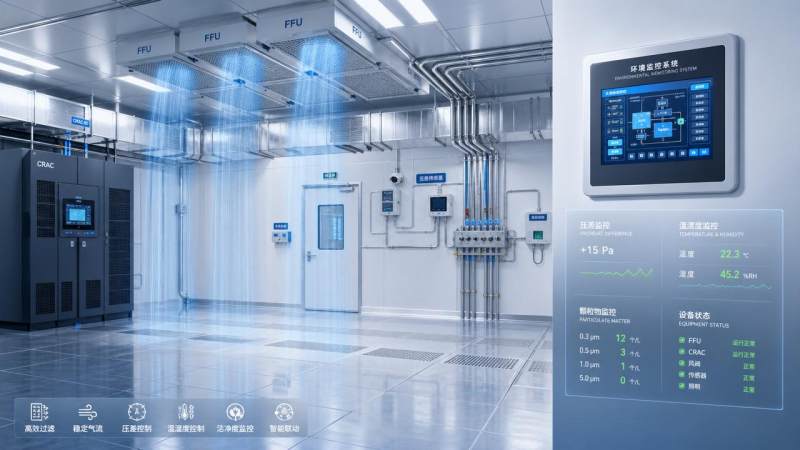
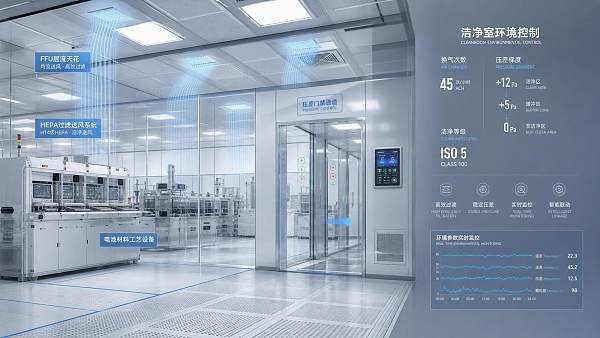
Cleanroom environmental standards often become the hidden bottleneck that delays project approval, equipment validation, and production ramp-up. When airflow design, particle control, humidity stability, and documentation are handled separately, compliance gaps appear late. That delay is expensive. Across advanced manufacturing and commercial environmental control projects, cleanroom environmental standards now shape schedule certainty as much as capital investment does.
The challenge is no longer limited to meeting one specification. Teams must align ISO classification, pressure cascade logic, filter integrity, temperature and dew point control, recovery time, energy performance, and traceable monitoring. If one parameter drifts, validation can stall. Understanding which cleanroom environmental standards most often trigger rework is the first step toward preventing avoidable delays.
Why cleanroom environmental standards are becoming a bigger schedule risk
Compliance pressure has intensified because clean environments now support more sensitive processes. Semiconductor nodes are smaller. Battery materials are more reactive. Medical and precision assembly spaces require tighter contamination control. At the same time, energy efficiency targets are rising.
This creates a difficult balance. A system must deliver stable air cleanliness and humidity while avoiding excessive fan energy, unstable pressure, and maintenance complexity. Cleanroom environmental standards are therefore not static checklists. They are operational performance commitments.
Another trend is earlier scrutiny from investors, certifiers, and end users. They increasingly ask for evidence before commissioning. Design assumptions that were once accepted now require measured proof, simulation support, and documented change control.
The standards areas that most often delay compliance
Most delays do not come from one dramatic failure. They come from several moderate gaps that compound near handover. The following areas are the most common sources of schedule drift under cleanroom environmental standards.
1. ISO 14644 particle classification is specified too late
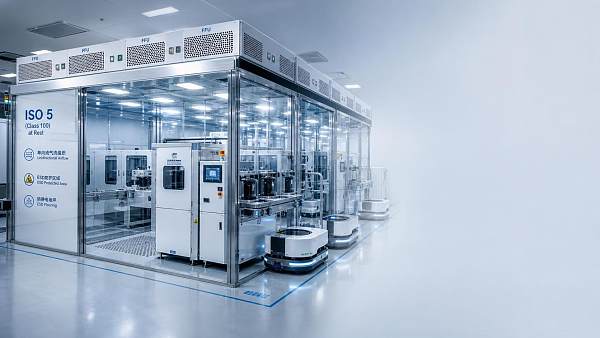
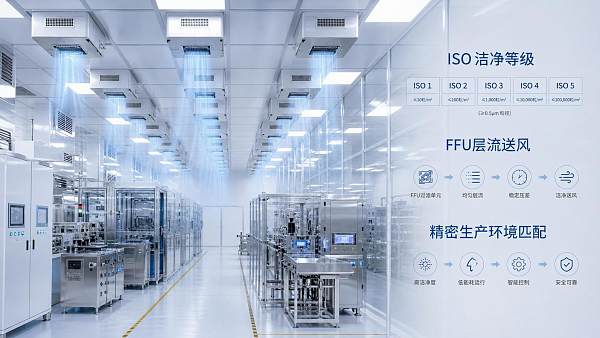
ISO 14644 remains central to cleanroom environmental standards. Problems begin when target classes are defined without linking them to process sensitivity, occupancy patterns, and airflow architecture.
Late adjustments often require FFU density changes, balancing revisions, or filter upgrades. Those modifications affect ceiling layout, fan power, and commissioning sequence.
2. Airflow visualization and recovery assumptions are overly optimistic
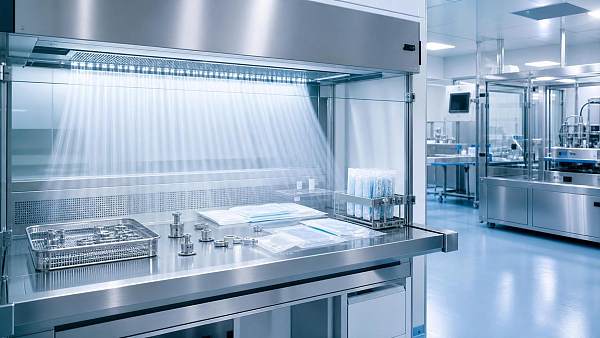
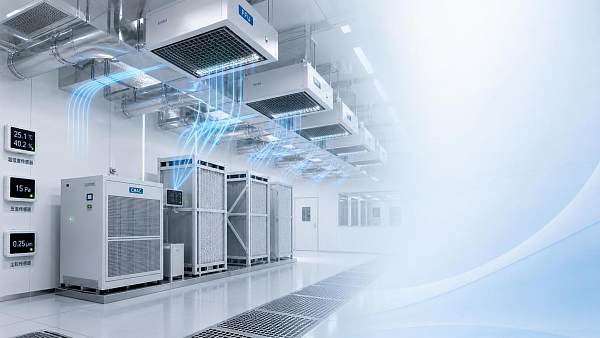
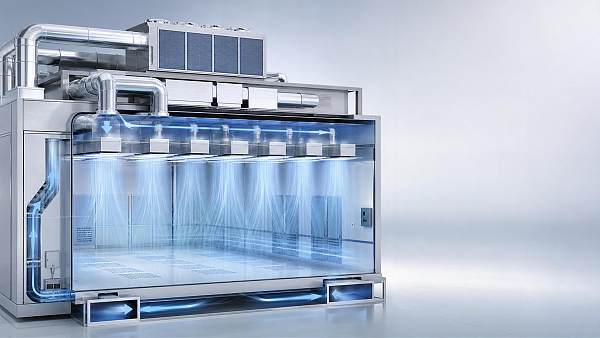
Laminar flow is frequently assumed rather than demonstrated. Equipment placement, cable trays, and operator zones can create turbulence, dead corners, or backflow. Recovery time then misses the required benchmark.
When smoke studies or airflow tests reveal instability, redesign is rarely minor. Hood geometry, return locations, and fan speeds may all need correction.
3. Humidity and dew point control are underestimated
In battery, electronics, and specialty materials spaces, moisture control is often more critical than temperature comfort. Yet some projects still treat dew point as an HVAC detail rather than a process compliance variable.
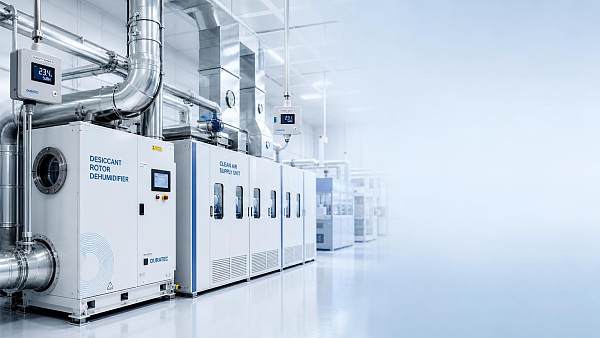
If desiccant performance, infiltration rates, or door-opening frequency are misjudged, the room may pass particle counts but fail process readiness. That is a major compliance delay.
4. Pressure cascade logic is designed without operational reality
Pressure differentials appear simple on drawings. In operation, they are influenced by door traffic, exhaust fluctuations, filter loading, and control tuning. Weak cascade design creates contamination migration risk.
Under cleanroom environmental standards, unstable pressure often forces repeated balancing and retesting. This is especially common in facilities combining clean zones with scrubber exhaust or aggressive process ventilation.
5. Monitoring, alarms, and records are not validation-ready
A room may perform well physically but still fail compliance readiness if sensors are poorly located, calibration records are incomplete, or trend data cannot support audit review.
Modern cleanroom environmental standards increasingly depend on proof. Continuous monitoring, alarm rationalization, and traceable reports are no longer optional support tools.
What is driving these delays across industries
Several forces are pushing compliance risk higher. They affect semiconductors, new energy production, industrial process treatment, and even energy-efficient commercial spaces with critical indoor air requirements.
How compliance delays affect different business stages
The impact of weak cleanroom environmental standards control is not limited to final certification. It changes decisions throughout the project lifecycle.
- During design, unclear cleanliness targets lead to oversized or undersized air systems.
- During procurement, unspecified testing criteria create mismatch between equipment capability and validation needs.
- During installation, ceiling congestion and utility conflicts undermine intended airflow patterns.
- During commissioning, repeated balancing extends labor cost and delays integrated performance checks.
- During operation, unstable control loops increase maintenance, alarm fatigue, and audit exposure.
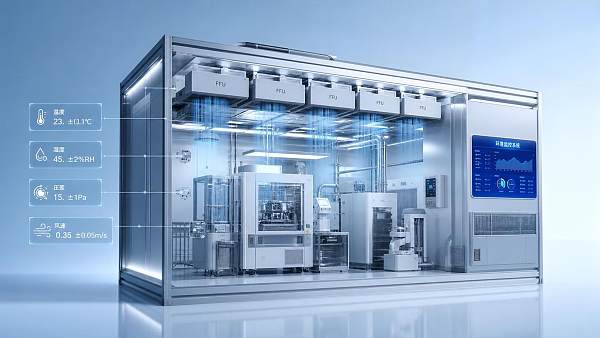
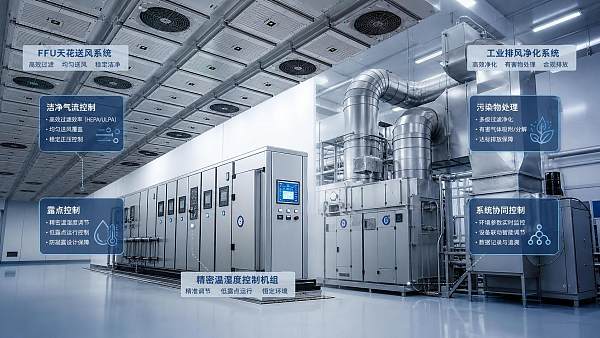
For intelligence-driven environmental control platforms such as CECS, this matters because clean performance and energy performance now move together. Precision CRAC units, FFUs, scrubbers, workshop ventilation, and ERV systems can no longer be optimized independently.
The checkpoints that deserve the closest attention
To reduce delays tied to cleanroom environmental standards, several checkpoints deserve early and structured review.
- Define room class, occupancy, process emissions, and recovery targets together.
- Verify airflow using simulation and field visualization, not only design intent.
- Model dew point risk using infiltration, door cycles, and desiccant performance data.
- Test pressure cascade behavior under realistic operating scenarios.
- Plan filter integrity, sensor calibration, and trend reporting before commissioning starts.
- Link energy recovery or exhaust treatment changes to cleanroom control logic.
- Maintain a documented change register for all layout and process revisions.
A practical response framework for faster compliance
The most effective response is to treat cleanroom environmental standards as a coordinated system, not a final test package. A practical framework can shorten approval cycles and lower redesign risk.
The next judgment: compliance will favor integrated environmental intelligence
The direction is clear. Cleanroom environmental standards will continue expanding from cleanliness alone toward integrated control of particles, moisture, airflow stability, energy use, and emissions interface.
That favors organizations able to connect micro-dust isolation, precision climate control, exhaust treatment, and heat recovery into one decision model. It also favors stronger validation evidence from the earliest project stages.
In practical terms, future-ready compliance depends on tighter coordination between FFUs, CRAC systems, scrubbers, ventilation networks, and monitoring architecture. Cleanroom environmental standards are becoming a test of systems thinking.
What to do now before delays appear
Start with a gap review focused on the standards most likely to slip: ISO class alignment, airflow recovery, dew point stability, pressure cascade control, and validation records. Then connect those findings to equipment selection and commissioning logic.
For projects facing strict cleanroom environmental standards, early intelligence is usually cheaper than late correction. A structured review of design assumptions, test readiness, and operational data paths can protect both compliance timing and long-term performance.
CECS supports this perspective by linking technical standards, energy discipline, and environmental control strategy. In a market where delays often begin with invisible variables, that integrated view is becoming a decisive advantage.
Recommended News
 Aug 25, 2026How to Select Cleanroom Particle Control Equipment for ISO Class and Process RiskCleanroom particle control equipment selection starts with process risk, ISO class, and airflow design. Learn how to compare FFUs, filters, and monitoring for reliable performance.
 Aug 23, 2026How Laminar Airflow Supports Compliance and Contamination Control in Medical Device ManufacturingLaminar airflow for medical devices helps reduce contamination risk, support cleanroom compliance, and improve audit readiness—see how it protects product quality and manufacturing control.
 Aug 21, 2026How to Achieve Stable RH Precision Humidity Control in Cleanroom Production?Stable RH precision humidity control starts with process-based design. Learn how airflow, sensors, dehumidification, and recovery logic keep cleanroom production consistent and reliable.
 Aug 19, 2026What Drives Cleanroom Compliance Cost in Pharma and Semiconductor Projects?Cleanroom compliance cost in pharma and semiconductor projects depends on ISO class, airflow, humidity control, validation, and energy use. Learn what drives cost and how to avoid costly overdesign.
 Aug 11, 2026How to Select Precision Humidity Control for Cleanrooms and Micro-EnvironmentsPrecision humidity control for cleanrooms starts with process needs. Learn how to compare dew point targets, airflow, controls, and energy tradeoffs for reliable, high-yield micro-environments.
 Aug 05, 2026How Cleanroom Environmental Control Automation Improves Compliance and StabilityCleanroom environmental control automation improves compliance, stability, and audit readiness through faster response, traceable control logic, and consistent environmental performance.
 Aug 04, 2026How Smart Cleanroom Thermal Control Improves Stability in FFU-Based Micro-EnvironmentsSmart cleanroom thermal control improves FFU-based micro-environment stability by aligning temperature, humidity, pressure, and airflow—learn what to evaluate before performance drifts.
 Aug 03, 2026Semiconductor Cleanroom Standards Explained: ISO Classes, Air Changes, and ESD ControlsCleanroom standards for semiconductor industry explained: understand ISO classes, air changes, and ESD controls to improve yield, reduce contamination risk, and choose smarter fab environments.
 Jul 30, 2026How to Choose Environmental Control Solutions for High-Tech Manufacturing FacilitiesHigh-tech manufacturing environment solutions guide: learn how to evaluate cleanroom airflow, dew point control, exhaust treatment, and compliance to protect yield and cut lifecycle risk.
 Jul 29, 2026How to Design Ventilation for Precision Manufacturing to Control Particles and HeatPrecision manufacturing ventilation design guide: learn how to control particles, heat, airflow, filtration, and pressure for cleaner production, higher yield, and more reliable operations.
 Jul 26, 2026ISO 5 Semiconductor Cleanroom Solutions: Key Design Criteria for Process StabilityISO 5 semiconductor cleanroom solutions focus on process stability, airflow uniformity, pressure control, and thermal consistency to protect yield and improve fab performance.
 Jul 24, 2026Cleanroom Standards Compliance: Key Requirements and Audit Readiness ChecklistCleanroom standards compliance starts with real control, not paperwork. Explore key ISO requirements, common audit gaps, and a practical checklist to improve readiness.
 Jul 20, 2026How to Evaluate a Semiconductor Cleanroom Solutions Supplier for Fab ProjectsSemiconductor cleanroom solutions supplier selection can make or break fab performance. Learn how to compare engineering depth, compliance, delivery, and lifecycle value.
 Jul 15, 2026Dust-Free Manufacturing: Key Process Controls for Cleaner Production LinesDust-free manufacturing starts with tighter control of airflow, humidity, filtration, and gas capture. Discover how cleaner production lines improve yield, safety, compliance, and energy performance.
 Jul 13, 2026How Semiconductor Environmental Control AMC Reduction Prevents Yield LossSemiconductor environmental control AMC reduction is essential to prevent yield loss. Learn how airflow, humidity, filtration, and gas treatment protect fabs and improve process stability.
 Jul 12, 2026How to Choose Semiconductor Cleanroom Solutions for EUV Lithography LinesSemiconductor cleanroom solutions for EUV require more than ISO class compliance. Learn how to compare airflow, AMC, thermal stability, vibration, and lifecycle cost for better yield.
 Jul 11, 2026Cleanroom Design Criteria Explained: Air Changes, Pressure Cascade, and ISO ClassCleanroom design criteria explained: learn how air changes, pressure cascade, and ISO Class work together to improve contamination control, compliance, and process stability.
 Jul 09, 2026Semiconductor Facility Ventilation Standards: Pressure Cascade, Air Changes, and ComplianceSemiconductor facility ventilation explained: pressure cascade, air changes, and compliance essentials to protect yield, control contamination, and reduce hidden operational risk.
 Jul 09, 2026Clean Environment Control Solutions for Dust, Humidity, and ESD in Sensitive ProductionClean environment control solutions for dust, humidity, and ESD help sensitive production improve yield, ensure compliance, cut energy waste, and reduce costly rework.
 Jul 08, 2026Cleanroom Standards ISO Class Explained: How to Match Class Levels to ProductionCleanroom standards ISO class explained clearly: learn how to match class levels to production needs, reduce contamination risk, control costs, and choose smarter cleanroom strategies.
 Jul 08, 2026How Electronics Cleanroom Air Showers Reduce Particle Transfer at Entry PointsElectronics cleanroom air showers reduce particle transfer at entry points, protect sensitive processes, and support better yield, cleaner airflow, and more reliable contamination control.
![]() Jul 07, 2026Cleanroom Certification USA: ISO Classes, Testing Steps, and Common Compliance GapsCleanroom certification USA explained: compare ISO classes, understand key testing steps, and spot common compliance gaps before they trigger audit issues, downtime, or product risk.
Jul 07, 2026Cleanroom Certification USA: ISO Classes, Testing Steps, and Common Compliance GapsCleanroom certification USA explained: compare ISO classes, understand key testing steps, and spot common compliance gaps before they trigger audit issues, downtime, or product risk. Jul 06, 2026What Is Semiconductor Clean Air and Why Does It Matter in Contamination Control?Semiconductor clean air is vital to contamination control, protecting yield, tool stability, and process consistency. Learn why it matters in modern fabs.
 Jul 05, 2026Cleanroom Airflow Control Systems Explained: How to Balance Pressure, Air Changes, and StabilityCleanroom airflow control systems explained: learn how to balance pressure, air changes, and stability to improve contamination control, cut energy waste, and protect production yield.