Search News
Industry Portal
Hot Articles
- How to Select a Gas Scrubbing System for Corrosive Industrial Exhaust StreamsGas scrubbing systems for exhaust: learn how to match corrosive stream chemistry, scrubber design, materials, controls, and compliance needs for reliable performance.
- How to Specify Tight Temperature and Humidity Control for Cleanroom ProcessesTight tolerance temperature and humidity control: learn how to specify measurable setpoints, recovery targets, sensing, and airflow for reliable cleanroom process performance.
- How to Specify ULPA Filter Units for ISO 4 Cleanrooms and Critical ProcessesULPA filter units for ISO 4 cleanrooms: learn how to specify efficiency, airflow uniformity, sealing, testing, and lifecycle energy for critical processes.
Popular Tags
EPA Tightens Wet Scrubber Import Requirements
author
Time
Click Count
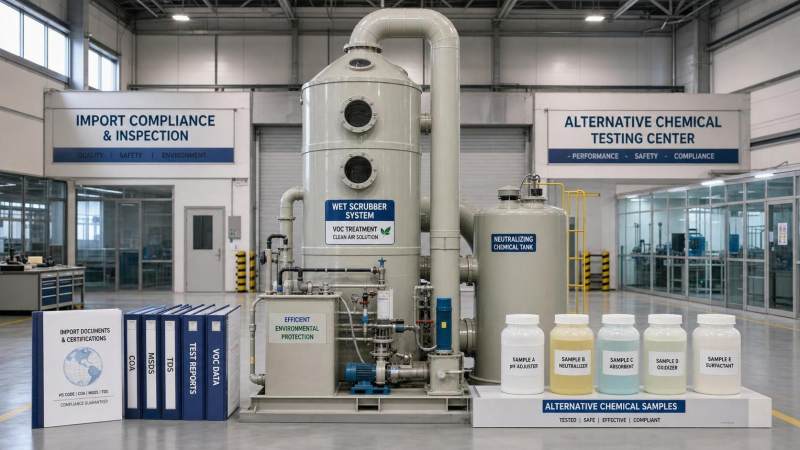
On June 20, 2026, the U.S. Environmental Protection Agency (EPA) issued a new import compliance notice for VOCs control equipment that changes how Wet Scrubbers entering the U.S. market must document their supporting neutralizing chemicals. The update matters not only because it adds three prohibited neutralizer categories, but also because it sets a new documentation threshold from September 1, 2026 for newly imported units, with direct implications for exporters, technical file preparation, testing coordination, procurement review, and delivery scheduling.
What the EPA notice changes in confirmed terms
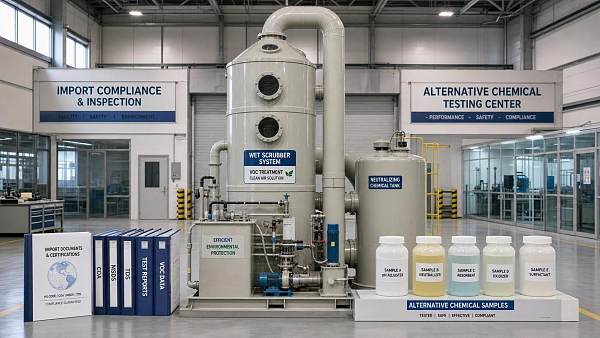
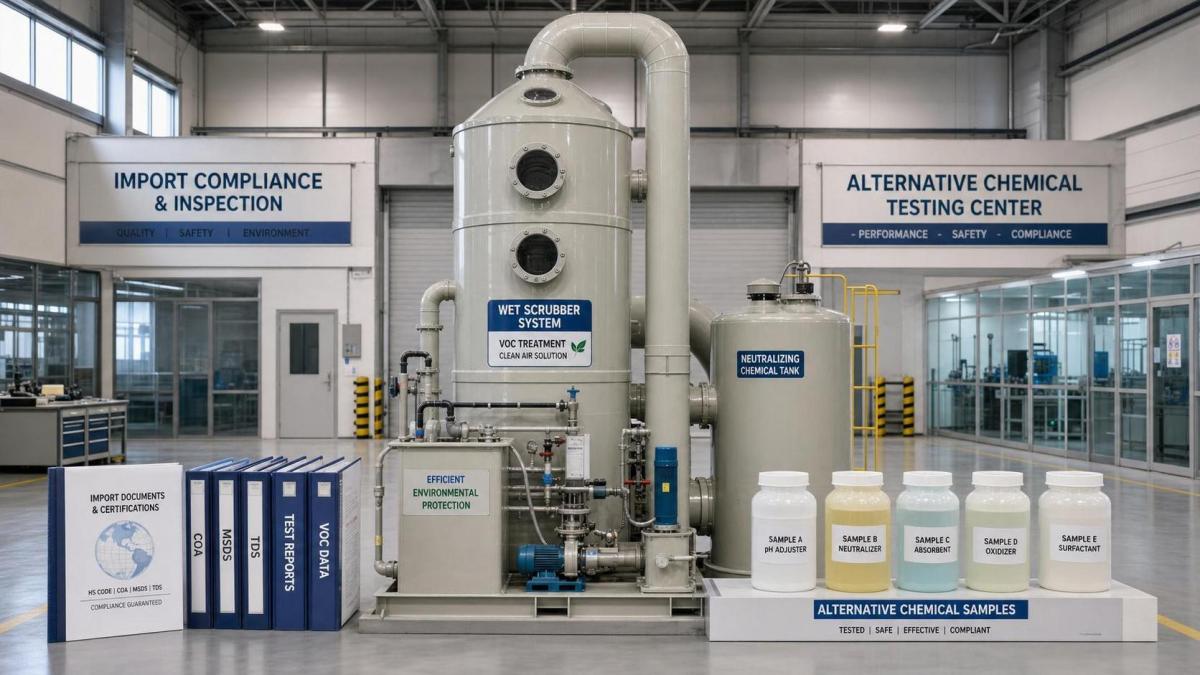
According to the provided event summary, the EPA released the 2026 VOCs Control Equipment Import Compliance Notice (EPA-ORD-2026-018) on June 20, 2026. The notice adds sodium hypochlorite, ammonium hydroxide aqueous solution, and composite organic amine buffering agents to the list of neutralizing chemicals that are prohibited for use with Wet Scrubbers.
The same notice states that, starting on September 1, 2026, all newly imported Wet Scrubbers must submit toxicological assessment reports for alternative chemicals under OECD TG 404/422, together with pH dynamic buffering capacity test data. The provided summary also states that this adjustment directly affects the technical documentation preparation cycle for China-made Wet Scrubbers exported to the United States.
Where the practical pressure is likely to appear first
Export documentation and market-entry review
From an industry perspective, exporters of Wet Scrubbers to the U.S. are likely to face the earliest impact in document preparation and pre-shipment compliance review. The reason is straightforward: the rule change is not limited to chemical selection, but extends to the supporting evidence package required for newly imported equipment. What deserves closer attention is whether existing technical files, chemical descriptions, and submission sets are still aligned with the new import expectations from September 1, 2026.
Procurement and chemical substitution decisions
Manufacturers and sourcing teams may also feel pressure at the procurement stage because three previously used neutralizer categories are now explicitly listed as prohibited for matching use with Wet Scrubbers. Analysis shows that this can shift attention toward substitute chemistry selection, internal specification updates, and coordination between equipment design and chemical purchasing, especially where export-bound configurations were prepared under earlier assumptions.
Testing, certification support, and third-party service workflows
Testing service providers, compliance support firms, and certification-related participants may be affected through increased demand for toxicology documentation and pH dynamic buffering data. Observably, the rule change links import acceptability more closely with supporting test materials, which means handoffs between equipment suppliers, chemical providers, and testing partners may become a more sensitive part of the delivery process.
Delivery timing and downstream customer coordination
For distributors, buyers, and after-sales coordinators, the main concern is not only whether a Wet Scrubber can be shipped, but whether the full supporting file can be completed on time. From an industry perspective, any delay in selecting alternative neutralizers or assembling OECD TG 404/422 and pH testing materials may affect quotation validity, order confirmation, delivery sequencing, and customer-side acceptance planning.
What companies should watch in the next compliance cycle
Check whether current technical files still match the new rule
Analysis shows that companies exporting newly imported Wet Scrubbers to the U.S. should review whether their existing technical documentation still references any of the three prohibited neutralizer categories. If so, the issue is not only product configuration, but also whether drawings, specifications, manuals, and submission materials remain consistent with the updated import compliance notice.
Prepare substitute-chemical evidence earlier than before
What deserves closer attention is the preparation lead time for toxicological assessment reports under OECD TG 404/422 and for pH dynamic buffering capacity test data. The provided information does not specify how these materials will be reviewed in practice, so it is more appropriate to treat this as an area requiring early preparation rather than assume a settled execution pattern.
Recheck bidding, order, and delivery documents
Where Wet Scrubbers are supplied against formal purchase specifications or bid documents, companies should pay attention to whether chemical descriptions, accessory lists, and compliance attachments need revision. Observably, mismatches between contract documents and the new import requirements could create friction at order confirmation or shipment preparation, even if equipment design itself is otherwise ready.
Follow official wording and market-side implementation signals
Because the provided summary identifies a clear effective date but does not provide detailed enforcement scenarios, companies should continue monitoring how the notice is reflected in customer requirements, submission checklists, and related compliance communications. Analysis shows that the immediate issue is documentation readiness, while the fuller market interpretation may still evolve through practical implementation.
Why this looks like an execution signal, not just a policy headline
In editorial observation, this update is better understood as a concrete import-compliance signal rather than a broad policy statement. The reason is that the notice combines two actionable elements at once: a prohibited list for supporting neutralizers and a dated documentation requirement for alternative chemicals. That combination usually matters to industry participants because it touches both product matching and proof-of-compliance workflows.
At the same time, it would be premature to treat all downstream consequences as settled. The provided information confirms the rule change and the filing requirements, but it does not define the full review pace, market response, or customer-side implementation details. For that reason, continued attention to execution wording, documentation practice, and industry feedback remains necessary.
How this update is best understood now
At this stage, the EPA notice is more appropriately understood as a rule change with near-term operational consequences for Wet Scrubber imports into the U.S., especially for exporters preparing technical files for the September 1, 2026 threshold. Its significance lies less in headline value and more in the fact that chemical selection, testing support, and compliance documentation now need to be aligned more tightly within the export process.
A neutral reading is that the change has already moved beyond general regulatory signaling, but some aspects of implementation still require observation. For companies involved in manufacturing, exporting, testing, sourcing, or purchasing Wet Scrubbers, the immediate priority is to verify document readiness and substitution pathways rather than wait for delivery-stage problems to surface.
Basis of this article and points still requiring verification
This article is generated based on the user-provided news title, event date, and event summary. The analysis is limited to the confirmed information provided for the EPA notice, its stated prohibited neutralizer categories, the September 1, 2026 documentation requirement, and the stated effect on technical documentation preparation for China-made Wet Scrubbers exported to the United States.
For this type of development, commonly relevant source categories may include official regulatory notices, releases from supervisory authorities, customs or trade administration updates, industry association materials, standards-related documents, and reporting by established trade media. The specific official source link was not provided in the input, so further verification is still needed. What should continue to be monitored includes detailed implementation wording, compliance review practice, certification-related interpretation, tender document changes, industry feedback, and how affected companies execute the new requirements in practice.
Recommended News
 Sep 20, 2026How to Select a Gas Scrubbing System for Corrosive Industrial Exhaust StreamsGas scrubbing systems for exhaust: learn how to match corrosive stream chemistry, scrubber design, materials, controls, and compliance needs for reliable performance.
 Sep 16, 2026Selecting Corrosion-Resistant Zero-Emission Gas Treatment for Acidic Exhaust StreamsCorrosion resistant zero-emission gas treatment: discover how to match materials, scrubber design, waste control, and uptime needs for acidic exhaust streams.
 Sep 11, 2026Selecting Industrial Air Scrubbers for European Plants: Airflow, Filters, and ComplianceIndustrial air scrubbers Europe: learn how to match airflow, filtration, gas chemistry, ATEX considerations, and compliance needs for reliable, efficient plant emissions control.
 Sep 03, 2026Industrial Gas Scrubbing Pricing: Cost Drivers for Compliance ProjectsIndustrial gas scrubbing pricing explained: compare compliance cost drivers, installation scope, operating expenses, and supplier quotes for smarter investments.
 Aug 27, 2026How to Size Industrial Gas Scrubbing Units for Acid Fumes and Variable AirflowsIndustrial gas scrubbing units: learn how to size acid-fume scrubbers for variable airflows, peak loads, chemical demand, pressure drop, and reliable compliance.
 Aug 07, 2026How to Choose an Industrial Gas Purification System for Corrosive Emissions?Industrial gas purification system selection starts with chemistry, corrosion resistance, compliance, and lifecycle cost. Learn how to compare solutions for corrosive emissions with confidence.
 Aug 02, 2026How to Select FRP Industrial Gas Scrubbers for Corrosive Exhaust Streams?FRP industrial gas scrubbers selection guide for corrosive exhaust streams: compare resin, scrubber type, pressure drop, and controls to improve compliance, durability, and ROI.
 Jul 28, 2026How to Evaluate a Gas Scrubbing Systems Supplier for Compliance and Long-Term Cost?Gas scrubbing systems supplier selection affects compliance, uptime, and lifetime cost. Learn how to compare process fit, materials, maintenance, and real operating risk before you buy.
 Jul 26, 2026EPA Rule Takes Effect for Imported Wet ScrubbersEPA rule for imported wet scrubbers now ties U.S. market access to 95% VOCs removal and MQTT emissions uploads. Learn the compliance risks, CBP impact, and key actions exporters should take.
 Jul 09, 2026Industrial Exhaust Treatment Cost Breakdown: CAPEX, OPEX, and Key Price DriversIndustrial exhaust treatment cost explained: compare CAPEX, OPEX, and key price drivers to budget smarter, avoid hidden expenses, and choose the right compliant system.
 Jul 08, 2026China Adds Wet Scrubbers to Export ChecksChina adds wet scrubbers to export checks, bringing stricter inspection, test report requirements, and 5–7 extra clearance days. Learn how exporters and buyers can avoid delays.
 Jul 06, 2026EU Tightens Wet Scrubber VOC Rules for 2026EU Tightens Wet Scrubber VOC Rules for 2026: Learn how new EU compliance, CE marking, dynamic load testing, and real-time VOC reporting will impact exporters and buyers.
 Jun 30, 2026REACH Nickel Limits Tighten for Scrubber PartsREACH nickel limits tighten for scrubber parts from 2027. Learn the new 0.05 mg/cm²/week rule, affected RTO/RCO and wet scrubber components, and how exporters can avoid EU customs risk.
 Jun 28, 2026PP Gas Scrubbers vs FRP Scrubbers: Which Is Better for Corrosive Exhaust Applications?PP gas scrubbers vs FRP scrubbers: compare corrosion resistance, temperature limits, maintenance, and lifecycle cost to choose the best solution for corrosive exhaust applications.
 Jun 26, 2026Wet Scrubber Systems vs RTO: Which VOC Control Option Fits Your Process?Wet scrubber systems or RTO? Compare VOC control by moisture, acid gas, energy use, and lifecycle cost to find the right fit for your process.
 Jun 26, 2026ENTECH Vietnam 2026 Opens as Wet Scrubbers Gain BuyersENTECH Vietnam 2026 highlights rising wet scrubbers demand, with 270+ qualified buyer inquiries focused on exhaust gas treatment. See why Vietnam buyers now prioritize control accuracy, corrosion resistance, and fast local service.
 Jun 25, 2026ENTECH Vietnam 2026 Opens as Wet Scrubbers Gain TractionWet scrubbers gain momentum at ENTECH Vietnam 2026 as EPC contractors in Bac Ninh and Hai Phong show sample-testing interest. Explore why fast delivery and local spare-parts support matter.
 Jun 23, 2026EPA Draft Tightens VOCs Margin Proof for ImportsEPA draft tightens VOCs margin proof for imports of Wet Scrubbers and RTO/RCO systems. See how Q2 2027 rules may impact compliance costs, delivery timelines, and export readiness.
 Jun 22, 2026Qingdao Water Conference 2026 Highlights Coastal治理 TechnologiesQingdao Water Conference 2026 highlights coastal governance technologies, from corrosion-resistant Wet Scrubbers to IP68 and ISO 8501-1 Sa2.5-ready solutions—see what buyers and suppliers should watch.
 Jun 21, 2026Industrial Gas Scrubbing for Acid Fumes: Wet Scrubber Selection and Common MistakesIndustrial gas scrubbing for acid fumes: learn how to choose the right wet scrubber, avoid common design mistakes, and improve corrosion control, compliance, and long-term uptime.
 Jun 21, 2026EPA Tightens Wet Scrubber Import RequirementsWet Scrubber import rules are changing fast. Learn how the EPA’s 2026 compliance notice affects banned neutralizers, testing documents, export readiness, and U.S. market access before the Sept. 1 deadline.
 Jun 20, 2026EPA Tightens Import Rules for Wet ScrubbersEPA Tightens Import Rules for Wet Scrubbers: learn how the 2026 EPA update affects VOC control imports, chemical documentation, customs risk, and on-time delivery.
 Jun 19, 2026EPA Tightens Import Rules for Wet ScrubbersEPA tightens import rules for wet scrubbers: from Sept. 1, 2026, U.S. entries need a manufacturer-signed compliance declaration. Learn the risks, deadlines, and steps importers must take now.
 Jun 18, 2026EPA import rule tightens for wet scrubbersEPA import rule tightens for wet scrubbers entering the U.S. from Sept. 1, 2026. Learn key declaration requirements, CBP entry risks, and what importers and manufacturers must prepare now.