Search News
Industry Portal
Hot Articles
- How Factories Can Select Air Quality Controls for Dust, Fumes, and VOCsIndustrial air quality control for factories: learn how to select effective solutions for dust, fumes, and VOCs while improving safety, compliance, energy efficiency, and uptime.
- How to Size Industrial Gas Scrubbing Units for Acid Fumes and Variable AirflowsIndustrial gas scrubbing units: learn how to size acid-fume scrubbers for variable airflows, peak loads, chemical demand, pressure drop, and reliable compliance.
- How to Evaluate Industrial Air Quality Control Systems for Dust, Fumes, and VOCsIndustrial air quality control systems: learn how to evaluate dust, fumes, and VOC solutions by capture efficiency, compliance, maintenance, and lifecycle cost.
Popular Tags
What does cleanroom certification really verify?
author
Time
Click Count
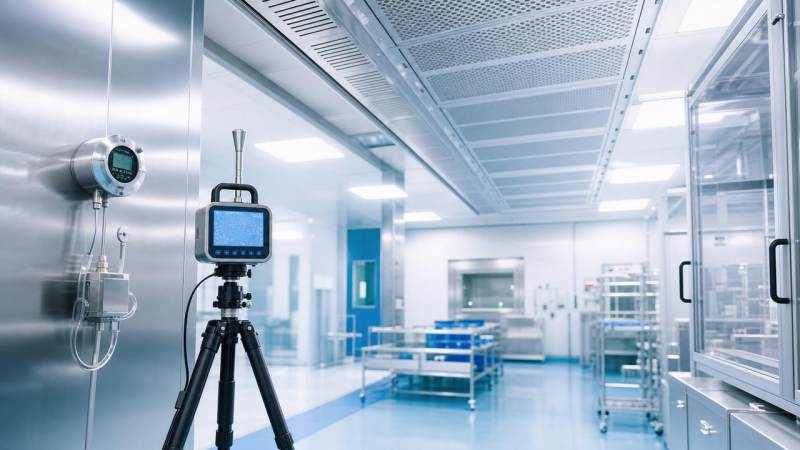
Cleanroom certification is often mistaken for a simple pass-or-fail label, but it actually verifies whether a controlled environment can consistently meet strict limits for particles, airflow, pressure, temperature, and humidity. For researchers comparing standards, suppliers, or compliance risks, understanding what cleanroom certification truly confirms is essential to judging performance, reliability, and suitability in high-precision manufacturing environments.
What does cleanroom certification actually verify?
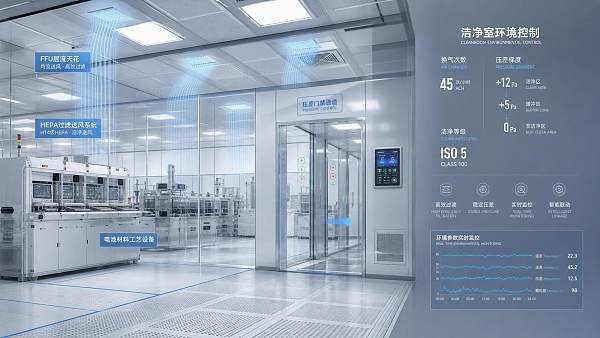
At its core, cleanroom certification verifies performance under defined operating conditions rather than simply confirming that a room looks clean or uses premium equipment. A certified cleanroom must demonstrate measurable control over airborne particle concentration, airflow pattern, room pressurization, recovery behavior, and often temperature and humidity stability.
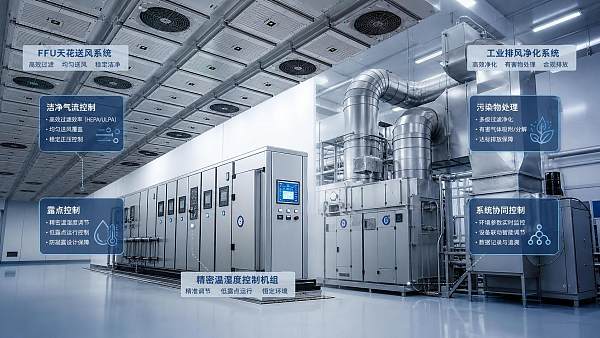
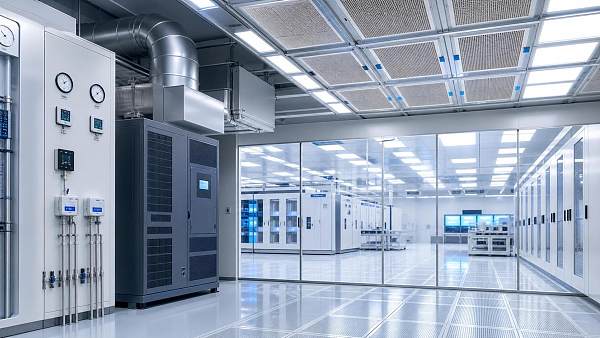
For information researchers, this distinction matters. A facility may install HEPA filters, FFUs, precision CRAC units, and pressure controls, yet still fail certification if the full system does not work together. Certification therefore evaluates environmental outcomes, not just component presence.
In practical terms, cleanroom certification usually confirms several questions at once:
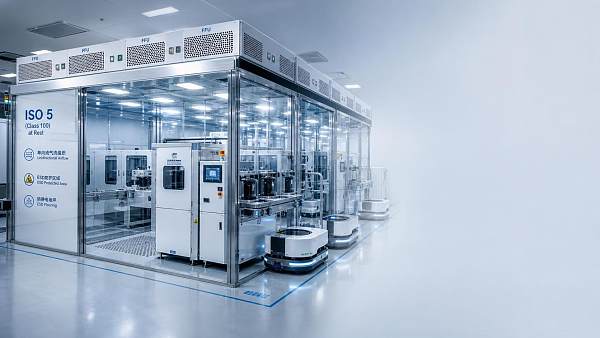
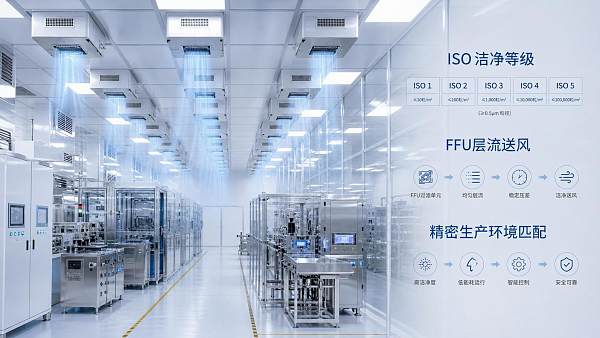
- Can the room maintain the particle class required by the process, such as ISO Class 5 or ISO Class 7?
- Does airflow move in the intended direction, with enough uniformity to sweep contaminants away from critical zones?
- Are pressure differentials stable enough to prevent infiltration from adjacent spaces with lower cleanliness?
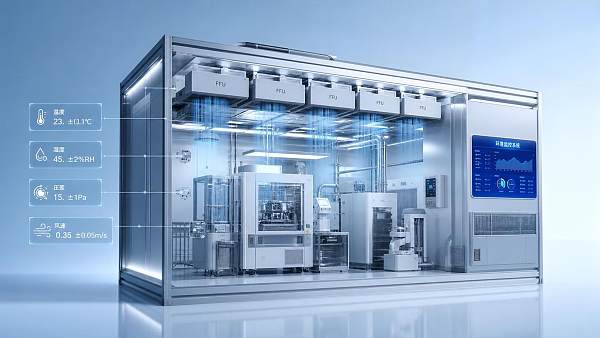
- Can temperature and relative humidity stay within process-specific tolerances during actual operation?
- Will the room recover after personnel movement, door opening, maintenance, or process disturbance?
This is why cleanroom certification is so important in semiconductors, lithium battery production, pharmaceuticals, precision optics, aerospace assembly, and advanced laboratories. In these environments, contamination is not merely a housekeeping issue. It is a yield risk, a compliance risk, and sometimes a safety risk.
Which standards shape cleanroom certification decisions?
Most global discussions around cleanroom certification start with ISO 14644, especially when buyers, exporters, and facility planners need a shared technical language. ISO 14644 defines classification principles, test methods, and operational considerations for controlled environments. However, certification decisions are rarely based on one line in one standard.
Researchers should distinguish between classification, testing, and ongoing monitoring. Classification tells you the allowable particle concentration. Certification testing checks whether the room performs to that target. Ongoing environmental monitoring confirms whether the room continues to perform during routine use.
Key standard areas researchers should review
- ISO 14644-1: Focuses on air cleanliness classes by particle concentration.
- ISO 14644-2: Addresses monitoring strategies to show continued compliance.
- ISO 14644-3: Covers test methods used during cleanroom certification.
- Industry-specific guidance: Semiconductor, medical, biotech, and battery projects often add stricter internal criteria.
- Local codes and customer protocols: Export projects may need additional acceptance documentation or witness testing.
This is where CECS adds value as an intelligence portal. Many project teams understand the label “ISO cleanroom” but struggle with the deeper compliance logic behind airflow, micro-dust isolation, extreme dew point control, and integrated ventilation performance. CECS helps translate standard language into engineering reality and procurement judgment.
What does a certified cleanroom test in practice?
The following table summarizes what cleanroom certification commonly verifies and why each item matters in real manufacturing or research settings.
A useful interpretation is that cleanroom certification does not verify only cleanliness. It verifies the environmental control architecture behind cleanliness. That includes FFU array behavior, CRAC response, air distribution balance, filter sealing quality, and pressure zoning logic.
Why do certified results differ between industries and applications?
The meaning of cleanroom certification changes with the process being protected. A semiconductor cleanroom, a lithium battery dry room, and a medical device assembly room may all seek controlled conditions, but their risk profiles differ. The certification scope therefore expands or narrows according to what could damage product quality or operational safety.
Typical application scenarios
- Semiconductor fabrication requires aggressive micro-particle control, highly uniform laminar airflow, and tight thermal stability to protect yield-sensitive wafer processes.
- Lithium battery coating and cell assembly often demand not only particulate control but also extremely low dew point conditions to avoid moisture-triggered defects.
- Precision optics and electronics assembly depend on vibration-aware air distribution and localized contamination control around sensitive benches or enclosures.
- Pharma and medical manufacturing may combine cleanroom certification with process-specific hygiene, pressure segregation, and documented validation routines.
CECS operates precisely in this decision zone. Its focus on industrial micro-dust isolation, extreme temperature and humidity control, and aerodynamic thermodynamic conversion helps researchers understand that certification targets come from process physics, not from generic room categories alone.
What is the difference between certification, qualification, and routine monitoring?
Many buyers confuse these terms, which leads to weak specifications and procurement gaps. Cleanroom certification is usually a formal verification event. Qualification is broader and may include design review, installation checks, operational checks, and performance verification. Routine monitoring is the day-to-day evidence that the room remains under control after handover.
If you are comparing suppliers, ask which deliverable they mean when they promise a “certified cleanroom.” Some provide only initial test reports. Others include design support, balancing, corrective actions, retesting, and documentation mapping to client audit needs.
The table below helps separate these concepts during supplier evaluation.
For procurement teams and technical researchers, this comparison reduces a common risk: accepting a narrow testing package when the project actually needs a full performance assurance path.
How should buyers evaluate cleanroom certification during supplier selection?
When cleanroom certification becomes part of supplier evaluation, the best question is not “Can you certify this room?” but “What conditions, methods, acceptance criteria, and correction steps are included in your certification scope?” That phrasing reveals technical depth very quickly.
Procurement checklist for information researchers
- Confirm the target ISO class and whether it applies to at-rest, operational, or both states.
- Review whether airflow testing includes volume, velocity, visualization, and room balance verification.
- Check if HEPA or ULPA filter integrity testing is included, especially for critical process ceilings and FFU arrays.
- Ask how temperature, humidity, and dew point performance are validated under realistic load conditions.
- Determine who is responsible for failure analysis if the room misses class, pressure cascade, or recovery targets.
- Request documentation format early, especially for export, customer audits, or regulated facilities.
This is particularly relevant for advanced manufacturing projects where cleanroom performance depends on a chain of systems. CECS emphasizes this systems view through its expertise in precision CRAC units, FFU performance, industrial exhaust treatment, workshop ventilation, and energy recovery strategies. Those elements interact. Certification success depends on that interaction.
What are the most common misconceptions about cleanroom certification?
Misconception 1: Certification proves long-term performance forever
It does not. Cleanroom certification verifies performance at the time of testing and under stated conditions. Filter loading, layout changes, production heat load, maintenance quality, and operator behavior can all shift the result later.
Misconception 2: Particle count is the only thing that matters
Particle data is central, but it is not the whole story. Poor airflow pattern, unstable pressure, or weak humidity control may still compromise yield or process chemistry even if a spot particle test looks acceptable.
Misconception 3: Good equipment guarantees certification
High-grade filters and advanced units help, but integration quality decides outcomes. Ceiling leakage, door cycles, return air design, zoning errors, and uneven FFU balancing can defeat expensive hardware.
Misconception 4: One certification approach fits all facilities
It does not. A dry room for new energy manufacturing may require deep attention to moisture control. A chip fab may prioritize flow uniformity and ultra-low particle intrusion. A commercial clean assembly room may need a more cost-conscious balance.
How does cleanroom certification connect to cost, risk, and energy use?
Researchers often compare certification only as a compliance cost. In reality, cleanroom certification is closely tied to scrap reduction, process continuity, utility demand, and upgrade planning. A room that barely passes on day one may consume more energy and require more rebalancing later than a better-engineered alternative.
This is one reason CECS places equal weight on cleanliness and energy efficiency. In advanced facilities, environmental control is not just an air problem. It is also a thermodynamic and financial problem. Over-ventilation can waste energy. Under-control can ruin yield. Smart certification planning helps reveal that tradeoff early.
- Well-balanced FFU layouts can improve airflow consistency without excessive fan energy.
- Precision CRAC control can stabilize humidity and dew point while reducing process interruption risk.
- Thoughtful pressure zoning can limit contamination migration without unnecessary air volume inflation.
- Integrated exhaust, scrubber, and heat recovery planning can support both compliance and lifecycle efficiency.
FAQ: what do researchers and buyers ask most about cleanroom certification?
How often should cleanroom certification be repeated?
The answer depends on industry practice, risk level, customer requirements, and operational change frequency. Many facilities schedule periodic recertification annually or semiannually, while critical zones may be reviewed more often after maintenance, filter replacement, layout change, or process expansion.
Does cleanroom certification include equipment like FFUs and CRAC units?
It usually evaluates their effect on room performance rather than certifying the equipment as standalone products. However, component tests such as filter integrity, airflow volume, and control stability often reveal whether those systems are operating correctly within the cleanroom.
Can a room pass certification but still be unsuitable for a process?
Yes. A room may satisfy a particle class yet still miss process-specific needs such as ultra-low dew point, rapid recovery, static control, molecular contamination control, or thermal uniformity near critical tools. That is why process mapping is essential before defining certification criteria.
What documents should be requested from a certification provider?
Request the testing scope, referenced standards, sample locations, acceptance criteria, instrument basis, deviation notes, and corrective action process. If the project involves export, regulated production, or customer audits, also confirm formatting, traceability, and witness support expectations in advance.
Why choose us for cleanroom certification research and project support?
CECS supports information researchers who need more than generic definitions. We connect cleanroom certification with the underlying realities of micro-dust isolation, extreme humidity control, air movement physics, exhaust compliance, and energy recovery strategy across semiconductors, new energy production, and zero-carbon building environments.
If you are evaluating a cleanroom project, you can consult us on specific decision points instead of sorting through fragmented technical claims alone.
- Parameter confirmation for ISO class targets, airflow expectations, pressure cascades, humidity ranges, and dew point requirements
- Product selection support for FFU configurations, precision CRAC strategies, ventilation paths, and compatible filtration architecture
- Delivery planning discussions covering project timing, testing sequence, and coordination with installation or commissioning milestones
- Customized solution review for semiconductor workshops, battery dry rooms, industrial exhaust-linked clean spaces, and high-efficiency commercial environments
- Certification requirement clarification for export projects, audit preparation, documentation expectations, and compliance interpretation
- Quotation communication based on technical scope rather than vague package comparisons
If your current question is not simply whether a room can pass, but whether it can pass reliably, efficiently, and in a way that matches your process risk, CECS can help you structure that evaluation with clearer technical logic and stronger procurement confidence.
Recommended News
 Aug 25, 2026How to Select Cleanroom Particle Control Equipment for ISO Class and Process RiskCleanroom particle control equipment selection starts with process risk, ISO class, and airflow design. Learn how to compare FFUs, filters, and monitoring for reliable performance.
 Aug 23, 2026How Laminar Airflow Supports Compliance and Contamination Control in Medical Device ManufacturingLaminar airflow for medical devices helps reduce contamination risk, support cleanroom compliance, and improve audit readiness—see how it protects product quality and manufacturing control.
 Aug 21, 2026How to Achieve Stable RH Precision Humidity Control in Cleanroom Production?Stable RH precision humidity control starts with process-based design. Learn how airflow, sensors, dehumidification, and recovery logic keep cleanroom production consistent and reliable.
 Aug 19, 2026What Drives Cleanroom Compliance Cost in Pharma and Semiconductor Projects?Cleanroom compliance cost in pharma and semiconductor projects depends on ISO class, airflow, humidity control, validation, and energy use. Learn what drives cost and how to avoid costly overdesign.
 Aug 11, 2026How to Select Precision Humidity Control for Cleanrooms and Micro-EnvironmentsPrecision humidity control for cleanrooms starts with process needs. Learn how to compare dew point targets, airflow, controls, and energy tradeoffs for reliable, high-yield micro-environments.
 Aug 05, 2026How Cleanroom Environmental Control Automation Improves Compliance and StabilityCleanroom environmental control automation improves compliance, stability, and audit readiness through faster response, traceable control logic, and consistent environmental performance.
 Aug 04, 2026How Smart Cleanroom Thermal Control Improves Stability in FFU-Based Micro-EnvironmentsSmart cleanroom thermal control improves FFU-based micro-environment stability by aligning temperature, humidity, pressure, and airflow—learn what to evaluate before performance drifts.
 Aug 03, 2026Semiconductor Cleanroom Standards Explained: ISO Classes, Air Changes, and ESD ControlsCleanroom standards for semiconductor industry explained: understand ISO classes, air changes, and ESD controls to improve yield, reduce contamination risk, and choose smarter fab environments.
 Jul 30, 2026How to Choose Environmental Control Solutions for High-Tech Manufacturing FacilitiesHigh-tech manufacturing environment solutions guide: learn how to evaluate cleanroom airflow, dew point control, exhaust treatment, and compliance to protect yield and cut lifecycle risk.
 Jul 29, 2026How to Design Ventilation for Precision Manufacturing to Control Particles and HeatPrecision manufacturing ventilation design guide: learn how to control particles, heat, airflow, filtration, and pressure for cleaner production, higher yield, and more reliable operations.
 Jul 26, 2026ISO 5 Semiconductor Cleanroom Solutions: Key Design Criteria for Process StabilityISO 5 semiconductor cleanroom solutions focus on process stability, airflow uniformity, pressure control, and thermal consistency to protect yield and improve fab performance.
 Jul 24, 2026Cleanroom Standards Compliance: Key Requirements and Audit Readiness ChecklistCleanroom standards compliance starts with real control, not paperwork. Explore key ISO requirements, common audit gaps, and a practical checklist to improve readiness.
 Jul 20, 2026How to Evaluate a Semiconductor Cleanroom Solutions Supplier for Fab ProjectsSemiconductor cleanroom solutions supplier selection can make or break fab performance. Learn how to compare engineering depth, compliance, delivery, and lifecycle value.
 Jul 15, 2026Dust-Free Manufacturing: Key Process Controls for Cleaner Production LinesDust-free manufacturing starts with tighter control of airflow, humidity, filtration, and gas capture. Discover how cleaner production lines improve yield, safety, compliance, and energy performance.
 Jul 13, 2026How Semiconductor Environmental Control AMC Reduction Prevents Yield LossSemiconductor environmental control AMC reduction is essential to prevent yield loss. Learn how airflow, humidity, filtration, and gas treatment protect fabs and improve process stability.
 Jul 12, 2026How to Choose Semiconductor Cleanroom Solutions for EUV Lithography LinesSemiconductor cleanroom solutions for EUV require more than ISO class compliance. Learn how to compare airflow, AMC, thermal stability, vibration, and lifecycle cost for better yield.
 Jul 11, 2026Cleanroom Design Criteria Explained: Air Changes, Pressure Cascade, and ISO ClassCleanroom design criteria explained: learn how air changes, pressure cascade, and ISO Class work together to improve contamination control, compliance, and process stability.
 Jul 09, 2026Semiconductor Facility Ventilation Standards: Pressure Cascade, Air Changes, and ComplianceSemiconductor facility ventilation explained: pressure cascade, air changes, and compliance essentials to protect yield, control contamination, and reduce hidden operational risk.
 Jul 09, 2026Clean Environment Control Solutions for Dust, Humidity, and ESD in Sensitive ProductionClean environment control solutions for dust, humidity, and ESD help sensitive production improve yield, ensure compliance, cut energy waste, and reduce costly rework.
 Jul 08, 2026Cleanroom Standards ISO Class Explained: How to Match Class Levels to ProductionCleanroom standards ISO class explained clearly: learn how to match class levels to production needs, reduce contamination risk, control costs, and choose smarter cleanroom strategies.
 Jul 08, 2026How Electronics Cleanroom Air Showers Reduce Particle Transfer at Entry PointsElectronics cleanroom air showers reduce particle transfer at entry points, protect sensitive processes, and support better yield, cleaner airflow, and more reliable contamination control.
![]() Jul 07, 2026Cleanroom Certification USA: ISO Classes, Testing Steps, and Common Compliance GapsCleanroom certification USA explained: compare ISO classes, understand key testing steps, and spot common compliance gaps before they trigger audit issues, downtime, or product risk.
Jul 07, 2026Cleanroom Certification USA: ISO Classes, Testing Steps, and Common Compliance GapsCleanroom certification USA explained: compare ISO classes, understand key testing steps, and spot common compliance gaps before they trigger audit issues, downtime, or product risk. Jul 06, 2026What Is Semiconductor Clean Air and Why Does It Matter in Contamination Control?Semiconductor clean air is vital to contamination control, protecting yield, tool stability, and process consistency. Learn why it matters in modern fabs.
 Jul 05, 2026Cleanroom Airflow Control Systems Explained: How to Balance Pressure, Air Changes, and StabilityCleanroom airflow control systems explained: learn how to balance pressure, air changes, and stability to improve contamination control, cut energy waste, and protect production yield.