Search News
Industry Portal
Hot Articles
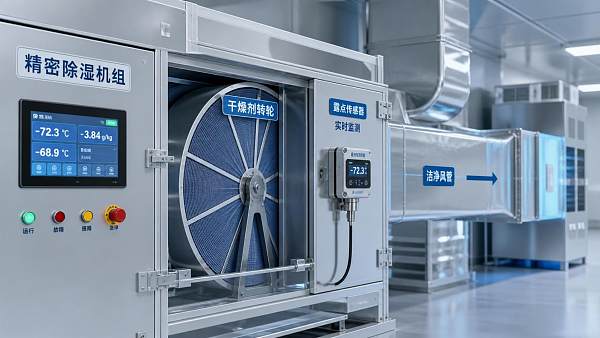
- How to Choose Extreme Humidity Control Automation for CleanroomsExtreme humidity control automation for cleanrooms: learn how to select reliable, energy-efficient controls for dew point stability, monitoring, integration, and failure recovery.
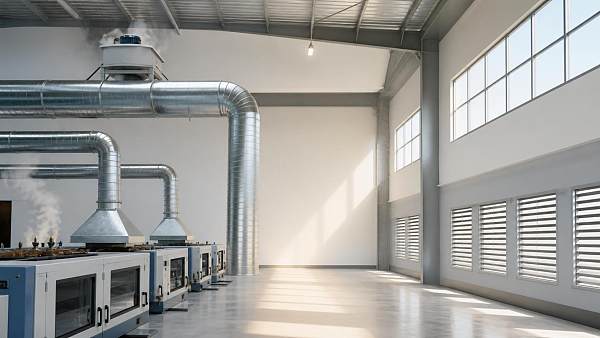
- How to Size a Workshop Roof Exhaust System for Heat, Fumes, and Dust ControlRoof exhaust workshop systems: learn how to size airflow for heat, fumes, and dust, optimize makeup air, control costs, and improve workplace safety.
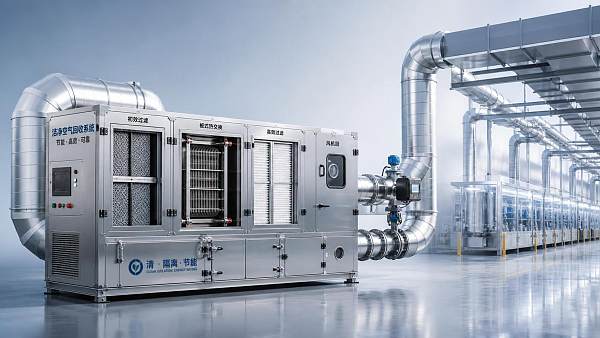
- How to Evaluate a Clean Air Recovery System Supplier for Industrial ProjectsChoose a clean air recovery system supplier with confidence. Compare technology, compliance, lifecycle cost, contamination control, and service for reliable industrial performance.
Popular Tags
EU Mandates Dual ATEX + EN 14986 Certification for Tunnel Jet Fans
author
Time
Click Count
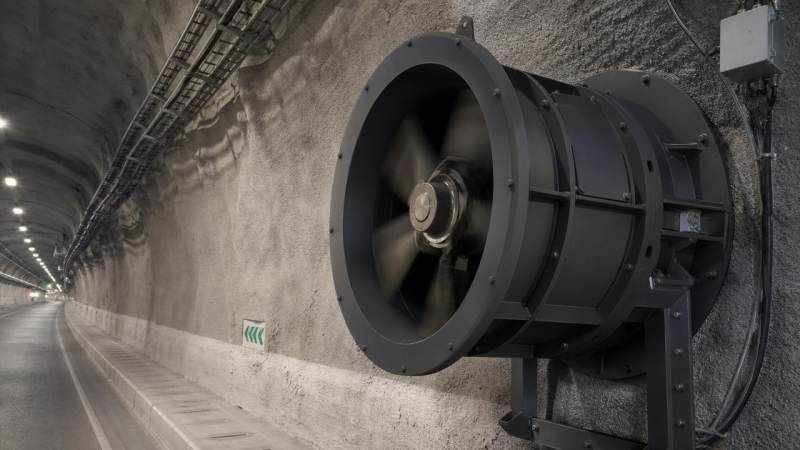
On 30 May 2026, the European Commission adopted Implementing Decision (EU) 2026/927, requiring all jet fans for road and rail tunnels imported into the EU to hold both ATEX Directive 2014/34/EU and EN 14986:2023 certifications — effective 1 October 2026. This update directly impacts manufacturers, exporters, importers, and system integrators supplying tunnel ventilation equipment to the EU market.
Event Overview
The European Commission published Implementing Decision (EU) 2026/927 on 30 May 2026. It stipulates that, from 1 October 2026, all jet fans intended for use in tunnels within the EU must comply simultaneously with Directive 2014/34/EU (ATEX) and standard EN 14986:2023 (‘Fans for use in tunnels – Safety requirements’). Products lacking both certifications will be denied customs clearance. The requirement applies retroactively to shipments dispatched in Q3 2026 onward.
Industries Affected by Segment
Export-oriented manufacturing enterprises: These firms produce jet fans for EU-bound tunnel projects. They are affected because compliance now requires dual certification — not just ATEX conformity assessment (typically focused on explosion protection), but also EN 14986:2023’s tunnel-specific mechanical, thermal, and operational safety requirements (e.g., fire resistance, thrust stability under high-temperature conditions, emergency mode reliability).
Importers and authorized representatives in the EU: As legal entities responsible for CE marking and market surveillance under EU law, they bear liability for verifying dual certification prior to placing products on the market. Non-compliant units arriving after 1 October 2026 risk detention or rejection at EU borders — including orders already shipped in Q3 2026.
Engineering contractors and tunnel system integrators: These stakeholders specify and procure ventilation equipment for infrastructure tenders. The new rule affects procurement timelines and technical specifications; contracts signed before October 2026 may still reference legacy standards unless explicitly updated, creating potential delivery or compliance gaps for ongoing projects.
Key Focus Areas and Immediate Actions for Stakeholders
Monitor official guidance and notified body capacity
Analysis shows that EN 14986:2023 is a newly harmonised standard (published March 2023), and few notified bodies currently list full competence for its conformity assessment alongside ATEX. Stakeholders should verify which bodies are designated for both scopes — and confirm lead times for dual certification reviews.
Review Q3 2026 shipment documentation and test reports
Observably, the retroactive application means any jet fan consignment dispatched to the EU from 1 July 2026 onward must be accompanied by valid evidence of both ATEX and EN 14986:2023 compliance — even if the order was placed before the decision’s publication. Exporters should audit pending bills of lading and test certificates against this threshold.
Distinguish between regulatory signal and enforceable obligation
From an industry perspective, (EU) 2026/927 is an implementing act under the EU’s Machinery Regulation framework — meaning it carries binding legal force upon entry into application. It is not a proposal or consultation draft. Compliance is mandatory, not advisory.
Update technical files, declarations of conformity, and labelling
Manufacturers must revise their technical documentation to include EN 14986:2023-specific risk assessments, performance testing (e.g., ISO 5801-based thrust verification under elevated temperature), and fire-resistance validation per EN 1363-1. Declarations of Conformity must explicitly cite both ATEX and EN 14986:2023.
Editorial Observation / Industry Perspective
This measure is better understood as a formalisation of long-standing safety expectations — rather than a sudden regulatory shift. EN 14986 has been referenced in major EU tunnel projects (e.g., Alpine base tunnels, urban metro expansions) for over a decade, and ATEX applicability to tunnel fans was already widely accepted. What changes is enforcement rigour: the Commission has now elevated EN 14986:2023 to mandatory status under EU product law. Observably, this signals tightening integration between functional safety (EN 14986) and intrinsic safety (ATEX) in critical infrastructure equipment — a trend likely to extend to other high-risk industrial fans in future revisions.
Conclusion
The dual-certification requirement reflects the EU’s prioritisation of layered safety assurance in life-critical infrastructure systems. It does not introduce novel hazard categories, but consolidates existing technical expectations into a legally enforceable, non-negotiable compliance gate. For industry actors, this is less about adapting to new risks — and more about aligning documentation, testing protocols, and supply chain verification to a unified, auditable standard framework. Current interpretation should treat this as an operational compliance milestone — not a strategic pivot.
Source Attribution
Main source: European Commission Implementing Decision (EU) 2026/927, published 30 May 2026 in the Official Journal of the European Union (OJ L 162/1).
Areas under ongoing observation: Designation status of notified bodies for EN 14986:2023 + ATEX joint assessment; potential transitional arrangements for projects with pre-2026 procurement contracts.
Recommended News
 Sep 01, 2026How to Choose Extreme Humidity Control Automation for CleanroomsExtreme humidity control automation for cleanrooms: learn how to select reliable, energy-efficient controls for dew point stability, monitoring, integration, and failure recovery.
 Aug 31, 2026How to Size a Workshop Roof Exhaust System for Heat, Fumes, and Dust ControlRoof exhaust workshop systems: learn how to size airflow for heat, fumes, and dust, optimize makeup air, control costs, and improve workplace safety.
 Aug 30, 2026How to Evaluate a Clean Air Recovery System Supplier for Industrial ProjectsChoose a clean air recovery system supplier with confidence. Compare technology, compliance, lifecycle cost, contamination control, and service for reliable industrial performance.
 Aug 29, 2026ISO 14644 Certification Process: From Cleanroom Testing to Compliance ApprovalISO 14644 certification process explained: prepare your cleanroom, complete particle testing, address failures, and achieve compliance approval with confidence.
 Aug 28, 2026How Factories Can Select Air Quality Controls for Dust, Fumes, and VOCsIndustrial air quality control for factories: learn how to select effective solutions for dust, fumes, and VOCs while improving safety, compliance, energy efficiency, and uptime.
 Aug 27, 2026How to Size Industrial Gas Scrubbing Units for Acid Fumes and Variable AirflowsIndustrial gas scrubbing units: learn how to size acid-fume scrubbers for variable airflows, peak loads, chemical demand, pressure drop, and reliable compliance.
 Aug 26, 2026How to Evaluate Industrial Air Quality Control Systems for Dust, Fumes, and VOCsIndustrial air quality control systems: learn how to evaluate dust, fumes, and VOC solutions by capture efficiency, compliance, maintenance, and lifecycle cost.
 Aug 25, 2026How to Select Cleanroom Particle Control Equipment for ISO Class and Process RiskCleanroom particle control equipment selection starts with process risk, ISO class, and airflow design. Learn how to compare FFUs, filters, and monitoring for reliable performance.
 Aug 24, 2026How to Choose a Ducted Heat Recovery Ventilation System for Commercial BuildingsDucted heat recovery ventilation for commercial buildings: learn how to compare efficiency, static pressure, controls, IAQ, and lifecycle cost to choose a smarter, high-performance system.
 Aug 23, 2026How Laminar Airflow Supports Compliance and Contamination Control in Medical Device ManufacturingLaminar airflow for medical devices helps reduce contamination risk, support cleanroom compliance, and improve audit readiness—see how it protects product quality and manufacturing control.
 Aug 22, 2026How to Verify CE Compliance When Comparing VOC Treatment Systems for EU ProjectsVOC treatment systems CE certified: learn how to verify real EU compliance, check directives, ATEX, and documentation, and avoid costly procurement and site integration risks.
 Aug 21, 2026How to Achieve Stable RH Precision Humidity Control in Cleanroom Production?Stable RH precision humidity control starts with process-based design. Learn how airflow, sensors, dehumidification, and recovery logic keep cleanroom production consistent and reliable.
 Aug 20, 2026How to Select Airflow Control Dampers for Pressure Balance and Energy EfficiencyAirflow control dampers selection starts with pressure balance, leakage, and control authority—not duct size alone. Learn how to improve stability and energy efficiency.
 Aug 19, 2026What Drives Cleanroom Compliance Cost in Pharma and Semiconductor Projects?Cleanroom compliance cost in pharma and semiconductor projects depends on ISO class, airflow, humidity control, validation, and energy use. Learn what drives cost and how to avoid costly overdesign.
 Aug 18, 2026How to Evaluate a High-Tech HVAC Manufacturer for Cleanroom and Precision FacilitiesHigh-tech HVAC manufacturer evaluation guide for cleanrooms and precision facilities. Learn how to assess control stability, compliance, serviceability, and long-term operational risk.
 Aug 17, 2026How to Evaluate a Commercial ERV Systems Supplier for Large Building ProjectsCommercial ERV systems supplier selection for large projects goes beyond price. Learn how to compare performance, compliance, controls, delivery, and lifecycle cost to reduce risk.
 Aug 16, 2026Commercial Ventilation Pricing: What Drives Cost in Industrial and Office Projects?Commercial ventilation pricing varies by airflow, compliance, and installation needs. Learn what drives costs in industrial and office projects—and how to compare quotes smarter.
 Aug 16, 2026EU Issues New RTO/RCO Compliance Guide, Adds Carbon and Efficiency CertificationEU releases a new RTO/RCO compliance guide with carbon and efficiency certification requirements, signaling stricter market access rules and urgent action for exporters.
 Aug 15, 2026What Makes an HVAC System Energy-Efficient for European Buildings?Energy efficient HVAC Europe solutions help European buildings cut costs, boost comfort, and meet carbon targets. Discover the design factors that truly improve performance.
 Aug 15, 2026China Issues New Export Compliance Rules for RTO/RCO SystemsChina's new export compliance rules for RTO/RCO systems are reshaping market access. Learn what the 2026 regulations mean for exporters, buyers, and green procurement.
 Aug 14, 2026How to Evaluate a Precision Cooling Supplier for High-Density Data CentersPrecision cooling supplier guide for high-density data centers: learn how to evaluate reliability, scalability, compliance, and lifecycle value before you buy.
 Aug 14, 2026China’s Temporary Helium Export Ban Slows RTO/RCO Core Cooling DeliveriesChina’s temporary helium export ban may delay RTO/RCO core cooling deliveries, especially for final testing and certification. Learn how it impacts projects and what companies should check next.
 Aug 13, 2026How to Select VAV Airflow Control Systems for Labs and Cleanroom HVAC ProjectsVAV airflow control systems are critical for labs and cleanroom HVAC projects. Discover how to choose the right system for stability, compliance, and energy savings.
 Aug 12, 2026How to Select Dew Point Control Systems for Battery Plants?Dew point control systems for battery plants: learn how to compare stability, energy use, controls, and maintenance to choose a safer, more efficient dry room solution.