Search News
Industry Portal
Hot Articles
- How Factories Can Select Air Quality Controls for Dust, Fumes, and VOCsIndustrial air quality control for factories: learn how to select effective solutions for dust, fumes, and VOCs while improving safety, compliance, energy efficiency, and uptime.
- How to Size Industrial Gas Scrubbing Units for Acid Fumes and Variable AirflowsIndustrial gas scrubbing units: learn how to size acid-fume scrubbers for variable airflows, peak loads, chemical demand, pressure drop, and reliable compliance.
- How to Evaluate Industrial Air Quality Control Systems for Dust, Fumes, and VOCsIndustrial air quality control systems: learn how to evaluate dust, fumes, and VOC solutions by capture efficiency, compliance, maintenance, and lifecycle cost.
Popular Tags
WCA 2026 Climate Award Highlights Pharma Cleanroom Air Systems
author
Time
Click Count

At the World Cement Association (WCA) Annual Conference held on May 24, 2026 in Thailand, Tianjin Research Institute of Sinoma International received the Climate Action Award for its ‘Pharmaceutical-Grade Clean Air System Integration Solution’. The recognition signals growing cross-sector alignment between low-carbon infrastructure and stringent pharmaceutical manufacturing requirements — particularly for cleanroom air handling units (AHUs), laminar flow FFUs, and HEPA/ULPA filtration systems. Life sciences manufacturers, contract development and manufacturing organizations (CDMOs), and cleanroom system suppliers should monitor implications for GMP Annex 1 compliance, regional supply chain qualification, and technical specification priorities.
Event Overview
The World Cement Association conferred its 2026 Climate Action Award on May 24, 2026, during its annual conference in Thailand. Tianjin Research Institute of Sinoma International was recognized for its ‘Pharmaceutical-Grade Clean Air System Integration Solution’. The solution features Cleanroom AHUs integrated with Class 100 laminar-flow Fan Filter Units (FFUs) and HEPA/ULPA filters. Following the award, Pfizer and Novartis indicated that this system configuration is under evaluation as the preferred clean air solution for new pharmaceutical facilities in Southeast Asia. Several international CDMOs have initiated pre-audits of Chinese cleanroom system suppliers against EU GMP Annex 1 requirements, with specific focus on FFU airflow uniformity and AHU condensate management design.
Industries Affected
Contract Development and Manufacturing Organizations (CDMOs)
CDMOs expanding capacity in Southeast Asia are directly affected: the award validates a specific cleanroom air system architecture as aligned with both climate goals and regulatory expectations. Impact manifests in accelerated vendor pre-qualification timelines and intensified scrutiny of airflow validation data and moisture control documentation during early-stage supplier assessments.
Pharmaceutical Facility Design & Engineering Firms
Firms specifying HVAC and cleanroom systems for new or retrofitted pharma plants must now treat laminar-flow FFU integration and AHU condensate prevention not only as technical specifications but as de facto compliance markers. Impact includes revised internal checklists for GMP Annex 1 readiness and increased demand for third-party airflow mapping reports during design review phases.
Cleanroom System Suppliers (Non-Chinese)
Established suppliers outside China face competitive pressure in emerging ASEAN markets, where procurement teams are now benchmarking solutions against the awarded system’s performance criteria. Impact centers on proposal responsiveness — especially regarding FFU uniformity testing protocols and cold coil condensate mitigation strategies — rather than solely on price or brand recognition.
What Stakeholders Should Monitor and Do Now
Track GMP Annex 1 Implementation Timelines in Key Markets
EU Annex 1 enforcement timelines vary by jurisdiction; ASEAN regulators are not bound by EU deadlines, but recent procurement behavior suggests early adoption of Annex 1-aligned technical benchmarks. Stakeholders should monitor official updates from ASEAN Pharmaceutical Regulatory Forum (APRF) and national agencies like Thailand’s FDA and Singapore’s HSA — not just EU EMA guidance.
Prioritize Technical Documentation for FFU Airflow and Condensate Control
Procurement evaluations now emphasize verifiable test data — not just product certifications. Companies should ensure their FFU airflow uniformity reports (per ISO 14644-3) and AHU condensate management schematics (including drain trap design and slope verification) are current, third-party validated, and readily available in English.
Distinguish Between Signal and Deployment
The WCA award is a signal of convergence between sustainability recognition and pharma-grade engineering rigor — not evidence of broad regulatory mandate. Current impact is concentrated in procurement preferences among select multinationals and CDMOs, not across all ASEAN-based facilities. Stakeholders should avoid overgeneralizing the award as a universal standard until further market-wide adoption patterns emerge.
Prepare for Supplier Pre-Audits with Annex 1-Focused Scoping
CDMOs and pharma firms initiating pre-audits of cleanroom suppliers should align audit scopes explicitly with Annex 1 Sections 5.29–5.42 (HVAC and cleanroom environmental control). This includes verifying documented risk assessments for microbial ingress via condensate pathways and validating FFU filter media integrity testing frequency and methodology.
Editorial Observation / Industry Insight
Observably, this event reflects a broader trend: climate awards are increasingly serving as informal technical credibility markers beyond their original environmental scope — especially when awarded to industrial solutions with dual-purpose applicability (e.g., energy-efficient AHUs meeting both carbon reduction and sterile process requirements). Analysis shows the award does not constitute regulatory endorsement, nor does it trigger automatic compliance status. Rather, it functions as a high-visibility reference point accelerating due diligence cycles among risk-averse buyers. From an industry perspective, it is less a policy shift and more a procurement signal — one that underscores how sustainability recognition can amplify technical specifications into market differentiators, particularly at the intersection of heavy industry and life sciences infrastructure.
Concluding, the WCA 2026 Climate Action Award serves as a timely indicator of evolving buyer expectations at the nexus of climate action and pharmaceutical manufacturing integrity. It does not represent a new regulation, but rather highlights a tightening alignment between environmental performance metrics and GMP-critical engineering attributes. Currently, it is best understood as an early procurement signal — not a compliance milestone — warranting focused attention from stakeholders involved in cleanroom system specification, supply, and validation in growth markets such as Southeast Asia.
Source: World Cement Association (WCA) 2026 Annual Conference official announcements; publicly confirmed statements from Pfizer and Novartis regarding Southeast Asia facility planning; documented initiation of GMP Annex 1 pre-audits by multiple CDMOs (as reported in post-conference industry briefings).
Areas requiring ongoing observation: Formal adoption of Annex 1-aligned HVAC criteria by ASEAN national regulators; expansion of similar procurement preferences beyond initial multinational and CDMO adopters.
Recommended News
 Aug 28, 2026How Factories Can Select Air Quality Controls for Dust, Fumes, and VOCsIndustrial air quality control for factories: learn how to select effective solutions for dust, fumes, and VOCs while improving safety, compliance, energy efficiency, and uptime.
 Aug 27, 2026How to Size Industrial Gas Scrubbing Units for Acid Fumes and Variable AirflowsIndustrial gas scrubbing units: learn how to size acid-fume scrubbers for variable airflows, peak loads, chemical demand, pressure drop, and reliable compliance.
 Aug 26, 2026How to Evaluate Industrial Air Quality Control Systems for Dust, Fumes, and VOCsIndustrial air quality control systems: learn how to evaluate dust, fumes, and VOC solutions by capture efficiency, compliance, maintenance, and lifecycle cost.
 Aug 25, 2026How to Select Cleanroom Particle Control Equipment for ISO Class and Process RiskCleanroom particle control equipment selection starts with process risk, ISO class, and airflow design. Learn how to compare FFUs, filters, and monitoring for reliable performance.
 Aug 24, 2026How to Choose a Ducted Heat Recovery Ventilation System for Commercial BuildingsDucted heat recovery ventilation for commercial buildings: learn how to compare efficiency, static pressure, controls, IAQ, and lifecycle cost to choose a smarter, high-performance system.
 Aug 23, 2026How Laminar Airflow Supports Compliance and Contamination Control in Medical Device ManufacturingLaminar airflow for medical devices helps reduce contamination risk, support cleanroom compliance, and improve audit readiness—see how it protects product quality and manufacturing control.
 Aug 22, 2026How to Verify CE Compliance When Comparing VOC Treatment Systems for EU ProjectsVOC treatment systems CE certified: learn how to verify real EU compliance, check directives, ATEX, and documentation, and avoid costly procurement and site integration risks.
 Aug 21, 2026How to Achieve Stable RH Precision Humidity Control in Cleanroom Production?Stable RH precision humidity control starts with process-based design. Learn how airflow, sensors, dehumidification, and recovery logic keep cleanroom production consistent and reliable.
 Aug 20, 2026How to Select Airflow Control Dampers for Pressure Balance and Energy EfficiencyAirflow control dampers selection starts with pressure balance, leakage, and control authority—not duct size alone. Learn how to improve stability and energy efficiency.
 Aug 19, 2026What Drives Cleanroom Compliance Cost in Pharma and Semiconductor Projects?Cleanroom compliance cost in pharma and semiconductor projects depends on ISO class, airflow, humidity control, validation, and energy use. Learn what drives cost and how to avoid costly overdesign.
 Aug 18, 2026How to Evaluate a High-Tech HVAC Manufacturer for Cleanroom and Precision FacilitiesHigh-tech HVAC manufacturer evaluation guide for cleanrooms and precision facilities. Learn how to assess control stability, compliance, serviceability, and long-term operational risk.
 Aug 17, 2026How to Evaluate a Commercial ERV Systems Supplier for Large Building ProjectsCommercial ERV systems supplier selection for large projects goes beyond price. Learn how to compare performance, compliance, controls, delivery, and lifecycle cost to reduce risk.
 Aug 16, 2026Commercial Ventilation Pricing: What Drives Cost in Industrial and Office Projects?Commercial ventilation pricing varies by airflow, compliance, and installation needs. Learn what drives costs in industrial and office projects—and how to compare quotes smarter.
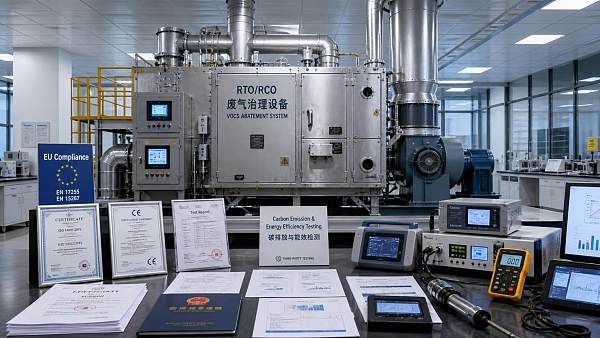
 Aug 16, 2026EU Issues New RTO/RCO Compliance Guide, Adds Carbon and Efficiency CertificationEU releases a new RTO/RCO compliance guide with carbon and efficiency certification requirements, signaling stricter market access rules and urgent action for exporters.
 Aug 15, 2026What Makes an HVAC System Energy-Efficient for European Buildings?Energy efficient HVAC Europe solutions help European buildings cut costs, boost comfort, and meet carbon targets. Discover the design factors that truly improve performance.
 Aug 15, 2026China Issues New Export Compliance Rules for RTO/RCO SystemsChina's new export compliance rules for RTO/RCO systems are reshaping market access. Learn what the 2026 regulations mean for exporters, buyers, and green procurement.
 Aug 14, 2026How to Evaluate a Precision Cooling Supplier for High-Density Data CentersPrecision cooling supplier guide for high-density data centers: learn how to evaluate reliability, scalability, compliance, and lifecycle value before you buy.
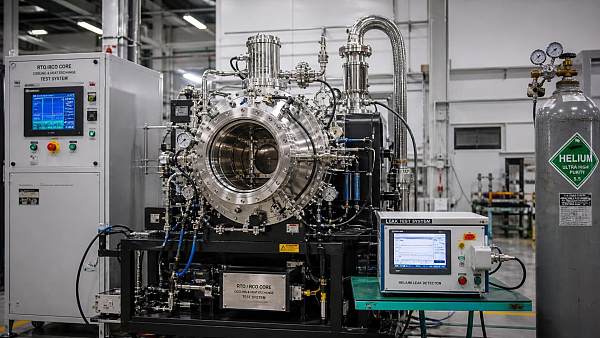
 Aug 14, 2026China’s Temporary Helium Export Ban Slows RTO/RCO Core Cooling DeliveriesChina’s temporary helium export ban may delay RTO/RCO core cooling deliveries, especially for final testing and certification. Learn how it impacts projects and what companies should check next.
 Aug 13, 2026How to Select VAV Airflow Control Systems for Labs and Cleanroom HVAC ProjectsVAV airflow control systems are critical for labs and cleanroom HVAC projects. Discover how to choose the right system for stability, compliance, and energy savings.
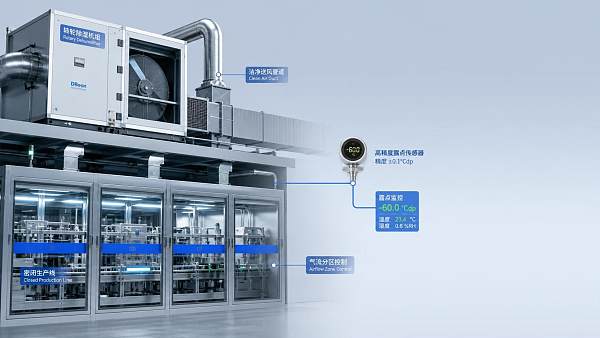
 Aug 12, 2026How to Select Dew Point Control Systems for Battery Plants?Dew point control systems for battery plants: learn how to compare stability, energy use, controls, and maintenance to choose a safer, more efficient dry room solution.
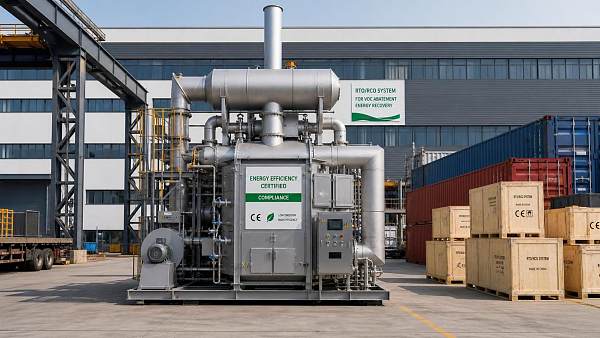
![]() Aug 12, 2026The EU updates CE guidelines, RTO/RCO need to take into account both energy efficiency and explosion protectionEU CE Guide update: RTO/RCO systems must now meet both energy efficiency and explosion-proof compliance. Learn how EN 1539, ATEX testing, and new VOCs rules impact EU market access.
Aug 12, 2026The EU updates CE guidelines, RTO/RCO need to take into account both energy efficiency and explosion protectionEU CE Guide update: RTO/RCO systems must now meet both energy efficiency and explosion-proof compliance. Learn how EN 1539, ATEX testing, and new VOCs rules impact EU market access. Aug 11, 2026How to Select Precision Humidity Control for Cleanrooms and Micro-EnvironmentsPrecision humidity control for cleanrooms starts with process needs. Learn how to compare dew point targets, airflow, controls, and energy tradeoffs for reliable, high-yield micro-environments.
 Aug 11, 2026China Sets New VOCs Certification Rule for RTO/RCO ExportsChina sets new VOCs certification rule for RTO/RCO exports. Learn how CN-ERV-2026, energy-efficiency grades, and customs impacts could affect bids, buyers, and delivery plans.
 Aug 10, 2026How to Evaluate Automated Industrial Exhaust Treatment Systems for VOC ControlAutomated industrial exhaust treatment systems for VOC control: learn how to compare compliance, automation, energy use, safety, and lifecycle cost before selecting the right solution.