Search News
Industry Portal
Hot Articles
- How Factories Can Select Air Quality Controls for Dust, Fumes, and VOCsIndustrial air quality control for factories: learn how to select effective solutions for dust, fumes, and VOCs while improving safety, compliance, energy efficiency, and uptime.
- How to Size Industrial Gas Scrubbing Units for Acid Fumes and Variable AirflowsIndustrial gas scrubbing units: learn how to size acid-fume scrubbers for variable airflows, peak loads, chemical demand, pressure drop, and reliable compliance.
- How to Evaluate Industrial Air Quality Control Systems for Dust, Fumes, and VOCsIndustrial air quality control systems: learn how to evaluate dust, fumes, and VOC solutions by capture efficiency, compliance, maintenance, and lifecycle cost.
Popular Tags
China Mandates Third-Party Methane Testing for RTO/RCO Exports
author
Time
Click Count
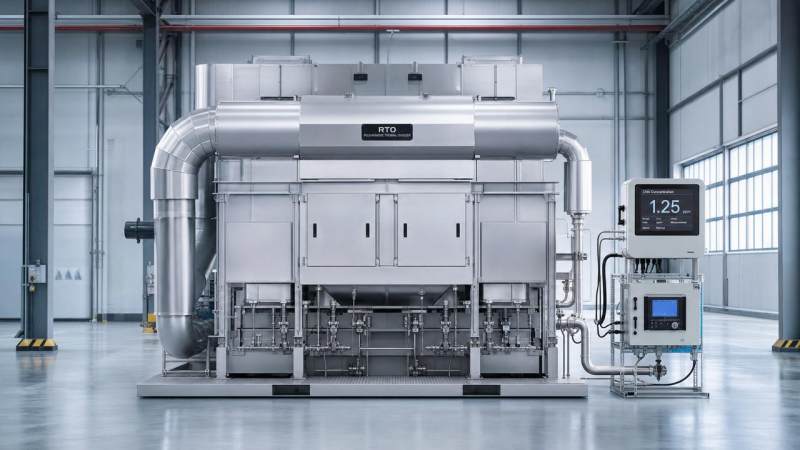
China has introduced new export compliance requirements for regenerative thermal oxidizers (RTOs) and regenerative catalytic oxidizers (RCOs), effective 1 July 2026. The policy — announced by the Ministry of Ecology and Environment Information Center on 29 May 2026 — requires third-party methane performance verification for exports to the EU, Canada, and South Korea. Equipment manufacturers, exporters, and EPR registrants in air pollution control, petrochemical processing, and industrial emissions management should take note: this directly affects customs clearance and regulatory registration timelines.
Event Overview
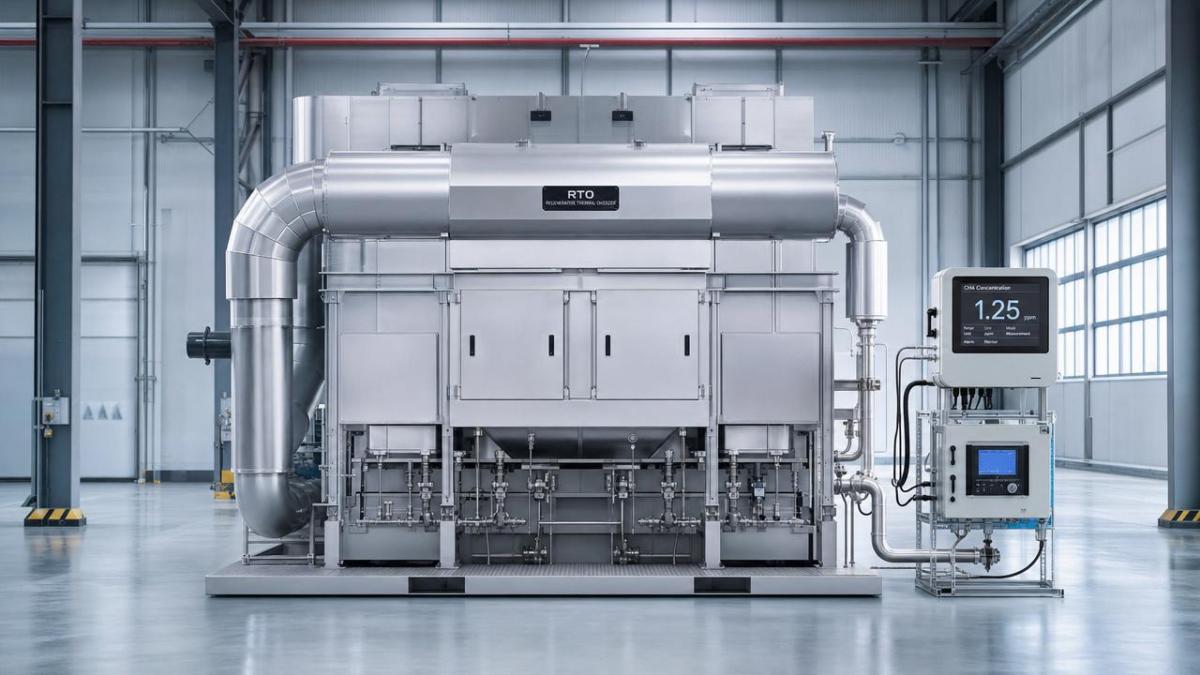
On 29 May 2026, the Ministry of Ecology and Environment Information Center jointly released the Digital Ecological Civilization Development Report (2025) — a blue book identifying ‘methane leakage control in oil & gas and chemical processes’ as a mandatory compliance item for exported equipment. As of 1 July 2026, RTO and RCO systems destined for the European Union, Canada, and South Korea must be accompanied by a verified 30-day continuous measurement report of methane conversion efficiency and exhaust CH4 concentration. The report must be issued by a laboratory accredited to CNAS under ISO/IEC 17025.
Industries Affected
Equipment Exporters & Trade Firms
Exporters handling RTO/RCO shipments to the EU, Canada, or South Korea will face new pre-shipment documentation requirements. Non-compliance may result in customs delays, rejection of EPR (Extended Producer Responsibility) registration, or inability to meet local environmental product declarations.
Manufacturers & System Integrators
Manufacturers producing RTO/RCO units for export must now incorporate methane performance validation into their quality assurance workflows. This includes coordinating with accredited labs for extended testing cycles — adding time and cost to production lead times and certification planning.
Supply Chain Service Providers
Logistics, customs brokers, and technical compliance consultants supporting cross-border environmental equipment trade must update documentation checklists and client advisories. The requirement introduces a new verification layer beyond standard CE marking or KC certification — one tied specifically to operational methane metrics.
Key Considerations and Recommended Actions
Monitor official implementation guidance
The blue book establishes the requirement but does not specify test protocols, sampling frequency within the 30-day window, or acceptable reporting formats. Stakeholders should track subsequent notices from the Ministry of Ecology and Environment or CNAS for procedural clarity.
Confirm scope applicability per destination market
The mandate explicitly applies only to exports to the EU, Canada, and South Korea — not other markets. Companies serving multiple regions must maintain differentiated documentation packages and avoid overgeneralizing compliance efforts.
Distinguish between policy signal and enforceable obligation
This requirement is codified in a government-published blue book rather than a formal regulation or ministerial decree. Analysis shows it functions as a de facto compliance benchmark; however, its legal enforcement mechanism (e.g., customs authority mandate, penalties) remains to be formally detailed.
Initiate lab coordination and internal testing readiness
Given the 30-day continuous measurement requirement, companies should identify and contract CNAS-accredited laboratories well in advance. Internal process mapping — including instrument calibration, data logging, and QA/QC protocols — should begin before Q3 2026 to align with the 1 July 2026 effective date.
Editorial Perspective / Industry Observation
Observably, this requirement reflects a broader shift toward lifecycle-based environmental accountability in China’s export governance — extending beyond energy efficiency or VOC removal rates to include upstream greenhouse gas performance. It is less an isolated technical update and more a signal that methane, as a short-lived climate forcer, is entering the operational compliance lexicon for industrial air treatment systems. From an industry perspective, the move signals growing alignment between domestic ecological goals and international climate-related trade expectations — particularly with jurisdictions advancing methane-focused import rules (e.g., EU Methane Strategy, Canadian Oil & Gas Methane Regulations). However, the absence of transitional provisions or phased implementation suggests stakeholders should treat this as an immediate operational consideration, not a distant policy horizon.
This development underscores how environmental performance metrics are evolving from voluntary reporting tools into binding trade prerequisites. For RTO/RCO suppliers, it marks a transition from equipment-centric certification to process- and emission-outcome verification. Currently, it is more appropriately understood as a compliance prerequisite with near-term execution implications — not merely a long-term sustainability signal.
Information Sources:
– Ministry of Ecology and Environment Information Center, Digital Ecological Civilization Development Report (2025) (Blue Book), published 29 May 2026.
– Note: Implementation details — including enforcement procedures, lab accreditation verification pathways, and reporting templates — remain subject to further official clarification and are under ongoing observation.
Recommended News
 Aug 28, 2026How Factories Can Select Air Quality Controls for Dust, Fumes, and VOCsIndustrial air quality control for factories: learn how to select effective solutions for dust, fumes, and VOCs while improving safety, compliance, energy efficiency, and uptime.
 Aug 27, 2026How to Size Industrial Gas Scrubbing Units for Acid Fumes and Variable AirflowsIndustrial gas scrubbing units: learn how to size acid-fume scrubbers for variable airflows, peak loads, chemical demand, pressure drop, and reliable compliance.
 Aug 26, 2026How to Evaluate Industrial Air Quality Control Systems for Dust, Fumes, and VOCsIndustrial air quality control systems: learn how to evaluate dust, fumes, and VOC solutions by capture efficiency, compliance, maintenance, and lifecycle cost.
 Aug 25, 2026How to Select Cleanroom Particle Control Equipment for ISO Class and Process RiskCleanroom particle control equipment selection starts with process risk, ISO class, and airflow design. Learn how to compare FFUs, filters, and monitoring for reliable performance.
 Aug 24, 2026How to Choose a Ducted Heat Recovery Ventilation System for Commercial BuildingsDucted heat recovery ventilation for commercial buildings: learn how to compare efficiency, static pressure, controls, IAQ, and lifecycle cost to choose a smarter, high-performance system.
 Aug 23, 2026How Laminar Airflow Supports Compliance and Contamination Control in Medical Device ManufacturingLaminar airflow for medical devices helps reduce contamination risk, support cleanroom compliance, and improve audit readiness—see how it protects product quality and manufacturing control.
 Aug 22, 2026How to Verify CE Compliance When Comparing VOC Treatment Systems for EU ProjectsVOC treatment systems CE certified: learn how to verify real EU compliance, check directives, ATEX, and documentation, and avoid costly procurement and site integration risks.
 Aug 21, 2026How to Achieve Stable RH Precision Humidity Control in Cleanroom Production?Stable RH precision humidity control starts with process-based design. Learn how airflow, sensors, dehumidification, and recovery logic keep cleanroom production consistent and reliable.
 Aug 20, 2026How to Select Airflow Control Dampers for Pressure Balance and Energy EfficiencyAirflow control dampers selection starts with pressure balance, leakage, and control authority—not duct size alone. Learn how to improve stability and energy efficiency.
 Aug 19, 2026What Drives Cleanroom Compliance Cost in Pharma and Semiconductor Projects?Cleanroom compliance cost in pharma and semiconductor projects depends on ISO class, airflow, humidity control, validation, and energy use. Learn what drives cost and how to avoid costly overdesign.
 Aug 18, 2026How to Evaluate a High-Tech HVAC Manufacturer for Cleanroom and Precision FacilitiesHigh-tech HVAC manufacturer evaluation guide for cleanrooms and precision facilities. Learn how to assess control stability, compliance, serviceability, and long-term operational risk.
 Aug 17, 2026How to Evaluate a Commercial ERV Systems Supplier for Large Building ProjectsCommercial ERV systems supplier selection for large projects goes beyond price. Learn how to compare performance, compliance, controls, delivery, and lifecycle cost to reduce risk.
 Aug 16, 2026Commercial Ventilation Pricing: What Drives Cost in Industrial and Office Projects?Commercial ventilation pricing varies by airflow, compliance, and installation needs. Learn what drives costs in industrial and office projects—and how to compare quotes smarter.
 Aug 16, 2026EU Issues New RTO/RCO Compliance Guide, Adds Carbon and Efficiency CertificationEU releases a new RTO/RCO compliance guide with carbon and efficiency certification requirements, signaling stricter market access rules and urgent action for exporters.
 Aug 15, 2026What Makes an HVAC System Energy-Efficient for European Buildings?Energy efficient HVAC Europe solutions help European buildings cut costs, boost comfort, and meet carbon targets. Discover the design factors that truly improve performance.
 Aug 15, 2026China Issues New Export Compliance Rules for RTO/RCO SystemsChina's new export compliance rules for RTO/RCO systems are reshaping market access. Learn what the 2026 regulations mean for exporters, buyers, and green procurement.
 Aug 14, 2026How to Evaluate a Precision Cooling Supplier for High-Density Data CentersPrecision cooling supplier guide for high-density data centers: learn how to evaluate reliability, scalability, compliance, and lifecycle value before you buy.
 Aug 14, 2026China’s Temporary Helium Export Ban Slows RTO/RCO Core Cooling DeliveriesChina’s temporary helium export ban may delay RTO/RCO core cooling deliveries, especially for final testing and certification. Learn how it impacts projects and what companies should check next.
 Aug 13, 2026How to Select VAV Airflow Control Systems for Labs and Cleanroom HVAC ProjectsVAV airflow control systems are critical for labs and cleanroom HVAC projects. Discover how to choose the right system for stability, compliance, and energy savings.
 Aug 12, 2026How to Select Dew Point Control Systems for Battery Plants?Dew point control systems for battery plants: learn how to compare stability, energy use, controls, and maintenance to choose a safer, more efficient dry room solution.
![]() Aug 12, 2026The EU updates CE guidelines, RTO/RCO need to take into account both energy efficiency and explosion protectionEU CE Guide update: RTO/RCO systems must now meet both energy efficiency and explosion-proof compliance. Learn how EN 1539, ATEX testing, and new VOCs rules impact EU market access.
Aug 12, 2026The EU updates CE guidelines, RTO/RCO need to take into account both energy efficiency and explosion protectionEU CE Guide update: RTO/RCO systems must now meet both energy efficiency and explosion-proof compliance. Learn how EN 1539, ATEX testing, and new VOCs rules impact EU market access. Aug 11, 2026How to Select Precision Humidity Control for Cleanrooms and Micro-EnvironmentsPrecision humidity control for cleanrooms starts with process needs. Learn how to compare dew point targets, airflow, controls, and energy tradeoffs for reliable, high-yield micro-environments.
 Aug 11, 2026China Sets New VOCs Certification Rule for RTO/RCO ExportsChina sets new VOCs certification rule for RTO/RCO exports. Learn how CN-ERV-2026, energy-efficiency grades, and customs impacts could affect bids, buyers, and delivery plans.
 Aug 10, 2026How to Evaluate Automated Industrial Exhaust Treatment Systems for VOC ControlAutomated industrial exhaust treatment systems for VOC control: learn how to compare compliance, automation, energy use, safety, and lifecycle cost before selecting the right solution.