Search News
Industry Portal
Hot Articles
- ISO 14644 Certification Process: From Cleanroom Testing to Compliance ApprovalISO 14644 certification process explained: prepare your cleanroom, complete particle testing, address failures, and achieve compliance approval with confidence.
- How Factories Can Select Air Quality Controls for Dust, Fumes, and VOCsIndustrial air quality control for factories: learn how to select effective solutions for dust, fumes, and VOCs while improving safety, compliance, energy efficiency, and uptime.
- How to Size Industrial Gas Scrubbing Units for Acid Fumes and Variable AirflowsIndustrial gas scrubbing units: learn how to size acid-fume scrubbers for variable airflows, peak loads, chemical demand, pressure drop, and reliable compliance.
Popular Tags
Sodium Carbonate Prices Surge 23% for Wet Scrubber Exports
author
Time
Click Count
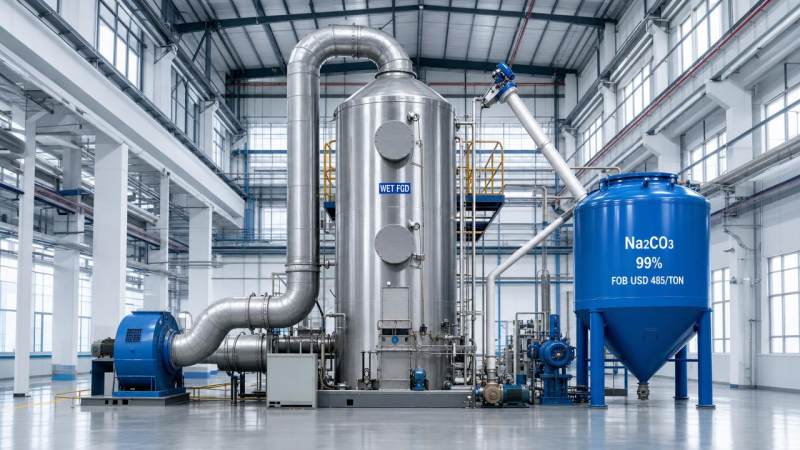
On May 24–30, 2026, the export FOB price of industrial-grade sodium carbonate (99%) — a critical raw material for wet scrubbers — rose 23% week-on-week to USD 485/ton. Concurrently, average lead times extended from 6 to 14 weeks. This development directly affects manufacturers and exporters of wet scrubber systems, particularly those relying on acid-base neutralization modules, and warrants close attention from air pollution control equipment suppliers, chemical procurement teams, and global environmental compliance service providers.
Event Overview
Between May 24 and May 30, 2026, the export FOB price of industrial-grade sodium carbonate (99%) increased by 23% compared to the prior week, reaching a mainstream quote of USD 485 per ton. This price shift coincided with a lengthening of average supplier lead times from 6 weeks to 14 weeks. The movement is attributed to a temporary contraction in global soda ash production capacity and an increase in marine cargo insurance rates.
Impact on Specific Industry Segments
Direct Exporters of Wet Scrubber Systems
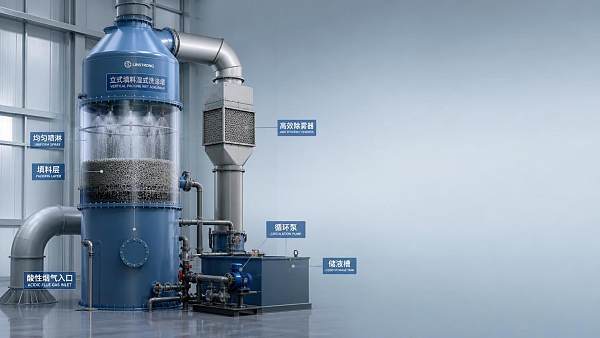
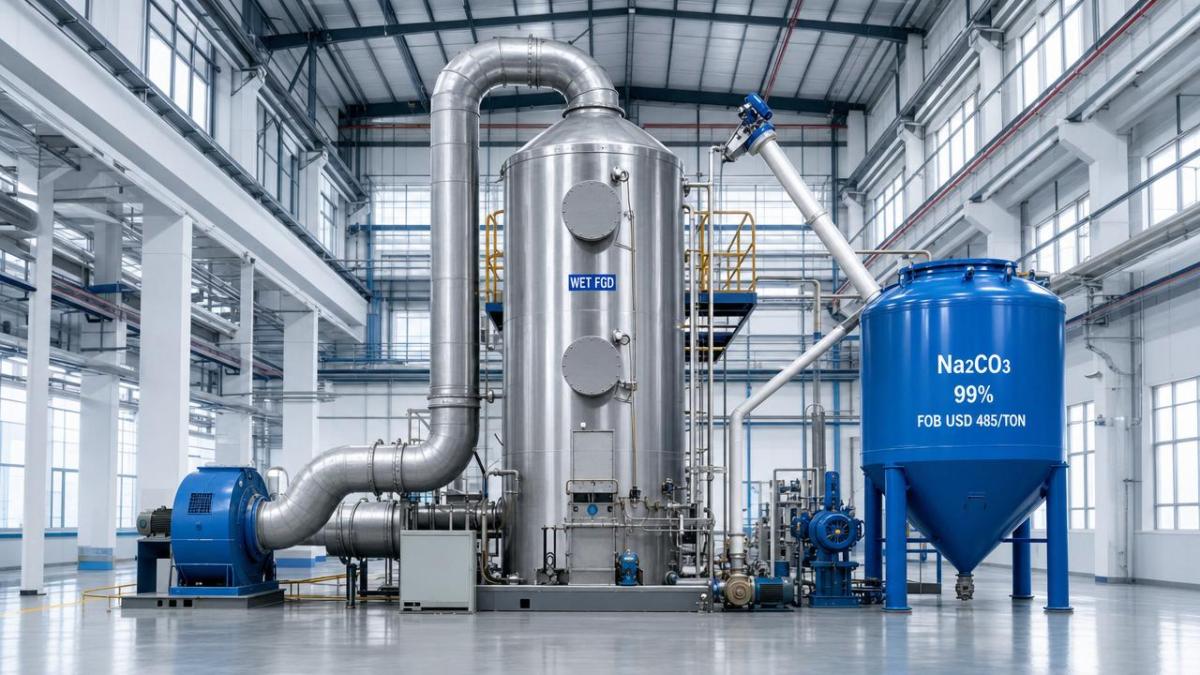
Wet scrubbers depend on sodium carbonate as a core consumable in their acid-neutralization stage. A 23% raw material cost increase and 14-week delivery delay directly pressure landed cost calculations, project margin forecasts, and on-site commissioning timelines — especially for turnkey contracts with fixed-price clauses or strict delivery windows.
Raw Material Procurement Teams (Chemical & Environmental Equipment Firms)
Procurement departments sourcing sodium carbonate for scrubber system integration or aftermarket supply face immediate challenges in budget adherence and inventory planning. Extended lead times reduce flexibility in responding to urgent client requests or regional regulatory deadlines, increasing reliance on safety stock — which in turn raises working capital requirements.
Contract Manufacturers & OEMs Integrating Scrubber Modules
For firms assembling or co-manufacturing scrubber units using third-party sodium carbonate inputs, this price and lead-time shift disrupts bill-of-materials (BOM) costing accuracy and production scheduling. Delays may cascade into downstream assembly lines, affecting shipment commitments to end customers or system integrators.
Supply Chain & Logistics Service Providers
Freight forwarders and customs brokers supporting sodium carbonate shipments are seeing elevated insurance premiums reflected in rate quotes. Longer lead times also imply greater demand for warehousing and buffer-stock coordination — particularly at key transshipment hubs — raising operational coordination complexity for time-sensitive environmental equipment deployments.
What Relevant Enterprises or Practitioners Should Monitor and Do Now
Track official updates on global soda ash production capacity indicators
Current lead-time extension appears tied to a *temporary* reduction in global output. Monitoring announcements from major producers (e.g., Solvay, Tata Chemicals, or domestic Chinese soda ash associations) will help assess whether the 14-week horizon reflects structural scarcity or short-term maintenance/seasonal constraints.
Review contractual terms for sodium carbonate supply agreements
Companies with existing long-term supply contracts should verify pricing mechanisms (e.g., index-linked vs. fixed), force majeure clauses covering insurance cost increases, and minimum order quantity (MOQ) adjustments triggered by extended lead times — all of which may affect near-term procurement decisions.
Assess inventory buffer strategy for high-usage scrubber models
Given the 14-week lead time, firms supplying standardized wet scrubber units should calculate safety stock thresholds based on historical deployment velocity and regional regulatory rollout schedules — prioritizing SKUs with highest sodium carbonate consumption per unit and shortest allowable installation windows.
Validate alternative logistics routing options for key markets
Since marine insurance rate hikes contributed to the delay, cross-checking inland transport + alternate port combinations (e.g., shifting from Shanghai to Qingdao for certain ASEAN-bound shipments) may yield marginal improvements in transit predictability — though not necessarily cost — for time-critical orders.
Editorial Observation / Industry Perspective
Observably, this price and lead-time shift functions less as an isolated incident and more as a stress test of supply resilience in the environmental equipment value chain. Analysis shows that sodium carbonate — though commoditized — remains operationally irreplaceable in many wet scrubber designs due to its pH buffering capacity and low solubility risk relative to alternatives like sodium hydroxide. From an industry perspective, the current situation signals heightened sensitivity to upstream chemical logistics volatility, especially where environmental hardware deployment timelines intersect with tightening emissions enforcement cycles. It is not yet evidence of permanent cost inflation, but rather a reminder that single-point material dependencies can rapidly amplify execution risk across multi-tiered environmental infrastructure projects.
This event underscores how seemingly peripheral commodity markets — such as industrial soda ash — can exert tangible, near-term pressure on the commercial viability and delivery reliability of regulated environmental technologies. Rather than indicating systemic failure, it highlights a point of vulnerability requiring proactive monitoring and tactical recalibration — particularly for firms operating under fixed-price contracts or tight regulatory compliance deadlines.
Information Source: Publicly reported export pricing data and lead-time benchmarks from domestic Chinese industrial chemical trade platforms and freight insurance indices (as of May 30, 2026). Ongoing observation is recommended for updates on global soda ash production restart timelines and maritime insurance rate revisions beyond Q2 2026.
Recommended News
 Aug 29, 2026ISO 14644 Certification Process: From Cleanroom Testing to Compliance ApprovalISO 14644 certification process explained: prepare your cleanroom, complete particle testing, address failures, and achieve compliance approval with confidence.
 Aug 28, 2026How Factories Can Select Air Quality Controls for Dust, Fumes, and VOCsIndustrial air quality control for factories: learn how to select effective solutions for dust, fumes, and VOCs while improving safety, compliance, energy efficiency, and uptime.
 Aug 27, 2026How to Size Industrial Gas Scrubbing Units for Acid Fumes and Variable AirflowsIndustrial gas scrubbing units: learn how to size acid-fume scrubbers for variable airflows, peak loads, chemical demand, pressure drop, and reliable compliance.
 Aug 26, 2026How to Evaluate Industrial Air Quality Control Systems for Dust, Fumes, and VOCsIndustrial air quality control systems: learn how to evaluate dust, fumes, and VOC solutions by capture efficiency, compliance, maintenance, and lifecycle cost.
 Aug 25, 2026How to Select Cleanroom Particle Control Equipment for ISO Class and Process RiskCleanroom particle control equipment selection starts with process risk, ISO class, and airflow design. Learn how to compare FFUs, filters, and monitoring for reliable performance.
 Aug 24, 2026How to Choose a Ducted Heat Recovery Ventilation System for Commercial BuildingsDucted heat recovery ventilation for commercial buildings: learn how to compare efficiency, static pressure, controls, IAQ, and lifecycle cost to choose a smarter, high-performance system.
 Aug 23, 2026How Laminar Airflow Supports Compliance and Contamination Control in Medical Device ManufacturingLaminar airflow for medical devices helps reduce contamination risk, support cleanroom compliance, and improve audit readiness—see how it protects product quality and manufacturing control.
 Aug 22, 2026How to Verify CE Compliance When Comparing VOC Treatment Systems for EU ProjectsVOC treatment systems CE certified: learn how to verify real EU compliance, check directives, ATEX, and documentation, and avoid costly procurement and site integration risks.
 Aug 21, 2026How to Achieve Stable RH Precision Humidity Control in Cleanroom Production?Stable RH precision humidity control starts with process-based design. Learn how airflow, sensors, dehumidification, and recovery logic keep cleanroom production consistent and reliable.
 Aug 20, 2026How to Select Airflow Control Dampers for Pressure Balance and Energy EfficiencyAirflow control dampers selection starts with pressure balance, leakage, and control authority—not duct size alone. Learn how to improve stability and energy efficiency.
 Aug 19, 2026What Drives Cleanroom Compliance Cost in Pharma and Semiconductor Projects?Cleanroom compliance cost in pharma and semiconductor projects depends on ISO class, airflow, humidity control, validation, and energy use. Learn what drives cost and how to avoid costly overdesign.
 Aug 18, 2026How to Evaluate a High-Tech HVAC Manufacturer for Cleanroom and Precision FacilitiesHigh-tech HVAC manufacturer evaluation guide for cleanrooms and precision facilities. Learn how to assess control stability, compliance, serviceability, and long-term operational risk.
 Aug 17, 2026How to Evaluate a Commercial ERV Systems Supplier for Large Building ProjectsCommercial ERV systems supplier selection for large projects goes beyond price. Learn how to compare performance, compliance, controls, delivery, and lifecycle cost to reduce risk.
 Aug 16, 2026Commercial Ventilation Pricing: What Drives Cost in Industrial and Office Projects?Commercial ventilation pricing varies by airflow, compliance, and installation needs. Learn what drives costs in industrial and office projects—and how to compare quotes smarter.
 Aug 16, 2026EU Issues New RTO/RCO Compliance Guide, Adds Carbon and Efficiency CertificationEU releases a new RTO/RCO compliance guide with carbon and efficiency certification requirements, signaling stricter market access rules and urgent action for exporters.
 Aug 15, 2026What Makes an HVAC System Energy-Efficient for European Buildings?Energy efficient HVAC Europe solutions help European buildings cut costs, boost comfort, and meet carbon targets. Discover the design factors that truly improve performance.
 Aug 15, 2026China Issues New Export Compliance Rules for RTO/RCO SystemsChina's new export compliance rules for RTO/RCO systems are reshaping market access. Learn what the 2026 regulations mean for exporters, buyers, and green procurement.
 Aug 14, 2026How to Evaluate a Precision Cooling Supplier for High-Density Data CentersPrecision cooling supplier guide for high-density data centers: learn how to evaluate reliability, scalability, compliance, and lifecycle value before you buy.
 Aug 14, 2026China’s Temporary Helium Export Ban Slows RTO/RCO Core Cooling DeliveriesChina’s temporary helium export ban may delay RTO/RCO core cooling deliveries, especially for final testing and certification. Learn how it impacts projects and what companies should check next.
 Aug 13, 2026How to Select VAV Airflow Control Systems for Labs and Cleanroom HVAC ProjectsVAV airflow control systems are critical for labs and cleanroom HVAC projects. Discover how to choose the right system for stability, compliance, and energy savings.
 Aug 12, 2026How to Select Dew Point Control Systems for Battery Plants?Dew point control systems for battery plants: learn how to compare stability, energy use, controls, and maintenance to choose a safer, more efficient dry room solution.
![]() Aug 12, 2026The EU updates CE guidelines, RTO/RCO need to take into account both energy efficiency and explosion protectionEU CE Guide update: RTO/RCO systems must now meet both energy efficiency and explosion-proof compliance. Learn how EN 1539, ATEX testing, and new VOCs rules impact EU market access.
Aug 12, 2026The EU updates CE guidelines, RTO/RCO need to take into account both energy efficiency and explosion protectionEU CE Guide update: RTO/RCO systems must now meet both energy efficiency and explosion-proof compliance. Learn how EN 1539, ATEX testing, and new VOCs rules impact EU market access. Aug 11, 2026How to Select Precision Humidity Control for Cleanrooms and Micro-EnvironmentsPrecision humidity control for cleanrooms starts with process needs. Learn how to compare dew point targets, airflow, controls, and energy tradeoffs for reliable, high-yield micro-environments.
 Aug 11, 2026China Sets New VOCs Certification Rule for RTO/RCO ExportsChina sets new VOCs certification rule for RTO/RCO exports. Learn how CN-ERV-2026, energy-efficiency grades, and customs impacts could affect bids, buyers, and delivery plans.