Search News
Industry Portal
Hot Articles
- Choosing a Clean Air Supplier for Semiconductor Fabs: What to CheckChoosing a semiconductor clean air supplier? Compare ISO 14644 testing, airflow, lifecycle costs, and service support to make a confident sourcing decision.
- Georg Fischer Reports Data Center Liquid-Cooling Orders Doubled in H1 2026Georg Fischer's reported H1 2026 data center liquid-cooling order growth signals shifting demand. Explore what buyers and suppliers should verify before purchasing.
- Nvidia Backs Madrone's Chiller-Free Data Center Cooling DevelopmentNvidia-backed Madrone is developing chiller-free data center cooling. Discover its potential impact on AI infrastructure energy and water use.
Popular Tags
Which Environmental Control System Alarms Require Immediate Action?
author
Time
Click Count
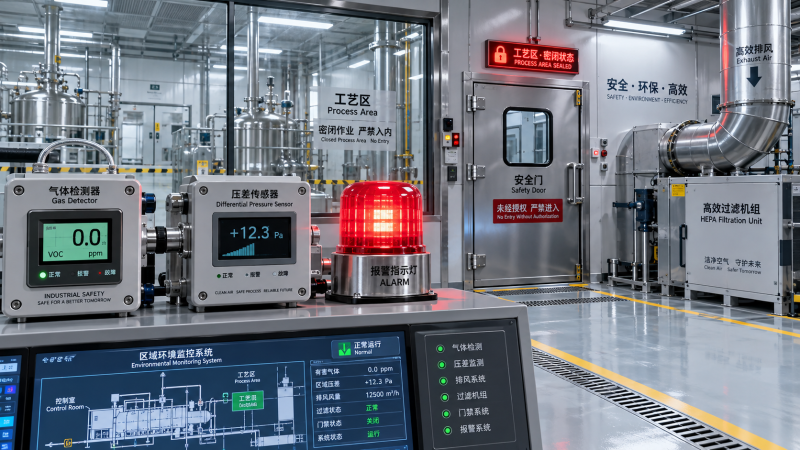
An environmental control alarm requires immediate action when it signals a condition that can harm people, create fire or explosion risk, compromise a controlled process, release pollutants, or make the monitoring system itself unreliable. The most urgent alarms are not necessarily the loudest or the most frequent. A clogged filter warning may allow time for controlled intervention; a toxic-gas detector in alarm, a loss of exhaust in a chemical area, or a rapid pressure reversal in a containment space may not.
The correct response is therefore based on consequence and rate of change, not simply on the alarm label. Facilities should distinguish between alarms that require immediate protective action, alarms that require rapid technical investigation, and maintenance alerts that can be planned within a defined service window. Treating all alarms alike leads either to alarm fatigue or to dangerous delay.
Alarms that demand an immediate protective response
Immediate action means initiating the site’s emergency procedure without waiting for a routine maintenance check or a second shift. Depending on the facility and hazard, that may involve stopping a process, evacuating or restricting access, activating emergency ventilation, isolating energy or material feeds, notifying emergency responders, and preserving alarm records for investigation. Personnel should not enter a potentially hazardous area merely to confirm whether an alarm is “real.”
Toxic, flammable, or oxygen-deficiency gas alarms
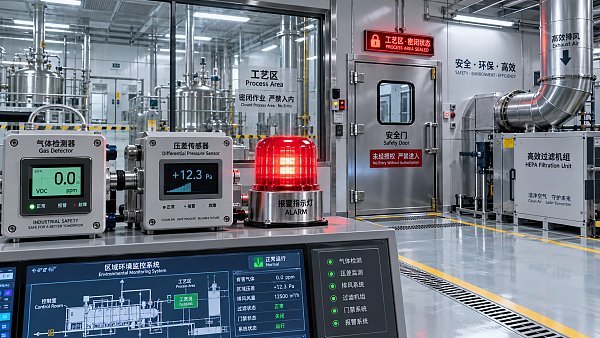
Gas detection alarms are among the clearest examples of alarms requiring immediate action. They may indicate a leak from process equipment, storage systems, battery formation or charging areas, chemical treatment systems, combustion equipment, wastewater treatment, or confined industrial spaces.
A toxic-gas alarm can indicate an exposure risk even when no odour is detectable. A flammable-gas alarm can indicate an ignition hazard, particularly where electrical equipment, hot surfaces, static discharge, or vehicle movement may be present. An oxygen-deficiency alarm is equally serious: it may result from nitrogen, argon, carbon dioxide, or another inert gas displacing breathable air. Oxygen enrichment can also increase combustion risk.
The safe initial assumption is that the detector may be correct. Follow the emergency response plan, restrict ignition sources where applicable, and do not rely on portable testing unless it is performed by trained personnel using suitable instruments and procedures. Resetting a gas alarm without identifying the cause turns a warning into an unmonitored exposure event.
Loss of hazardous exhaust or critical ventilation
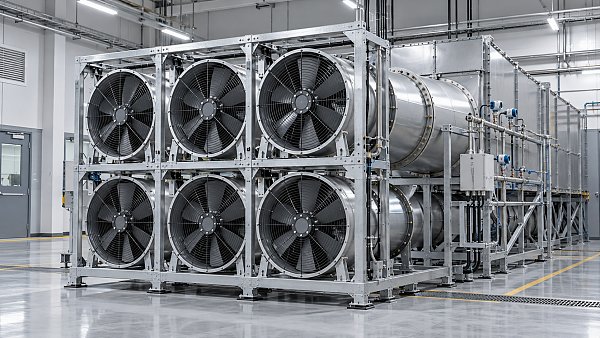
Failure of local exhaust ventilation, fume extraction, scrubber-induced draft, or general mechanical ventilation can quickly change the safety condition of a workplace. The risk is particularly high where welding fumes, solvents, corrosive vapours, combustible dust, process gases, or airborne contaminants are generated continuously.
A fan-running indication alone does not prove that airflow is adequate. A broken belt, failed variable-frequency drive, closed damper, collapsed duct, blocked intake, disconnected pressure sensor, or heavily loaded filter can leave a fan energized while the required capture or exhaust performance is lost. For that reason, an immediate-action alarm should be based where possible on verified airflow, differential pressure, fan status, or process interlocking—not only on a command signal.
When ventilation is essential for safe operation, the affected process should be stopped or placed in a safe state according to the established operating procedure. Continuing production while waiting to see whether airflow “comes back” can expose workers and may spread contaminants beyond the source area.
Fire, smoke, overheating, and thermal runaway indicators
Environmental control systems often provide early warnings of abnormal heat before a full fire alarm condition develops. High discharge-air temperature, fan motor overtemperature, electrical cabinet temperature, smoke detection in air-handling equipment, or abnormal heat in battery-related areas should not be treated as ordinary HVAC faults.
In lithium-ion battery operations, for example, abnormal temperature readings, off-gas detection, smoke, or rapid changes in ventilation demand can be connected to an escalating event. The appropriate action is governed by the site’s battery safety plan and emergency response arrangements. Attempting to keep production running to avoid downtime is not an acceptable substitute for hazard assessment.
In data rooms, cleanrooms, and manufacturing areas, an overheated fan motor or electrical component can also spread smoke through the air-distribution system. Emergency shutdown logic must be application-specific: shutting down airflow can limit smoke transport in one zone, while maintaining or increasing exhaust may be necessary in another. The alarm response matrix should define this before an event occurs.
Critical cleanroom pressure loss or pressure reversal
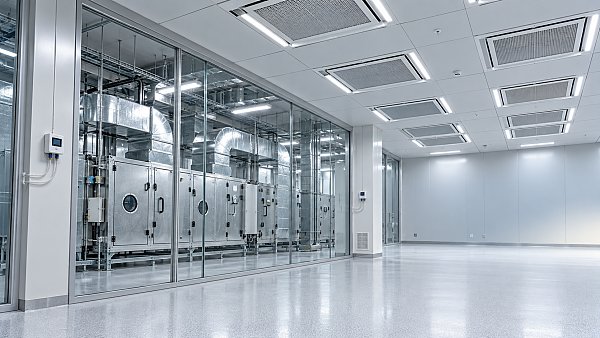
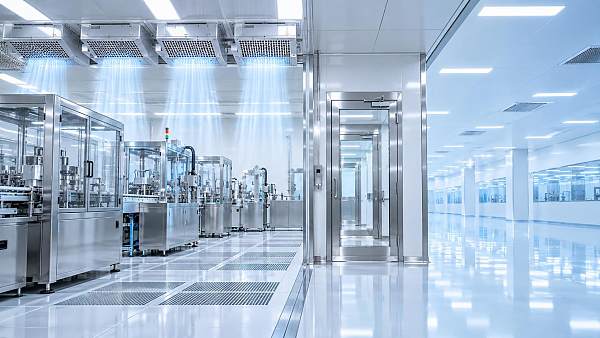
Pressure alarms require immediate action when they threaten containment, product integrity, or both. A clean manufacturing space may be held at positive pressure relative to adjacent areas to reduce ingress of particles and unfiltered air. A hazardous-process room may be held negative to prevent contaminants escaping into corridors or occupied zones.
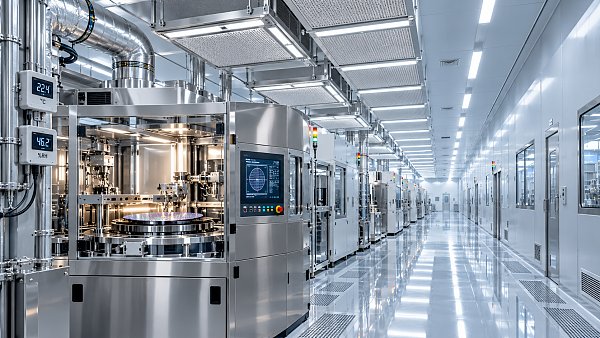
The direction of the pressure relationship matters more than a generic “low pressure” message. In a semiconductor or precision assembly cleanroom, a sudden drop in differential pressure can allow contaminated air to enter through doors, cracks, pass-throughs, or service penetrations. In a chemical handling room or isolation area, a loss of negative pressure can permit contaminants to migrate outward.
An alarm becomes particularly urgent when pressure reverses direction, when several adjacent zones lose their designed pressure cascade, or when the deviation follows a fan trip, door failure, damper malfunction, utility interruption, or building-management-system fault. The immediate priority is to protect people and isolate the affected process or material according to contamination-control procedures. Product disposition should be decided from documented exposure conditions rather than assumptions that the room “still looked clean.”
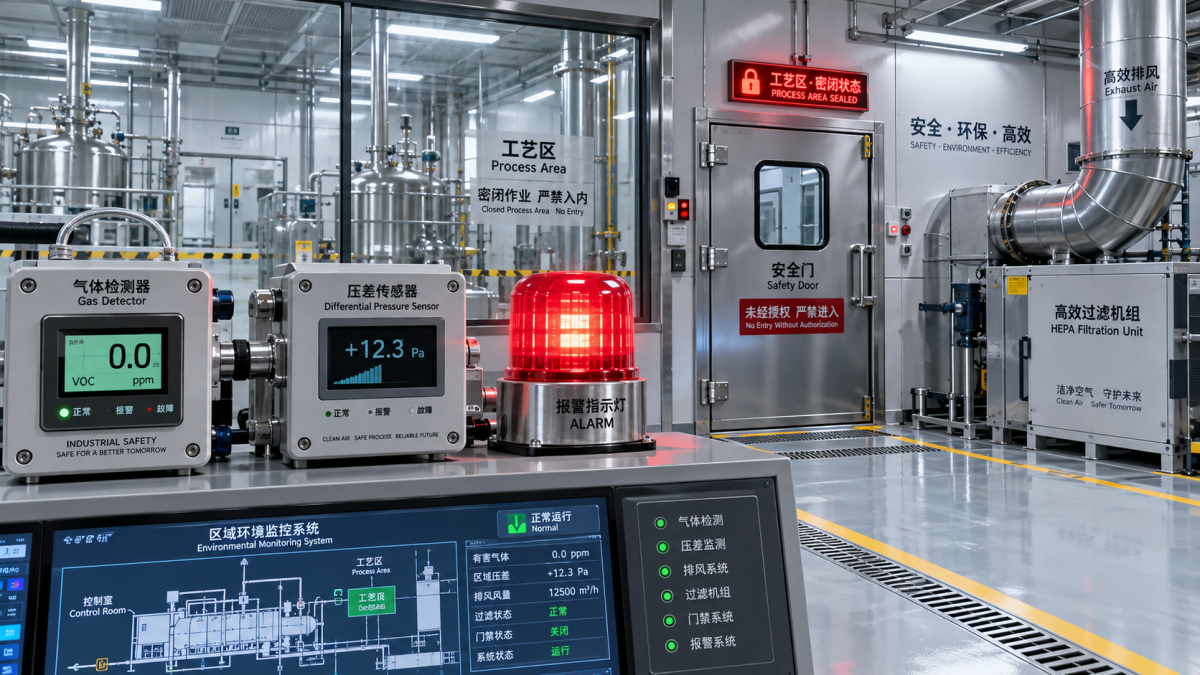
Extreme temperature or humidity excursions in process-critical spaces
Not every temperature alarm is an emergency. A modest comfort deviation in an office zone may require service but not an immediate response. The same deviation can be process-critical in a dry room, pharmaceutical support area, metrology space, server room, or controlled warehouse.
The key question is whether the excursion crosses the validated operating limit for material, equipment, or process stability. In battery electrode manufacturing, moisture control can be integral to material handling and downstream quality. In precision manufacturing, temperature changes can affect dimensional measurement and equipment stability. In spaces handling hygroscopic materials, humidity excursions can cause irreversible material exposure before operators notice visible effects.
Rapid changes deserve more urgency than a stable, minor deviation. A supply-air cooling failure during high outdoor temperatures, loss of dehumidification caused by a desiccant system fault, frozen coil conditions, or a failed reheat sequence may push a controlled area outside its allowable range quickly. Immediate action may include pausing sensitive production, protecting exposed material, closing dampers to prevent unsuitable air intake, or switching to a qualified standby system.
When a “maintenance alarm” becomes an operational alarm
Filter differential-pressure alarms, water-leak alarms, condensate high-level alarms, and equipment communication failures are sometimes categorized as noncritical because they do not always create an immediate hazard. That classification can be misleading. Their urgency depends on what function is being impaired and whether redundancy remains available.
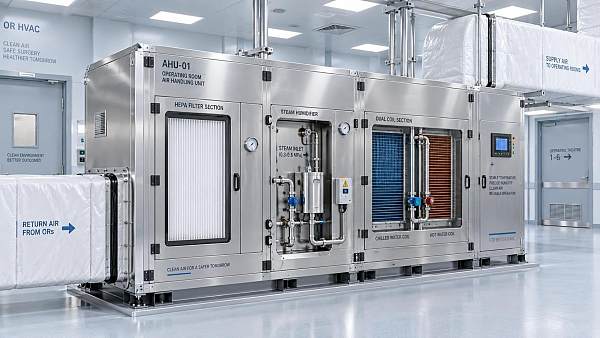
A high differential pressure across a HEPA or prefilter may simply indicate that replacement planning is required. It becomes urgent when airflow or room pressurization has fallen below the required operating condition, when a fan is approaching overload, or when bypass risk or filter damage is suspected. In clean environments, filter integrity and airflow verification are more meaningful than pressure drop alone.
A condensate alarm may be low priority in a small comfort-cooling unit, but it requires rapid escalation when water can enter electrical equipment, drip over critical production, damage ceilings, support microbial growth, or disable an air-handling unit. Similarly, a water leak beneath a chilled-water valve is not merely a housekeeping issue if it threatens power distribution, raised-floor infrastructure, or process tools.
Communication-loss alarms also need careful treatment. If a supervisory system loses connection to one sensor while local controls remain functional and independently monitored, the event may be manageable. If the loss of communication removes visibility of toxic gas, pressure, temperature, or fan status in an occupied or hazardous zone, operators are effectively blind. That condition may require immediate manual verification, access restrictions, or process shutdown until monitoring is restored.
How to determine the right alarm priority before an incident
Alarm prioritization should be built around credible consequences, not around the preferences of the controls contractor or the convenience of the operations team. A useful review begins with four questions:
- Can the condition cause injury, fire, explosion, toxic exposure, or unsafe entry?
- Can it release contaminants from a controlled area or compromise product that cannot be recovered?
- How fast can the condition become unacceptable after the alarm occurs?
- Does the facility retain verified redundancy, local indication, and sufficient time to intervene safely?
These questions often produce different priorities for the same equipment type. A failed supply fan serving a general office area is not equivalent to a failed exhaust fan serving a solvent process. A high humidity alarm in a lobby is not equivalent to one in a dry room. A dirty filter signal in a redundant air-handling system differs from the same signal in a single-train containment system.
Each critical alarm should have an action statement that is short enough to use under pressure: what condition has occurred, what hazard it represents, who must be notified, whether entry is permitted, which process must stop, and what evidence is required before reset. Vague instructions such as “check unit” or “investigate fault” are inadequate for a high-consequence alarm.
Alarm design failures that create unnecessary risk
Many avoidable incidents begin with poor alarm design rather than a single mechanical failure. Excessive nuisance alarms train operators to acknowledge messages without assessing them. Duplicate alarms from a single fault can bury the initiating event. Thresholds that are too wide provide warning only after a limit has been breached; thresholds that are too tight create constant noise and loss of confidence.
Alarm delays must also match the physics of the hazard. A short delay may be appropriate for a rapidly rising gas concentration or a pressure reversal. A longer delay may be suitable for a slow room-temperature drift caused by a temporary door opening. Applying the same delay to every point is not defensible.
Equally important, alarm priority must not depend solely on sensor value. The system should recognize states such as occupied versus unoccupied operation, process active versus idle, normal versus maintenance bypass, and primary unit available versus failed over to backup. A filter alarm during planned maintenance can be informational; the same alarm combined with low airflow and loss of standby capacity may require immediate escalation.
Verification and reset are part of the response
An alarm is not resolved because it has disappeared from the screen. A return to normal may result from an automatic restart, a temporary sensor recovery, a changed process load, or an operator acknowledgement. Before resetting a critical event, the responsible team should establish that the underlying cause has been identified or that the area has been placed in a documented safe condition.
Verification may include confirming airflow at the required point, checking room pressure relationships, reviewing trend data, inspecting dampers and fans, testing gas concentration with appropriate equipment, confirming filter condition, or validating sensor calibration status. The exact method depends on the hazard and the facility’s procedures. For cleanrooms and other controlled spaces, a normal building-management display does not by itself prove that environmental performance has been restored.
Trend records are especially valuable when the alarm was brief. A pressure dip that coincided with a door event may have a different explanation from a pressure collapse that began with a fan-speed reduction. A humidity excursion that follows regeneration-system failure needs a different corrective action from one caused by a sensor fault. Preserving these records supports safe restart decisions and prevents repeated, unexplained events from being normalized.
The practical distinction: protect first, diagnose second
The most important environmental control alarms are those where delay can expose people, spread hazardous contaminants, damage sensitive product, or remove the ability to detect a developing hazard. Toxic or flammable gas detection, oxygen deficiency, critical exhaust loss, fire or abnormal heat indicators, containment pressure failure, and severe process-environment excursions belong in the immediate-action category when they exceed the facility’s defined limits.
Equipment faults, filter loading, leaks, and communication failures should not be dismissed as routine by default. Their priority must be tied to the protected function, available redundancy, and remaining safe operating time. An effective alarm system does not merely announce that equipment needs attention; it makes clear when the environment is no longer safe to occupy, operate, or release product from control.
Got questions about the latest insights discussed here, or seeking customized strategic advice for your business? Drop us a line below, and let the think-tank experts at CECS help you out.
We respect your privacy. Your information is strictly confidential.
Recommended News
 Nov 28, 2026Choosing a Clean Air Supplier for Semiconductor Fabs: What to CheckChoosing a semiconductor clean air supplier? Compare ISO 14644 testing, airflow, lifecycle costs, and service support to make a confident sourcing decision.
 Nov 25, 2026Technical Column Examines AHU Startup Sequence Failure and System ShutdownAHU startup sequence failure can trigger system shutdown. Explore control interactions, hospital cases and practical steps to reduce operational risk.
 Nov 22, 2026Precise Cleanroom Temperature Control: Managing Heat Loads and StabilityDiscover how precise cleanroom temperature control manages heat loads, airflow and humidity to improve stability and process reliability.
 Nov 21, 2026Air Handling for Electronics Manufacturing: Controlling Particles and HumidityIndustrial air handling for electronics manufacturing: discover how integrated filtration, airflow, and humidity control help protect sensitive processes.
 Nov 16, 2026Applied Materials Warns Cleanroom Constraints Could Limit 2027 Equipment GrowthApplied Materials warns cleanroom constraints could limit 2027 semiconductor equipment growth. Explore the supply chain risks and what buyers should check.
 Nov 15, 2026Cleanroom Thermal Management: How to Maintain Tight Temperature TolerancesMaster cleanroom thermal management for tight tolerance control. Explore practical strategies for airflow, sensors, cooling, and commissioning.
 Nov 13, 2026Choosing Cleanroom Equipment for Pharmaceutical Plants: Key Selection CriteriaChoose cleanroom equipment for pharmaceutical plants with confidence. Explore airflow, filtration, GMP considerations, qualification, and lifecycle costs.
 Nov 10, 2026Choosing a Stainless Steel Cleanroom AHU: Materials and Hygiene CriteriaChoosing cleanroom air conditioning units stainless steel? Compare 304 and 316L, hygiene, drainage, and filter seals to make a confident, evidence-based choice.
 Oct 31, 2026Q-PAC Lab First to Earn AMCA 270 Fan Array Testing AccreditationAMCA 270 fan array testing is now available at Q-PAC's accredited Florida lab. Explore its 2,000–70,000 CFM range and what it means for HVAC project teams.
 Oct 27, 2026Clean Air for Semiconductor Fabs in Southeast Asia: Humidity and Particle ControlSemiconductor clean air Southeast Asia guide: discover how integrated humidity, particle, and exhaust control can protect wafers and improve fab reliability.
 Oct 18, 2026Cleanroom Environmental Control Automation: AHU–FFU Integration for Stable PressureExplore cleanroom environmental control automation with AHU–FFU integration to stabilize pressure, reduce control conflicts, and optimize energy use. Discover practical design and testing tips.
 Oct 10, 2026Which Environmental Control System Alarms Require Immediate Action?What environmental control system alarms require immediate action? Identify critical gas, ventilation, fire, pressure, and climate alarms to protect people, processes, and compliance.
 Oct 15, 2026Which costs drive cleanroom operating costs after commissioning?Cleanroom operating costs after commissioning are driven by airflow, humidity control, filtration, maintenance, and compliance. Discover practical ways to reduce waste while protecting performance.
 Oct 03, 2026How to Specify Precision Air Conditioning for Electronics Plants with Tight Temperature ControlPrecision air conditioning for electronics plants: learn how to specify stable temperature, humidity, airflow, and resilient controls for critical production zones.
 Sep 29, 2026Electronics Cleanroom System Cost: CAPEX, Energy, and Lifecycle Budget FactorsElectronics cleanroom systems cost explained: compare CAPEX, energy use, maintenance, and lifecycle factors to build a smarter, finance-ready budget.
 Sep 26, 2026Semiconductor Manufacturing HVAC: How to Maintain Fab Temperature StabilitySemiconductor manufacturing HVAC temperature stability: practical strategies for precise fab thermal control, airflow balance, humidity coordination, and resilient operations.
 Sep 14, 2026Cleanroom Design Criteria: Airflow, Pressure, Filtration, and ISO ComplianceCleanroom design criteria explained: optimize airflow, pressure cascades, filtration, energy efficiency, and ISO 14644 compliance for reliable, contamination-controlled production.
 Sep 15, 2026Air Handling Units vs. Dedicated Outdoor Air Systems: When to Choose AHUs for Hospital HVAC DesignAir handling units deliver unified, traceable control for hospital HVAC—essential for pressure-critical, humidity-sensitive, and regulatory-compliant clinical spaces.
 Aug 18, 2026How to Evaluate a High-Tech HVAC Manufacturer for Cleanroom and Precision FacilitiesHigh-tech HVAC manufacturer evaluation guide for cleanrooms and precision facilities. Learn how to assess control stability, compliance, serviceability, and long-term operational risk.
 Aug 13, 2026How to Select VAV Airflow Control Systems for Labs and Cleanroom HVAC ProjectsVAV airflow control systems are critical for labs and cleanroom HVAC projects. Discover how to choose the right system for stability, compliance, and energy savings.
 Jul 21, 2026How to Evaluate Cleanroom Equipment Suppliers in the Middle East for New ProjectsCleanroom equipment Middle East supplier selection starts with technical fit, compliance, service, and lifecycle cost. Discover how to evaluate vendors and reduce project risk.
 Jul 19, 2026How to Estimate HVAC Cost for Electronics Manufacturing Cleanrooms and Production AreasElectronics manufacturing HVAC cost explained: learn how cleanroom class, humidity control, filtration, exhaust, and energy recovery shape realistic budgets and smarter project decisions.
 Jul 14, 2026Electronics Cleanroom Systems in Southeast Asia: How to Choose AHU, FFU, and HEPA LevelsElectronics cleanroom systems Southeast Asia: learn how to choose AHU, FFU, and HEPA levels for better yield, humidity control, energy efficiency, and long-term ROI.
 Jul 13, 2026Cleanroom Design Layout Basics: Zoning, Material Flow, and Contamination ControlCleanroom design layout basics explained: learn zoning, material and personnel flow, and contamination control strategies that reduce risk, improve compliance, and support efficient project planning.