Search News
Industry Portal
Hot Articles
- Choosing a Clean Air Supplier for Semiconductor Fabs: What to CheckChoosing a semiconductor clean air supplier? Compare ISO 14644 testing, airflow, lifecycle costs, and service support to make a confident sourcing decision.
- Georg Fischer Reports Data Center Liquid-Cooling Orders Doubled in H1 2026Georg Fischer's reported H1 2026 data center liquid-cooling order growth signals shifting demand. Explore what buyers and suppliers should verify before purchasing.
- Nvidia Backs Madrone's Chiller-Free Data Center Cooling DevelopmentNvidia-backed Madrone is developing chiller-free data center cooling. Discover its potential impact on AI infrastructure energy and water use.
Popular Tags
How critical environment controls compliance affects audit readiness
author
Time
Click Count
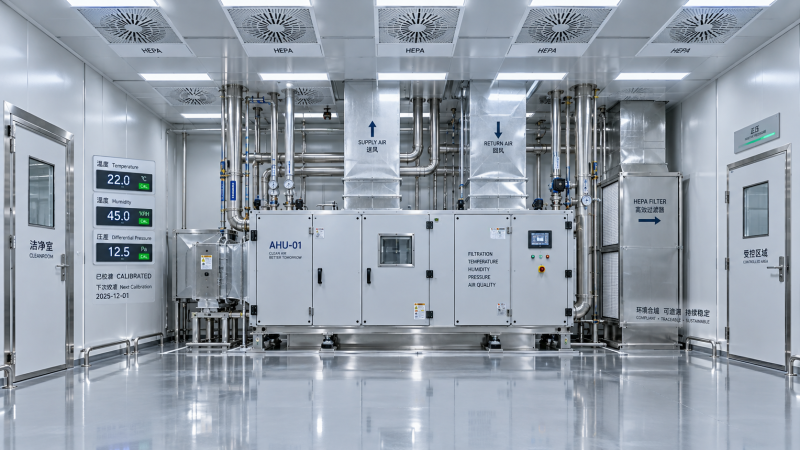
Audit readiness in a controlled environment is determined by whether the facility can show that its conditions remained within defined limits, that deviations were recognized promptly, and that corrective action was effective. A cleanroom that looks orderly, a dry room that feels cool, or a scrubber that is running does not by itself demonstrate compliance. Auditors examine the chain of evidence connecting requirements, equipment capability, measured performance, maintenance activity, and product or worker protection.
This matters wherever environmental conditions affect contamination, chemical stability, emissions, or exposure. In a high-grade clean area, airborne particle control may protect sensitive surfaces or assemblies. In a low-dew-point process, moisture ingress may alter material behavior. In welding, chemical processing, or battery operations, capture velocity and extraction performance can influence airborne exposure. In commercial ventilation, outdoor-air delivery and pressure relationships can affect both indoor conditions and energy performance. The relevant standard or permit may differ, but audit logic remains similar: controls must be defined, verified, traceable, and managed when they fail.
Evidence must describe the operating condition, not merely the equipment
Environmental control systems are often accepted too easily on the basis of installation records, commissioning reports, or a manufacturer data sheet. Those documents establish an initial basis, but they do not prove continued performance after filters load, sensors drift, dampers move, production layouts change, or maintenance introduces a new configuration.
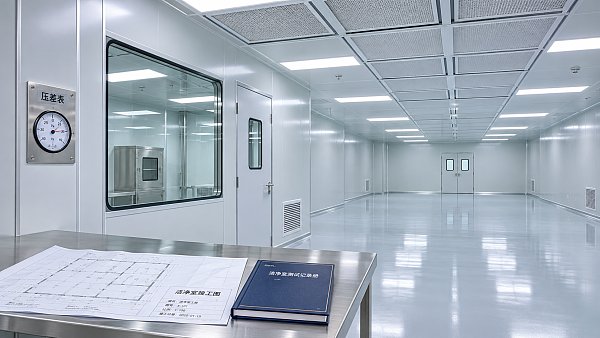
A defensible record connects each critical parameter to the condition it is intended to control. For example, a differential pressure reading between adjacent spaces is meaningful only when its measurement location, direction of intended airflow, door behavior, and surrounding airflow paths are understood. A stable pressure display can coexist with poor contamination control if a bypass path, an improperly seated filter, or frequent door opening changes the actual air movement near the process.
The same distinction applies to temperature and humidity. A room-average value may remain within its target band while a local area near an exterior wall, supply diffuser, process exhaust, or heat-generating tool experiences excursions. If the product is sensitive to local condensation, static charge, dimensional movement, or moisture uptake, a single central sensor provides incomplete evidence. Monitoring locations should reflect the risk being controlled rather than the easiest cable route.
Audit readiness therefore begins with a clear statement of critical environmental attributes: what is controlled, where it is controlled, the acceptable limits, the monitoring method, the review frequency, and the action required when data leave an approved range. Vague language such as “maintain clean conditions” or “ensure adequate ventilation” is difficult to audit because it cannot be consistently tested.
Limits require context before they become useful controls
Environmental specifications frequently contain numbers that are valid only under stated conditions. Treating them as universal limits creates avoidable findings. Air-change rate, for instance, does not independently establish cleanliness. Room geometry, equipment heat load, obstruction below supply outlets, process-generated particles, filter coverage, return-air arrangement, and personnel movement all affect particle transport. A nominally high air-change rate may still leave stagnant zones or recirculation around equipment.
Similarly, a HEPA or ULPA filter rating does not establish installed-system performance. Filter media efficiency addresses particle capture under a specified test condition. Installed performance also depends on frame sealing, gasket compression, housing integrity, scan-test method, airflow uniformity, and whether the pressure drop is compatible with the fan's operating point. A clean filter with an installation leak can undermine a room classification more directly than a properly sealed filter approaching its replacement pressure limit.
Dew point deserves the same disciplined interpretation. Relative humidity changes with temperature; a relative-humidity value cannot reliably describe the amount of water vapor in air when process temperatures vary. Where moisture control is critical, dew point or absolute humidity generally provides more direct evidence. Yet even a correct dew-point reading needs context: sampling-line condition, sensor response after maintenance, process exhaust influence, and the possibility of moist infiltration through doors, cable penetrations, or poorly balanced make-up air.
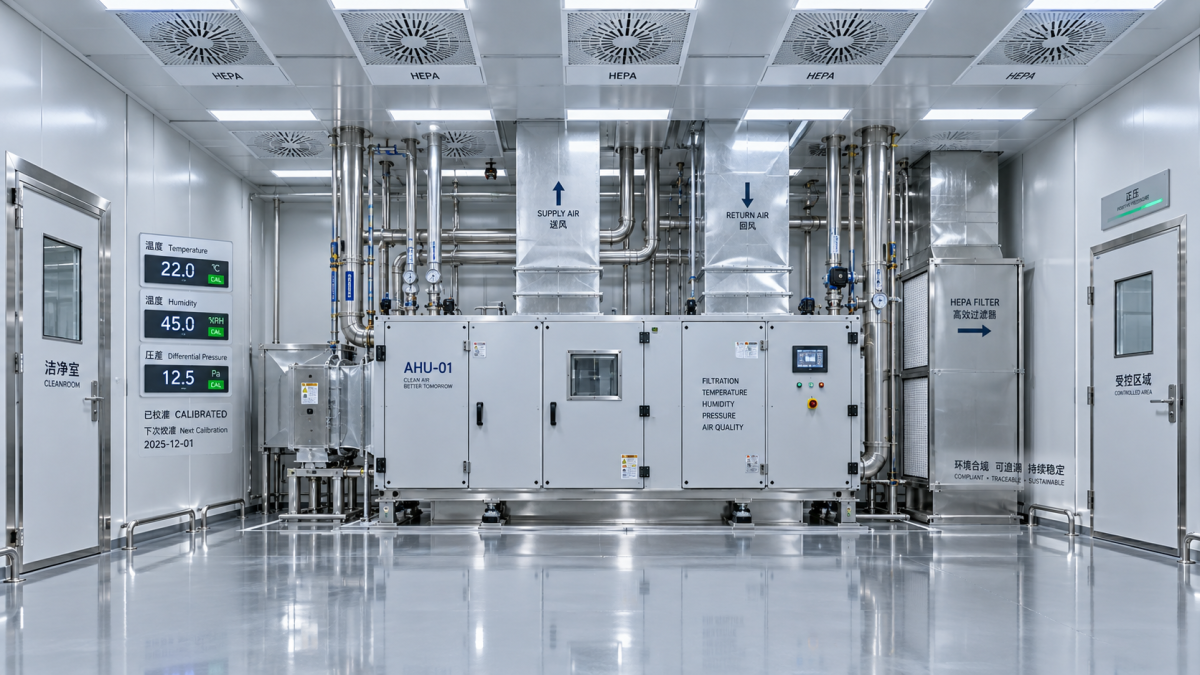
For gas-treatment equipment, a pressure drop across a scrubber, carbon bed, mist eliminator, or duct section can indicate a change in condition, but it does not prove pollutant destruction or removal. Rising pressure drop may signal fouling, liquid carryover, blocked packing, or a damper problem. Falling pressure drop can be equally concerning if it reflects a bypass, a failed pump, depleted media, or reduced airflow. The interpretation must be tied to the process, design flow, reagent condition, and any required emission measurement.
Traceability turns monitoring into audit evidence
Data become persuasive when they can be followed from the instrument to the decision made. A chart with continuous readings is weak evidence if there is no way to show whether the sensor was calibrated, which configuration was active, or how alarms were handled. The required depth of traceability varies by application, but several links are commonly examined during an audit.
- Instrument identity and status: Each critical sensor, gauge, transmitter, or portable test device needs a unique reference, defined range, calibration status, and known location. Replacing a transmitter without updating the asset record can create an unexplained break in the data history.
- Time integrity: Environmental trends, alarm events, maintenance records, and production or occupancy records should use aligned time sources. A deviation cannot be reconstructed reliably when the building-management system and maintenance log disagree on when an event occurred.
- Data review: Automatic collection does not prove that abnormal conditions were assessed. Records should identify who reviewed relevant trends, what was considered abnormal, and whether a delayed response was justified.
- Configuration control: Setpoints, alarm delays, control sequences, fan speeds, filter stages, and damper positions should not change without an approved record. A changed alarm threshold can hide a worsening condition while leaving the trend visually calm.
Calibration evidence should also be evaluated for fitness rather than presence alone. A certificate may show that a device was checked, but audit questions often arise when the calibration range does not cover the actual operating region, when the stated uncertainty is too large for the alarm band, or when a low-humidity sensor is calibrated at conditions far removed from its use. For portable instruments, pre-use checks and controlled storage may be as important as the periodic calibration interval.
Maintenance records need to show functional restoration
Preventive maintenance is often documented as a completed task, yet a signed work order does not establish that environmental performance returned to its required state. Filter replacement, fan service, desiccant-wheel work, duct cleaning, pump repair, and control-panel changes can each disturb a control boundary. The post-maintenance verification should match the risk introduced by the work.
Replacing a prefilter may require confirmation of airflow and differential pressure. Work on a terminal filter housing may call for an integrity examination and airflow verification before the area returns to use. A repair to a scrubber circulation loop may need confirmation of liquid flow, reagent concentration, fan operation, and alarm response. When an exhaust fan has been repaired, a simple motor-current reading is not equivalent to verifying capture at the emission source.
Maintenance records are stronger when they identify the condition found, parts or materials installed, relevant lot or specification details where necessary, work performed, functional test completed, and any restrictions placed on the area during restoration. This is especially important where substitutions occur. A filter that fits physically may have a different pressure-drop characteristic, seal arrangement, moisture resistance, or fire performance. A replacement sensor may communicate correctly but have a different accuracy profile or response time.
Transport and storage can introduce hidden defects. Filter packages exposed to water, damaged corners, or excessive stacking may compromise media or frames before installation. Desiccant media can lose useful capacity if exposed to uncontrolled moisture. Chemical-treatment components may be sensitive to temperature, shelf life, or incompatible cleaning agents. Receiving inspection does not need to duplicate every supplier test, but it should address the attributes that could invalidate the installed control.
Deviation handling is where audit readiness is tested
Audits often focus on excursions because they reveal whether a management system can distinguish an inconvenience from a meaningful loss of control. A short alarm caused by a door opening is not equivalent to a prolonged pressure reversal caused by failed supply airflow. A humidity excursion during an idle period may have different consequences than the same excursion while hygroscopic material is exposed. The record should show that the impact assessment considered the actual condition, duration, affected area, process state, and product or exposure pathway.
A useful deviation record avoids two opposite errors. The first is treating every alarm as a major event without evidence, producing large volumes of repetitive paperwork that obscures real trends. The second is closing alarms as “transient” without identifying why the event occurred or confirming that the stated explanation matches available data. Repeated short excursions at the same shift change, loading activity, weather condition, or production setup often indicate a control weakness even when no single event appears severe.
Corrective action should address the failure mechanism. If pressure alarms occur because door opening overwhelms a modest pressure differential, recalibrating the sensor does not solve the issue. If a dry room loses dew-point control when regenerative equipment cycles, changing the alarm delay may conceal an undersized capacity margin or an unstable control sequence. If dust collector pressure changes coincide with production batches, the source material, particle characteristics, or cleaning frequency may require review rather than another generic inspection.
Control relationships matter more than isolated readings
Critical environments work as interacting systems. Supply air, return paths, exhaust, make-up air, enclosure integrity, process loads, and control logic influence one another. Auditable compliance therefore benefits from reviewing relationships, not only individual values.
This relational view is particularly valuable after change. New production equipment can alter heat gain, solvent load, particulate generation, and local airflow. A revised wall opening can change leakage paths. Adjusting one exhaust branch can affect room pressure elsewhere. Each change does not require full requalification of every system, but the documented assessment should explain which environmental attributes could be affected and what verification is proportionate to that risk.
Prepared records reduce audit disruption
Audit readiness is visible in the speed and coherence with which records can be retrieved. The strongest documentation is organized around the control itself: approved requirement, design or commissioning basis, current asset configuration, calibration history, monitoring trends, alarms, maintenance, deviations, and verification after significant change. Scattered files can contain all of the same information yet still create doubt when the sequence cannot be reconstructed.
Before an audit, it is useful to review a representative period of records as an auditor would. Look for missing timestamps, unexplained gaps, alarm acknowledgements without resolution, expired calibrations, recurring maintenance remarks, and setpoint changes without authorization. Compare the documented system description against the physical installation. Labels, sensor locations, filter stages, duct routing, and controlled-area boundaries drift over time, particularly after minor projects.
Compliance becomes durable when environmental performance is treated as a living operating condition with a complete evidence trail. That approach supports cleaner investigations, more credible corrective actions, and audits centered on verified control rather than document recovery.
Got questions about the latest insights discussed here, or seeking customized strategic advice for your business? Drop us a line below, and let the think-tank experts at CECS help you out.
We respect your privacy. Your information is strictly confidential.
Recommended News
 Nov 25, 2026Festo and NOCTI Add Three Skills Certifications for Semiconductor Cleanroom RolesFesto and NOCTI add three semiconductor cleanroom certifications. Explore their potential impact on training, contamination control and workforce planning.
 Nov 24, 2026Macao Productivity Centre Releases Cleanroom and Purified Water GuidanceMacao cleanroom and purified water guidance supports pharmaceutical upgrades. Discover what it could mean for manufacturers and facility compliance.
 Nov 24, 2026Cleanroom Particle Limits by ISO Class: How to Interpret ISO 14644-1Understand cleanroom environmental standards particle limits by ISO class. Learn how to interpret ISO 14644-1 results and assess classification reports.
 Nov 23, 2026Infrastructure Policy and Domestic Substitution Support Cleanroom ProspectsCleanroom prospects may benefit from infrastructure policy and domestic substitution. Explore potential opportunities and what suppliers and buyers should verify.
 Nov 23, 2026Turnkey Cleanroom Solutions: How to Evaluate Project Scope and HandoverEvaluate turnkey cleanroom solutions with confidence. Learn how to define scope, acceptance tests and handover requirements to reduce costly project gaps.
 Nov 15, 2026Applied Materials Sees Cleanroom Capacity Constraining Chip ExpansionApplied Materials highlights cleanroom capacity as a constraint on chip expansion. Explore why rising equipment spending may not immediately translate into production growth.
 Nov 09, 2026Clean Air Technology for Microelectronics: Controlling Fab ContaminationExplore clean air technology for microelectronics, from FFUs and airflow to molecular contamination control, and learn how to protect wafers in real fab conditions.
 Nov 05, 2026US Export Limits Leave SK Hynix's Dalian Cleanroom Equipment Awaiting ApprovalSK Hynix's Dalian cleanroom equipment awaits US export approval. Explore the potential impact on semiconductor procurement and delivery plans.
 Oct 26, 2026Cleanroom Airflow Velocity: Where to Measure and How to Verify UniformityCleanroom airflow velocity: learn where to measure, how to verify uniformity, and why averages can hide risks. Improve testing confidence and protect critical processes with practical guidance.
 Oct 26, 2026AIRERA Showcases TUV Class 0-Certified Oil-Free Compressors at COMVAC ChinaExplore AIRERA’s TUV Class 0-certified oil-free compressors at COMVAC China and discover key air-purity considerations for semiconductor cleanrooms and informed equipment purchasing.
 Oct 25, 2026AIRERA Debuts Class 0 Oil-Free Compressor for Semiconductor Cleanrooms at COMVAC ChinaAIRERA’s Class 0 oil-free compressor debuted at COMVAC China for semiconductor cleanrooms. Explore its TÜV certification and what buyers should assess for air purity.
 Oct 24, 2026Vetting Cleanroom Equipment Suppliers in Southeast Asia: Compliance and Local SupportVetting cleanroom equipment suppliers Southeast Asia offers? Discover how to verify compliance, compare lifecycle costs, and secure reliable local support before you buy.
 Oct 23, 2026Chip Packaging Cleanrooms: Full-Room Control or Localized Mini-Environments?Explore semiconductor cleanroom solutions for chip packaging. Compare full-room control and mini-environments to reduce contamination risks, manage costs, and choose the right design.
 Oct 20, 2026Binghamton University Opens Cleanroom for Chip Manufacturing and Packaging ResearchExplore Binghamton University's new cleanroom for chip manufacturing and packaging research, supporting hands-on training for over 100 students annually and semiconductor workforce development.
 Oct 13, 2026Cleanroom Compliance Service Costs: How Test Scope and Frequency Affect QuotesUnderstand cleanroom compliance service cost by comparing test scope, frequency, and reporting. Learn how to evaluate quotes, avoid hidden fees, and budget smarter without compliance gaps.
 Oct 10, 2026Cleanroom Equipment Manufacturer Comparison: Quality, Validation, and Lifecycle SupportCleanroom equipment manufacturer comparison: evaluate quality evidence, ISO 14644 alignment, validation, airflow consistency, and lifecycle support to reduce project risk.
 Oct 11, 2026Which Cleanroom Design Mistakes Can Cause Contamination Failures?What cleanroom design mistakes can cause contamination failures? Discover how airflow, pressure, layout, and maintenance gaps threaten product quality—and how to prevent them.
 Oct 18, 2026Critical environment compliance failures that can delay facility releaseCritical environment compliance failures can delay facility release. Discover the airflow, filtration, humidity, exhaust, and documentation gaps that threaten approval—and how to address them.
 Oct 17, 2026How critical environment controls compliance affects audit readinessCritical environment controls compliance strengthens audit readiness through traceable monitoring, maintenance verification, deviation handling, and proven corrective actions.
 Oct 11, 2026How to identify the right CECS standard before a cleanroom retrofitCECS cleanroom retrofit guide: identify the right standard by process risk, zoning, airflow, humidity, validation, and lifecycle performance.
 Oct 10, 2026What does CECS mean for cleanroom design compliance?c.e.c.s explained for cleanroom design compliance: explore ISO 14644 alignment, airflow, filtration, pressure, humidity, and commissioning strategies.
 Sep 28, 2026Designing Laminar Airflow for Microelectronics Assembly to Control Particle RiskLaminar airflow for microelectronics: learn how to reduce particle risk with optimized airflow paths, local protection, ISO commissioning, and efficient cleanroom design.
 Sep 23, 2026How to Select Particle Control Equipment for Cleanrooms and Sensitive Production AreasParticle control equipment selection guide for cleanrooms and sensitive production areas. Compare filtration, airflow, pressure, humidity, energy efficiency, and maintenance for reliable compliance.
 Sep 21, 2026EUV Cleanroom Design: Controlling AMC, Airflow, and Micro-Vibration RisksSemiconductor cleanroom solutions for EUV: control AMC, laminar airflow, and micro-vibration with integrated design strategies that protect yield and tool performance.