Search News
Industry Portal
Hot Articles
- How Factories Can Select Air Quality Controls for Dust, Fumes, and VOCsIndustrial air quality control for factories: learn how to select effective solutions for dust, fumes, and VOCs while improving safety, compliance, energy efficiency, and uptime.
- How to Size Industrial Gas Scrubbing Units for Acid Fumes and Variable AirflowsIndustrial gas scrubbing units: learn how to size acid-fume scrubbers for variable airflows, peak loads, chemical demand, pressure drop, and reliable compliance.
- How to Evaluate Industrial Air Quality Control Systems for Dust, Fumes, and VOCsIndustrial air quality control systems: learn how to evaluate dust, fumes, and VOC solutions by capture efficiency, compliance, maintenance, and lifecycle cost.
Popular Tags
What drives energy recovery ventilation systems cost
author
Time
Click Count
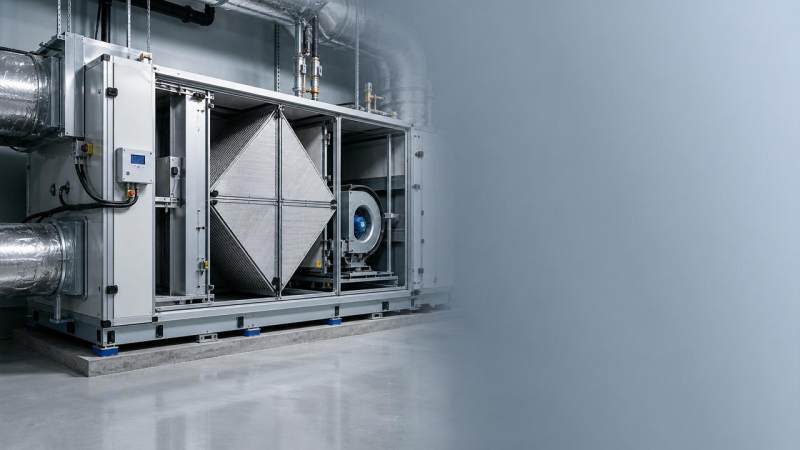
For finance approvers, understanding what drives energy recovery ventilation systems cost starts with one reality.
The price is never only about the unit itself.
Airflow demand, recovery efficiency, controls, installation constraints, and code compliance all shape total investment.
A lower quote can become a higher lifecycle burden if fan power, maintenance, or commissioning are underestimated.
A stronger design can raise initial capital yet reduce HVAC loads for years.
This guide explains the main factors behind energy recovery ventilation systems cost and how to compare options with better financial clarity.
What is included in energy recovery ventilation systems cost?
Many budgets focus on equipment price, but energy recovery ventilation systems cost is broader than the cabinet and core.
A realistic estimate usually includes five layers.
- Base ERV unit, fans, heat exchange core, casing, and insulation
- Filters, dampers, sensors, control panel, and communication interfaces
- Ductwork changes, structural support, electrical connection, and condensate drainage
- Testing, balancing, startup, and commissioning
- Service access provisions, replacement filters, and planned maintenance
Some projects also include crane lifting, roof curb work, weatherproofing, or building automation integration.
These items can materially change energy recovery ventilation systems cost, especially in retrofit projects.
The most accurate comparison separates capital cost from lifecycle cost.
Capital covers purchase and installation.
Lifecycle cost adds energy, maintenance, downtime risk, and component replacement over years of operation.
Why this matters in commercial buildings
In offices, schools, retail, healthcare support spaces, and mixed-use buildings, ventilation is both a comfort and energy decision.
That makes energy recovery ventilation systems cost closely tied to occupancy patterns and HVAC operating hours.
Which technical factors raise or lower energy recovery ventilation systems cost?
The first major driver is airflow capacity.
Higher CFM requires larger fans, larger cores, stronger casings, and often more robust controls.
As airflow rises, energy recovery ventilation systems cost usually increases nonlinearly.
The second driver is recovery efficiency.
Higher sensible or total energy recovery can reduce HVAC loads, but premium cores cost more upfront.
Core type also matters.
- Plate heat exchangers are often simpler but may offer less moisture transfer
- Enthalpy cores can recover heat and humidity, improving comfort efficiency
- Rotary wheels may deliver strong recovery but need careful sealing and maintenance
Fan efficiency is another hidden cost lever.
Better EC fans or premium motors increase initial budget yet can lower annual electricity use.
Casing quality affects more than durability.
Thermal breaks, corrosion resistance, leakage class, and acoustic treatment all influence energy recovery ventilation systems cost.
Cold climates may also require frost protection.
Preheaters, bypass dampers, defrost logic, and drain design add complexity and budget.
Controls can reshape total value
Basic on-off operation is cheaper, but smart controls often create better financial results.
CO2 control, variable speed fans, occupancy schedules, and BMS integration improve energy performance.
They increase initial energy recovery ventilation systems cost, yet may shorten payback in heavily used buildings.
How do installation conditions affect energy recovery ventilation systems cost?
Installation complexity is often the biggest source of budget surprises.
A rooftop new-build unit is usually easier than a retrofit above an occupied ceiling.
Space constraints can force custom dimensions, segmented delivery, or off-hour installation.
That directly raises energy recovery ventilation systems cost.
Duct routing is another major factor.
Long runs, tight elbows, fire dampers, silencers, and roof penetrations increase labor and pressure loss.
Higher pressure loss can require larger fans, which adds both capital and operating expense.
Structural issues matter too.
Older buildings may need reinforcement for unit weight, vibration isolation, or seismic restraint.
Electrical readiness affects schedule and cost.
If new feeders, disconnects, or control wiring are needed, the quote expands quickly.
Commissioning should not be treated as optional.
Without balancing and verification, even a premium ERV may fail to deliver expected savings.
Retrofit vs new construction
New construction usually offers lower installation risk and cleaner coordination.
Retrofit projects often show higher energy recovery ventilation systems cost because hidden conditions emerge during demolition and tie-in.
Do compliance and performance goals change energy recovery ventilation systems cost?
Yes, and sometimes dramatically.
Projects targeting energy codes, indoor air quality standards, or green building certifications usually require stronger documentation and performance verification.
That can increase engineering hours and product specification depth.
For example, low leakage rates, certified recovery performance, acoustic limits, and advanced filtration may all raise energy recovery ventilation systems cost.
Climate zone also changes design needs.
Humid regions may favor latent recovery and condensate management.
Cold regions may need stronger frost control and insulated housings.
Low-carbon building strategies further affect selection.
If the goal is lower HVAC tonnage, a higher-performing ERV may unlock downsizing elsewhere in the system.
In that case, the ERV line item rises while total project economics improve.
How should options be compared beyond purchase price?
A sound comparison uses total cost of ownership, not only first cost.
When reviewing energy recovery ventilation systems cost, compare these metrics side by side.
- Installed cost, including all accessories and startup
- Annual fan energy and expected thermal savings
- Filter replacement frequency and access labor
- Expected service life of core, motors, and controls
- Payback period under local utility rates and climate
It is also wise to test assumptions.
A unit with very high recovery efficiency may not produce proportional savings if occupancy is low or operating hours are short.
Likewise, a cheaper unit may become expensive if pressure drop is high and maintenance access is poor.
Useful comparison questions
- Is the quoted energy recovery ventilation systems cost fully installed?
- What recovery performance is certified under expected conditions?
- How much fan power is needed at design airflow?
- What maintenance tasks require shutdown or special access?
- Can the controls support demand-based ventilation later?
What common mistakes lead to poor cost decisions?
One mistake is chasing the lowest quoted price without checking scope completeness.
Missing dampers, sensors, startup, or roof work can distort energy recovery ventilation systems cost comparisons.
Another mistake is ignoring pressure drop.
A more efficient recovery core is not always better if the fan energy penalty is excessive.
Some projects also overestimate savings by using ideal climate assumptions.
Local weather, occupancy, and control strategy must be realistic.
Maintenance access is often overlooked.
If filters or cores are hard to reach, service quality declines and lifecycle cost rises.
Finally, failing to connect ERV selection with whole-building HVAC design can miss major savings opportunities.
The right ERV may reduce coil loads, plant runtime, and peak demand.
The most reliable way to assess energy recovery ventilation systems cost is to combine equipment specification, installation reality, and lifecycle economics.
In practice, the best option is rarely the cheapest box or the most advanced brochure.
It is the solution that fits airflow demand, climate conditions, building constraints, and long-term energy goals.
For stronger capital planning, request a fully itemized quote, a projected savings model, and a clear commissioning scope.
That approach turns energy recovery ventilation systems cost from a vague number into a decision backed by measurable building performance.
Recommended News
 Aug 17, 2026How to Evaluate a Commercial ERV Systems Supplier for Large Building ProjectsCommercial ERV systems supplier selection for large projects goes beyond price. Learn how to compare performance, compliance, controls, delivery, and lifecycle cost to reduce risk.
 Aug 15, 2026What Makes an HVAC System Energy-Efficient for European Buildings?Energy efficient HVAC Europe solutions help European buildings cut costs, boost comfort, and meet carbon targets. Discover the design factors that truly improve performance.
 Jul 31, 2026How to Evaluate a Green Building Ventilation Supplier for Energy and IAQ GoalsGreen building ventilation supplier selection starts with performance, not brochures. Learn how to compare energy, IAQ, controls, compliance, and lifecycle cost before you buy.
 Jul 22, 2026How to Evaluate Commercial Ventilation Systems in Southeast Asia for Climate and ComplianceCommercial ventilation systems Southeast Asia: learn how to assess climate fit, code compliance, IAQ, corrosion resistance, and lifecycle cost to choose reliable, high-performance solutions.
 Jul 14, 2026BMS Temperature and Humidity Control Systems: Key Control Logic and Sensor Points ExplainedBMS temperature and humidity control systems explained: learn key control logic, critical sensor placement, and practical ways to improve stability, energy efficiency, and process reliability.
 Jul 13, 2026LEED Certification Indoor Air Quality: What HVAC Strategies Earn More Credits?LEED certification indoor air quality starts with smarter HVAC design. Learn which strategies—DOAS, filtration, humidity control, ERV, and commissioning—can help earn more credits.
 Jul 08, 2026Energy Efficient HVAC for Industrial Buildings: Which Metrics Matter Most?Energy efficient HVAC for industrial buildings starts with the right metrics. Learn which KPIs cut energy costs, protect operations, and improve long-term ROI.
![]() Jul 07, 2026Industrial Environmental Control Systems: What Drives Total Cost of Ownership?Industrial environmental control systems cost more than the purchase price. Discover how energy, maintenance, filtration, and compliance shape total ownership costs.
Jul 07, 2026Industrial Environmental Control Systems: What Drives Total Cost of Ownership?Industrial environmental control systems cost more than the purchase price. Discover how energy, maintenance, filtration, and compliance shape total ownership costs. Jul 04, 2026Environmental Control System Design for Manufacturing: What Parameters Matter Most?Environmental control system design for manufacturing: discover the key parameters that drive yield, safety, compliance, and energy efficiency—plus how to avoid costly design mistakes.
 Jul 03, 2026What Counts as High-Tech Environmental Control Equipment in Modern Facilities?High-tech environmental control equipment keeps modern facilities clean, stable, compliant, and energy-efficient. Learn what qualifies, why it matters, and how it drives safer, smarter performance.
 Jun 26, 2026LEED Certification Cost Breakdown for HVAC and Clean Air Upgrades in New ProjectsLEED certification cost explained for new projects: compare HVAC and clean air upgrade costs, payback, risks, and smart budgeting strategies to improve building value.
 Jun 22, 2026How Energy Recovery Technology Works in Fresh Air Systems and Where It Delivers the Best ROIEnergy recovery technology explained: learn how fresh air systems cut HVAC costs, improve IAQ, and deliver the best ROI in offices, schools, healthcare, and more.
 Jun 21, 2026Is Energy Recovery Technology Worth the Investment in ESG Building Upgrades?Energy recovery technology can turn ESG building upgrades into measurable ROI. Explore savings, IAQ benefits, payback timelines, and smarter HVAC retrofit decisions.
 Jun 20, 2026How to Improve Industrial Ventilation Efficiency Without Disrupting ProductionIndustrial ventilation efficiency starts with smarter, phased upgrades. Learn how to improve airflow, capture contaminants, cut energy waste, and protect production continuity.
 Jun 17, 2026Green Building Ventilation: How to Balance IAQ, Energy Use, and ESG GoalsGreen building ventilation is key to balancing IAQ, energy efficiency, and ESG goals. Learn practical strategies to cut HVAC waste, improve occupant wellness, and strengthen building performance.
 Jun 15, 2026LEED Certification for Industrial Facilities: Costs, Credits, and Payback FactorsLEED certification for industrial facilities explained: compare costs, high-payback credits, and ROI factors to cut energy use, reduce risk, and justify smarter capital upgrades.
 Jun 14, 2026Green Building Ventilation Standards: What to Check for Energy and IAQ ComplianceGreen building ventilation standards affect energy use, IAQ, and compliance. Learn the key checks for codes, ERV performance, filtration, controls, and commissioning.
 Jun 14, 2026Cleanroom Energy Management: Where Power Use Rises and How to Cut It SafelyCleanroom energy management starts with finding the biggest power loads. Learn safe, proven ways to cut FFU, cooling, humidity, and exhaust energy without risking compliance or yield.
 Jun 13, 2026LEED Certification Consultant: What Services Matter Most for New Building Projects?LEED certification consultant services can make or break new building projects. Learn which services matter most for cost, compliance, HVAC strategy, and long-term building performance.
 Jun 13, 2026China Rule Effective July 1 Backs Overseas Service for Eco EquipmentChina rule effective July 1 supports overseas service for eco equipment, highlighting localized after-sales, tax deductions, and key markets like Germany, Vietnam, and Mexico.
![]() Jun 09, 2026LEED Certification for Industrial Facilities: What Impacts Cost and Approval Time?LEED certification for industrial facilities: discover what drives cost and approval time, from HVAC and cleanroom systems to documentation and commissioning, so you can reduce risk and speed decisions.
Jun 09, 2026LEED Certification for Industrial Facilities: What Impacts Cost and Approval Time?LEED certification for industrial facilities: discover what drives cost and approval time, from HVAC and cleanroom systems to documentation and commissioning, so you can reduce risk and speed decisions. Jun 08, 2026Energy Efficient Ventilation: What Drives Operating Cost and Payback in New ProjectsEnergy efficient ventilation impacts operating cost, HVAC load, and payback. Learn the key cost drivers, common modeling mistakes, and how to compare options for smarter project approval.
 Jun 07, 2026What Is LEED Certification and How Does It Affect HVAC Design Choices?LEED certification shapes HVAC design far beyond green branding. Discover how ventilation, energy recovery, filtration, humidity control, and smart commissioning drive building performance.
![]() Jun 04, 2026High-Tech HVAC Systems: What Buyers Should Compare Beyond Energy EfficiencyHigh-tech HVAC systems: compare more than energy efficiency. Learn how air quality, humidity control, compliance, and lifecycle cost impact smarter buying decisions.
Jun 04, 2026High-Tech HVAC Systems: What Buyers Should Compare Beyond Energy EfficiencyHigh-tech HVAC systems: compare more than energy efficiency. Learn how air quality, humidity control, compliance, and lifecycle cost impact smarter buying decisions.