Search News
Industry Portal
Hot Articles
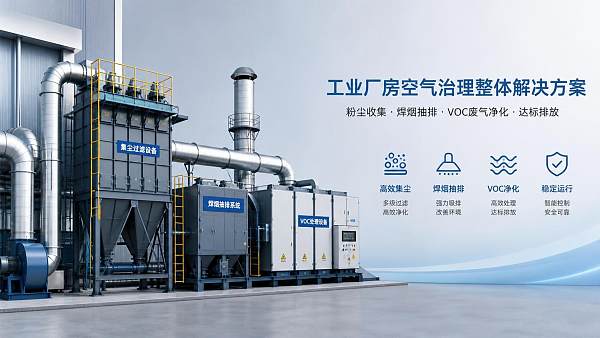
- How Factories Can Select Air Quality Controls for Dust, Fumes, and VOCsIndustrial air quality control for factories: learn how to select effective solutions for dust, fumes, and VOCs while improving safety, compliance, energy efficiency, and uptime.
- How to Size Industrial Gas Scrubbing Units for Acid Fumes and Variable AirflowsIndustrial gas scrubbing units: learn how to size acid-fume scrubbers for variable airflows, peak loads, chemical demand, pressure drop, and reliable compliance.
- How to Evaluate Industrial Air Quality Control Systems for Dust, Fumes, and VOCsIndustrial air quality control systems: learn how to evaluate dust, fumes, and VOC solutions by capture efficiency, compliance, maintenance, and lifecycle cost.
Popular Tags
Revised Maritime Code Shifts No-Pickup Liability to Exporters
author
Time
Click Count
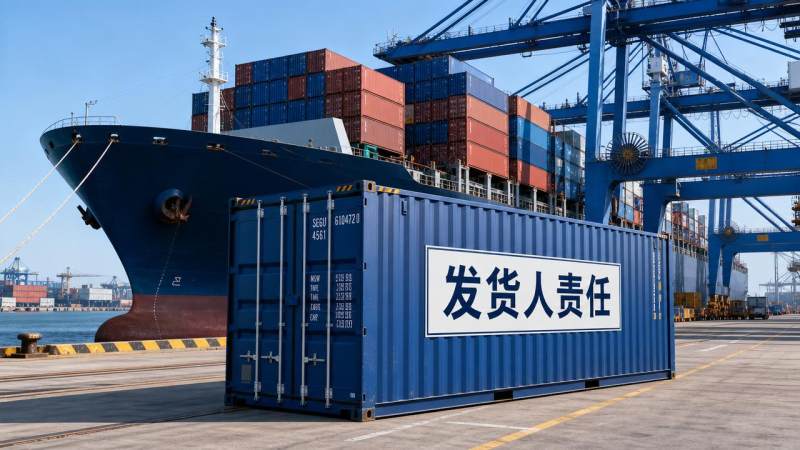
Starting May 1, 2026, the newly revised People’s Republic of China Maritime Code—specifically Article 93—reassigns legal liability for port detention, storage, and cargo disposal costs arising from non-pickup at discharge ports from consignees to shippers (i.e., Chinese exporters). This change directly affects export-oriented enterprises engaged in containerized maritime trade, particularly those serving markets in South America and the Middle East, where importers are now requesting ‘pickup guarantee clauses’ in FOB contracts. The revision signals a structural shift in risk allocation under standard international shipping terms and warrants close attention from logistics, trade compliance, and supply chain management professionals.
Event Overview
The revised Maritime Code of the People’s Republic of China enters into force on May 1, 2026. Per confirmed official text, Article 93 stipulates that when goods remain unclaimed at the discharge port, resulting in incurred charges—including port detention fees, container demurrage, yard storage fees, and mandatory cargo destruction costs—the shipper (not the consignee) bears primary legal responsibility. This represents a formal departure from prior practice, where liability was generally assigned to the consignee under customary interpretation of INCOTERMS® and domestic judicial precedent. The amendment has already prompted reactive contractual adjustments by importers in South America and the Middle East, notably the inclusion of pickup guarantee clauses in FOB agreements with Chinese suppliers.
Industries Affected by This Change
Direct Export Trading Enterprises
These firms—often SMEs acting as named exporters on bills of lading—now assume direct statutory liability for downstream port costs even when delivery terms (e.g., FOB) traditionally place physical and financial responsibility for import clearance and pickup on the buyer. Impact manifests as unexpected cost exposure, potential claims from carriers or terminals, and increased disputes over cargo abandonment or delayed release.
Manufacturing Exporters with Integrated Trade Functions
Companies that both produce and export—especially those shipping under FOB terms without dedicated overseas customs representation—are exposed to dual risks: production-related liabilities and new maritime statutory obligations. Their exposure intensifies when shipments involve perishable, regulated, or high-value goods, where port delays may trigger rapid cost accrual or regulatory intervention (e.g., customs seizure or quarantine).
Supply Chain & Logistics Service Providers
Freight forwarders, NVOCCs, and customs brokers acting on behalf of Chinese shippers may face heightened due diligence expectations—not only from clients but also from carriers and terminal operators seeking enforceable recourse. While not statutory parties under Article 93, their operational role in documentation, pre-arrival customs coordination, and post-discharge communication places them at functional risk if pickup failures occur.
Import-Dependent Distributors & Wholesalers (China-Based)
Though not liable under Article 93, domestic distributors fulfilling overseas orders via third-party exporters must reassess contractual alignment. If their nominated exporter lacks capacity to manage foreign port handover, the distributor risks shipment rejection, reputational damage, or forced cost-sharing—even under DAP or DPU arrangements where control passes abroad.
Key Considerations and Recommended Actions for Affected Entities
Monitor official interpretations and implementation guidance
While Article 93 is effective May 1, 2026, no supplementary judicial interpretation or Ministry of Transport circular has yet been published. Entities should track announcements from the Supreme People’s Court, the Ministry of Justice, and China Ports & Harbors Association for clarifications on scope (e.g., applicability to multimodal transport, force majeure exceptions, or evidence standards for ‘non-pickup’).
Review FOB contracts and prioritize markets with active enforcement patterns
South American and Middle Eastern importers have already begun inserting pickup guarantee clauses. Exporters should audit existing FOB agreements for indemnity language, insurance requirements, and dispute resolution mechanisms—and assess exposure concentration by destination country, especially where local customs clearance is complex or historically slow (e.g., Argentina, Saudi Arabia, Egypt).
Distinguish between statutory obligation and operational feasibility
Article 93 imposes legal liability on shippers, but does not grant them legal authority to clear goods or retrieve containers abroad. Entities must therefore separate compliance intent from practical capability: securing reliable overseas customs agents, pre-validating import documentation, and establishing real-time cargo status monitoring—not just relying on carrier notifications—are now operationally essential, not optional enhancements.
Update internal risk controls and contingency planning
Export departments should integrate port cost exposure into credit risk assessments for new buyers; revise standard operating procedures to require pre-shipment confirmation of importer’s customs eligibility and local agent engagement; and evaluate marine cargo insurance policies for coverage extensions related to discharge port liabilities (e.g., ‘extended warehouse-to-warehouse’ clauses covering post-unloading risks).
Editorial Perspective / Industry Observation
Analysis shows this revision reflects a broader policy trend toward strengthening shipper accountability across China’s international trade legal framework—not merely as a commercial adjustment, but as a systemic effort to reduce port congestion, improve container turnover, and align domestic liability rules with carrier risk management practices widely adopted globally. Observably, it functions less as an immediate enforcement tool and more as a structural signal: one that incentivizes upstream risk mitigation rather than retroactive dispute resolution. From an industry perspective, the shift is not yet fully operationalized—no public cases of enforcement under the revised Article 93 have been reported—but its contractual ripple effects (e.g., guarantee clauses, revised INCOTERMS® usage) are already materializing. Continued observation is warranted, particularly regarding how Chinese courts interpret ‘shipper’ in cases involving trading companies versus actual manufacturers, and whether parallel revisions follow in related regulations such as the Customs Law or Regulations on International Freight Forwarding.
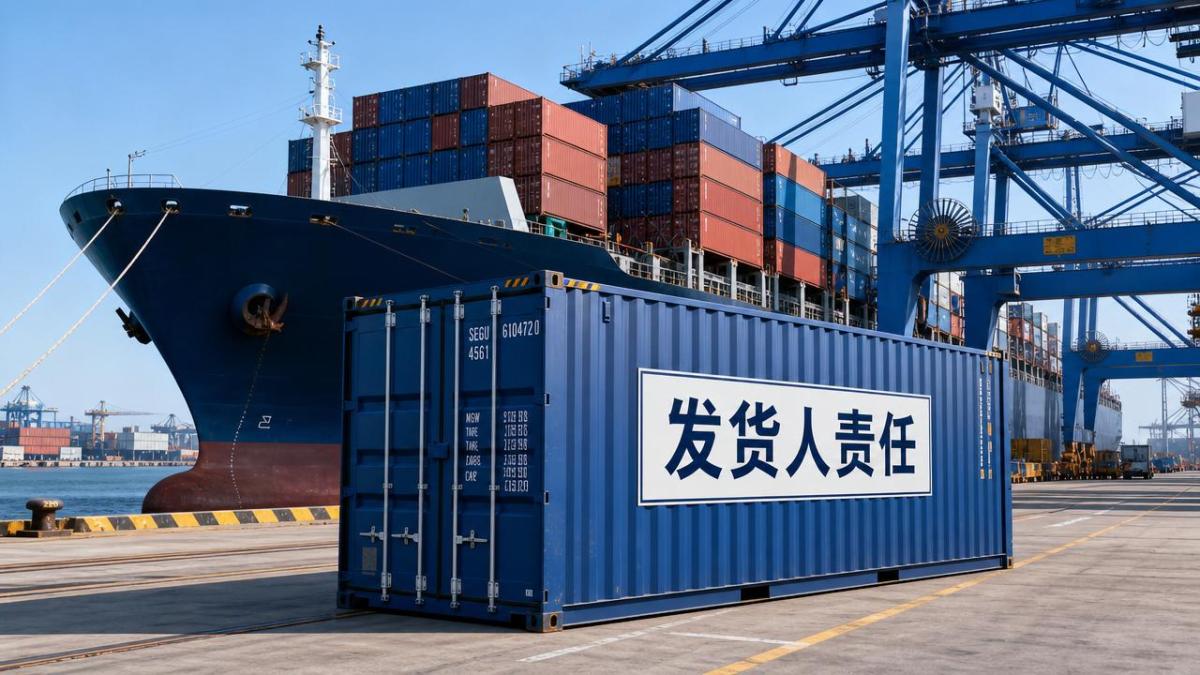
In summary, the revised Maritime Code does not introduce new categories of trade activity, but recalibrates legal responsibility within existing frameworks. Its significance lies not in novelty, but in enforceability: for the first time, Chinese law explicitly anchors port cost liability to the shipper, regardless of delivery term or contractual allocation. Current practice suggests this is best understood not as a finalized operational mandate, but as a binding baseline against which commercial adaptations—including contract drafting, insurance procurement, and overseas partner vetting—must now be calibrated.
Source: Official text of the Maritime Code of the People’s Republic of China, revised and promulgated by the Standing Committee of the National People’s Congress, effective May 1, 2026. Additional context drawn from publicly reported trade association briefings (China Chamber of Commerce for Import and Export of Machinery and Electronic Products, May 2025) and documented contractual responses from importers in Chile, Brazil, UAE, and Saudi Arabia. Ongoing developments—including judicial interpretations and sector-specific guidance—remain subject to observation.
Recommended News
 Aug 28, 2026How Factories Can Select Air Quality Controls for Dust, Fumes, and VOCsIndustrial air quality control for factories: learn how to select effective solutions for dust, fumes, and VOCs while improving safety, compliance, energy efficiency, and uptime.
 Aug 27, 2026How to Size Industrial Gas Scrubbing Units for Acid Fumes and Variable AirflowsIndustrial gas scrubbing units: learn how to size acid-fume scrubbers for variable airflows, peak loads, chemical demand, pressure drop, and reliable compliance.
 Aug 26, 2026How to Evaluate Industrial Air Quality Control Systems for Dust, Fumes, and VOCsIndustrial air quality control systems: learn how to evaluate dust, fumes, and VOC solutions by capture efficiency, compliance, maintenance, and lifecycle cost.
 Aug 25, 2026How to Select Cleanroom Particle Control Equipment for ISO Class and Process RiskCleanroom particle control equipment selection starts with process risk, ISO class, and airflow design. Learn how to compare FFUs, filters, and monitoring for reliable performance.
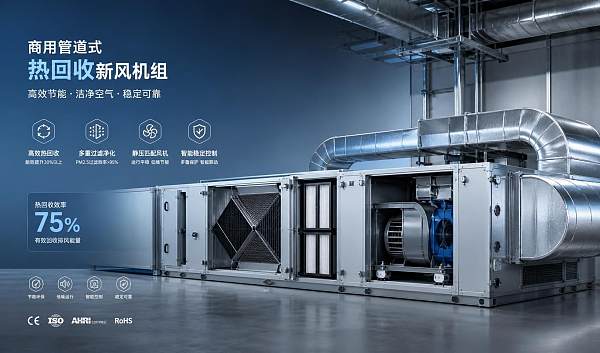
 Aug 24, 2026How to Choose a Ducted Heat Recovery Ventilation System for Commercial BuildingsDucted heat recovery ventilation for commercial buildings: learn how to compare efficiency, static pressure, controls, IAQ, and lifecycle cost to choose a smarter, high-performance system.
 Aug 23, 2026How Laminar Airflow Supports Compliance and Contamination Control in Medical Device ManufacturingLaminar airflow for medical devices helps reduce contamination risk, support cleanroom compliance, and improve audit readiness—see how it protects product quality and manufacturing control.
 Aug 22, 2026How to Verify CE Compliance When Comparing VOC Treatment Systems for EU ProjectsVOC treatment systems CE certified: learn how to verify real EU compliance, check directives, ATEX, and documentation, and avoid costly procurement and site integration risks.
 Aug 21, 2026How to Achieve Stable RH Precision Humidity Control in Cleanroom Production?Stable RH precision humidity control starts with process-based design. Learn how airflow, sensors, dehumidification, and recovery logic keep cleanroom production consistent and reliable.
 Aug 20, 2026How to Select Airflow Control Dampers for Pressure Balance and Energy EfficiencyAirflow control dampers selection starts with pressure balance, leakage, and control authority—not duct size alone. Learn how to improve stability and energy efficiency.
 Aug 19, 2026What Drives Cleanroom Compliance Cost in Pharma and Semiconductor Projects?Cleanroom compliance cost in pharma and semiconductor projects depends on ISO class, airflow, humidity control, validation, and energy use. Learn what drives cost and how to avoid costly overdesign.
 Aug 18, 2026How to Evaluate a High-Tech HVAC Manufacturer for Cleanroom and Precision FacilitiesHigh-tech HVAC manufacturer evaluation guide for cleanrooms and precision facilities. Learn how to assess control stability, compliance, serviceability, and long-term operational risk.
 Aug 17, 2026How to Evaluate a Commercial ERV Systems Supplier for Large Building ProjectsCommercial ERV systems supplier selection for large projects goes beyond price. Learn how to compare performance, compliance, controls, delivery, and lifecycle cost to reduce risk.
 Aug 16, 2026Commercial Ventilation Pricing: What Drives Cost in Industrial and Office Projects?Commercial ventilation pricing varies by airflow, compliance, and installation needs. Learn what drives costs in industrial and office projects—and how to compare quotes smarter.
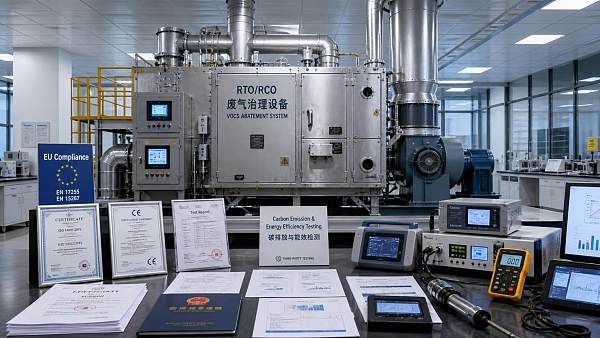
 Aug 16, 2026EU Issues New RTO/RCO Compliance Guide, Adds Carbon and Efficiency CertificationEU releases a new RTO/RCO compliance guide with carbon and efficiency certification requirements, signaling stricter market access rules and urgent action for exporters.
 Aug 15, 2026What Makes an HVAC System Energy-Efficient for European Buildings?Energy efficient HVAC Europe solutions help European buildings cut costs, boost comfort, and meet carbon targets. Discover the design factors that truly improve performance.
 Aug 15, 2026China Issues New Export Compliance Rules for RTO/RCO SystemsChina's new export compliance rules for RTO/RCO systems are reshaping market access. Learn what the 2026 regulations mean for exporters, buyers, and green procurement.
 Aug 14, 2026How to Evaluate a Precision Cooling Supplier for High-Density Data CentersPrecision cooling supplier guide for high-density data centers: learn how to evaluate reliability, scalability, compliance, and lifecycle value before you buy.
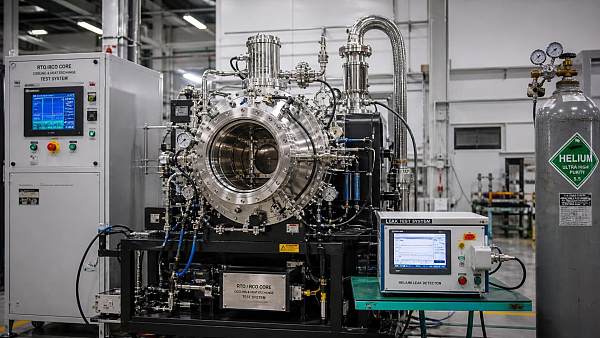
 Aug 14, 2026China’s Temporary Helium Export Ban Slows RTO/RCO Core Cooling DeliveriesChina’s temporary helium export ban may delay RTO/RCO core cooling deliveries, especially for final testing and certification. Learn how it impacts projects and what companies should check next.
 Aug 13, 2026How to Select VAV Airflow Control Systems for Labs and Cleanroom HVAC ProjectsVAV airflow control systems are critical for labs and cleanroom HVAC projects. Discover how to choose the right system for stability, compliance, and energy savings.
 Aug 12, 2026How to Select Dew Point Control Systems for Battery Plants?Dew point control systems for battery plants: learn how to compare stability, energy use, controls, and maintenance to choose a safer, more efficient dry room solution.
![]() Aug 12, 2026The EU updates CE guidelines, RTO/RCO need to take into account both energy efficiency and explosion protectionEU CE Guide update: RTO/RCO systems must now meet both energy efficiency and explosion-proof compliance. Learn how EN 1539, ATEX testing, and new VOCs rules impact EU market access.
Aug 12, 2026The EU updates CE guidelines, RTO/RCO need to take into account both energy efficiency and explosion protectionEU CE Guide update: RTO/RCO systems must now meet both energy efficiency and explosion-proof compliance. Learn how EN 1539, ATEX testing, and new VOCs rules impact EU market access. Aug 11, 2026How to Select Precision Humidity Control for Cleanrooms and Micro-EnvironmentsPrecision humidity control for cleanrooms starts with process needs. Learn how to compare dew point targets, airflow, controls, and energy tradeoffs for reliable, high-yield micro-environments.
 Aug 11, 2026China Sets New VOCs Certification Rule for RTO/RCO ExportsChina sets new VOCs certification rule for RTO/RCO exports. Learn how CN-ERV-2026, energy-efficiency grades, and customs impacts could affect bids, buyers, and delivery plans.
 Aug 10, 2026How to Evaluate Automated Industrial Exhaust Treatment Systems for VOC ControlAutomated industrial exhaust treatment systems for VOC control: learn how to compare compliance, automation, energy use, safety, and lifecycle cost before selecting the right solution.