Search News
Industry Portal
Hot Articles
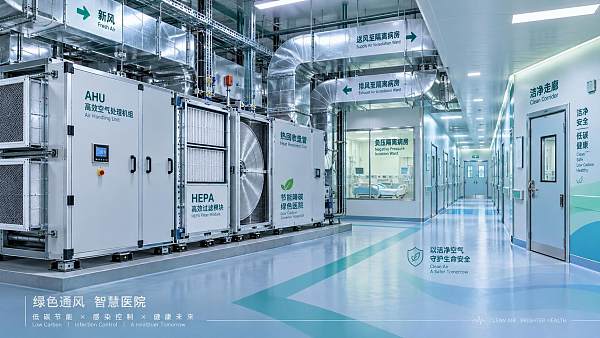
- Designing Zero-Carbon Hospital Ventilation Without Compromising Infection ControlZero-carbon ventilation hospitals: learn how to cut energy use with heat recovery, smart controls, and resilient airflow design—without compromising infection control.
- High-Efficiency Air Filtration for Semiconductor Fab Cleanrooms: ULPA vs. HEPA at MERV 20+ — Real-World Contamination Control Trade-offsHigh efficiency air filtration decoded for semiconductor fabs: ULPA vs. HEPA at MERV 20+—real TCO, yield impact, and contamination control trade-offs revealed.
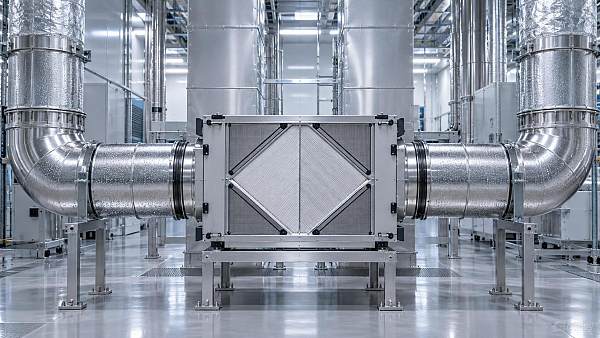
- Heat Recovery Ventilation for Lab Exhaust: Calculating Payback Periods When Neutralizing Acid Fumes with Base InjectionHeat recovery ventilation slashes lab energy costs—discover how base injection + ERV cuts NaOH use, HVAC load & delivers 18–30-month payback.
Popular Tags
QSLH Filter Launch Raises Air Quality Benchmark
author
Time
Click Count
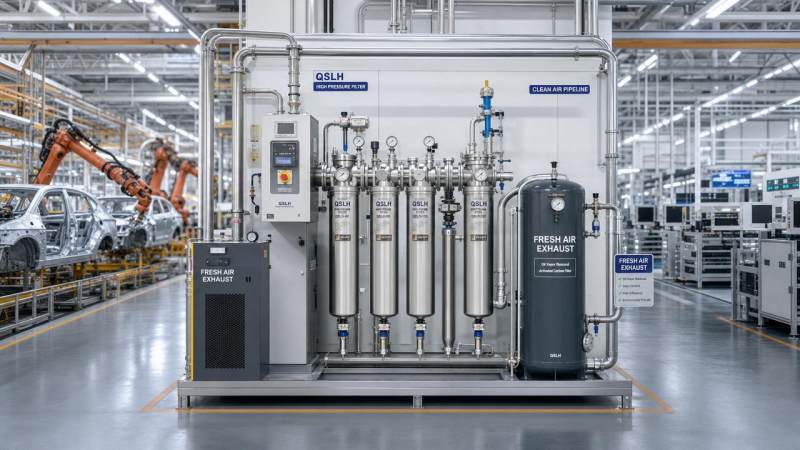
On May 25, 2026, Shenchi Pneumatic introduced the QSLH high-pressure filter series for 7–16 bar industrial air sources, bringing tighter control of particle and oil mist levels in compressed air used ahead of Fresh Air Exhaust systems. For manufacturers, procurement teams, and system integrators serving automotive welding and electronics assembly, the development is worth watching because it suggests that front-end air purification performance is moving from a technical option toward a more visible purchasing benchmark.
What the launch confirms
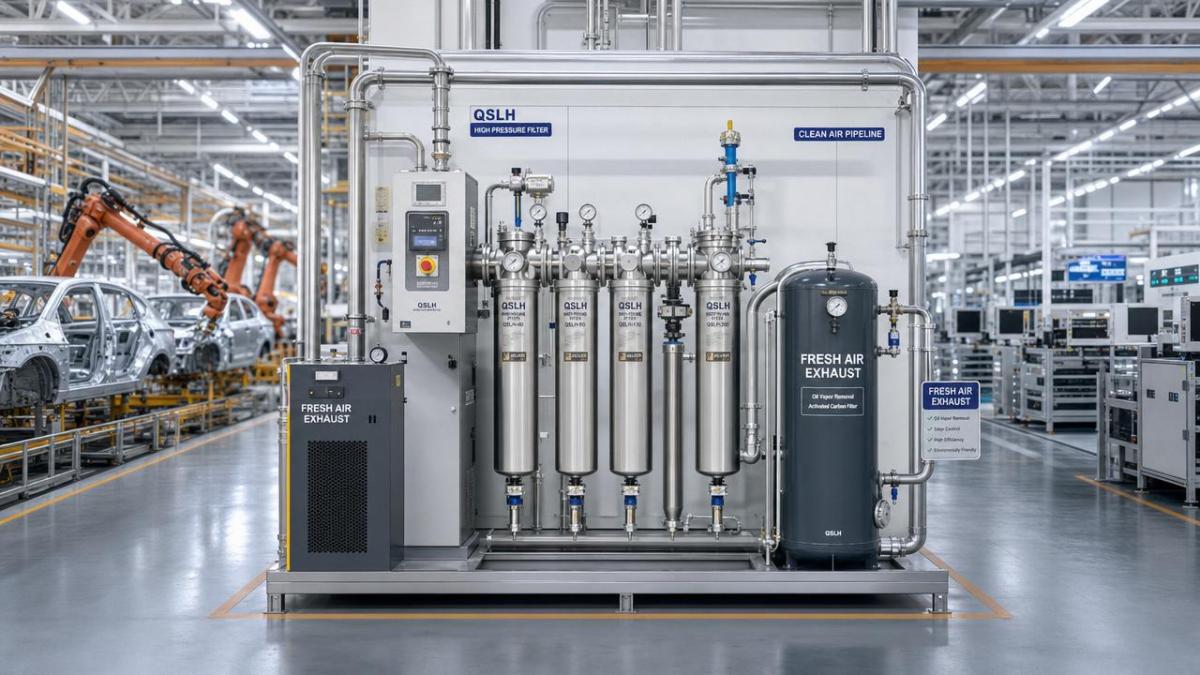
According to the provided event information, the QSLH series is designed for industrial compressed air systems operating at 7–16 bar. The stated filtration performance reduces solid particles to 0.01 μm and limits residual oil mist to no more than 0.003 mg/m³. The summary also states that this performance is significantly better than ISO 8573-1:2010 Class 1.
The same input further confirms that the product has already been supplied for export use in an automotive welding line in Mexico and an electronics assembly plant in Vietnam. In the context of Fresh Air Exhaust systems, the event information indicates that this is helping front-end purification configuration become a new purchasing baseline.
Where the impact may appear first
System buyers may tighten front-end specifications
Analysis shows that procurement teams for Fresh Air Exhaust-related projects may be among the first to feel the impact, because filter performance data often affects how technical requirements are written at the sourcing stage. The main effect may appear in bid specifications, supplier comparison criteria, and acceptance discussions around compressed air cleanliness.
Integrators and equipment suppliers may face closer technical matching
From an industry perspective, companies that assemble or configure systems for industrial exhaust and air handling may need to pay closer attention to how front-end purification is matched with operating pressure ranges. What deserves closer attention is whether customers begin to treat higher air cleanliness performance as a default requirement rather than an upgrade item.
Export-oriented manufacturers may see stronger customer scrutiny
Observably, the confirmed deployment in Mexico and Vietnam gives export-facing manufacturers a practical reference point. The likely impact is not that all projects will immediately adopt the same standard, but that overseas customers in quality-sensitive production environments may ask more direct questions about compressed air treatment before finalizing purchases.
What companies should monitor now
How technical claims are presented in procurement documents
Companies should watch whether customers begin referencing particle size and residual oil mist more explicitly in RFQs, technical appendices, or pre-qualification materials. This matters because a shift in wording can quickly change which suppliers remain competitive in early screening.
Whether pressure range and filtration targets are evaluated together
For engineering and sourcing teams, the practical issue is not only the headline filtration level but also its stated applicability to 7–16 bar industrial air sources. Supplier communication and technical review should therefore focus on how operating pressure and purification targets are considered together in actual project requirements.
Documentation readiness for export and project delivery
Analysis shows that teams involved in cross-border delivery should pay attention to specification sheets, compliance descriptions, and customer-facing technical records. Even without any new formal rule stated in the input, clearer documentation may become more important if buyers begin treating higher front-end purification standards as part of normal evaluation.
Differences between a market signal and a universal requirement
It is more appropriate to understand this as a market-facing signal rather than a confirmed industry-wide mandate. Companies should avoid assuming that every customer will immediately adopt the same benchmark, while still preparing contingency plans for cases where higher compressed air quality becomes a stated requirement.
Why this looks more like a signal than a settled outcome
Observably, the event points to a meaningful direction: compressed air quality ahead of Fresh Air Exhaust systems is receiving more attention as a purchasing factor, especially where process cleanliness and equipment stability matter. At the same time, the provided information confirms product launch, performance indicators, and initial export applications, but it does not by itself prove that the entire market has already standardized around the same configuration.
From an industry perspective, this makes the development important but still transitional. The strongest immediate takeaway is that technical purchasing baselines may be rising in some projects. Whether that becomes a broader and stable market norm still requires continued observation.
How to read the development at this stage
For now, this update is best understood as a concrete sign that higher compressed air purification performance is gaining weight in project selection tied to Fresh Air Exhaust systems. The confirmed export use cases and the stated performance level suggest practical commercial relevance, but the wider industry effect should still be assessed with caution rather than treated as a finalized market consensus.
Basis of this article
This article is based on the user-provided news title, event date, and event summary. Information of this kind is typically cross-checked against sources such as official company announcements, manufacturer releases, industry association updates, authoritative media coverage, and standard organization documents.
No specific official source link was provided in the input, so the exact original publication path remains to be verified on an ongoing basis. If follow-up coverage is needed, the key areas to monitor are any updated official wording, additional project deployment details, and whether procurement practices in Fresh Air Exhaust-related applications continue to reflect this higher front-end purification benchmark.
Recommended News
 Sep 12, 2026Designing Zero-Carbon Hospital Ventilation Without Compromising Infection ControlZero-carbon ventilation hospitals: learn how to cut energy use with heat recovery, smart controls, and resilient airflow design—without compromising infection control.
 Sep 12, 2026High-Efficiency Air Filtration for Semiconductor Fab Cleanrooms: ULPA vs. HEPA at MERV 20+ — Real-World Contamination Control Trade-offsHigh efficiency air filtration decoded for semiconductor fabs: ULPA vs. HEPA at MERV 20+—real TCO, yield impact, and contamination control trade-offs revealed.
 Sep 12, 2026Heat Recovery Ventilation for Lab Exhaust: Calculating Payback Periods When Neutralizing Acid Fumes with Base InjectionHeat recovery ventilation slashes lab energy costs—discover how base injection + ERV cuts NaOH use, HVAC load & delivers 18–30-month payback.
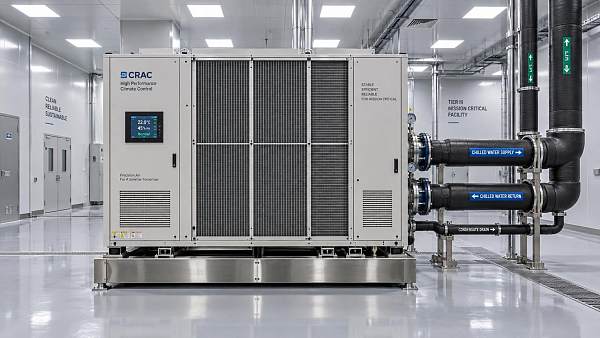
 Sep 12, 2026CRAC Units vs. CRAH Units: Capacity Matching, Redundancy Strategy, and Failure Mode Implications for Tier III FacilitiesCRAC units deliver precision climate control for Tier III facilities—guaranteeing dew-point stability, deterministic redundancy, and failure-resilient design where environmental fidelity is non-negotiable.
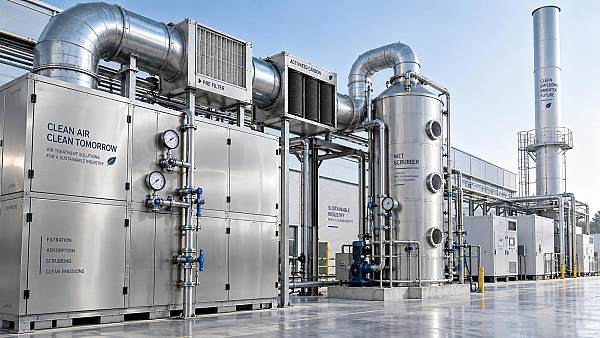
 Sep 11, 2026Selecting Industrial Air Scrubbers for European Plants: Airflow, Filters, and ComplianceIndustrial air scrubbers Europe: learn how to match airflow, filtration, gas chemistry, ATEX considerations, and compliance needs for reliable, efficient plant emissions control.
 Sep 10, 2026What Drives Industrial Ventilation System Costs in High-Heat Production Facilities?Industrial ventilation solutions cost depends on heat, pressure, capture design, filtration, ductwork, and installation access. Explore key cost drivers now.
 Sep 09, 2026How to Size RTO, RCO, and Wet Scrubbers for VOC Emissions from Coating LinesIndustrial emission control for coating lines: learn how to size RTO, RCO, and wet scrubbers for VOC loads, compliance, energy efficiency, and safer operations.
 Sep 08, 2026How to Verify CE Compliance for Industrial Gas Purification Systems Before PurchaseIndustrial gas purification CE certified? Use this practical buyer’s guide to verify declarations, ATEX evidence, labels, supplier controls, and contract requirements before purchase.
 Sep 07, 2026How to Choose Cleanroom Fan Filter Units for PCB Assembly: Airflow, HEPA, and ESDCleanroom fan filter units for PCB assembly: learn how to balance airflow, HEPA filtration, ESD protection, controls, and energy efficiency for reliable production.
 Sep 07, 2026What Drives Cleanroom Contamination Prevention Costs in Facility Design?Cleanroom contamination prevention cost depends on airflow, humidity, zoning, validation, and lifecycle energy. Discover smarter design choices that protect quality and budgets.
 Sep 05, 2026How Retailers Can Size Heat Recovery Systems for Store Ventilation LoadsCommercial heat recovery systems for retail: learn how to size ventilation by zone, manage humidity and pressure, and cut HVAC energy costs.
 Sep 04, 2026Ballroom Semiconductor Cleanroom Design: Airflow, Layout, and Contamination ControlBallroom semiconductor cleanroom design insights on airflow, layout, filtration, pressure cascades, and contamination control for scalable, high-yield semiconductor production.
 Sep 03, 2026Industrial Gas Scrubbing Pricing: Cost Drivers for Compliance ProjectsIndustrial gas scrubbing pricing explained: compare compliance cost drivers, installation scope, operating expenses, and supplier quotes for smarter investments.
 Sep 02, 2026How to Choose Industrial Emission Control Equipment for Process and Compliance NeedsIndustrial emission control equipment selection made practical: match process emissions, compliance targets, safety, lifecycle cost, and maintenance needs for reliable performance.
 Sep 01, 2026How to Choose Extreme Humidity Control Automation for CleanroomsExtreme humidity control automation for cleanrooms: learn how to select reliable, energy-efficient controls for dew point stability, monitoring, integration, and failure recovery.
 Aug 31, 2026How to Size a Workshop Roof Exhaust System for Heat, Fumes, and Dust ControlRoof exhaust workshop systems: learn how to size airflow for heat, fumes, and dust, optimize makeup air, control costs, and improve workplace safety.
 Aug 30, 2026How to Evaluate a Clean Air Recovery System Supplier for Industrial ProjectsChoose a clean air recovery system supplier with confidence. Compare technology, compliance, lifecycle cost, contamination control, and service for reliable industrial performance.
 Aug 29, 2026ISO 14644 Certification Process: From Cleanroom Testing to Compliance ApprovalISO 14644 certification process explained: prepare your cleanroom, complete particle testing, address failures, and achieve compliance approval with confidence.
 Aug 28, 2026How Factories Can Select Air Quality Controls for Dust, Fumes, and VOCsIndustrial air quality control for factories: learn how to select effective solutions for dust, fumes, and VOCs while improving safety, compliance, energy efficiency, and uptime.
 Aug 27, 2026How to Size Industrial Gas Scrubbing Units for Acid Fumes and Variable AirflowsIndustrial gas scrubbing units: learn how to size acid-fume scrubbers for variable airflows, peak loads, chemical demand, pressure drop, and reliable compliance.
 Aug 26, 2026How to Evaluate Industrial Air Quality Control Systems for Dust, Fumes, and VOCsIndustrial air quality control systems: learn how to evaluate dust, fumes, and VOC solutions by capture efficiency, compliance, maintenance, and lifecycle cost.
 Aug 25, 2026How to Select Cleanroom Particle Control Equipment for ISO Class and Process RiskCleanroom particle control equipment selection starts with process risk, ISO class, and airflow design. Learn how to compare FFUs, filters, and monitoring for reliable performance.
 Aug 24, 2026How to Choose a Ducted Heat Recovery Ventilation System for Commercial BuildingsDucted heat recovery ventilation for commercial buildings: learn how to compare efficiency, static pressure, controls, IAQ, and lifecycle cost to choose a smarter, high-performance system.
 Aug 23, 2026How Laminar Airflow Supports Compliance and Contamination Control in Medical Device ManufacturingLaminar airflow for medical devices helps reduce contamination risk, support cleanroom compliance, and improve audit readiness—see how it protects product quality and manufacturing control.