Search News
Industry Portal
Hot Articles
- How Factories Can Select Air Quality Controls for Dust, Fumes, and VOCsIndustrial air quality control for factories: learn how to select effective solutions for dust, fumes, and VOCs while improving safety, compliance, energy efficiency, and uptime.
- How to Size Industrial Gas Scrubbing Units for Acid Fumes and Variable AirflowsIndustrial gas scrubbing units: learn how to size acid-fume scrubbers for variable airflows, peak loads, chemical demand, pressure drop, and reliable compliance.
- How to Evaluate Industrial Air Quality Control Systems for Dust, Fumes, and VOCsIndustrial air quality control systems: learn how to evaluate dust, fumes, and VOC solutions by capture efficiency, compliance, maintenance, and lifecycle cost.
Popular Tags
Japan METI Mandates Ultra-Low Dew Point CRACs for Semiconductor Cleanrooms
author
Time
Click Count
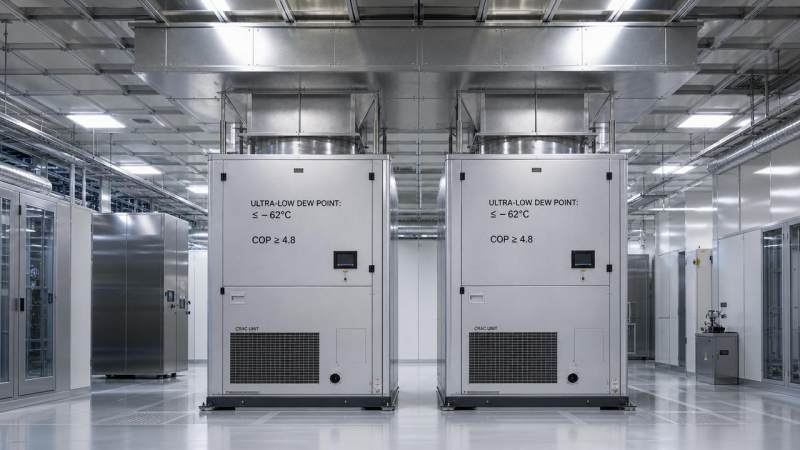
On 23 May 2026, Japan’s Ministry of Economy, Trade and Industry (METI) revised the Enforcement Regulations of the Building Energy Conservation Act, introducing binding energy efficiency requirements for ultra-low dew point CRAC systems in semiconductor packaging facilities—a move with direct implications for global HVAC equipment exporters and cleanroom infrastructure suppliers.
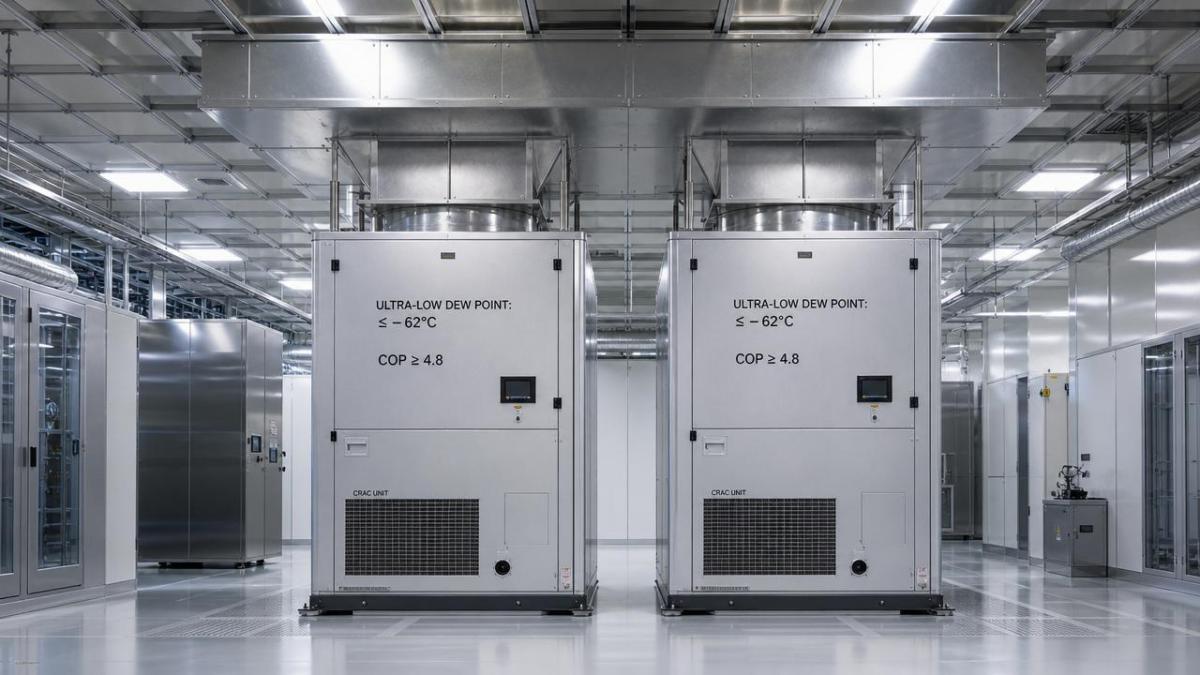
New Regulatory Scope: Ultra-Low Dew Point CRACs Classified as 'Specified Equipment'
Effective 23 May 2026, METI formally added air conditioning units capable of achieving a dew point ≤ −60°C to the list of 'Specified Equipment' under the Building Energy Conservation Act. For new or renovated semiconductor packaging plants in Japan, installation of such ultra-low dew point CRAC systems is now subject to the Top Runner energy efficiency benchmark: a minimum coefficient of performance (COP) of 4.8 under operating conditions delivering dew point ≤ −62°C. Compliance requires submission of third-party verification reports confirming both thermal performance and dew point stability.
Impact Across the Supply Chain
Export-oriented HVAC manufacturers
Chinese CRAC exporters supplying to Japanese semiconductor infrastructure projects must now align product certification frameworks with METI’s updated Top Runner criteria—not only for COP but also for ultra-low dew point validation. This affects type approval processes, test protocol selection, and documentation architecture for export declarations.
Raw material and component suppliers
Suppliers of critical subsystems—including ultra-low-temperature heat exchangers, high-efficiency compressors, and moisture-absorbing desiccant modules—face increased demand for traceable, pre-validated components that support certified dew point performance. Material certifications must now reflect compatibility with −62°C operational envelopes.
Cleanroom system integrators and EPC contractors
Integrators must revise technical specifications, commissioning checklists, and energy modeling inputs to incorporate verified dew point–COP co-performance data. Bid submissions for Japanese semiconductor projects will require demonstrable compliance evidence—not just nominal ratings—across full-load and part-load dew point conditions.
Logistics and certification support providers
Third-party testing laboratories, certification bodies, and regulatory consultants must expand their accreditation scope to cover combined dew point stability and COP verification under METI-defined test conditions. Turnaround time for conformity assessments is expected to lengthen due to specialized environmental chamber requirements.
Key Actions for Affected Enterprises
Upgrade energy efficiency certification pathways
Manufacturers must transition from generic energy labels to METI-recognized Top Runner verification schemes, including dew point–conditioned COP testing per JIS B 8617 or equivalent internationally harmonized protocols.
Validate dew point stability across operational load ranges
Compliance hinges not only on peak-performance dew point but on sustained ≤ −62°C capability at 30%, 50%, and 100% cooling loads—requiring enhanced control logic and sensor redundancy in unit design.
Prepare auditable third-party verification dossiers
Dossiers must include calibrated test reports, uncertainty analysis, chamber environmental logs, and traceable calibration certificates for all measurement instruments used in dew point and COP validation.
Review supply chain resilience for low-temperature components
Procurement strategies must account for longer lead times and stricter qualification requirements for refrigeration-grade seals, cryo-compatible sensors, and adsorption-desiccant media meeting −62°C service conditions.
Industry Observation: A Shift Toward Performance-Based Regulation
Analysis shows this revision marks a strategic pivot—from prescriptive equipment categorization toward outcome-based performance mandates. What deserves closer attention is how METI’s dual-parameter requirement (COP + dew point) sets a precedent for other high-precision manufacturing sectors, including advanced battery production and pharmaceutical aseptic processing. From an industry perspective, the 24-month typical lead time for cleanroom project execution implies that procurement decisions made in late 2026 will already need to reflect full compliance—not just design intent. Observably, this elevates the technical threshold for market entry and increases the weight of pre-certification investment relative to post-installation commissioning.
Strategic Implications for Global Cleanroom Infrastructure
This regulation does not merely raise efficiency bars—it redefines the functional specification of critical environmental control systems in mission-critical facilities. Its significance lies less in incremental COP gains and more in institutionalizing dew point as a regulated performance metric alongside energy use. For exporters, it signals a broader trend: climate-conscious industrial policy is increasingly converging with process-critical environmental control standards—making holistic system validation, not component-level compliance, the new baseline for competitiveness.
Source Information and Verification Notes
This article is based exclusively on the user-provided title, event date (23 May 2026), and summary text. Specific official source links were not provided in the input and should be verified continuously. Stakeholders are advised to monitor upcoming METI technical guidance documents, updates to the Top Runner Program implementation manual, tender specifications issued by Japanese semiconductor firms, and evolving interpretations from accredited Japanese testing bodies such as JET or JQA.
Recommended News
 Aug 28, 2026How Factories Can Select Air Quality Controls for Dust, Fumes, and VOCsIndustrial air quality control for factories: learn how to select effective solutions for dust, fumes, and VOCs while improving safety, compliance, energy efficiency, and uptime.
 Aug 27, 2026How to Size Industrial Gas Scrubbing Units for Acid Fumes and Variable AirflowsIndustrial gas scrubbing units: learn how to size acid-fume scrubbers for variable airflows, peak loads, chemical demand, pressure drop, and reliable compliance.
 Aug 26, 2026How to Evaluate Industrial Air Quality Control Systems for Dust, Fumes, and VOCsIndustrial air quality control systems: learn how to evaluate dust, fumes, and VOC solutions by capture efficiency, compliance, maintenance, and lifecycle cost.
 Aug 25, 2026How to Select Cleanroom Particle Control Equipment for ISO Class and Process RiskCleanroom particle control equipment selection starts with process risk, ISO class, and airflow design. Learn how to compare FFUs, filters, and monitoring for reliable performance.
 Aug 24, 2026How to Choose a Ducted Heat Recovery Ventilation System for Commercial BuildingsDucted heat recovery ventilation for commercial buildings: learn how to compare efficiency, static pressure, controls, IAQ, and lifecycle cost to choose a smarter, high-performance system.
 Aug 23, 2026How Laminar Airflow Supports Compliance and Contamination Control in Medical Device ManufacturingLaminar airflow for medical devices helps reduce contamination risk, support cleanroom compliance, and improve audit readiness—see how it protects product quality and manufacturing control.
 Aug 22, 2026How to Verify CE Compliance When Comparing VOC Treatment Systems for EU ProjectsVOC treatment systems CE certified: learn how to verify real EU compliance, check directives, ATEX, and documentation, and avoid costly procurement and site integration risks.
 Aug 21, 2026How to Achieve Stable RH Precision Humidity Control in Cleanroom Production?Stable RH precision humidity control starts with process-based design. Learn how airflow, sensors, dehumidification, and recovery logic keep cleanroom production consistent and reliable.
 Aug 20, 2026How to Select Airflow Control Dampers for Pressure Balance and Energy EfficiencyAirflow control dampers selection starts with pressure balance, leakage, and control authority—not duct size alone. Learn how to improve stability and energy efficiency.
 Aug 19, 2026What Drives Cleanroom Compliance Cost in Pharma and Semiconductor Projects?Cleanroom compliance cost in pharma and semiconductor projects depends on ISO class, airflow, humidity control, validation, and energy use. Learn what drives cost and how to avoid costly overdesign.
 Aug 18, 2026How to Evaluate a High-Tech HVAC Manufacturer for Cleanroom and Precision FacilitiesHigh-tech HVAC manufacturer evaluation guide for cleanrooms and precision facilities. Learn how to assess control stability, compliance, serviceability, and long-term operational risk.
 Aug 17, 2026How to Evaluate a Commercial ERV Systems Supplier for Large Building ProjectsCommercial ERV systems supplier selection for large projects goes beyond price. Learn how to compare performance, compliance, controls, delivery, and lifecycle cost to reduce risk.
 Aug 16, 2026Commercial Ventilation Pricing: What Drives Cost in Industrial and Office Projects?Commercial ventilation pricing varies by airflow, compliance, and installation needs. Learn what drives costs in industrial and office projects—and how to compare quotes smarter.
 Aug 16, 2026EU Issues New RTO/RCO Compliance Guide, Adds Carbon and Efficiency CertificationEU releases a new RTO/RCO compliance guide with carbon and efficiency certification requirements, signaling stricter market access rules and urgent action for exporters.
 Aug 15, 2026What Makes an HVAC System Energy-Efficient for European Buildings?Energy efficient HVAC Europe solutions help European buildings cut costs, boost comfort, and meet carbon targets. Discover the design factors that truly improve performance.
 Aug 15, 2026China Issues New Export Compliance Rules for RTO/RCO SystemsChina's new export compliance rules for RTO/RCO systems are reshaping market access. Learn what the 2026 regulations mean for exporters, buyers, and green procurement.
 Aug 14, 2026How to Evaluate a Precision Cooling Supplier for High-Density Data CentersPrecision cooling supplier guide for high-density data centers: learn how to evaluate reliability, scalability, compliance, and lifecycle value before you buy.
 Aug 14, 2026China’s Temporary Helium Export Ban Slows RTO/RCO Core Cooling DeliveriesChina’s temporary helium export ban may delay RTO/RCO core cooling deliveries, especially for final testing and certification. Learn how it impacts projects and what companies should check next.
 Aug 13, 2026How to Select VAV Airflow Control Systems for Labs and Cleanroom HVAC ProjectsVAV airflow control systems are critical for labs and cleanroom HVAC projects. Discover how to choose the right system for stability, compliance, and energy savings.
 Aug 12, 2026How to Select Dew Point Control Systems for Battery Plants?Dew point control systems for battery plants: learn how to compare stability, energy use, controls, and maintenance to choose a safer, more efficient dry room solution.
![]() Aug 12, 2026The EU updates CE guidelines, RTO/RCO need to take into account both energy efficiency and explosion protectionEU CE Guide update: RTO/RCO systems must now meet both energy efficiency and explosion-proof compliance. Learn how EN 1539, ATEX testing, and new VOCs rules impact EU market access.
Aug 12, 2026The EU updates CE guidelines, RTO/RCO need to take into account both energy efficiency and explosion protectionEU CE Guide update: RTO/RCO systems must now meet both energy efficiency and explosion-proof compliance. Learn how EN 1539, ATEX testing, and new VOCs rules impact EU market access. Aug 11, 2026How to Select Precision Humidity Control for Cleanrooms and Micro-EnvironmentsPrecision humidity control for cleanrooms starts with process needs. Learn how to compare dew point targets, airflow, controls, and energy tradeoffs for reliable, high-yield micro-environments.
 Aug 11, 2026China Sets New VOCs Certification Rule for RTO/RCO ExportsChina sets new VOCs certification rule for RTO/RCO exports. Learn how CN-ERV-2026, energy-efficiency grades, and customs impacts could affect bids, buyers, and delivery plans.
 Aug 10, 2026How to Evaluate Automated Industrial Exhaust Treatment Systems for VOC ControlAutomated industrial exhaust treatment systems for VOC control: learn how to compare compliance, automation, energy use, safety, and lifecycle cost before selecting the right solution.