Search News
Industry Portal
Hot Articles
- ISO 14644 Certification Process: From Cleanroom Testing to Compliance ApprovalISO 14644 certification process explained: prepare your cleanroom, complete particle testing, address failures, and achieve compliance approval with confidence.
- How Factories Can Select Air Quality Controls for Dust, Fumes, and VOCsIndustrial air quality control for factories: learn how to select effective solutions for dust, fumes, and VOCs while improving safety, compliance, energy efficiency, and uptime.
- How to Size Industrial Gas Scrubbing Units for Acid Fumes and Variable AirflowsIndustrial gas scrubbing units: learn how to size acid-fume scrubbers for variable airflows, peak loads, chemical demand, pressure drop, and reliable compliance.
Popular Tags
How to choose a cyclone separation supplier wisely
author
Time
Click Count
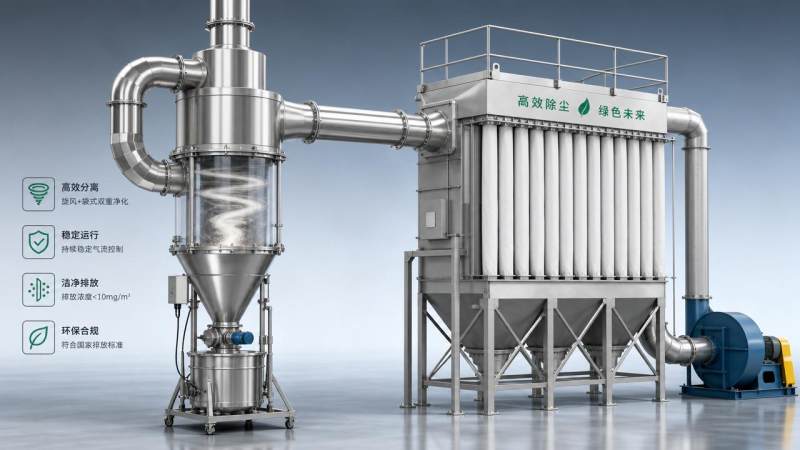
Choosing the right cyclone separation supplier is not just a purchasing decision. It affects dust collection efficiency, emission compliance, maintenance cost, and operational stability.
In chemicals, metallurgy, battery materials, and clean manufacturing, the wrong partner can overload downstream filters and raise environmental risk.
A reliable cyclone separation supplier should understand particles, airflow, pressure loss, corrosion, abrasion, and site constraints before quoting equipment.
How to choose a cyclone separation supplier wisely
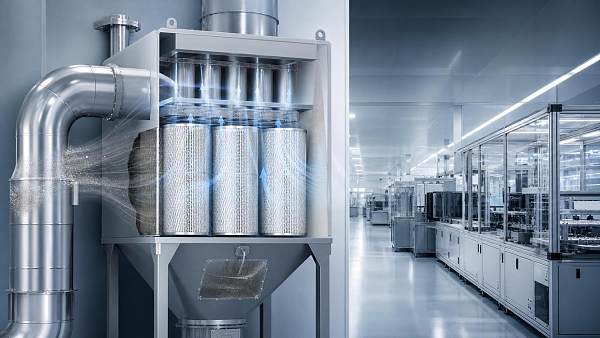
Cyclone separation uses centrifugal force to remove particles from gas streams. Dust-laden air enters tangentially, forms a vortex, and separates heavier particles.
The cleaned gas exits through the outlet tube. Collected dust falls into the hopper, bin, or rotary discharge device.
This principle looks simple, but performance depends on geometry, inlet velocity, particle size, gas density, temperature, and moisture.
A capable cyclone separation supplier does not sell one standard shell for every process. It calculates and adapts the separator to actual duty.
The supplier should define cut size, collection efficiency, pressure drop, wear protection, and safe discharge under realistic operating conditions.
Industry context behind cyclone supplier selection
Industrial air treatment is becoming stricter because emission limits, worker safety expectations, and carbon targets are all rising together.
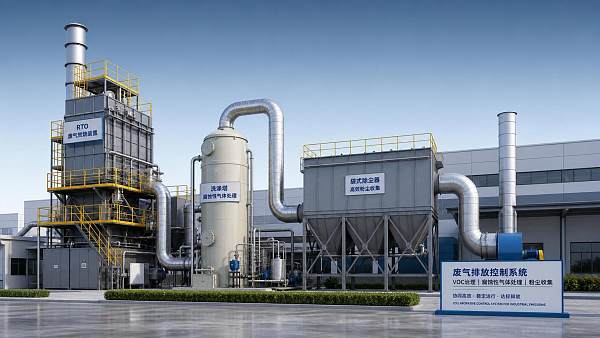
CECS observes this shift across industrial dust collectors, scrubbers, workshop ventilation, cleanrooms, and energy recovery systems.
Within that wider environmental control landscape, a cyclone separation supplier often supports the first defensive layer of particulate control.
A qualified cyclone separation supplier should speak fluently about these signals, not only about vessel diameter and delivery time.
Technical capability as the first evaluation layer
The most important difference between suppliers is engineering depth. Drawings alone do not prove separation performance.
A strong cyclone separation supplier asks for process gas flow, temperature, pressure, dust concentration, particle distribution, bulk density, and humidity.
It also checks whether particles are sticky, explosive, corrosive, hygroscopic, or likely to bridge inside the hopper.
Design quality can be reviewed through several technical outputs:
- Efficiency estimate by particle size range.
- Pressure drop calculation at normal and peak flow.
- Inlet velocity and vortex stability assessment.
- Material selection based on abrasion and corrosion.
- Hopper angle and discharge device recommendation.
If a cyclone separation supplier cannot explain these points clearly, price comparison becomes risky and incomplete.
Material quality and fabrication reliability
Cyclones operate under continuous gas flow, particle impact, vibration, and sometimes high temperature. Mechanical quality matters every day.
A dependable cyclone separation supplier should provide material certificates, welding standards, dimensional tolerances, and coating specifications.
For abrasive dust, common carbon steel may fail quickly at the inlet, cone, or dipleg. Protection must be designed early.
For corrosive gases, stainless steel, special alloys, rubber lining, or protective coatings may be required.
The right choice depends on acid dew point, moisture, chemical composition, and cleaning frequency.
Fabrication details also influence leakage. Poor flange flatness, weak welds, and bad access door sealing reduce real performance.
Airflow matching and system integration
Cyclone performance cannot be separated from the complete dust collection system. Duct layout, fan selection, and discharge control all matter.
A professional cyclone separation supplier studies upstream duct velocity and downstream equipment resistance before finalizing the separator.
If airflow is too low, particles may not separate effectively. If airflow is too high, pressure loss and wear increase.
The supplier should help balance separation efficiency with energy consumption. Lower emissions should not create unnecessary fan power penalties.
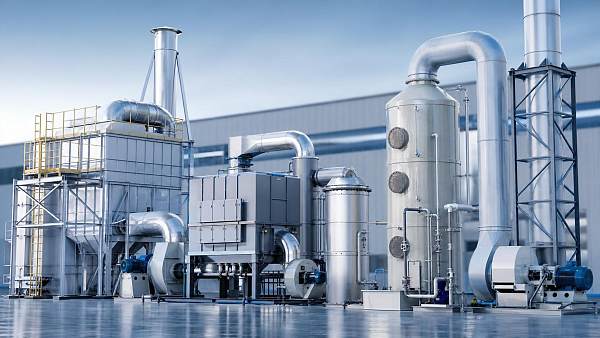
Integration is especially important when a cyclone protects baghouses, cartridge collectors, wet scrubbers, or regenerative thermal oxidizers.
In such systems, the cyclone reduces coarse dust load and extends the life of sensitive downstream components.
Application scenarios and supplier focus areas
Different industries need different cyclone priorities. A single evaluation checklist should still reflect application-specific risks.
A cyclone separation supplier with relevant references can usually predict site problems faster and design safer operating margins.
Compliance, testing, and documentation
Environmental equipment decisions increasingly depend on documentation. Compliance confidence must be built before installation begins.
A responsible cyclone separation supplier should provide inspection reports, pressure test records, welding qualifications, and performance assumptions.
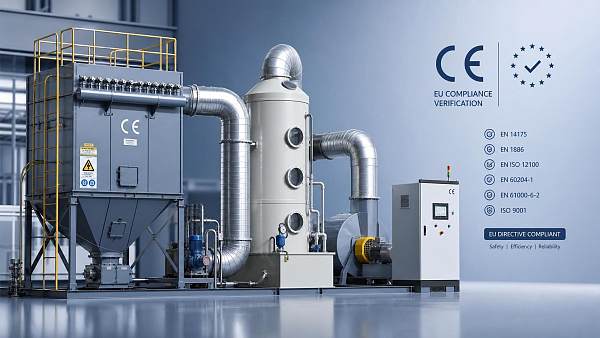
For export projects, documentation may also include CE conformity, ATEX considerations, ISO-aligned quality records, and local code references.
Performance testing should be discussed before ordering. Acceptance criteria should cover airflow, pressure drop, leakage, and visible dust behavior.
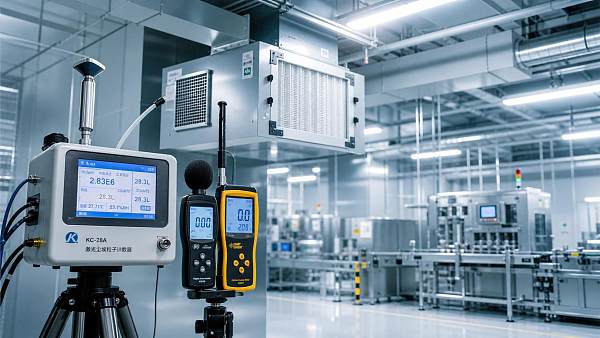
When emissions are critical, third-party stack testing or particle measurement may be needed after commissioning.
A credible cyclone separation supplier will not avoid these conversations. It will clarify what the cyclone can and cannot guarantee.
After-sales support and lifecycle economics
The lowest purchase price may become expensive when wear, clogging, leakage, and poor discharge appear after startup.
A wise assessment includes lifecycle cost, not only initial quotation. Maintenance access and spare part availability affect real value.
A dependable cyclone separation supplier should offer commissioning guidance, troubleshooting support, replacement liners, valves, gaskets, and inspection recommendations.
Ask how the supplier handles flow changes, process expansion, and dust characteristic variations after installation.
Good suppliers document lessons from previous projects. This practical memory often prevents repeated failures in demanding plants.
Practical checklist before selecting a supplier
A structured comparison reduces uncertainty. The following checklist supports a fair review of each cyclone separation supplier.
- Confirm the supplier understands actual gas flow, temperature, and dust loading.
- Request efficiency and pressure drop calculations, not only equipment drawings.
- Check material selection against abrasion, corrosion, and thermal stress.
- Review fabrication quality, welding records, and sealing design.
- Compare references from similar industries and dust conditions.
- Clarify commissioning support, spare parts, and maintenance guidance.
- Define acceptance criteria before signing the purchase order.
These steps help separate a commodity fabricator from a true cyclone separation supplier with engineering responsibility.
Warning signs during quotation review
Several warning signs deserve attention. They usually appear early, before technical and commercial risk becomes locked in.
- The quotation ignores particle size distribution.
- Pressure drop is not stated clearly.
- The same design is proposed for very different processes.
- Wear protection is treated as an optional afterthought.
- No references are available for similar operating conditions.
- After-sales support is vague or unavailable.
If several warning signs appear together, another cyclone separation supplier should be evaluated before commitment.
Building a smarter cyclone procurement path
A wise selection begins with a complete process data sheet. It should include normal, minimum, and peak operating conditions.
The next step is technical clarification. Compare how each cyclone separation supplier explains trade-offs between efficiency, pressure drop, and durability.
Then review commercial terms together with inspection plans, delivery schedule, documentation, and lifecycle support.
CECS recommends treating cyclone selection as part of a broader environmental control strategy, not as an isolated steel purchase.
The best cyclone separation supplier helps protect emission compliance, downstream filtration assets, and long-term plant reliability.
Before ordering, prepare your dust data, airflow profile, site layout, and compliance targets. Then request a design-based proposal.
That approach makes supplier comparison clearer and increases the chance of choosing a cyclone separation supplier wisely.
Recommended News
 Aug 28, 2026How Factories Can Select Air Quality Controls for Dust, Fumes, and VOCsIndustrial air quality control for factories: learn how to select effective solutions for dust, fumes, and VOCs while improving safety, compliance, energy efficiency, and uptime.
 Aug 26, 2026How to Evaluate Industrial Air Quality Control Systems for Dust, Fumes, and VOCsIndustrial air quality control systems: learn how to evaluate dust, fumes, and VOC solutions by capture efficiency, compliance, maintenance, and lifecycle cost.
 Aug 20, 2026How to Select Airflow Control Dampers for Pressure Balance and Energy EfficiencyAirflow control dampers selection starts with pressure balance, leakage, and control authority—not duct size alone. Learn how to improve stability and energy efficiency.
 Aug 10, 2026How to Evaluate Automated Industrial Exhaust Treatment Systems for VOC ControlAutomated industrial exhaust treatment systems for VOC control: learn how to compare compliance, automation, energy use, safety, and lifecycle cost before selecting the right solution.
 Aug 01, 2026Cleanroom Aerodynamic Design Layout: How to Optimize Airflow for ComplianceCleanroom aerodynamic design layout tips for optimizing airflow, FFU placement, return paths, and pressure cascade to support ISO 14644 compliance and improve cleanroom performance.
 Jul 25, 2026How to Verify CE Certified Industrial Emission Control Systems for EU Compliance?Industrial emission control CE certified systems require more than a CE mark. Learn how to verify EU directives, test evidence, ATEX scope, and risk files before you buy.
 Jul 18, 2026How to Choose an Aerodynamic Filtration System: Key Parameters and Application FitAerodynamic filtration system selection starts with pressure drop, airflow uniformity, particle capture, and application fit. Learn how to compare options for cleanrooms, industry, and HVAC with confidence.
 Jul 17, 2026How to Choose Industrial Clean Air Systems: Key Airflow, Filtration, and Compliance FactorsIndustrial clean air systems buying guide: compare airflow, filtration, energy efficiency, and compliance factors to choose safer, cost-effective solutions for your facility.
 Jul 16, 2026How to Choose an Industrial Emission Control Supplier for RTO, Scrubber, and Dust Collection ProjectsIndustrial emission control supplier selection for RTO, scrubber, and dust collection projects: compare compliance, lifecycle cost, service, and technical fit.
 Jul 15, 2026How Aerodynamic Filtration Improves High-Efficiency Dust Capture in Industrial Air SystemsAerodynamic filtration high efficiency boosts dust capture by optimizing airflow, pressure stability, and particle control in industrial air systems. Learn how to cut energy waste and improve compliance.
 Jul 14, 2026Industrial Emission Control Systems in Europe: How to Compare RTO, RCO, and Wet ScrubbersIndustrial emission control systems Europe: compare RTO, RCO, and wet scrubbers by VOCs, acid gases, energy use, and compliance fit to choose the right solution.
 Jul 12, 2026Industrial Air Quality Testing: What to Measure and How to Read the ResultsIndustrial air quality testing made practical: learn what to measure, how to interpret results, and how to turn data into safer operations, better product quality, and smarter control decisions.
 Jul 11, 2026Industrial Clean Air Technology Price: What Drives System Cost in Manufacturing Projects?Industrial clean air technology price depends on more than size. Discover the real cost drivers in manufacturing projects, from filtration and dew point control to compliance, energy use, and supplier scope.
 Jul 08, 2026Aerodynamic Filtration in Electronics: Solving Pressure Drop and Yield RisksAerodynamic filtration electronics directly affects pressure drop, contamination control, and yield. Learn how to reduce airflow instability, cut defects, and improve cleanroom performance.
 Jul 03, 2026How to Choose Industrial Clean Air Equipment for Dust, Fumes, and VOC ControlIndustrial clean air equipment selection made practical: learn how to match dust, fumes, and VOC control systems to compliance, process needs, energy efficiency, and long-term cost.
 Jun 30, 2026Zero Emission Air Treatment for Battery Plants: Cost Drivers, Compliance, and ROIZero emission air treatment for battery plants: uncover key cost drivers, compliance risks, and ROI factors to cut lifecycle costs, protect uptime, and support scalable plant growth.
 Jun 29, 2026How to Compare Air Pollution Control Systems in North America by Emission TypeAir pollution control systems North America compared by emission type: learn how to evaluate dust, VOC, and acid gas solutions for compliance, cost, and process fit.
 Jun 28, 2026How to Compare Industrial Gas Treatment Systems in the USA by Emission Type and Compliance NeedsIndustrial gas treatment systems USA buyers can compare by emission type, compliance risk, and lifecycle cost. Learn how to choose the right solution with confidence.
 Jun 27, 2026How Industrial Emission Control Systems Help Plants Meet Air Compliance RequirementsIndustrial emission control helps plants meet air compliance requirements while improving process stability, worker safety, and audit readiness. Learn what to evaluate before upgrading.
 Jun 26, 2026Gas Scrubbing Systems Explained: How to Match Scrubber Type to Exhaust ContaminantsGas scrubbing systems explained: learn how to match scrubber types to acid gases, VOCs, particulates, and corrosive exhaust for better compliance, reliability, and lifecycle performance.
 Jun 24, 2026Tonxing Tech Showcases Compliance-Ready Green Tech in VietnamTonxing Tech showcases compliance-ready green tech in Vietnam, featuring SCR catalysts, CO catalysts, and TXio carbon capture for importers seeking efficient, low-carbon solutions.
 Jun 23, 2026Industrial Air Handling vs Dedicated Exhaust: Which Layout Fits Your Facility Better?Industrial air handling vs dedicated exhaust: discover which layout improves contamination control, compliance, energy efficiency, and long-term facility performance.
 Jun 22, 2026Industrial Air Purification for Dust, Fumes, and VOCs: How to Match the Right SystemIndustrial air purification starts with the process. Learn how to match dust, fume, and VOC control systems for safer compliance, lower energy costs, and more reliable plant performance.
 Jun 22, 2026ISO 22067-2:2026 Sets New Green Data ThresholdsISO 22067-2:2026 sets new green data thresholds for post-press operations, helping suppliers prepare for ESG reviews, EPD alignment, and stricter green procurement demands.