Search News
Industry Portal
Hot Articles
- How Factories Can Select Air Quality Controls for Dust, Fumes, and VOCsIndustrial air quality control for factories: learn how to select effective solutions for dust, fumes, and VOCs while improving safety, compliance, energy efficiency, and uptime.
- How to Size Industrial Gas Scrubbing Units for Acid Fumes and Variable AirflowsIndustrial gas scrubbing units: learn how to size acid-fume scrubbers for variable airflows, peak loads, chemical demand, pressure drop, and reliable compliance.
- How to Evaluate Industrial Air Quality Control Systems for Dust, Fumes, and VOCsIndustrial air quality control systems: learn how to evaluate dust, fumes, and VOC solutions by capture efficiency, compliance, maintenance, and lifecycle cost.
Popular Tags
ICCEE 2026 Opens in Kunming, Advances Three Micro-Environment Energy Efficiency Standards
author
Time
Click Count
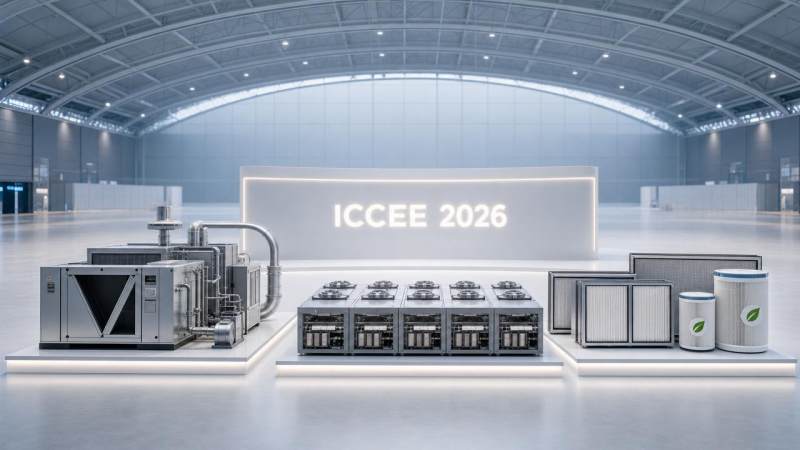
On May 29, 2026, the Fifth International Conference on Clean Energy and Environment (ICCEE 2026) opened in Kunming, spotlighting regulatory developments that will shape energy efficiency requirements for cleanroom and industrial thermal management systems globally.
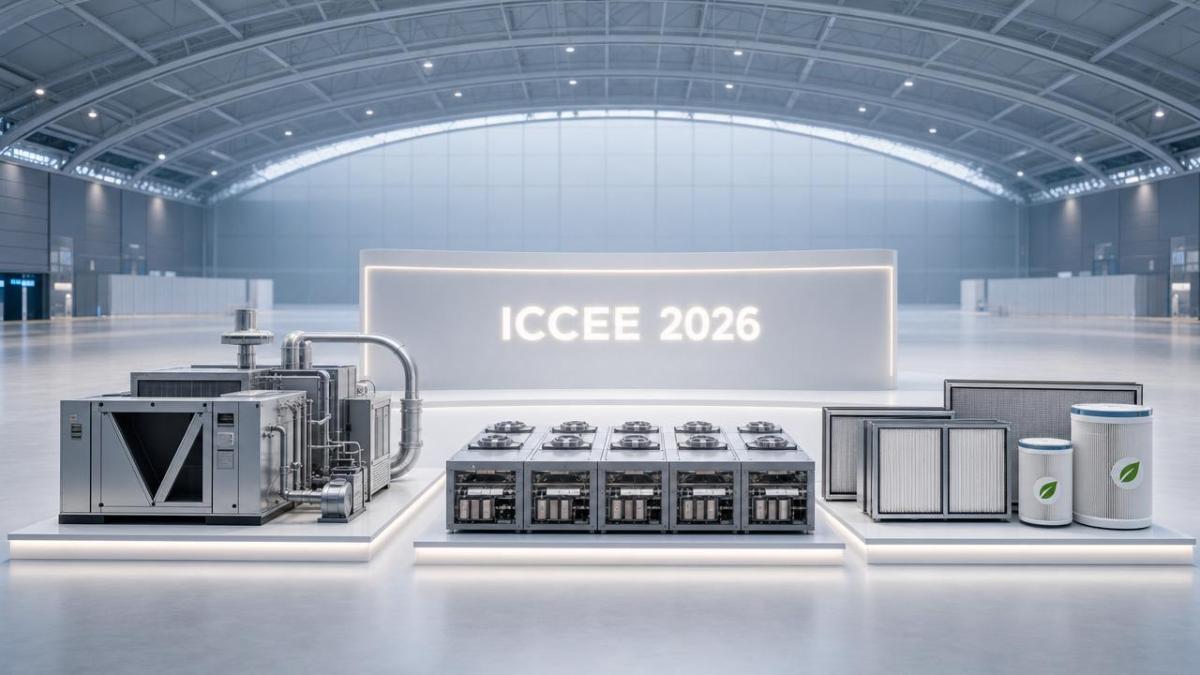
Three Draft Standards Unveiled at ICCEE 2026 Technical Forum
During the inaugural technical forum of ICCEE 2026, three China-led draft standards for micro-environment energy efficiency were formally introduced: Methodology for Evaluating Energy Efficiency of Ultra-Low Dew Point CRAC Units Driven by RTO Flue Gas Waste Heat, AI-Based Airflow Coordination Protocol for Class 100 Laminar FFU Clusters, and Life-Cycle Carbon Footprint Accounting Guidelines for HEPA/ULPA Filters. All three drafts have been submitted to the ISO/TC 209 secretariat for preliminary review, with formal international standard proposals expected by 2027.
Impacts Across Key Industry Roles
Export-Oriented Equipment Manufacturers
These drafts introduce new performance verification and reporting obligations—particularly for CRAC units and FFU systems integrated with waste-heat recovery. Exporters must anticipate updated technical bid specifications in public tenders and facility upgrade projects, especially in semiconductor, pharmaceutical, and biotech sectors where ISO/TC 209-aligned environments are mandated.
Raw Material and Component Suppliers
Suppliers of high-efficiency heat exchangers, AI-enabled airflow sensors, and certified HEPA/ULPA media will face tighter traceability and carbon accounting expectations. The draft carbon footprint guidelines require documented upstream emissions data—impacting procurement documentation and supplier declarations.
System Integrators and OEMs
OEMs designing modular cleanroom HVAC solutions must align control logic, commissioning protocols, and validation reports with the AI coordination protocol and dew-point CRAC evaluation methodology. Interoperability testing and third-party verification may become mandatory pre-delivery steps.
Logistics and Compliance Support Providers
Supply chain service firms—including certification consultants, test laboratories, and technical documentation agencies—will see rising demand for ISO/TC 209 pre-assessment support, life-cycle assessment (LCA) verification, and AI-control protocol conformance testing.
Strategic Priorities for Enterprise Preparedness
Early Review of Draft Standard Requirements
Companies should obtain and internally assess the full text of all three draft standards—especially the CRAC evaluation methodology’s operating condition definitions and the FFU protocol’s interoperability thresholds—before final ISO/TC 209 ballot cycles begin.
Alignment of Technical Bids and Tender Specifications
Bidding teams must proactively update technical annexes to reflect anticipated changes in performance metrics, AI integration scope, and carbon reporting depth—particularly for government-funded cleanroom infrastructure projects in Asia and Europe.
Supplier Qualification and Lifecycle Documentation
Procurement departments should initiate supplier surveys to verify readiness for carbon footprint data submission and FFU cluster control interface compliance—prioritizing vendors already engaged in ISO 14040/14044 LCA practices or IEC 63178-certified AI controller development.
Emerging Regulatory Trajectory: From National Drafts to Global Benchmarks
Analysis shows these drafts represent a deliberate shift: China is moving beyond domestic standard-setting to lead harmonized frameworks for energy-efficient micro-environments. Observably, the coupling of waste-heat recovery (RTO) with ultra-low dew point cooling reflects growing convergence between industrial decarbonization and precision environmental control. It is more appropriate to understand this as an early signal—not of immediate compliance mandates—but of tightening technical baselines in next-generation cleanroom procurement, particularly where energy intensity and embodied carbon are weighted in evaluation criteria.
Toward Harmonized Performance Accountability
This initiative underscores a broader industry evolution: from isolated equipment efficiency ratings toward system-level, lifecycle-integrated performance accountability. While formal adoption remains pending ISO/TC 209 deliberations, early alignment offers competitive advantage—not only in regulatory readiness but also in differentiating value propositions around energy resilience and carbon transparency.
Source Attribution and Monitoring Guidance
This article is generated exclusively from the provided title, event date (May 29, 2026), and summary. Specific official source links were not provided in the input and should be verified continuously. Stakeholders are advised to monitor updates from ISO/TC 209, national standardization bodies (e.g., SAC), and sector-specific procurement authorities for final standard texts, implementation timelines, certification pathways, and tender clause revisions.
Recommended News
 Aug 28, 2026How Factories Can Select Air Quality Controls for Dust, Fumes, and VOCsIndustrial air quality control for factories: learn how to select effective solutions for dust, fumes, and VOCs while improving safety, compliance, energy efficiency, and uptime.
 Aug 27, 2026How to Size Industrial Gas Scrubbing Units for Acid Fumes and Variable AirflowsIndustrial gas scrubbing units: learn how to size acid-fume scrubbers for variable airflows, peak loads, chemical demand, pressure drop, and reliable compliance.
 Aug 26, 2026How to Evaluate Industrial Air Quality Control Systems for Dust, Fumes, and VOCsIndustrial air quality control systems: learn how to evaluate dust, fumes, and VOC solutions by capture efficiency, compliance, maintenance, and lifecycle cost.
 Aug 25, 2026How to Select Cleanroom Particle Control Equipment for ISO Class and Process RiskCleanroom particle control equipment selection starts with process risk, ISO class, and airflow design. Learn how to compare FFUs, filters, and monitoring for reliable performance.
 Aug 24, 2026How to Choose a Ducted Heat Recovery Ventilation System for Commercial BuildingsDucted heat recovery ventilation for commercial buildings: learn how to compare efficiency, static pressure, controls, IAQ, and lifecycle cost to choose a smarter, high-performance system.
 Aug 23, 2026How Laminar Airflow Supports Compliance and Contamination Control in Medical Device ManufacturingLaminar airflow for medical devices helps reduce contamination risk, support cleanroom compliance, and improve audit readiness—see how it protects product quality and manufacturing control.
 Aug 22, 2026How to Verify CE Compliance When Comparing VOC Treatment Systems for EU ProjectsVOC treatment systems CE certified: learn how to verify real EU compliance, check directives, ATEX, and documentation, and avoid costly procurement and site integration risks.
 Aug 21, 2026How to Achieve Stable RH Precision Humidity Control in Cleanroom Production?Stable RH precision humidity control starts with process-based design. Learn how airflow, sensors, dehumidification, and recovery logic keep cleanroom production consistent and reliable.
 Aug 20, 2026How to Select Airflow Control Dampers for Pressure Balance and Energy EfficiencyAirflow control dampers selection starts with pressure balance, leakage, and control authority—not duct size alone. Learn how to improve stability and energy efficiency.
 Aug 19, 2026What Drives Cleanroom Compliance Cost in Pharma and Semiconductor Projects?Cleanroom compliance cost in pharma and semiconductor projects depends on ISO class, airflow, humidity control, validation, and energy use. Learn what drives cost and how to avoid costly overdesign.
 Aug 18, 2026How to Evaluate a High-Tech HVAC Manufacturer for Cleanroom and Precision FacilitiesHigh-tech HVAC manufacturer evaluation guide for cleanrooms and precision facilities. Learn how to assess control stability, compliance, serviceability, and long-term operational risk.
 Aug 17, 2026How to Evaluate a Commercial ERV Systems Supplier for Large Building ProjectsCommercial ERV systems supplier selection for large projects goes beyond price. Learn how to compare performance, compliance, controls, delivery, and lifecycle cost to reduce risk.
 Aug 16, 2026Commercial Ventilation Pricing: What Drives Cost in Industrial and Office Projects?Commercial ventilation pricing varies by airflow, compliance, and installation needs. Learn what drives costs in industrial and office projects—and how to compare quotes smarter.
 Aug 16, 2026EU Issues New RTO/RCO Compliance Guide, Adds Carbon and Efficiency CertificationEU releases a new RTO/RCO compliance guide with carbon and efficiency certification requirements, signaling stricter market access rules and urgent action for exporters.
 Aug 15, 2026What Makes an HVAC System Energy-Efficient for European Buildings?Energy efficient HVAC Europe solutions help European buildings cut costs, boost comfort, and meet carbon targets. Discover the design factors that truly improve performance.
 Aug 15, 2026China Issues New Export Compliance Rules for RTO/RCO SystemsChina's new export compliance rules for RTO/RCO systems are reshaping market access. Learn what the 2026 regulations mean for exporters, buyers, and green procurement.
 Aug 14, 2026How to Evaluate a Precision Cooling Supplier for High-Density Data CentersPrecision cooling supplier guide for high-density data centers: learn how to evaluate reliability, scalability, compliance, and lifecycle value before you buy.
 Aug 14, 2026China’s Temporary Helium Export Ban Slows RTO/RCO Core Cooling DeliveriesChina’s temporary helium export ban may delay RTO/RCO core cooling deliveries, especially for final testing and certification. Learn how it impacts projects and what companies should check next.
 Aug 13, 2026How to Select VAV Airflow Control Systems for Labs and Cleanroom HVAC ProjectsVAV airflow control systems are critical for labs and cleanroom HVAC projects. Discover how to choose the right system for stability, compliance, and energy savings.
 Aug 12, 2026How to Select Dew Point Control Systems for Battery Plants?Dew point control systems for battery plants: learn how to compare stability, energy use, controls, and maintenance to choose a safer, more efficient dry room solution.
![]() Aug 12, 2026The EU updates CE guidelines, RTO/RCO need to take into account both energy efficiency and explosion protectionEU CE Guide update: RTO/RCO systems must now meet both energy efficiency and explosion-proof compliance. Learn how EN 1539, ATEX testing, and new VOCs rules impact EU market access.
Aug 12, 2026The EU updates CE guidelines, RTO/RCO need to take into account both energy efficiency and explosion protectionEU CE Guide update: RTO/RCO systems must now meet both energy efficiency and explosion-proof compliance. Learn how EN 1539, ATEX testing, and new VOCs rules impact EU market access. Aug 11, 2026How to Select Precision Humidity Control for Cleanrooms and Micro-EnvironmentsPrecision humidity control for cleanrooms starts with process needs. Learn how to compare dew point targets, airflow, controls, and energy tradeoffs for reliable, high-yield micro-environments.
 Aug 11, 2026China Sets New VOCs Certification Rule for RTO/RCO ExportsChina sets new VOCs certification rule for RTO/RCO exports. Learn how CN-ERV-2026, energy-efficiency grades, and customs impacts could affect bids, buyers, and delivery plans.
 Aug 10, 2026How to Evaluate Automated Industrial Exhaust Treatment Systems for VOC ControlAutomated industrial exhaust treatment systems for VOC control: learn how to compare compliance, automation, energy use, safety, and lifecycle cost before selecting the right solution.