Search News
Industry Portal
Hot Articles
- Industrial Ventilation Efficiency vs Air Change Rate: Which Metric Matters in Upgrades?Industrial ventilation efficiency vs air change rate: discover which metric truly improves contaminant removal, energy performance, and upgrade ROI in modern facilities.
- Cleanroom Temperature Regulation Problems: Causes of Hot Spots, Drift, and Recovery DelaysCleanroom temperature regulation issues often start with hot spots, drift, and slow recovery. Learn the hidden causes, practical diagnostics, and fixes to protect stability and product quality.
- Cleanroom Certification Process: What Documents, Tests, and Retesting Intervals MatterCleanroom certification explained: learn which documents, tests, and retesting intervals matter most to avoid delays, pass audits, and keep contamination control stable.
Popular Tags
How to compare industrial air filtration systems by cost
author
Time
Click Count
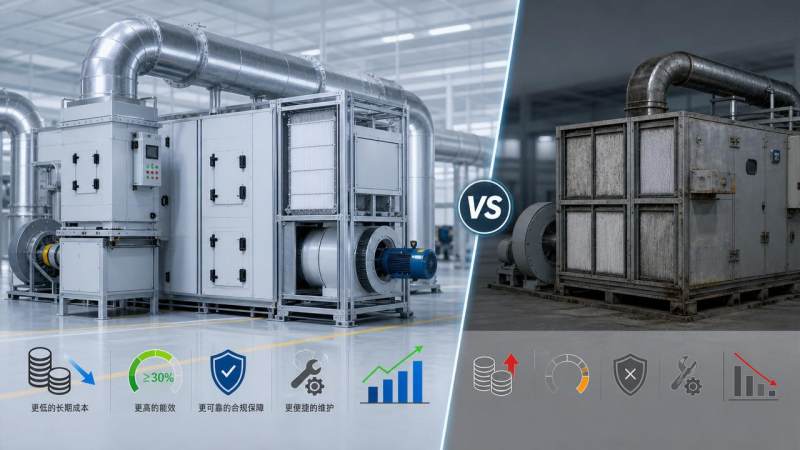
Choosing among industrial air filtration systems by cost is not just about the purchase price. For procurement teams, the real comparison includes filtration efficiency, energy use, maintenance cycles, compliance risk, and total lifecycle value. This guide helps you evaluate industrial air filtration systems with a practical cost-focused framework, so you can balance budget control with operational safety, air quality performance, and long-term ROI.
Why cost comparison of industrial air filtration systems is often misleading
Many buyers begin with capital expenditure, then compare quotations line by line. That approach misses the main drivers of ownership cost. In industrial air filtration systems, the wrong airflow design, media grade, or pressure drop profile can quietly increase energy bills, filter replacement frequency, and downtime.
This matters across semiconductor clean spaces, battery coating workshops, heavy dust processes, VOC treatment lines, and commercial ventilation projects. A lower upfront number may still produce a higher five-year cost if fan power rises, compliance margins shrink, or maintenance access is difficult.
For procurement personnel, the smarter question is not “Which system is cheaper?” but “Which system delivers the lowest risk-adjusted cost for the required air quality target?”
- Purchase price affects budget approval, but it is only the first cost layer.
- Operating power often becomes the largest recurring cost in high-air-volume environments.
- Maintenance labor, spare filters, and shutdown coordination can outweigh initial savings.
- Compliance exposure may create hidden costs through rework, delayed audits, or rejected installations.
Which cost elements should buyers compare first?
A reliable cost comparison of industrial air filtration systems starts with a structured model. Procurement teams should separate direct, indirect, and risk-related costs rather than mixing them into a single quote review.
The table below gives a practical framework for comparing industrial air filtration systems across common purchasing scenarios.
This framework is especially useful in mixed industrial portfolios where one buyer may source FFUs for cleanrooms, dust collectors for process exhaust, and ERV-related ventilation solutions for energy-conscious buildings. The cost logic must adapt to the application, not force every project into the same template.
How application scenario changes the cost logic
Not all industrial air filtration systems solve the same problem. A procurement team comparing a cleanroom FFU with a heavy-duty dust collector on purchase price alone will get a distorted result because the value drivers are different.
Clean manufacturing and micro-dust control
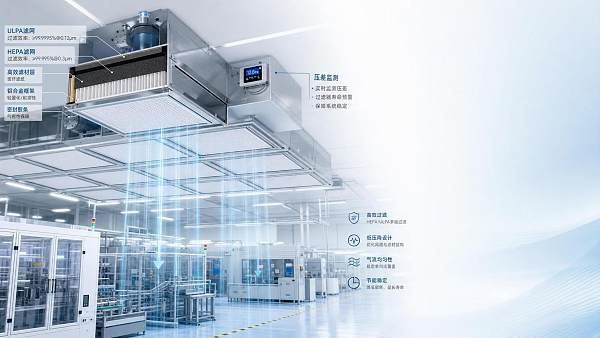
In semiconductor, electronics, and battery production, the cost of contamination is often much higher than the filtration hardware itself. Here, uniform airflow, low turbulence, filter integrity, and stable differential pressure can protect yield and reduce reprocessing losses.
Heavy industry dust and hazardous gas handling
In metallurgy, chemicals, welding, or bulk solids handling, the key comparison points shift toward capture efficiency, explosion-risk design, corrosion resistance, and disposal costs. A cheaper collector can become expensive if dust loading is underestimated and filter blinding occurs early.
Commercial and zero-carbon ventilation projects
For commercial buildings, air filtration cost should be assessed together with thermal recovery. When ERV and filtration work together, energy recovery can offset fan and conditioning loads, changing the net value calculation.
- Cleanroom projects prioritize contamination control and process stability.
- Dust-intensive workshops prioritize capture reliability and safe discharge.
- Building ventilation projects prioritize energy efficiency and indoor air quality balance.
A practical comparison table for industrial air filtration systems by cost
The following comparison table helps buyers evaluate major categories of industrial air filtration systems in a way that reflects both cost and application fit.
A table like this helps prevent category errors. It also shows why CECS places value on intelligence stitching across micro-filtration, thermodynamic control, emission treatment, and ventilation recovery rather than treating each system as an isolated product purchase.
What technical parameters have the biggest cost impact?
When procurement teams compare industrial air filtration systems, several technical parameters consistently shape cost. These should be reviewed before commercial negotiation, because they affect both sizing and lifecycle expense.
1. Pressure drop
Higher pressure drop generally increases fan energy consumption. A low-cost filter with a high resistance curve may look attractive in a bid sheet but become expensive over years of operation.
2. Filtration grade and capture target
The required particle size or contaminant type determines whether you need pre-filters, fine filters, HEPA stages, gas adsorption, wet scrubbing, or a hybrid design. Over-specification wastes budget, while under-specification increases failure risk.
3. Airflow stability
In clean manufacturing, stable vertical laminar flow can matter more than nominal airflow alone. In workshop exhaust, capture velocity and hood design may matter more than total fan size. The right metric depends on the process.
4. Environmental durability
Corrosive gases, high humidity, elevated temperature, and combustible dust all influence housing material, sealing, media selection, and service intervals. Durability is a cost issue, not just an engineering detail.
- Ask for initial and final pressure drop data, not just nominal efficiency.
- Check whether stated filtration performance aligns with the actual contaminant profile.
- Review service access, because labor cost grows quickly in ceiling or confined installations.
How to build a procurement decision model that finance and operations both accept
The most effective buyers create a simple weighted scoring model before requesting final quotations. This reduces internal conflict between capital budget pressure and operational performance concerns.
- Define the air quality objective: particle control, gas treatment, humidity stability, ventilation safety, or energy recovery.
- Confirm critical site data: airflow demand, contaminants, temperature, humidity, corrosiveness, duty cycle, and maintenance access.
- Set weighted comparison criteria such as capital cost, power use, maintenance burden, compliance fit, and expected service life.
- Ask suppliers to submit assumptions transparently so quotes can be normalized.
- Review the lowest total evaluated cost, not just the lowest initial bid.
This method is valuable when sourcing from multiple regions or comparing domestic and export-oriented suppliers. It is also where CECS intelligence adds value, especially when compliance interpretation, thermodynamic performance, and lifecycle economics intersect.
What standards and compliance points can change the real cost?
Procurement teams often underestimate the cost impact of standards. Industrial air filtration systems may need to align with cleanroom classifications, emission controls, workplace safety expectations, and project-specific owner requirements. If compliance is handled late, retrofit costs can erase earlier savings.
The table below highlights common compliance areas that influence system selection and project cost.
For export-oriented or high-spec projects, compliance should be evaluated at the same time as cost. CECS pays close attention to this intersection, especially where cleanroom interpretation, gas treatment discipline, and energy-performance claims affect purchasing confidence.
Common mistakes when comparing industrial air filtration systems by cost
Several purchasing mistakes repeat across industries. Avoiding them can save more money than negotiating a small percentage discount.
- Comparing only filter efficiency without reviewing pressure drop and energy demand.
- Ignoring the contaminant source and relying on generic airflow assumptions.
- Using one payback model for both cleanroom and heavy-industry applications.
- Excluding maintenance access, spare part lead time, and shutdown coordination from cost review.
- Treating compliance as paperwork instead of a technical design requirement.
Buyers who avoid these traps usually make faster approvals later because engineering, EHS, and finance can align around the same decision logic.
FAQ: procurement questions buyers ask most
How do I compare industrial air filtration systems from different suppliers fairly?
Normalize the assumptions first. Make each supplier quote against the same airflow, contaminant profile, environmental conditions, service interval target, and compliance basis. Without that, the prices are not directly comparable.
Which matters more: filter efficiency or energy consumption?
Neither should be isolated. If the process requires high-grade filtration, efficiency is mandatory. But two systems meeting the same target can have very different pressure drops and fan energy use. That is why lifecycle review is essential.
Are industrial air filtration systems with higher initial cost always better?
No. Some are over-engineered for the application, while others legitimately cost more because they reduce contamination risk, improve durability, or recover energy. Value depends on scenario fit, not price alone.
What documents should procurement request before final selection?
Request performance data, pressure drop information, material specifications, maintenance recommendations, control logic description, compliance references, spare parts list, and a clear scope boundary for installation and commissioning.
Why work with a specialist intelligence partner when comparing options?
In advanced manufacturing and green building projects, filtration is rarely a standalone purchase. It connects with humidity control, airflow behavior, gas treatment, heat recovery, and certification strategy. That is why cost comparison becomes more accurate when technical, compliance, and lifecycle perspectives are stitched together.
CECS focuses on that intersection. From micro-dust isolation and extreme dew point control to zero-emission gas treatment and ERV economics, the CECS perspective helps buyers understand where apparent savings can create hidden cost, and where a smarter specification can improve long-term value.
Why choose us for your next filtration evaluation
If you are comparing industrial air filtration systems for a new plant, retrofit, export project, or building upgrade, you can consult CECS for decision support that goes beyond a price sheet.
- Parameter confirmation for airflow, contaminants, humidity, and process constraints.
- Product selection guidance across FFU, dust collection, scrubber, ventilation, and ERV-related solutions.
- Delivery cycle discussion for project schedules, replacement planning, and phased installation.
- Customized scheme review for cleanroom, battery, chemical, heavy-industry, and commercial scenarios.
- Certification and compliance consultation where cleanroom, emissions, or energy targets shape procurement decisions.
- Quotation communication support to help compare suppliers on a normalized lifecycle basis.
If your team needs help narrowing specifications, validating assumptions, or balancing budget against long-term operating value, CECS can support a more confident procurement process with industry-focused intelligence and practical evaluation logic.
Recommended News
 Jun 19, 2026How to Choose Cleanroom Filtration Systems for ISO Class Control and Energy UseCleanroom filtration systems guide: learn how to balance ISO class control, airflow design, pressure drop, and energy use to choose a reliable, cost-efficient solution.
 Jun 18, 2026High-Efficiency Filtration in Cleanrooms: What Ratings and Pressure Drop MeanHigh-efficiency filtration in cleanrooms is not just about HEPA or ULPA ratings. Learn how pressure drop impacts airflow, energy use, compliance, and long-term system performance.
 Jun 16, 2026High-Efficiency Air Filtration for Cleanrooms: HEPA vs ULPA Filters and Lifecycle CostHigh-efficiency air filtration for cleanrooms explained: compare HEPA vs ULPA, pressure drop, energy use, and lifecycle cost to choose the smartest contamination-control solution.
 Jun 13, 2026HEPA/ULPA Filter Orders Shift Toward Yangtze DeltaHEPA/ULPA Filter orders are shifting toward the Yangtze Delta as buyers prioritize ISO 29463-3:2023 compliance, proof-ready documentation, and integrated delivery. See what this means for suppliers and exporters.
 Jun 12, 2026HEPA/ULPA Orders Shift Toward Yangtze Delta ClusterHEPA/ULPA orders are shifting toward the Yangtze Delta cluster as buyers seek Class 100 FFUs, clean AHUs, ISO 14644-1 Class 3 capability, and faster 8-week delivery.
 Jun 11, 2026Korea’s PET Film Duty Shift Pressures Filter TradeKorea’s PET film duty shift pressures filter trade as HEPA/ULPA suppliers face tighter compliance, ISO 29463 review, and KOLAS alignment. See what exporters and buyers should act on now.
 Jun 09, 2026CCE 2026 Adds Global Zone as HEPA/ULPA Draw BuyersHEPA/ULPA Filters take center stage at CCE 2026 as the new Global Clean Tech Zone attracts global buyers. Explore key sourcing signals shaping semiconductor and biopharma cleanrooms.
 Jun 08, 2026Qingdao Ruichen Patents Speed Seal LocalizationQingdao Ruichen patents accelerate speed seal localization for cleanroom equipment, improving leakage control, export delivery stability, and spec-ready sourcing insights.
 Jun 07, 2026Industrial Air Filtration Price Breakdown: What Drives Equipment and Lifecycle Cost?Industrial air filtration price is more than the unit cost. Learn what drives equipment, energy, maintenance, and compliance expenses to compare quotes smarter and cut lifecycle spend.
 Jun 07, 2026HEPA/ULPA Filter Lead Times Stretch to 18 WeeksHEPA/ULPA filter lead times stretch to 18 weeks as glass fiber supply tightens. Learn how delays impact FFU, CRAC procurement, contracts, and project planning.
 Jun 06, 2026HEPA/ULPA Media Lead Times Extend to 18 WeeksHEPA/ULPA media lead times extend to 18 weeks as E-CR glass fiber supply tightens. Learn how this impacts cleanroom production, exports, procurement planning, and delivery risk.
 Jun 05, 2026High-Efficiency Air Filtration for Industrial Facilities: Key Specs That Affect PerformanceHigh-efficiency air filtration starts with the right specs. Learn how pressure drop, sealing, airflow, and environment impact industrial performance, cost, and compliance.
 Jun 05, 2026Glass Fiber Shortage Extends HEPA/ULPA Lead Times to 18 WeeksGlass fiber shortage is pushing HEPA/ULPA lead times to 18 weeks. Learn how supply constraints, price spikes, and custom order delays may impact cleanroom projects and procurement plans.
![]() Jun 04, 2026Particle Filtration in Controlled Environments: HEPA vs ULPA and When Each FitsParticle filtration in controlled environments: compare HEPA vs ULPA by efficiency, pressure drop, energy use, and risk to choose the right fit and reduce lifecycle cost.
Jun 04, 2026Particle Filtration in Controlled Environments: HEPA vs ULPA and When Each FitsParticle filtration in controlled environments: compare HEPA vs ULPA by efficiency, pressure drop, energy use, and risk to choose the right fit and reduce lifecycle cost.![]() Jun 04, 2026Glass Fiber Chopped Strands Shortage Extends HEPA/ULPA Lead TimesGlass Fiber Chopped Strands shortage is extending HEPA/ULPA lead times from 6 to 18 weeks. See how supply disruption, validation delays, and project prioritization may impact your sourcing plans.
Jun 04, 2026Glass Fiber Chopped Strands Shortage Extends HEPA/ULPA Lead TimesGlass Fiber Chopped Strands shortage is extending HEPA/ULPA lead times from 6 to 18 weeks. See how supply disruption, validation delays, and project prioritization may impact your sourcing plans. Jun 03, 2026Glass Fiber Shortage Pushes HEPA Lead Times to 18 WeeksGlass fiber shortage pushes HEPA and ULPA lead times to 18 weeks, raising costs and supply risks for cleanroom filter makers. See key impacts and planning actions.
 Jun 02, 2026High-Efficiency Filtration vs HEPA/ULPA: Ratings, Pressure Drop, and Use CasesHigh-efficiency filtration guide comparing HEPA and ULPA ratings, pressure drop, and use cases to help improve air quality, cut energy waste, and choose smarter filters.
 Jun 02, 2026HEPA/ULPA Glass Fiber Lead Times Reach 18 WeeksHEPA/ULPA glass fiber lead times now reach 18 weeks, pressuring filter media procurement, export schedules, and compliance planning. See key risks and actions.
 Jun 01, 2026Cleanroom particle control starts before filter choiceCleanroom particle control starts before filter choice—learn how airflow, pressure, sources, and maintenance drive cleaner, safer, more efficient production.
 Jun 01, 2026Are cleanroom fan filter units for hospitals overused?Cleanroom fan filter units for hospitals can improve infection control, but are they always necessary? Learn when FFUs add value, reduce risk, or create costly overengineering.
 May 27, 2026When should you switch HEPA filtration manufacturer?HEPA filtration manufacturer issues can quietly raise energy costs, delay compliance, and hurt uptime. Learn the clear signs it’s time to switch and choose a stronger long-term partner.
 May 26, 2026How to compare industrial air filtration systems by costIndustrial air filtration systems cost comparison goes beyond price. Learn how to evaluate energy use, maintenance, compliance, and lifecycle ROI for smarter buying decisions.
 May 22, 2026What cleanroom filtration systems matter most for ISO goals?Cleanroom filtration systems shape ISO compliance, airflow stability, and lifecycle cost. Compare FFU, HEPA, and ULPA strategies to choose a reliable, efficient cleanroom solution.
 May 17, 2026Why semiconductor clean air costs vary more than expectedSemiconductor clean air costs vary with cleanliness class, humidity control, airflow, compliance, and energy use. Discover the hidden cost drivers and compare suppliers with confidence.