Search News
Industry Portal
Hot Articles
- When Does Cyclone Separation for Dust Collection Reduce Baghouse Filter Loading?Cyclone separation for dust collection can reduce baghouse filter loading by removing coarse, abrasive dust. Discover key sizing, flow, and discharge factors.
- What Determines Low Dew Point Dehumidification System Price for Dry Rooms?Low dew point dehumidification systems price depends on dew point targets, moisture loads, regeneration energy, controls, and installation scope. Compare costs confidently.
- Electronics Cleanroom System Cost: CAPEX, Energy, and Lifecycle Budget FactorsElectronics cleanroom systems cost explained: compare CAPEX, energy use, maintenance, and lifecycle factors to build a smarter, finance-ready budget.
Popular Tags
The EU updates CE guidelines, RTO/RCO need to take into account both energy efficiency and explosion protection
author
Time
Click Count

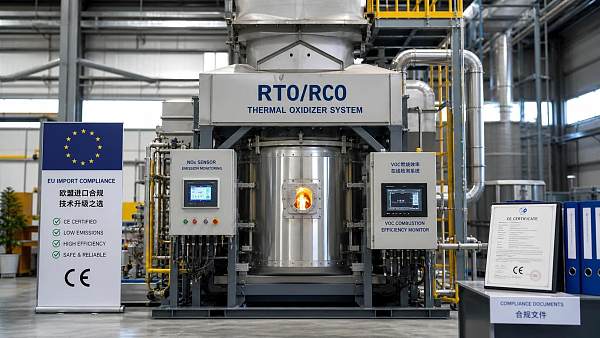
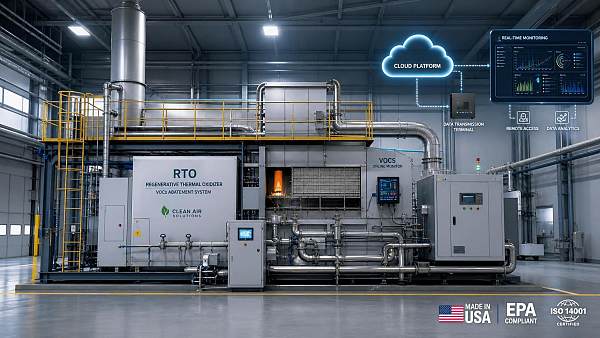
After the European Commission updated the "CE Mark Implementation Guidelines (2026 Revised Edition)" on August 11, 2026, the EU access requirements for RTO/RCO exhaust gas treatment systems have become clearer and dual constraints: on the one hand, they must meet the relevant explosion-proof safety requirements of EN 1539, and on the other hand, they must also meet the requirements for energy efficiency classification and actual measurement verification of VOCs treatment equipment in the new Appendix XVII. For manufacturers, testing agencies, certification service providers, and procurement and delivery links exporting to the EU, this is not only an adjustment at the document level, but also directly related to the type inspection path, test arrangements, and technical data preparation methods, and is worthy of continued follow-up.

After CE guideline update, RTO/RCO enters dual compliance path
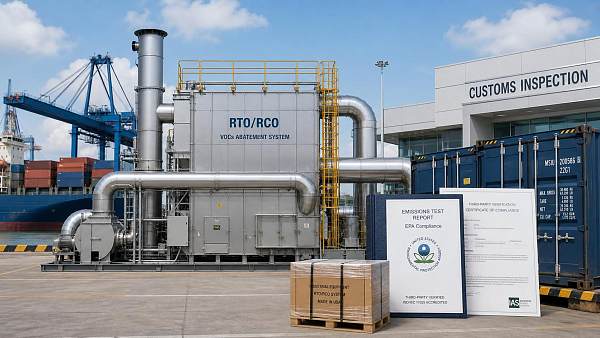
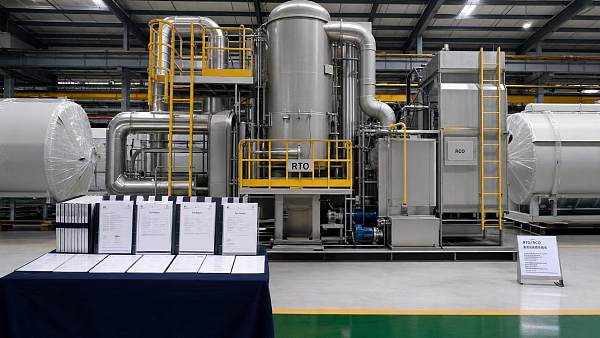
According to the "CE Mark Implementation Guidelines (2026 Revised Edition)" released by the European Commission's official website on August 11, 2026, starting from January 1, 2027, all RTO/RCO exhaust gas treatment systems imported into the EU must meet the dual compliance requirements of EN 1539 (Explosion-proof Safety of Industrial Heat Treatment Equipment) and the new Appendix XVII (Energy Efficiency Classification and Actual Measurement Verification of VOCs Treatment Equipment). The document also increases the RTO heat recovery efficiency threshold to no less than 92%, which is higher than the original standard of 85%, and requires third-party laboratories to issue joint energy efficiency and ATEX test reports that include on-site working condition simulation. Confirmed information also includes that this adjustment will directly affect the type inspection path, certification cycle and technical document preparation of Chinese export manufacturers.
All links in the industry chain have begun to recalibrate
Export manufacturers need to deal with both performance and safety lines simultaneously
For RTO/RCO equipment manufacturers that directly export to the EU, the most direct impact is not the improvement of a single indicator, but the parallelization of testing and certification logic. In the past, it may only be necessary to prepare materials around a certain type of performance or safety documents, but now it is necessary to put heat recovery efficiency, on-site working condition simulation and explosion-proof safety requirements under the same set of declaration and verification framework. From an analysis point of view, this will increase the coordination costs of early design confirmation, prototype testing, technical document compilation and laboratory scheduling.
The workload of testing and certification services will be lengthened
Third-party laboratories and certification service agencies will face more complex test combinations. The joint test report must not only cover energy efficiency results, but also include ATEX-related verification and reflect on-site working condition simulations. For this type of service organization, changes are mainly reflected in the arrangement of test plans, the completeness of the evidence chain and the report delivery cycle. Observation shows that such requirements usually raise the threshold for preparation for inspection and increase the risk of data rework.
Purchasers and project deliverers will pay more attention to pre-confirmation
Purchasers, general contractors and equipment integrators for EU projects will need to lock in compliance in advance in bidding documents, technical agreements and acceptance clauses. Since the new requirements involve energy efficiency thresholds, test methods and joint reporting formats, if the procurement process is still organized according to the old standards, it is easy to face the pressure of supplementary parts and review during the delivery, acceptance or customs clearance process. From a business process perspective, the impact will focus on technical clarification, contract confirmation and delivery cycle management.
What preparatory actions should we focus on now
First check whether the product has been re-evaluated according to the 92% threshold
Enterprises must first confirm whether the heat recovery efficiency of existing RTO products has been re-evaluated according to the requirement of ≥92%, rather than continuing the old internal caliber of 85%. For models that are planned to continue to be exported to the EU, relevant test records, design parameters and performance statements need to be updated simultaneously to avoid inconsistencies between technical documents and the new version of the guidelines.
Make joint test data into a complete chain of traceability
Since the new requirements emphasize joint testing of energy efficiency and ATEX, companies should pay attention to whether the report has traceable prototype information, test conditions, on-site working condition simulation instructions, and result correspondence. From an analysis point of view, the follow-up review is likely to focus not only on the conclusion itself, but also on whether the testing process is consistent with the declared model and whether the technical documents can support the certification conclusion.
Impacts delivery pace and supplier selection in advance
If a company relies on external laboratory or certification service resources, scheduling and data completeness will directly affect order delivery. A more suitable approach at present is to incorporate the certification window, sample preparation for inspection, data translation and version control into the project plan as early as possible, and at the same time conduct consistency checks on key accessories, technical documents and after-sales support responsibilities in the supply chain. This can reduce the need to do additional testing or reorganize files just before shipment.
This is more like an execution signal, rather than a simple file update
From an industry perspective, this information is more suitable to be understood as a clear execution signal, rather than a regular revision that stays at the text level. The reason is that it not only raises the energy efficiency threshold, but also puts explosion-proof safety and energy efficiency actual testing into the same compliance framework, and requires third-party laboratories to provide joint test reports. According to analysis, such changes usually affect export enterprises and certification chains first, and then gradually spread to procurement, bidding and acceptance links. What deserves more attention at this stage is not the excessive deduction of the rules, but the subsequent official enforcement caliber, test report acceptance method and whether the project bidding documents will be adjusted accordingly.
What we will focus on in the short term is the enforcement details and corporate enforcement
Overall, this information has released a strong signal of tightening compliance, but its final enforcement method, information details and review focus still need to continue to be observed. For relevant enterprises, it is currently more suitable to understand it as a compliance change that must be prepared in advance, rather than as background information that can be processed until it is close to taking effect. What will really affect the pace of the market is how subsequent certification agencies, laboratories and procurement parties convert this new set of requirements into operable documents and acceptance standards.
Scope of public information this article is based on
This article is generated based on the information title, event time and event summary provided by the user, and no additional unverified facts are introduced. Types of sources typically associated with such events include official European Commission announcements, regulatory agency releases, customs and trade authority information, industry association information, standards organization documents, and authoritative media reports. No specific official source link is provided in the input, and it is still necessary to continue to verify relevant policy details, certification enforcement standards, changes in bidding documents, industry feedback, and actual enforcement by the company.
Recommended News
 Sep 09, 2026How to Size RTO, RCO, and Wet Scrubbers for VOC Emissions from Coating LinesIndustrial emission control for coating lines: learn how to size RTO, RCO, and wet scrubbers for VOC loads, compliance, energy efficiency, and safer operations.
 Aug 22, 2026How to Verify CE Compliance When Comparing VOC Treatment Systems for EU ProjectsVOC treatment systems CE certified: learn how to verify real EU compliance, check directives, ATEX, and documentation, and avoid costly procurement and site integration risks.
 Aug 16, 2026EU Issues New RTO/RCO Compliance Guide, Adds Carbon and Efficiency CertificationEU releases a new RTO/RCO compliance guide with carbon and efficiency certification requirements, signaling stricter market access rules and urgent action for exporters.
 Aug 15, 2026China Issues New Export Compliance Rules for RTO/RCO SystemsChina's new export compliance rules for RTO/RCO systems are reshaping market access. Learn what the 2026 regulations mean for exporters, buyers, and green procurement.
 Aug 14, 2026China’s Temporary Helium Export Ban Slows RTO/RCO Core Cooling DeliveriesChina’s temporary helium export ban may delay RTO/RCO core cooling deliveries, especially for final testing and certification. Learn how it impacts projects and what companies should check next.
![]() Aug 12, 2026The EU updates CE guidelines, RTO/RCO need to take into account both energy efficiency and explosion protectionEU CE Guide update: RTO/RCO systems must now meet both energy efficiency and explosion-proof compliance. Learn how EN 1539, ATEX testing, and new VOCs rules impact EU market access.
Aug 12, 2026The EU updates CE guidelines, RTO/RCO need to take into account both energy efficiency and explosion protectionEU CE Guide update: RTO/RCO systems must now meet both energy efficiency and explosion-proof compliance. Learn how EN 1539, ATEX testing, and new VOCs rules impact EU market access. Aug 11, 2026China Sets New VOCs Certification Rule for RTO/RCO ExportsChina sets new VOCs certification rule for RTO/RCO exports. Learn how CN-ERV-2026, energy-efficiency grades, and customs impacts could affect bids, buyers, and delivery plans.
 Aug 09, 2026EPA Rule Takes Effect for Imported RTO/RCO SystemsEPA Rule Takes Effect for Imported RTO/RCO Systems: learn how new EPA monitoring and CEP compliance rules affect customs clearance, product readiness, and U.S. market access.
 Aug 08, 2026EU CE Rule Takes Effect for RTO/RCO VOCs MonitoringEU CE Rule Takes Effect for RTO/RCO VOCs Monitoring: learn how EU 2026/1389 changes CE compliance, embedded VOCs modules, testing, and customs risk for exporters and buyers.
 Aug 07, 2026EPA Rule Takes Effect for RTO/RCO ImportsEPA Rule Takes Effect for RTO/RCO Imports: learn how the new VOCs compliance rule affects customs clearance, buyer acceptance, and shipment readiness in the U.S. market.
 Aug 06, 2026EU CE Rule Takes Effect for RTO/RCO Data InterfacesEU CE rule takes effect for RTO/RCO data interfaces under EN 17493:2026. Learn how real-time NOx, CO, VOC reporting and EU-ETS connectivity impact EU market access.
 Aug 05, 2026EPA Rule Takes Effect for RTO/RCO ImportsEPA Rule Takes Effect for RTO/RCO Imports: learn how the new EPA requirement impacts customs clearance, CEMS documentation, compliance planning, and U.S.-bound shipment readiness.
 Aug 04, 2026EN 13043:2026 Tightens EU Rules for RTO/RCO ImportsEN 13043:2026 tightens EU rules for RTO/RCO imports, requiring VOC efficiency monitoring, NOx sensing, and DDI-2.1 CE documentation. See what exporters must update now.
 Aug 03, 2026EPA Rule Takes Effect for Imported RTO/RCO SystemsEPA Rule Takes Effect for Imported RTO/RCO Systems: learn how the new EPA-certified VOC monitoring and remote-audit requirements affect compliance, customs clearance, delivery planning, and U.S. market access.
 Aug 02, 2026EU CE Rule Change Tightens RTO/RCO VOC CertificationEU CE rule change tightens RTO/RCO VOC certification under EN 17483:2026. Learn how the new 95.5% threshold and Notified Body type-test reports affect imports, CE access, and project approval.
 Aug 01, 2026EPA Rule Takes Effect for RTO/RCO ImportsEPA Rule Takes Effect for RTO/RCO Imports: learn how the new EPA import rule affects VOC destruction verification, customs clearance, delivery timelines, and compliance planning for U.S.-bound systems.
 Jul 31, 2026EU CE Rule Takes Effect for RTO/RCO SystemsEU CE Rule Takes Effect for RTO/RCO Systems: learn how EN 1539-2:2026, third-party verification, and digital CE marking affect customs clearance, compliance, and buyer acceptance.
 Jul 30, 2026EPA Rule Takes Effect on Imported RTO/RCO VOC ReportsEPA rule takes effect on imported RTO/RCO VOC reports: learn how the new VOC destruction efficiency requirement affects U.S. imports, customs clearance, buyer approval, and LEED project compliance.
 Jul 29, 2026EU EN 13053:2026 Tightens VOCs Test Certification for RTO/RCO ImportsEU EN 13053:2026 tightens VOCs test certification for RTO/RCO imports, shifting to third-party on-site verification. Learn how it impacts CE validity, customs clearance, and EU market access.
 Jul 28, 2026EPA Rule Takes Effect for Imported RTO/RCO SystemsEPA Rule Takes Effect for Imported RTO/RCO Systems: learn how the new EPA import requirement impacts VOCs compliance, customs clearance, and buyer acceptance in the U.S. market.
 Jul 25, 2026EU CE Rule Takes Effect for RTO/RCO EntryEU CE Rule Takes Effect for RTO/RCO Entry: learn how EN 13779:2026+A1:2026 changes EU market access, CE compliance, VOCs interface rules, and customs clearance risk.
 Jul 24, 2026EPA Rule Takes Effect for RTO/RCO VOCs MonitoringEPA Rule Takes Effect for RTO/RCO VOCs Monitoring: learn how new U.S. requirements for VOCs tracking, EPA-certified modules, and cloud compliance reporting may affect exports, certification, and delivery.
 Jul 23, 2026How to Compare VOC Treatment Options for Coating Lines by Solvent Load and Compliance?VOC treatment for coating lines: compare RTO, catalytic, adsorption, and recovery options by solvent load, compliance risk, energy use, and lifecycle cost to choose the right system.
 Jul 23, 2026EU Requires EN 17499:2026 for RTO/RCO CE MarkingEU Requires EN 17499:2026 for RTO/RCO CE Marking from October 1, 2026. Learn how VOCs, thermal efficiency, and data interface rules impact EU market access.