Search News
Industry Portal
Hot Articles
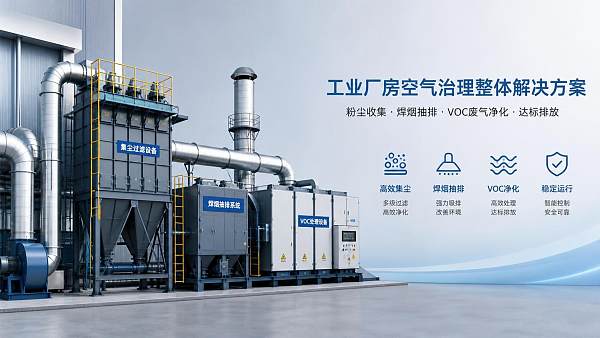
- How Factories Can Select Air Quality Controls for Dust, Fumes, and VOCsIndustrial air quality control for factories: learn how to select effective solutions for dust, fumes, and VOCs while improving safety, compliance, energy efficiency, and uptime.
- How to Size Industrial Gas Scrubbing Units for Acid Fumes and Variable AirflowsIndustrial gas scrubbing units: learn how to size acid-fume scrubbers for variable airflows, peak loads, chemical demand, pressure drop, and reliable compliance.
- How to Evaluate Industrial Air Quality Control Systems for Dust, Fumes, and VOCsIndustrial air quality control systems: learn how to evaluate dust, fumes, and VOC solutions by capture efficiency, compliance, maintenance, and lifecycle cost.
Popular Tags
China's Energy Administration Prioritizes Power-Compute Synergy, Boosting ERV Exports
author
Time
Click Count

On May 25, 2026, China’s National Energy Administration emphasized the urgent need to advance coordinated development between computing infrastructure and power systems—prompting sharp growth in demand for high-sensible-heat ERV systems domestically and internationally, driven by heightened cooling loads from the 2026 El Niño event and stricter overseas energy and environmental requirements.

Confirmed Policy Directive and Market Response
On May 25, 2026, the National Energy Administration issued a directive underscoring the imperative to “solidly implement and strengthen synergistic development of computing power and electric power.” Concurrently, domestic IDC operators increased procurement of high-sensible-heat Energy Recovery Ventilators (ERV) by 100% year-on-year, attributed to elevated cooling demands intensified by the 2026 El Niño phenomenon. Separately, major data center operators in Singapore and Germany initiated bulk inquiries with leading Chinese ERV manufacturers, specifying compliance with EN 13053 Class III energy efficiency and low-global-warming-potential (low-GWP) refrigerants.
Impact Across Supply Chain Roles
Export-Oriented Manufacturers
These firms face immediate pressure to align production with EN 13053 Class III certification timelines and low-GWP refrigerant integration—impacting product design, testing cycles, and documentation preparation for EU and ASEAN markets.
Raw Material Suppliers
Suppliers of heat exchanger alloys, sealing compounds, and refrigerant-compatible gaskets must verify material compatibility with low-GWP working fluids (e.g., R1234ze, R513A) and support traceability documentation required for EN-compliant system validation.
Equipment Assembly & Integration Firms
Manufacturers integrating ERV units into modular data center solutions must revalidate thermal performance under combined sensible/total heat recovery configurations—and ensure firmware and control logic meet EN 13053 test condition reporting standards.
Logistics & Compliance Support Providers
Third-party conformity assessment bodies and export documentation services are seeing rising demand for pre-shipment verification of energy labeling, refrigerant charge records, and Declaration of Conformity (DoC) drafting aligned with EU CE marking and Singapore EMA requirements.
Key Operational Priorities for Enterprises
EN 13053 Class III Certification Readiness
Companies must verify current test reports cover all required operating conditions—including part-load performance, frost protection behavior, and sensible heat ratio (SHR) ≥ 0.8 at rated airflow—per EN 13053 Annex A and Class III definitions.
Low-GWP Refrigerant Qualification & Documentation
Manufacturers must confirm refrigerant selection meets both GWP thresholds (<750 for new equipment under EU F-Gas Regulation) and thermodynamic compatibility with existing ERV heat wheel or plate core materials—backed by safety data sheets (SDS), compatibility test summaries, and refrigerant charge verification records.
Technical Tender Alignment for Data Center Projects
Bid submissions targeting Singaporean and German data center tenders require explicit specification mapping: SHR values at multiple airflow rates, sound power level (LWA) declarations, and evidence of third-party verification against EN 13053—not just self-declared performance.
Supply Chain Coordination for Dual-Market Delivery
Given concurrent surges in domestic IDC orders (driven by policy alignment) and overseas inquiries, firms must reconcile lead time commitments across two regulatory frameworks—prioritizing component sourcing, factory acceptance testing (FAT) scheduling, and logistics routing to avoid bottlenecks.
Industry Observation: Beyond Compliance to Systemic Integration
Analysis shows this is not merely a certification-driven export uptick, but an early signal of systemic convergence between energy policy and digital infrastructure planning. From an industry perspective, the National Energy Administration’s directive elevates ERV systems from auxiliary HVAC components to critical enablers of grid-responsive computing load management—especially as data centers explore dynamic cooling modulation linked to real-time electricity pricing signals. What deserves closer attention is the growing technical divergence between domestic high-sensible-heat demand (optimized for server heat rejection) and international total-heat recovery expectations (emphasizing humidity control)—a gap requiring distinct product variants, not just label adjustments.
Strategic Implication for the Sector
This development marks a structural inflection point: ERV technology is transitioning from a niche energy-saving device to a regulated interface between power systems and digital infrastructure. Its adoption is now tied not only to thermal efficiency metrics but also to national energy strategy execution and cross-border climate compliance frameworks. A rational interpretation is that long-term competitiveness will depend less on unit cost and more on verifiable, auditable, and jurisdictionally adaptable system-level compliance capabilities.
Source Attribution and Monitoring Guidance
This article was generated exclusively from the provided title, event date (May 25, 2026), and summary. It reflects no external data sources, proprietary market intelligence, or unverified stakeholder statements. Typical authoritative references for such developments include official releases from China’s National Energy Administration, the European Commission’s Energy Efficiency Directive implementation notices, Singapore’s Energy Market Authority (EMA) technical advisories, and CEN/CENELEC standard updates. Specific official source links were not provided in the input and should be verified continuously. Ongoing monitoring is recommended for forthcoming detailed implementation guidelines on power-compute synergy, EN 13053 enforcement interpretations by notified bodies, and evolving tender specifications in Tier-1 data center projects across Asia and Europe.
Recommended News
 Aug 28, 2026How Factories Can Select Air Quality Controls for Dust, Fumes, and VOCsIndustrial air quality control for factories: learn how to select effective solutions for dust, fumes, and VOCs while improving safety, compliance, energy efficiency, and uptime.
 Aug 27, 2026How to Size Industrial Gas Scrubbing Units for Acid Fumes and Variable AirflowsIndustrial gas scrubbing units: learn how to size acid-fume scrubbers for variable airflows, peak loads, chemical demand, pressure drop, and reliable compliance.
 Aug 26, 2026How to Evaluate Industrial Air Quality Control Systems for Dust, Fumes, and VOCsIndustrial air quality control systems: learn how to evaluate dust, fumes, and VOC solutions by capture efficiency, compliance, maintenance, and lifecycle cost.
 Aug 25, 2026How to Select Cleanroom Particle Control Equipment for ISO Class and Process RiskCleanroom particle control equipment selection starts with process risk, ISO class, and airflow design. Learn how to compare FFUs, filters, and monitoring for reliable performance.
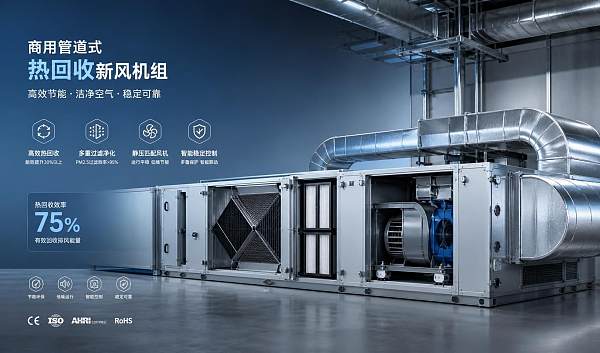
 Aug 24, 2026How to Choose a Ducted Heat Recovery Ventilation System for Commercial BuildingsDucted heat recovery ventilation for commercial buildings: learn how to compare efficiency, static pressure, controls, IAQ, and lifecycle cost to choose a smarter, high-performance system.
 Aug 23, 2026How Laminar Airflow Supports Compliance and Contamination Control in Medical Device ManufacturingLaminar airflow for medical devices helps reduce contamination risk, support cleanroom compliance, and improve audit readiness—see how it protects product quality and manufacturing control.
 Aug 22, 2026How to Verify CE Compliance When Comparing VOC Treatment Systems for EU ProjectsVOC treatment systems CE certified: learn how to verify real EU compliance, check directives, ATEX, and documentation, and avoid costly procurement and site integration risks.
 Aug 21, 2026How to Achieve Stable RH Precision Humidity Control in Cleanroom Production?Stable RH precision humidity control starts with process-based design. Learn how airflow, sensors, dehumidification, and recovery logic keep cleanroom production consistent and reliable.
 Aug 20, 2026How to Select Airflow Control Dampers for Pressure Balance and Energy EfficiencyAirflow control dampers selection starts with pressure balance, leakage, and control authority—not duct size alone. Learn how to improve stability and energy efficiency.
 Aug 19, 2026What Drives Cleanroom Compliance Cost in Pharma and Semiconductor Projects?Cleanroom compliance cost in pharma and semiconductor projects depends on ISO class, airflow, humidity control, validation, and energy use. Learn what drives cost and how to avoid costly overdesign.
 Aug 18, 2026How to Evaluate a High-Tech HVAC Manufacturer for Cleanroom and Precision FacilitiesHigh-tech HVAC manufacturer evaluation guide for cleanrooms and precision facilities. Learn how to assess control stability, compliance, serviceability, and long-term operational risk.
 Aug 17, 2026How to Evaluate a Commercial ERV Systems Supplier for Large Building ProjectsCommercial ERV systems supplier selection for large projects goes beyond price. Learn how to compare performance, compliance, controls, delivery, and lifecycle cost to reduce risk.
 Aug 16, 2026Commercial Ventilation Pricing: What Drives Cost in Industrial and Office Projects?Commercial ventilation pricing varies by airflow, compliance, and installation needs. Learn what drives costs in industrial and office projects—and how to compare quotes smarter.
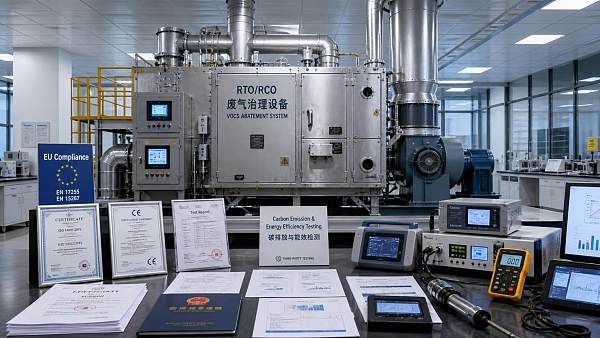
 Aug 16, 2026EU Issues New RTO/RCO Compliance Guide, Adds Carbon and Efficiency CertificationEU releases a new RTO/RCO compliance guide with carbon and efficiency certification requirements, signaling stricter market access rules and urgent action for exporters.
 Aug 15, 2026What Makes an HVAC System Energy-Efficient for European Buildings?Energy efficient HVAC Europe solutions help European buildings cut costs, boost comfort, and meet carbon targets. Discover the design factors that truly improve performance.
 Aug 15, 2026China Issues New Export Compliance Rules for RTO/RCO SystemsChina's new export compliance rules for RTO/RCO systems are reshaping market access. Learn what the 2026 regulations mean for exporters, buyers, and green procurement.
 Aug 14, 2026How to Evaluate a Precision Cooling Supplier for High-Density Data CentersPrecision cooling supplier guide for high-density data centers: learn how to evaluate reliability, scalability, compliance, and lifecycle value before you buy.
 Aug 14, 2026China’s Temporary Helium Export Ban Slows RTO/RCO Core Cooling DeliveriesChina’s temporary helium export ban may delay RTO/RCO core cooling deliveries, especially for final testing and certification. Learn how it impacts projects and what companies should check next.
 Aug 13, 2026How to Select VAV Airflow Control Systems for Labs and Cleanroom HVAC ProjectsVAV airflow control systems are critical for labs and cleanroom HVAC projects. Discover how to choose the right system for stability, compliance, and energy savings.
 Aug 12, 2026How to Select Dew Point Control Systems for Battery Plants?Dew point control systems for battery plants: learn how to compare stability, energy use, controls, and maintenance to choose a safer, more efficient dry room solution.
![]() Aug 12, 2026The EU updates CE guidelines, RTO/RCO need to take into account both energy efficiency and explosion protectionEU CE Guide update: RTO/RCO systems must now meet both energy efficiency and explosion-proof compliance. Learn how EN 1539, ATEX testing, and new VOCs rules impact EU market access.
Aug 12, 2026The EU updates CE guidelines, RTO/RCO need to take into account both energy efficiency and explosion protectionEU CE Guide update: RTO/RCO systems must now meet both energy efficiency and explosion-proof compliance. Learn how EN 1539, ATEX testing, and new VOCs rules impact EU market access. Aug 11, 2026How to Select Precision Humidity Control for Cleanrooms and Micro-EnvironmentsPrecision humidity control for cleanrooms starts with process needs. Learn how to compare dew point targets, airflow, controls, and energy tradeoffs for reliable, high-yield micro-environments.
 Aug 11, 2026China Sets New VOCs Certification Rule for RTO/RCO ExportsChina sets new VOCs certification rule for RTO/RCO exports. Learn how CN-ERV-2026, energy-efficiency grades, and customs impacts could affect bids, buyers, and delivery plans.
 Aug 10, 2026How to Evaluate Automated Industrial Exhaust Treatment Systems for VOC ControlAutomated industrial exhaust treatment systems for VOC control: learn how to compare compliance, automation, energy use, safety, and lifecycle cost before selecting the right solution.